Skip to content
DevMeme
3956 of 7435
When Your Combat Robot Hits INT_MAX and Learns One More Technique
CS Fundamentals Post #4308, on Apr 14, 2022 in TG

When Your Combat Robot Hits INT_MAX and Learns One More Technique

Why is this CS Fundamentals meme funny?

Level 1: One Too Many

Imagine you have a bucket that can only hold 100 balls. You’ve filled it right to the top with 100 balls. Now your friend comes along with one more ball and plops it in. What happens? The bucket overflows and balls spill everywhere! Suddenly you’ve lost track of all the balls that were neatly in the bucket. This meme is joking about the same idea, but with a robot’s “memory” of fighting moves. The robot had learned as many moves as it possibly could – it was full. When the human tried to teach it one extra move, that was like overloading the bucket. The robot’s brain couldn’t handle that one extra technique, so it forgot everything (all the moves spilled out, so to speak). The humor comes from how dramatically the robot reacts. It’s a funny way of saying even a super-cool combat robot can bite off more than it can chew. Just like us, if you try to cram in more than your limit, you might end up blanking out entirely!

Level 2: Overflow 101

Let’s break down what’s happening in simpler terms. The robot is essentially a computer program saying it has learned 2,147,483,647 techniques. Why that oddly specific number? In computing, many languages use a data type called an integer (often 32 bits in size) to count things. A 32-bit signed integer can only count up to 2,147,483,647 – that’s its built-in maximum (commonly referred to in code as INT_MAX). Think of it like a digital odometer that’s limited to 9,999,999,999 – it has a fixed number of digits. If you try to go one past the maximum, it doesn’t magically grow another digit; it flips back around to a negative or zero value. This is called an integer overflow. It’s a type of bug where numbers wrap around because the computer ran out of bits to represent the next number.

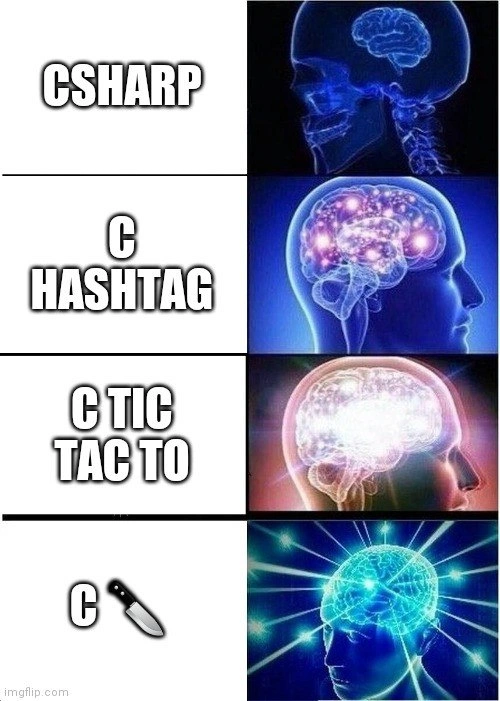
In the comic, the human fighter says “pay attention, I’m about to teach you something NEW!” meaning they’re adding one more technique to the robot’s memory. That “DONK” to the robot’s head is a humorous way to depict the teaching moment (or data input). But because the robot was already at its memory limit (INT_MAX techniques learned), adding one more technique causes an overflow. In practical terms, if the robot’s technique count was stored in a 32-bit variable, it would wrap around from 2,147,483,647 back to -2,147,483,648 (or possibly to 0, depending on how it’s handled). The final panel’s punchline “I’VE FORGOTTEN EVERYTHING!!” illustrates the outcome: the robot’s technique counter reset to an invalid value, effectively wiping out its knowledge (at least from its own perspective).

Let’s imagine this in code to see what we mean by overflow. In C-like pseudocode it might look like:

int techniques = INT_MAX;
printf("Techniques before: %d\n", techniques);   // Outputs 2147483647
techniques = techniques + 1;                    // Add one -> overflow occurs
printf("Techniques after: %d\n", techniques);    // Might output -2147483648 now!

The robot literally hit the maximum number it could count, and that extra “+1” made the number roll over like an old odometer turning from 99999 to 00000. In a real program, an overflow can cause very weird behavior if you’re not expecting it – values suddenly becoming negative, resetting to zero, or even crashing the program. An OffByOneError like this (going one past the limit) is a common mistake. New programmers might not realize that computer numbers have these limits, so this meme is both a joke and a gentle reminder: always be mindful of your data type limits! The robot_memory_reset in the comic is a funny exaggeration of what an overflow bug feels like when it happens. It’s as if the robot’s memory was a cup filled to the brim – one more drop (one more technique) caused it to spill everything out.

Level 3: Showdown at INT_MAX

For seasoned developers, this comic triggers war stories of classic bugs and system crashes caused by unhandled numeric limits. The robot’s boast about “2,147,483,647 martial art techniques” immediately flags a signed_32bit_limit – it’s a wink that the robot’s “brain” is using a 32-bit int to count techniques. We all know what’s coming next: one more increment and boom – integer overflow. The human fighter’s cheeky “I’m about to teach you something NEW!” sets the stage for that one extra technique, effectively an off-by-one error delivered via karate chop. In the third panel “... DONK,” we witness a low-level programming joke in action. Just as predicted, the poor robot exceeds its counting capacity and experiences a total shutdown: “I’VE FORGOTTEN EVERYTHING!!”

This scenario might be silly in comic form, but it’s painfully familiar to anyone who’s debugged overflow issues. It echoes real incidents like the famous YouTube view counter bug – back when PSY’s “Gangnam Style” video surpassed 2,147,483,647 views, it literally broke YouTube’s 32-bit counter. Engineers had to rush in and upgrade the counter to a 64-bit number to avoid it resetting to a negative value. Similarly, many classic video games suffered from overflow glitches: Pac-Man’s infamous level 256 kill screen arose because an 8-bit level counter overflowed, messing up the game’s memory and rendering a chaotic half-playable level. These aren’t just one-off mistakes; they’re emblematic of a broader pattern in software development where a value exceeding its expected range can cause bizarre behavior. Seasoned devs have learned (often the hard way) to anticipate these edge cases – whether it’s the Year 2038 problem (when Unix time on 32-bit systems will overflow) or a finance application that doesn’t expect a bank balance to hit 10 digits.

The humor in the meme comes from recognizing this pattern instantly. The robot’s plight is basically a dramatization of an overflow_bug we’ve all seen: a counter goes past its max and everything resets. It’s the ultimate “off-by-one” gotcha – one more than the maximum, and years of data (or training, in the robot’s case) seemingly vanish. A veteran developer might chuckle and cringe at the same time, recalling that one deployment where an un-checked counter rolled over and wreaked havoc in production. The phrase “I’ve forgotten everything!!” is exactly what it feels like when an overflow error causes your program’s state to become nonsensical. The comic overlay of a martial arts lesson just adds a fun twist – instead of a software bug, it’s portrayed as a comical sparring mishap. But beneath the laughs is a real lesson: always account for your limits, or your system might get knocked out by something as small as +1.

Level 4: Two’s Complement Catastrophe

At the binary heart of this joke is a fundamental limitation of computer arithmetic. The combat robot proudly claims to know 2,147,483,647 techniques – that specific number isn’t random at all. It’s actually $2^{31} - 1$, the maximum positive value of a 32-bit signed integer (often known as INT_MAX). In two’s complement binary representation (used by virtually all modern CPUs for signed integers), this value is a sequence of 31 ones in binary: 0x7FFFFFFF in hex. Adding one more technique would require the number $2^{31}$, but a 32-bit register can’t represent $2^{31}$ as a positive number. Instead, the binary addition “wraps around” – the bit pattern rolls over from 0x7FFFFFFF to 0x80000000. That new bit pattern has the leading sign bit set to 1, which the system interprets as -2,147,483,648 in two’s complement form (the most negative 32-bit value). In effect, incrementing INT_MAX causes an integer overflow: the value wraps around like an odometer ticking over from 999999 to 000000, but here it jumps into negative territory.

In low-level programming, this overflow is a direct consequence of fixed-size data types. The hardware’s arithmetic logic unit performs addition modulo $2^{32}$ for 32-bit integers, meaning it just discards any overflow beyond the 32 bits. There’s no automatic error – the result is mathematically correct mod $2^{32}$, but it’s likely not what the programmer intended. In languages like C/C++ this signed overflow invokes undefined behavior (often manifesting as the wrap-around we expect on typical two’s complement hardware). Other systems might trigger an overflow flag or an exception if you’re lucky, but usually it just silently flips the number. The meme humorously personifies this binary overflow as the robot “forgetting everything.” Technically, what’s happened is the robot’s internal counter of techniques has rolled over from its max value back into a negative or invalid state. This is the same overflow_bug that can lead to real-world software glitches: when a counter or memory index hits its limit, adding one can make it appear to reset or turn negative, wreaking havoc on program logic. The comic exaggerates it as a total memory wipe, which underscores just how catastrophic a simple off-by-one error at the limits of a data type can be.

Description

Four-panel comic on a lavender background. Panel 1: a black-and-red masked combat robot raises its hand and says, “As a combat robot, I’m programmed with 2,147,483,647 martial art techniques.” Panel 2: an orange-haired human in a black bodysuit, fists up, replies, “Oh yeah? Well pay attention, I’m about to teach you something NEW!” Panel 3: silent beat; the human flicks the robot’s temple with a small “DONK” sound effect. Panel 4: the robot clutches its head and screams, “I’VE FORGOTTEN EVERYTHING!!” in large red text. The gag hinges on the robot already storing INT_MAX (2,147,483,647) techniques; adding one more overflows a 32-bit signed integer, illustrating integer-overflow bugs familiar to low-level programmers and CS fundamentals students
Comments

7
Anonymous ★ Top Pick Pro tip: when your battle-bot’s skills counter hits 2,147,483,647, just push one more - signed-int overflow doubles as an O(1) factory reset
  1. Anonymous ★ Top Pick

    Pro tip: when your battle-bot’s skills counter hits 2,147,483,647, just push one more - signed-int overflow doubles as an O(1) factory reset

  2. Anonymous

    When the junior dev says "just use a long" but your entire codebase assumes martial arts are stored as int32 and now you're explaining to the board why the combat robot division needs a complete rewrite

  3. Anonymous

    Should've stored techniques in an unsigned int - then one donk would just unlock 2 billion more instead of a knowledge rollback. Schema decisions matter in combat

  4. Anonymous

    Ah yes, the classic off-by-one error in hardware design: the robot's memory protection was clearly set to 2,147,483,646 impact resistance units. One bonk later and we've got a complete stack overflow - literally. This is why you always implement ECC memory and redundant storage for mission-critical systems, especially when your threat model includes enthusiastic humans with teaching aspirations. The real tragedy? That's a signed 32-bit integer's worth of martial arts knowledge gone in a single clock cycle. Should've used a 64-bit architecture and RAID for those neural weights

  5. Anonymous

    When your skillset is stored in a signed 32-bit int and the PM says “just one more feature,” your robot suddenly has negative kung fu

  6. Anonymous

    INT_MAX kata mastered? One bonk and it's underflow city - classic signed int humility check for us 32-bit veterans

  7. Anonymous

    2,147,483,647 martial arts techniques is your hint the training counter is int32; teach it one more and learn() gracefully degrades into forgetEverything() via signed overflow

Use J and K for navigation