The Promised Land for Rust Evangelists
Why is this Languages meme funny?
Level 1: Follow That Sign
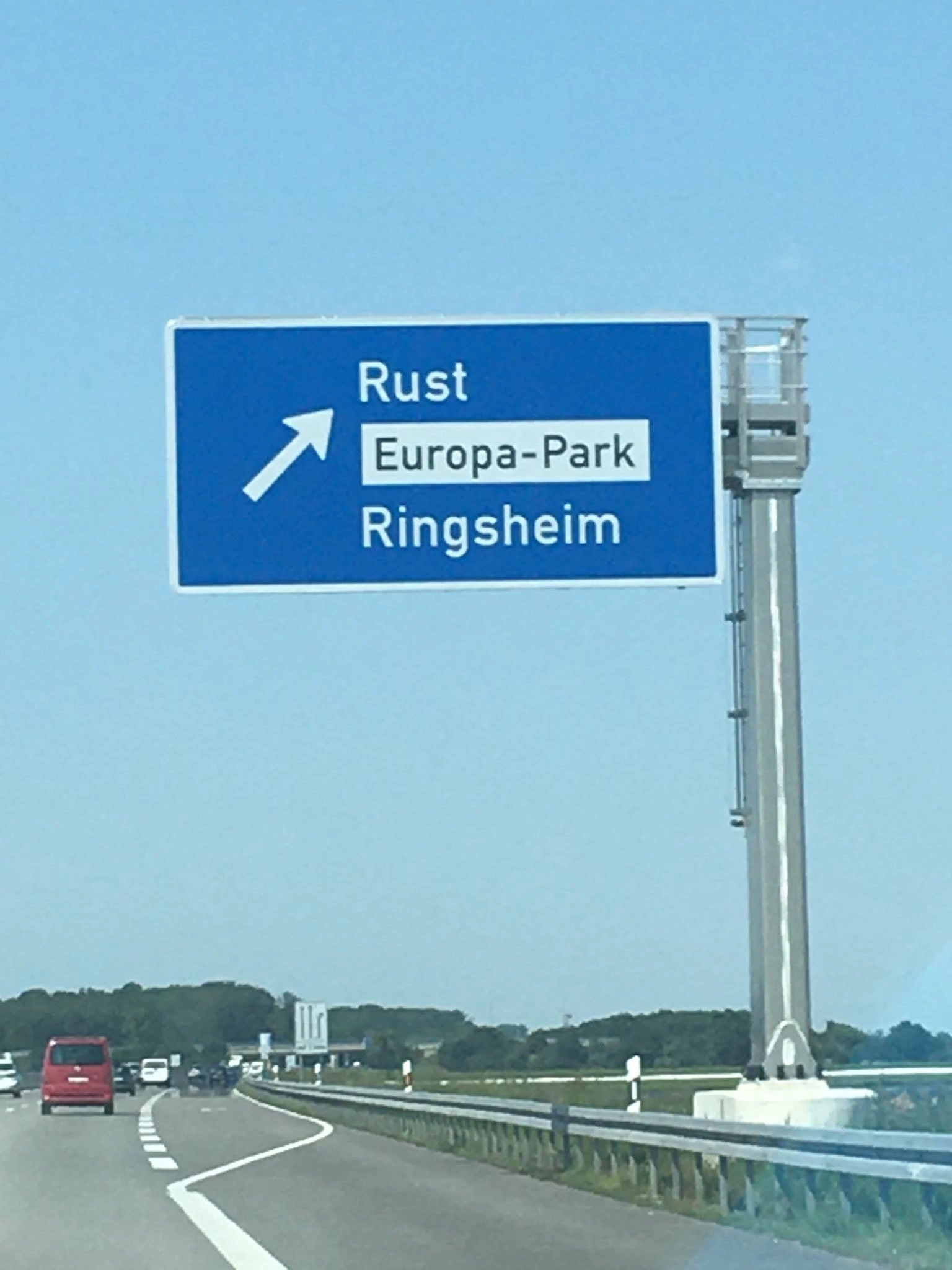
Imagine you’re on a road trip and you see a big sign pointing to Disneyland. You love Disneyland so much that you immediately want to take that exit, right? This meme is like that, but for a programmer with their favorite thing. The sign in the photo has the word “Rust” on it. Now, Rust is the name of a programming language that a lot of coders are excited about (kind of like a favorite game or toy for them). When a programmer who really loves Rust sees a highway sign with “Rust”, it makes them laugh and think, “Wow, it’s like the universe is telling me to go that way!” It’s funny because normally road signs point to places, not to computer languages. The caption jokingly says, “If you love it so much, why don’t you move there?” which is something you might tease a friend with if they can’t stop talking about something. In simple terms, the meme shows that programmers can get super enthusiastic about their tools — so much that seeing the word in an unexpected place (like on an actual road sign) gets them excited to drop everything and follow it. Just like a kid might beg to turn the car towards an amusement park they love, this developer sees “Rust” and kind of wants to veer off their current road to go chase that passion. It’s a playful way to show how loving a thing (even a computer language) can make you momentarily daydream about crazy ideas — like literally moving to a place named after it!
Level 2: Rust: The Safer Road
Let’s break down the basic references in this meme. First, Rust in this context is not about corrosion – it’s the name of a popular modern programming language. Rust (the language) was created to build software that runs very fast like C++ programs, but with far fewer errors and security problems. One of Rust’s big selling points is memory safety. Memory safety means the language protects you from common coding mistakes that can make a program crash or misbehave (like trying to use data that was already thrown away, which in older languages can cause a nasty segmentation fault error). Rust achieves this with a strict set of rules at compile time (the famous borrow checker that every Rust learner hears about). It basically forces the developer to manage memory correctly while writing the code, so that once the program is running, you don’t get those wild errors. In other words, Rust is designed so that many bugs that might only show up when running a C++ program (or, worst case, when your app is in production!) will be caught by the Rust compiler and won’t even let the program start until they’re fixed. This is a huge deal for systems programming, where a tiny memory bug can crash a server or open a security hole.
Now, the photo shows an actual highway sign in Germany. The sign’s top line says “Rust” with an arrow pointing to an exit lane. It’s a real place – Rust is a small town, famous for being next to Europa-Park (one of Europe’s biggest theme parks, a bit like a German Disneyland). To any driver, that sign means “hey, you can exit here to go towards the town of Rust and Europa-Park”. But to a developer (especially one savvy about current IndustryTrends), seeing the word “Rust” instantly brings to mind the programming language. It’s a bit like if you were a big fan of the Python language and drove by a sign for “Python, Alabama” – you’d do a double-take and chuckle. Here the dev’s brain goes: “Rust? Whoa, that’s my favorite programming language on a road sign!” It creates a fun mental image that this exit might lead you to the land of Rust (the language), metaphorically a place where code is safe and speedy.
The meme caption “If you love it so much, why don’t you move there?” is a joking response often said to someone who keeps praising something. In a dev team context: imagine one programmer won’t stop talking about how great Rust is. Eventually a teammate grins and says, “Geez, if you love Rust that much, why don’t you move there!” In real life, you can’t move inside a programming language, but – surprise – Rust is also a physical town, so the joke lands perfectly. The meme basically visualizes that comeback: Here’s the exit, buddy, go ahead and relocate to Rust! It ties into the DeveloperHumor tag: we’re poking a bit of fun at how enthusiastically programmers latch onto new languages. There’s even a tongue-in-cheek term “language evangelist” for someone who spreads the gospel of their favorite language (be it Rust, Python, Go, etc.) and tries to get everyone on board. The LanguageWars tag refers to the lighthearted (and sometimes serious) debates over which programming language is best for a job. Rust has been in such debates a lot recently, often positioned as a superior alternative to older languages like C++ for systems-level work because of its safety and modern features.
Let’s also clarify “safe, zero-cost abstractions,” an important phrase that was in the description. In Rust’s context, zero-cost abstractions means you can write high-level code (abstractions like iterators, generics, etc. that make code nicer and more readable) and trust that the Rust compiler will produce machine code that’s just as efficient as if you’d written a low-level hand-tuned version. “Zero-cost” implies you don’t pay a performance penalty for using nicer, safer language features. This is a big deal in systems programming — traditionally, languages that gave you more safety (like Java or Python with automatic memory management) made you pay with slower performance or extra memory usage. Rust tries to give you the best of both worlds: the performance of C++ with the safety guarantees approaching those of managed languages. Hence the quip in the sign: an onramp to Rust is figuratively an onramp to a safer, but no slower, way of programming.
So, for a junior developer or someone new to this, what’s funny here is the double meaning. The sign is literally about a highway exit to a town named Rust (and an amusement park), but developers see “Rust” and immediately think of the tech world. It triggers the idea of “taking an exit into Rust” meaning starting to use the Rust language. Many devs today are indeed considering or taking that exit — learning Rust, using it in new projects — because it’s seen as an upgrade or evolution in programming languages (LanguageEvolution tag). The main road is like the path you’re currently on (maybe using older languages or your current stack), and the Rust exit is an enticing new path offering improvements. The meme plays on that temptation. If you’re new to coding, imagine you’ve been using one tool for a while, and then you hear of a new tool that everyone says is awesome. It’s natural to be curious and want to “switch lanes” to try it out. Just as a driver might impulsively take an exit upon seeing a sign for something exciting, a developer might impulsively start a side project in Rust after hearing so much buzz.
In summary, this meme combines a real-world coincidence (the town of Rust on a road sign) with a tech in-joke (the craze around Rust language). It exaggerates the scenario where a coder’s love for a technology is so strong that even a highway sign can derail their plans. It’s tagged under Languages and hype for a reason: it’s commentary on how new programming languages like Rust generate a lot of excitement and how devs sometimes have a one-track mind about them. And yes, if you were wondering, people have actually made pilgrimages to the real town of Rust just to take selfies with the sign — that’s how you know a language has a fanbase! 😄
Level 3: Legacy Lane Change
For experienced developers, this image hits home as a clever metaphor for a technology migration that’s been gaining serious traction: switching from legacy C++ code (the main highway we’ve been stuck on for ages) to the shiny new side road of Rust adoption. Picture a grizzled C++ veteran cruising down the project highway with decades of baggage (maybe a codebase full of pointers and occasional memory leaks). Suddenly, they see a big blue exit sign labeled “Rust” — their eyes light up because Rust the programming language has been the talk of the industry. It promises fewer runtime crashes, better concurrency, and all those safe, zero-cost abstractions that sound like a dream after you’ve debugged your thousandth segmentation fault. The humor is in that instant gut reaction: “Ooh, Rust! Let’s take that exit!” It’s the senior engineer’s equivalent of a kid spotting a Disneyland exit. In the meme, the sign literally lists “Rust” (a real town in Germany) and points to an off-ramp. To a dev this feels like fate or a dare: here’s your chance to literally exit to Rust.
This speaks to an ongoing LanguageWars narrative in tech. Rust has been touted as the modern replacement for C++ in system-level programming — there’s a ton of hype (IndustryTrends_Hype tag checks out). Seasoned developers have seen these hype cycles before (remember when Java was the hot new safe language in the late ’90s, or when Go was the cool kid a few years back?). But Rust’s buzz is uniquely strong; it’s consistently topping “most loved language” surveys and creeping into big projects (even the Linux kernel started cautiously merging Rust code). So in many teams, there’s that one enthusiastic engineer always talking about Rust’s virtues. They’ll say things like, “We could avoid so many bugs if this was in Rust,” or “This new module might be a good place to try Rust.” Colleagues sometimes roll their eyes at the fervor. The post’s caption captures this dynamic: “If you love it so much, why don’t you move there?” — basically telling the Rust fanboy: “Fine, we get it, you love Rust. Why don’t you marry it… or literally relocate to Rust?” It’s a playful ribbing. In this scenario, the real-life road sign for a town called Rust becomes a perfect setup for that punchline.
Technically speaking, what makes Rust so alluring to those in the know? Memory safety and concurrency. A senior dev who has been “on call” at 3 AM due to a production crash from a wild pointer or a race condition has the scars that make Rust’s guarantees very attractive. Rust prevents common C++ pitfalls; for example, you can’t accidentally use memory after it’s freed — the compiler simply won’t let you compile that. Contrast a quick example:
// C++ code compiles but is dangerous:
int* giveMeDanglingPointer() {
int local = 42;
return &local; // returning pointer to a stack variable (dangling pointer!)
}
// Using that pointer after this function returns causes undefined behavior (likely a crash).
// Rust equivalent won't even compile:
fn give_me_dangling() -> &i32 {
let local = 42;
&local // error: `local` does not live long enough
}
// Rust's compiler stops us from returning a reference to data that goes out of scope.
In C++ the above giveMeDanglingPointer would compile fine and blow up at runtime when you use the invalid pointer. In Rust, the compiler throws an error at the &local, essentially saying “🚫 Hold on, that local variable will be gone, you can’t take it with you!” This kind of built-in safety net makes senior devs almost giddy — no more mysterious segfaults to hunt down in the middle of the night. It’s like an offramp where a diligent safety inspector checks your car (code) for issues before you’re allowed to drive on.
But the meme isn’t just extolling Rust; it’s poking fun at the culture around new tech adoption. The Languages category means we’re dealing with programmer language preferences, and indeed, tribalism. Devs can get very emotionally invested in their favorite language — almost like sports fans with teams. Here, Rust is the new superstar team, and some folks won’t shut up about how awesome it is. The image exaggerates that sentiment: the moment our Rust evangelist sees “Rust” on a freeway sign, they’re ready to swerve the entire roadmap of a project (or maybe their actual car 🚗) in that direction. It’s funny because in reality, migrating a legacy system to a new language is a huge, risky undertaking — you can’t just yank the wheel without consequences. If you literally tried a stunt like the infamous “sharp highway exit” meme, you might flip the car (i.e., derail the project). And indeed, in software, we have cautionary tales of big rewrites gone wrong. A senior knows that while Rust might fix certain bugs, adopting it in a mature project requires planning, training, and careful integration (you might use Rust for new components and interface with older parts via FFI, gradually off-ramping piece by piece).
The sign also references Europa-Park, a massive amusement park near the town of Rust. There’s an accidental metaphor there: adopting Rust can feel like a rollercoaster ride. It’s thrilling and promising, but also has twists and turns (learning the borrow checker can be an up-and-down experience of excitement and frustration). And “Ringsheim” (another town on the sign) might be obscure, but to pun a bit: a veteran might jadedly say rewriting everything in Rust is like chasing the “one ring to rule them all” in programming — seductive but dangerous to pursue blindly. The enlightened senior perspective is a mix of excitement and caution: Rust is an amazing new road, but you don’t want to be the driver who suddenly yanks the whole team’s car onto that off-ramp just because you personally saw the light. Thus, the meme humorously encapsulates that moment of temptation every experienced dev feels when hearing about the next great technology: “Should I take this exit and start a whole new journey?” If only it were as easy as a quick lane change at 130 km/h on the autobahn!
Level 4: No Speed Limits, No Segfaults
At the highest technical level, this meme hints at Rust’s ambitious promise: delivering C/C++ performance (the autobahn’s “no speed limit” thrill) without the dreaded crashes (no more segfaults). Under the hood, Rust achieves memory safety through an advanced ownership model enforced by the compiler’s borrow checker. This is essentially a form of compile-time formal verification for memory: the language uses concepts from academic PL (Programming Language) research (like affine types and lifetimes) to ensure that every memory access is valid. The result? If your Rust code compiles, entire classes of bugs (buffer overruns, use-after-free, data races) are statically eliminated. All those pesky pointer errors that would have caused undefined behavior in C/C++ are caught at compile time. It’s as if Rust erected rigorous guardrails on the coding autobahn — you can still drive at breakneck speed (zero-cost abstractions mean high-level code has zero runtime overhead), but the chances of veering off into a memory-corruption ditch are drastically reduced. This delicate balance between high performance and strong memory safety was long thought to be the “unicorn” of systems programming. Rust’s design — inspired by decades of language evolution and research (from Cyclone to modern type theory) — proves that with a sophisticated type system and compiler, we can have our cake and eat it too: blazing speed and peace of mind. The humor in the meme’s “off-ramp to Rust” is thus layered: for the seasoned technologist, it’s a nod to Rust being an onramp to a better paradigm, where one doesn’t have to trade speed for safety. It’s like leaving the old highway known for wrecks and taking a newly built express lane that’s engineered to prevent the classic crashes. Of course, there’s a cost to enter this utopia — the learning curve is notoriously steep. Mastering Rust’s rules (lifetimes, mutability restrictions) can feel like earning a special license to drive a very fast, very safe sports car. But from a theoretical perspective, Rust’s strictness is a feature, not a bug: it’s enforcing at compile time many conditions that would otherwise be proven via formal methods or extensive testing in other languages. So the “literal off-ramp to Rust adoption” is, in ultra-geek terms, a signpost towards a new highway in programming language design, where speed and safety finally travel hand in hand.
Description
The image is a photo taken from a moving car on a highway, showing a large blue rectangular road sign in Germany. The sign has white text and a white arrow pointing up and to the right, indicating an upcoming exit. The text on the sign lists three destinations: 'Rust', 'Europa-Park', and 'Ringsheim'. The sky is clear and blue, and the road ahead curves slightly. The humor is derived from a pun on the word 'Rust'. In the tech world, Rust is a modern systems programming language known for its safety and performance, and it has a very vocal and enthusiastic community of developers, often called 'Rustaceans' or 'evangelists'. The caption, 'If you love it so much, why don’t you move there?', directly plays on this by showing a literal, physical place named Rust, comically suggesting it as a destination for the language's biggest fans

Comments
13Comment deleted
I hear the town of Rust has amazing infrastructure: zero-cost abstractions, guaranteed memory safety, and apparently, a pretty decent theme park
Legacy codebase cruising at 120 km/h - sees the ‘Rust’ sign - performs an immediate `unsafe {}` free lane change to guarantee memory safety
Finally found where all those zero-cost abstractions are manufactured - turns out it's right next to a theme park, which explains why debugging async lifetimes feels like a rollercoaster
Finally, a destination where memory safety is guaranteed by design and the only thing that panics is when you realize you took the wrong exit. Unlike the language, this Rust actually welcomes garbage collection - it's a theme park after all
Taking the Rust exit: the only Autobahn where undefined behavior gets a lifetime ban
Rust ahead: no ownership disputes, just right-of-way
Taking the Rust exit - the borrow checker is the seatbelt and ‘Ringsheim’ is clearly where the kernel’s privilege rings vacation
Yes, i know what Rust is. It's my favourite game 😀 Comment deleted
I lived nearby this place for 10 years Comment deleted
So you know Rust, right? Comment deleted
it was always somewhere nearby Comment deleted
Removing a watermark is like using ad blocker "just because you can". Comment deleted
Dat feeling when you almost lived there Comment deleted