Growing Into the Computer Person
Why is this Career HR meme funny?
Level 1: Not The Costume
It is like a kid imagining they might grow up to be a cowboy, a singer, or a sports star, and then becoming the person everyone asks to fix the TV remote. The joke is that life picked a different costume, and somehow that costume came with a keyboard.
Level 2: The Computer Person
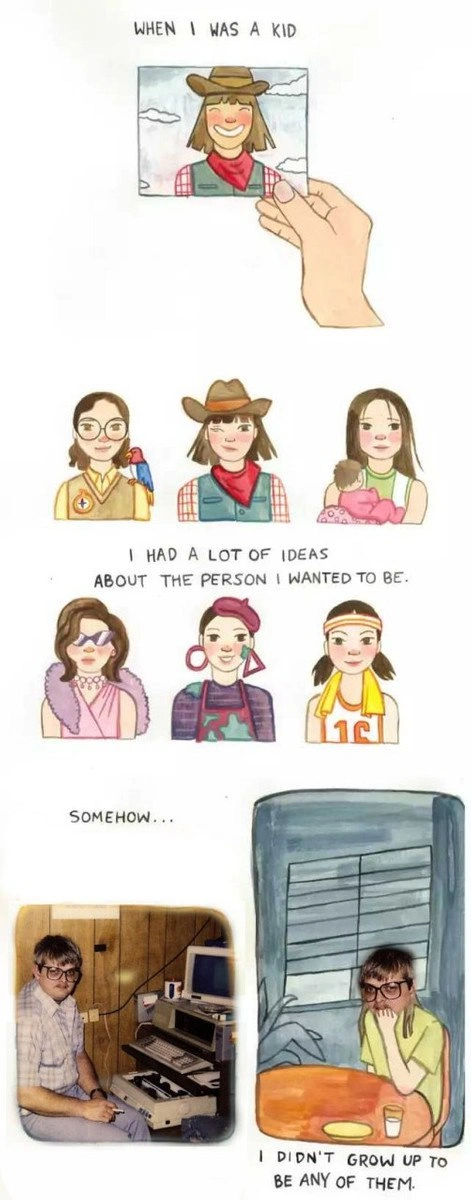
The image is funny because the early panels show simple childhood dreams. Each drawing looks like a possible future self. Then the comic suddenly jumps to an old computer setup and a tired adult, as if the real answer was not "cowboy" or "artist" but "someone who ended up with machines."
For developers, this is relatable because a tech career can feel accidental. A person may start by liking games, fixing a family computer, making a small website, or being curious about how things work. Years later, they are handling tools, tickets, systems, and responsibilities that were never part of the childhood fantasy.
The retro computing image also makes the joke feel older than modern laptops and cloud dashboards. Computers have been pulling people into strange career paths for decades. The funny part is not that the outcome is bad. It is that the outcome is weirdly specific compared with the broad, colorful dreams at the top.
Level 3: Identity Drift
The comic starts with childhood possibility and ends with the quiet gravity well of computers:
WHEN I WAS A KIDI HAD A LOT OF IDEAS ABOUT THE PERSON I WANTED TO BE.SOMEHOW...I DIDN'T GROW UP TO BE ANY OF THEM.
Visually, the first half is full of clean archetypes: cowboy, scout, caregiver, glamorous figure, artist, athlete. They are easy identities, the kind children can describe in one word because society has already packaged them. The bottom shifts to a photo of a bespectacled person operating a bulky vintage computer setup, paired with a drawing of someone looking drained at a table. In a developer meme corpus, that final turn reads as: none of the childhood costumes won, but the computer did.
The humor works because career reflection in tech is often less heroic than the recruiting posters promised. Many developers did not grow up imagining dependency graphs, flaky CI, migration tickets, sprint planning, OAuth scope confusion, and the noble art of asking whether anyone has changed DNS recently. Yet the work becomes an identity anyway. You become the person family members ask about printers, the coworker who knows the old system, the one who can read logs at midnight and detect bad news from a timestamp format.
The vintage computer photo gives the joke a tech nostalgia edge. It suggests that becoming "the computer person" was never presented as one of the shiny childhood roles, but it still swallowed the story. The post message, "They are saying it like it's something bad," adds a defensive wink: yes, this may look like a compromised dream, but there is also pride in mastering strange machines. The comic is not only sadness. It is a small recognition that adult identity is usually assembled from accidents, opportunities, aptitude, and the first time someone says, "You are good with computers, right?"
That is the uncomfortable industry pattern under the joke: software careers are often sold as creativity, autonomy, and future-building, while the lived reality includes support load, constant learning pressure, and a social label that follows you outside work. The drawing of the tired person at the end matters because developer life is not just code; it is the exhaustion of being useful in a field that keeps changing the shape of usefulness.
Description
A tall illustrated comic begins with the text "WHEN I WAS A KID" above a childlike drawing of a smiling cowboy figure. It continues, "I HAD A LOT OF IDEAS ABOUT THE PERSON I WANTED TO BE," showing several imagined identities, including a scout-like outfit, cowboy, caregiver, glamorous figure, artist, and athlete; near the bottom it says "SOMEHOW..." next to a photo of a bespectacled person operating a vintage computer setup and a drawing of a tired person at a table. The final line reads, "I DIDN'T GROW UP TO BE ANY OF THEM," which lands in a dev corpus as self-deprecating career reflection about becoming the computer person instead of a childhood archetype.
Comments
7Comment deleted
Childhood had many personas available, but the scheduler eventually pinned the process to `computer_person`.
Born to be Terry Davis. Comment deleted
I wanted to explore new lands and swe things beyond imagination. Nowadays, the only thing beyond imagination is my electricity bill Comment deleted
Had you become a miner? 💵 Comment deleted
Born too late to explore Earth, too early to explore space, just right to explore existential crisis and crippling depression Comment deleted
Don't hurt me pls Comment deleted
1с developer is scary lifepath Comment deleted