EU Stars Over The Encryption Backdoor
Why is this Cryptography meme funny?
Level 1: The Special Spare Key
Imagine you have a diary with a lock, and only you have the key. An adult says, "Make one special spare key, but only nice people with permission will ever use it." The problem is that the spare key can be lost, copied, or stolen. The meme is funny because it makes that risky spare key look like a fancy official technology plan.
Level 2: Locked Messages
Encryption scrambles data so people without the right key cannot read it. End-to-end encryption means only the sender and receiver should have the keys, not the company carrying the message. If Alice sends Bob an encrypted chat, the server may deliver it, but it should not be able to read it.
A backdoor is a special way around that protection. Governments often describe this as lawful access, meaning investigators could get data for legitimate cases. The problem is that the technical mechanism still has to exist. If a system can secretly let one extra party in, then the system is more complicated and more dangerous than before.
For developers, this connects to basic security design. Fewer trusted parties usually means fewer ways to fail. More access paths mean more places for bugs, stolen credentials, bad updates, or abuse. That is why privacy and security engineers get nervous when a polished digital-policy image implies that encrypted systems can simply add a government-only access lane.
Level 3: Stars And Side Channels
The humor is dry because the image looks like a polished cybersecurity initiative. The EU-star circle says public authority and legitimacy. The circuit traces say technology, modernization, and resilience. But the linked context points toward the old fight over encryption backdoors, online privacy, and surveillance technology. The visual language says "secure digital future"; the policy anxiety says "please weaken the thing that makes the digital future secure."
This conflict has been replayed for decades. Law enforcement argues that serious crime increasingly relies on digital communications and that investigators need access to evidence. Security engineers respond that weakening encryption for one class of access weakens it as a system. Both sides are talking about real risks, but only one side has to implement the magic door that opens for authorized users and somehow never for criminals, hostile states, corrupt insiders, or future administrations with broader definitions of necessity.
The meme's strongest point is the mismatch between institutional abstraction and engineering reality. Phrases like data protection, lawful access, and cybersecurity policy can sound balanced in a strategy document. In protocol design, balance becomes code. Code has interfaces, keys, logs, deployment bugs, maintenance burdens, and threat actors. The policy world can ask for a door that only opens under proper procedure. The security world has to ask who stores the key, how the key is rotated, what happens when it leaks, and whether every messaging app, VPN, backup provider, and device vendor must now carry the same liability.
The stars over the circuit board also make the meme feel less like a joke about one institution and more like a recurring industry ritual. Every few years, someone discovers encrypted messaging again, calls it "going dark," and proposes a managed exception. Every few years, cryptographers point to the same pile of broken assumptions. Then everyone schedules another working group, because apparently the real cryptographic primitive is consensus by calendar invite.
Level 4: Exceptional Access Fallacy
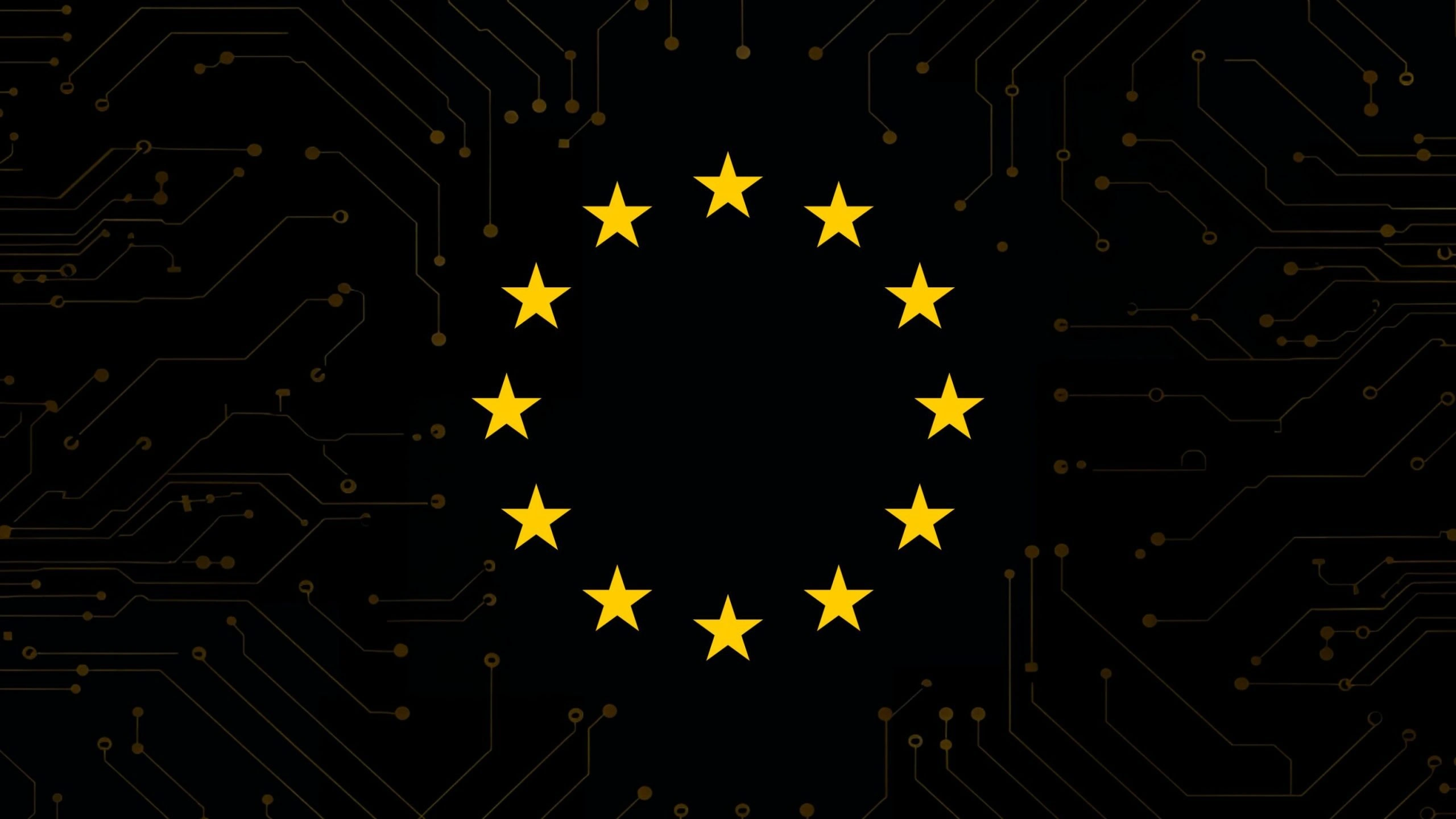
The image shows twelve yellow EU-style stars in a circle over a black field of gold circuit traces. There is no caption text inside the image, which makes the visual feel like a policy banner: clean, official, digital, and just abstract enough to hide the mess underneath. Paired with the post context about ProtectEU and encryption access, the joke is about end-to-end encryption being presented as a wiring problem instead of a security property.
In proper E2EE, the service provider should not possess the plaintext or the keys needed to read it. The cryptographic protocol is designed so endpoints encrypt and decrypt locally, while servers mostly route ciphertext. That is the point. If a policy asks for "lawful access" to encrypted data, the implementation pressure usually has to land somewhere concrete: key escrow, client-side scanning, hidden recipients, weakened key verification, compelled endpoint access, recovery mechanisms, or some other exceptional path around the normal protocol.
The hard cryptographic issue is that exceptional access is not just a new permission bit. A backdoor changes the threat model. It creates additional secrets, trusted parties, update paths, audit systems, and failure modes. Even if the stated user is law enforcement with a warrant, the mechanism must exist in software and infrastructure. Once it exists, attackers can search for it, insiders can abuse it, governments can expand it, and implementers can misconfigure it. Cryptography does not have a good_guys_only=True parameter, despite what the committee minutes keep implying.
This is why the circuit-board styling matters. It visually suggests that security is a matter of adding the right trace to the board. But strong encryption is not secured by vibes or patriotic color palettes. It is secured by reducing who can read the message. Adding a special reader is not modernization; it is a new attack surface with nicer typography.
Description
The image is a dark, wide banner with twelve yellow European Union-style stars arranged in a circle at the center. Thin gold circuit-board traces and nodes spread across the black background, turning the EU flag motif into a digital-policy visual. The linked context is an article about the EU's ProtectEU strategy and renewed concern that "lawful access" language could become pressure for encryption backdoors. Technically, the humor is dry and political: the graphic looks like cybersecurity modernization, while the implied policy debate is about weakening the cryptographic guarantees that make modern communications secure.
Comments
8Comment deleted
A government-mandated encryption backdoor is just `chmod 777` with a press release about public safety.
amateurs, us did it since AES Comment deleted
EU just can't stop making bad decisions Comment deleted
The EU is basically a church of bureaucracy. It's impossible for it to stop making bad decisions, because there always will be some sub-commitee that screws things up. Comment deleted
https://youtu.be/j7PbJzrpyXc?feature=shared 2015 Comment deleted
humanity biotrash moment Comment deleted
Whatever, humans won’t be needed soon anyways. Comment deleted
God bless I'm not european Comment deleted