When a face was one texture: early 3-D graphics nostalgia
Why is this Graphics meme funny?
Level 1: Sticker Face Magic
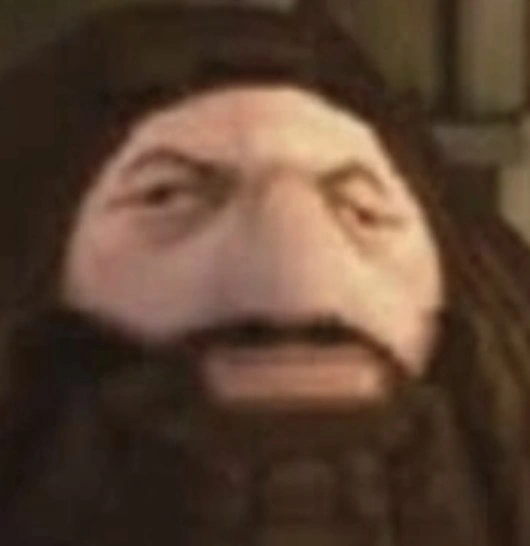
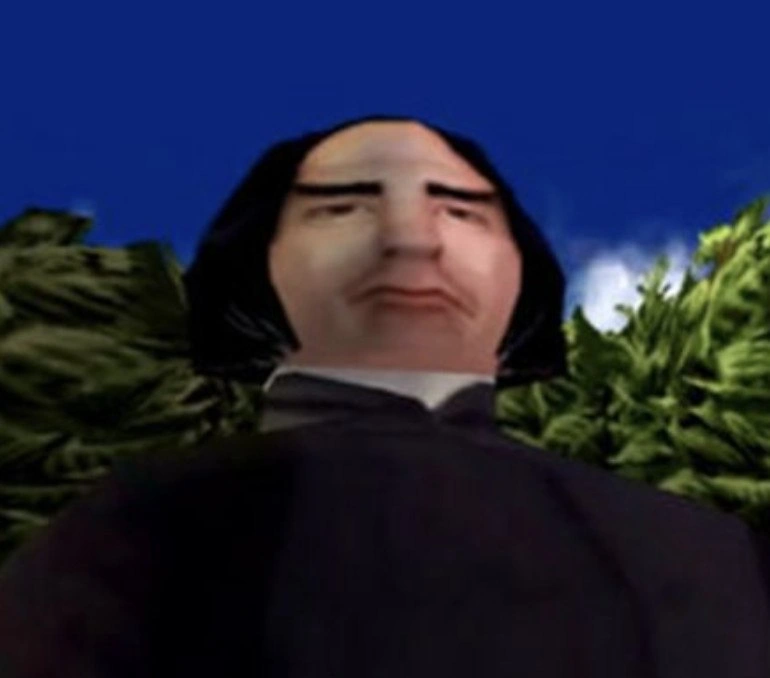
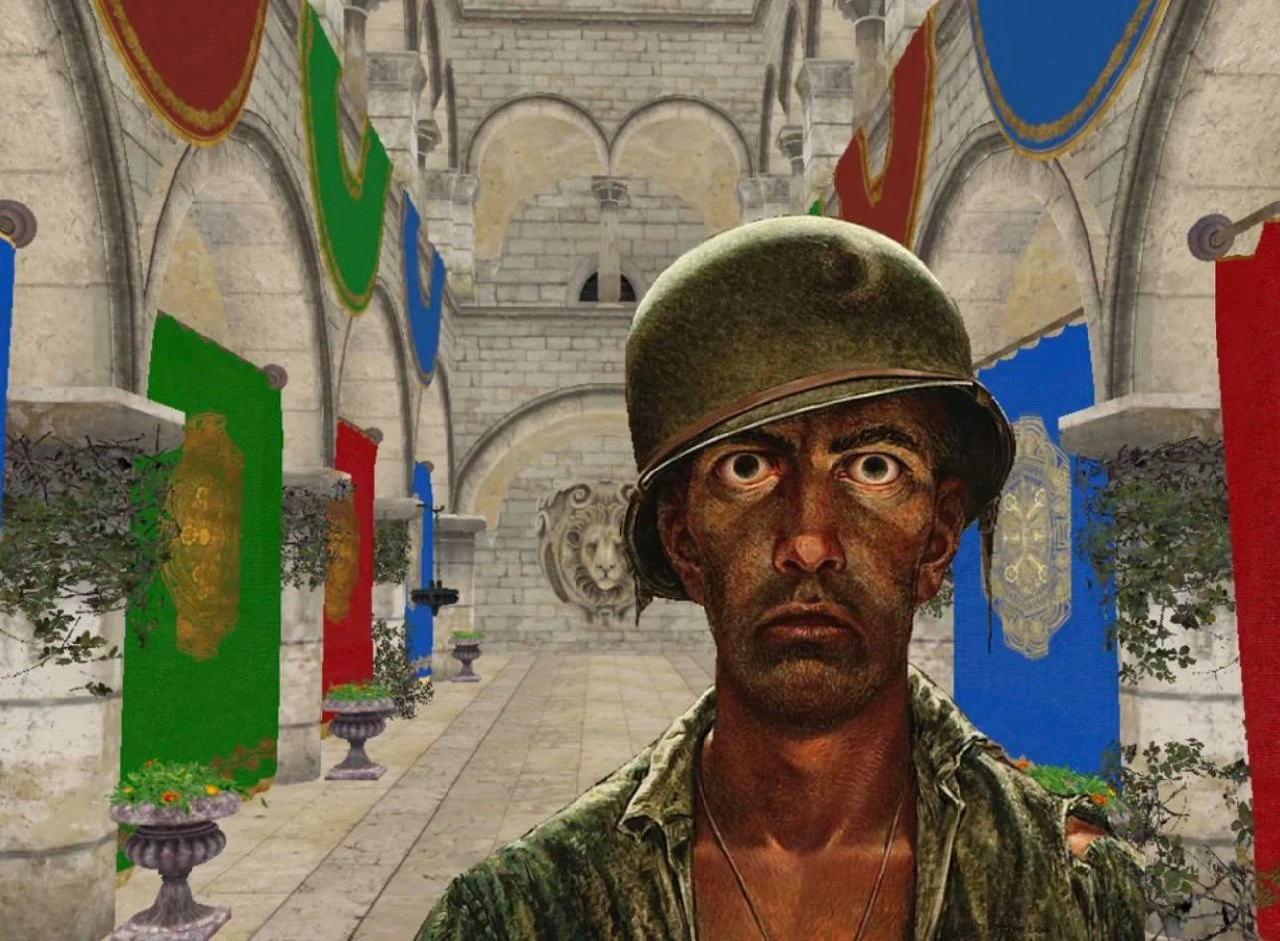
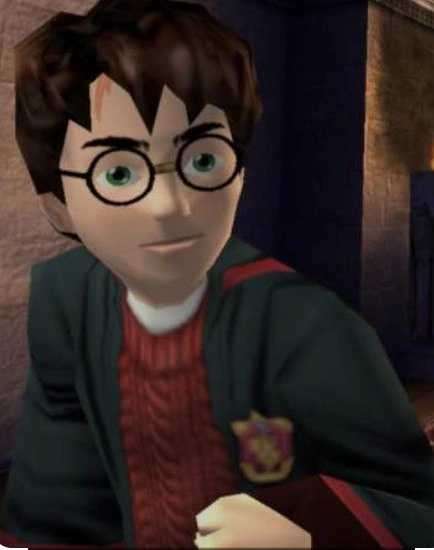
Imagine you have a very simple toy figure of a person, and to give it a face, you just stick a little drawing or sticker on its head. 🧒🏽 It has eyes and a mouth on the sticker, but they don’t move or change — it’s just a flat picture. That’s exactly how old video games made characters’ faces! The character in the picture looks kind of blocky, like a chunky action figure, and his face is just one drawn-on image. It’s funny and cute because today’s games have super detailed characters with moving eyes, mouths, and realistic skin, but back then we were happy with a flat face that looked sort of like the character. Think of it like a cartoon: not a ton of detail, but you can tell who it is. People find this meme funny because it reminds us of when video game characters were much simpler and we had to use our imagination a bit. It’s a warm, nostalgic kind of funny — like looking at an old drawing you made as a kid and smiling at how simple it was. We love those old games, blocky faces and all, because that’s what made the magic of our early gaming memories.
Level 2: Polygons & Pixels
Let’s break down what’s going on for those newer to game development or computer graphics. In modern games, characters have incredibly detailed 3D models with thousands or even millions of tiny triangles (polygons) making up their faces, and multiple high-resolution images (textures) to give color and detail (skin, stubble, wrinkles, etc.). Back around the early 2000s, we didn’t have that luxury. A low-polygon model means a character built out of a small number of flat shapes (usually triangles). Fewer polygons make the shape look blockier, but they were necessary so the game could run on slow hardware. Think of a head made out of a few big flat surfaces rather than smoothly curved.
Now, a texture is basically an image that’s pasted onto a 3D model to give it detail. Instead of modeling every bump or eye, the artist draws those details on a picture. In the old days, a character’s face texture was just one small image file that had the eyes, mouth, and other features drawn on it. The 3D engine would map (wrap) that image onto the character’s face polygon. So “one texture for a face” literally means the character’s face was just a flat picture applied to a flat (or slightly curved) part of the model. No separate eyeball objects, no 3D mouth that opens — just a picture of a face stretched over the geometry. This was common in early 2000s PC games and console games because hardware couldn’t handle much more detail.
Why not use more images or polygons? Because of hardware constraints. Older graphics cards and game consoles had very limited memory and processing power. Developers had a texture budget, meaning a cap on the total images’ size they could use for a character or a scene. If you went over the budget, the game might crash or slow to a crawl. For example, a game might limit a whole character to, say, a 256x256 pixel texture (which is tiny by today’s standards) for the entire body and face. They had to cram the robe details, the crest, the strap, and the face all into that one image file! This is why the crest on the chest and even clothing folds were often just drawn on the texture instead of modeled. It saved both memory and the number of polygons needed. Fewer polygons also meant less work for the CPU/GPU to transform (rotate, move) them each frame. In fact, before dedicated graphics hardware took over these tasks, the CPU often did the heavy lifting (that’s “software T&L” – Transform and Lighting done in software on the CPU). This could quickly become a bottleneck, so keeping models simple was key to maintaining a playable framerate. 30 FPS (30 frames per second) was a common target for smooth gameplay back then, and it was hard to reach if your scene was too detailed.
The term fixed-function pipeline refers to the old way graphics were programmed. Instead of writing custom shaders (small programs for the GPU) like we do now, developers had to use a fixed set of steps provided by APIs like older OpenGL or DirectX. You’d turn on or off features (like lighting or texturing) with simple switches and states. For instance, you might enable a light, bind a texture, then draw your model — but you couldn’t change how the lighting or texturing worked under the hood. It was all predefined by the GPU’s design. This made graphics programming a bit simpler to get into (no writing shader code), but also very limiting — you only had a few types of surface looks available. It’s why old games often have a certain “flat” or uniform look to their lighting and materials. The meme image shows that look: the lighting on the character is pretty basic (no realistic shadows on the face, just overall brightness). That’s because per-pixel lighting or shadows weren’t really a thing in real-time graphics then, except in very crude forms. We sometimes faked lighting by baking it into the textures (literally drawing highlights or dark areas on the texture itself to simulate light and shadow).
All these limitations are what give retro 3D games their distinctive style. Today, you might hear people talk about “low-poly art” or retro 3D aesthetics — deliberately making something look like an old game as a style. Back then, it wasn’t a style choice, it was the only choice! Seeing this blocky, textured wizard boy character is a trip down memory lane for many. It’s a reminder of how graphics used to look when we first ventured into 3D gaming. It might seem comically simple now, but at the time, this was cutting-edge and immersive. Gamers were excited just to explore a 3D Hogwarts, even if Harry’s face was literally a flat picture. And as developers, we were extremely proud when we could make a character recognizable and expressive within those constraints. This meme is basically calling attention to that contrast — it’s saying, “look how far game graphics have come.” In the early 2000s, we had to make do with a few hundred polygons and one tiny texture for a character’s face. Now? We can have movie-quality models in real time. For a new developer or someone who didn’t live through that era, it’s an eye-opener: it shows how much GraphicsProgramming and hardware have evolved. And for those of us who did live through it, it’s a fond dose of nostalgia and a little chuckle at how quaint our old masterpieces look today.
Level 3: Fixed-Function Wizardry
For veteran game developers, this image sparks immediate recognition and a mix of pride and amusement. We remember when a character’s entire expression was literally painted on. The phrase “when a face was one texture” hits close to home: it satirizes the era of low poly graphics where we had to use one small image to convey everything about a face. In an early 2000s PC game (very likely a certain young wizard’s adventure), having a detailed face model simply wasn’t feasible. Instead, developers slapped a single face.jpg (so to speak) onto a flat-ish head and called it a day. The result was a kind of painted mannequin look — and seeing it now is both funny and nostalgic.
Why is this so humorous to those of us who lived it? Because it’s too real. We used to implement exactly this sort of hack under strict texture_budget_constraints. The GameDevelopment process then was constrained by hardware so tightly that every texture felt like a luxury. Developers recall tweaking character art to fit into 256 KB of memory, or reducing polygon counts at the eleventh hour to prevent the game from chugging. That brown shoulder strap in the image? It’s not a modeled strap at all, just the same torso texture with a brown line drawn on. The little crest on the robe is a flat decal on the texture, blurry up close, but giving the impression of detail. We relied on the player’s imagination to fill in the gaps our polygons couldn’t. This is the retro_game_assets vibe: small tricks to suggest a bigger world.
The meme also nods at the old OpenGL fixed pipeline and early DirectX days. Back then, you had a limited menu of graphics techniques: no fancy shaders or real-time physics-based rendering. If you wanted Harry’s wand to cast a glow on his face, you had to enable a simple light source with glLightfv() and hope for the best. Many of us can practically smell the solder on a 3Dfx Voodoo card or an NVIDIA RIVA TNT when looking at this image. We recall testing builds on a clunky PC tower, squeezing out 30 FPS, cheering when we achieved that on late-90s hardware. GamingCulture has turned these once-frustrating limits into endearing memories. It’s become a shared joke: “Remember when characters had painted-on faces and we still thought it looked amazing?” We laugh because it reminds us how far GraphicsProgramming has come. Today’s game heroes have facial motion capture, normal maps, and high-poly sculpts with 4K textures for pores. By contrast, our old wizard here has the same fixed gaze in every scene — because changing his expression would mean swapping to a completely different face texture (yes, that’s how you did “emotions” in 2001!).
There’s a camaraderie in this humor. It’s a classic GamingReference for developers and players alike: if you recognize this kind of graphics, you earned your stripes in the era of early_2000s_pc_game development. Sure, it’s tech nostalgia — fondly remembering when we tried to make magic with 500 polygons and an 8 MB GPU. But it’s also a subtle high-five to the cleverness of those times. We reminisce about how we’d squeeze in detail by baking shadows into textures, or how game engines had custom code paths for hardware with and without a T&L unit. Seeing this blocky wizard now, we chuckle because the illusion is laid bare: what once immersed us as “wow, 3D characters!” now looks adorably primitive. Yet, that primitiveness has its charm. It reminds us that behind those simple graphics were ingenious tricks and hard-fought optimizations. The meme captures a snapshot of TechHistory in game dev: a time when devs truly had to be wizards of the fixed-function pipeline to create worlds that felt alive. And as much as we poke fun at the blockiness, there’s a genuine respect underlying the laughter — we know the effort it took to make that one-texture face come alive on our screens.
Level 4: Texel Budget Alchemy
Back in the late 90s, 3-D graphics programming felt a bit like alchemy: turning a handful of polygons and a few kilobytes of texture into a recognizable character. GPUs of the era were fixed-function beasts with very limited VRAM (video memory). A face texture might be a tiny 128×128 image (or even 64×64!) because memory and bandwidth were precious. Artists had to perform digital sorcery, squeezing every detail into that one bitmap. Each pixel (or texel, the texture’s pixel) was carefully painted to suggest eyes, lips, even a lightning scar — all on a single, flat image. Why just one image? Early GPUs often had only one texture unit per pass, so multi-texturing (using multiple images on a surface) required extra passes and extra precious milliseconds. A “single-pass” render with one texture was much faster. This was the era of fixed_function_pipeline graphics, where you couldn’t write custom shader code; you relied on the hardware’s built-in stages. If you wanted a character’s face to have color and lighting, you fed the texture and lighting parameters into the pipeline and let the fixed algorithms do their thing. Programmable shaders didn't exist yet for games — not until the early 2000s — so everything had to be achieved with clever UV mapping and palette tricks instead of per-pixel logic.
Compute power was another harsh limit. Many games still used software T&L (Transform and Lighting) on the CPU for older cards, meaning the CPU had to calculate every vertex’s position and lighting effect. This made high poly counts impossible. If you tried to model a detailed face with many polygons, the CPU might choke. Using one textured polygon for the whole face was a strategic hack: it slashed the vertex count and pushed the heavy lifting (drawing a textured triangle) to the GPU. The result? We got characters that suggested a face without actually modeling much of it. The trade-off was noticeable: textures looked stretched over blocky geometry, and close-ups were blurry, but the game could hit the magical ~30 frames per second on a 300 MHz processor and a 16 MB GPU. The affine texture mapping of early hardware sometimes produced warping on steep angles, and Gouraud shading (per-vertex lighting) meant lighting was chunky and simple. Yet, within these limits, developers achieved a kind of visual alchemy. They baked shadows and highlights into the face texture (since true per-pixel lighting was off the table), mirrored UVs (often only one half of a face texture was drawn, then mirrored, to save space and keep characters symmetrical), and even dabbled in early texture compression (S3TC/DXT formats) to stretch the texture_budget. These fundamental constraints of rasterization and memory formed the aesthetic we now recognize instantly: the charming flat faces and blocky forms of yesteryear were the direct result of engineering decisions and mathematical limits. In essence, the meme’s “one-texture face” is a nod to the root-level trade-offs in the graphics pipeline of that era — a time when pushing more than a few hundred triangles for a character and a single 256×256 texture felt like a triumph of wizardry over silicon weakness.
Description
The image shows a low-polygon 3-D character model of a young robed wizard from an early-2000s video game, framed from the chest up inside a dimly lit stone corridor. The character wears a dark green robe with red trim, a red cable-knit sweater, and a small embroidered crest on the left chest; a brown shoulder strap crosses the torso. Warm torchlight glows against rough stone walls in the background, while the face area has been intentionally blurred for privacy. Blocky geometry, stretched textures, and flat lighting immediately recall the days when memory budgets, single-pass rendering, and fixed-function GPUs limited artists to a few hundred triangles per character. For developers, it’s a nostalgic reminder of OpenGL’s fixed pipeline, software T&L, and the clever asset hacks needed to hit 30 fps on late-90s hardware
Comments
6Comment deleted
We packed Harry’s entire head into a 64×64 TGA, called glBegin(GL_TRIANGLE_FAN), and shipped gold - now I need a Kubernetes cluster just to preview a shader tweak
When you realize the "magic" in the legacy codebase is just 47 layers of monkey patches held together by a singleton that somehow manages global state through environment variables named after Hogwarts houses
That moment when you're told the 'well-documented' legacy system uses a custom ORM written by a contractor in 2003, the original architect left six years ago, the test coverage is 3%, and your first ticket is to add a 'simple feature' that touches every layer of the application. But hey, at least there's a README that says 'TODO: Write documentation.'
When stakeholders demand cinematic wizardry but the render budget is 300 triangles and a single 128×128 atlas - performance optimization becomes the design language
PS1 Harry: where affine warping was a 'feature' and shaders were just wizard dreams
At Hogwarts they call it magic; in our stack it’s implicit global state and reflection - looks cool right up until the 3 a.m. incident