Skip to content
DevMeme
3728 of 7435
A Sticker Sheet of In-Jokes and Identity
DevCommunities Post #4067, on Dec 24, 2021 in TG

A Sticker Sheet of In-Jokes and Identity

Why is this DevCommunities meme funny?

Level 1: Mixed Up Stickers

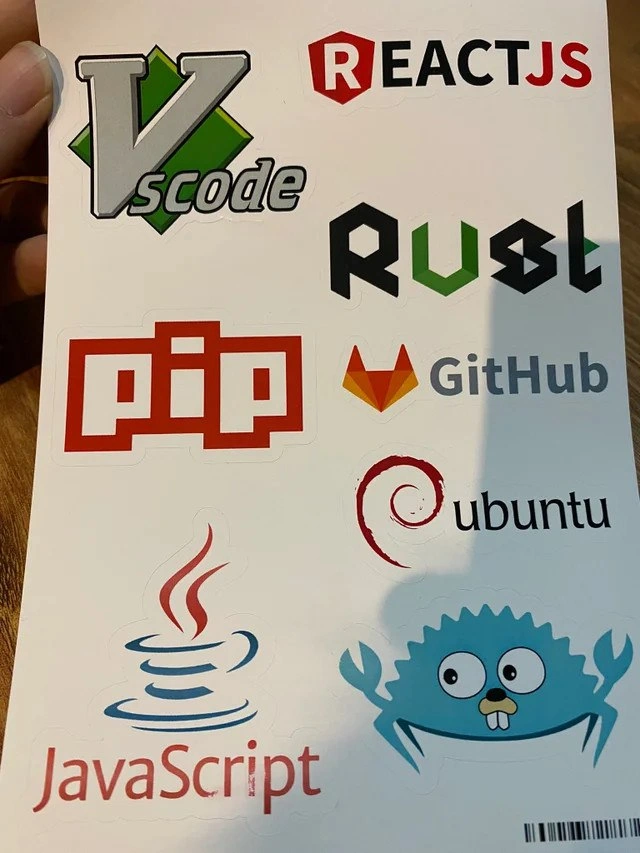
Imagine you have a sheet of animal stickers, but all the names are wrong. There’s a picture of a cat but underneath it says “dog”, and a cow labeled “horse”. It looks really silly, right? You’d probably laugh and also feel a bit confused because you know those names don’t match the pictures. That’s exactly what’s happening here, but with technology logos. Each sticker is like a famous character wearing the wrong name tag. It’s funny in the same way mixing up names or labels is always funny — our brains know it’s wrong so it feels absurd. Basically, someone put the wrong captions on each picture, and anyone who recognizes the pictures can see the mix-up. The result is a goofy sheet of stickers that makes tech folks laugh because it’s so obviously messed up, like a big inside joke about not paying attention.

Level 2: Identity Crisis

For someone newer to development, let’s unpack why these sticker mix-ups are so cringe-inducing (and thus funny) to experienced devs. Each sticker pairs a logo (the image that represents a tech tool or language) with a label (the name text) – but here they’re all wrong combinations. It’s as if someone who isn’t familiar with these technologies just guessed or copied names blindly. Understanding what each item is supposed to be will clarify the joke:

  • Visual Studio Code (VS Code) – This is a very popular code editor (an IDE) used by developers to write code. Microsoft makes it, and its real logo is a blue ribbon-like shape (kind of like an infinity symbol or </> icon, not a plain “V”). In the sticker, they printed a big green “V” with “scode” after it. That’s not VS Code’s actual logo at all. It’s a bit like writing “Microsift” instead of Microsoft – close in letters, but clearly off. So the sticker is portraying VS Code in a way no actual VS Code user would.

  • ReactJS – React is a JavaScript library for building user interfaces (think dynamic web apps). Its official logo looks like a blue atom or electron orbit symbol. The sticker, however, says “REACTJS” and puts the letter R inside a red hexagon shape. That red hexagon is reminiscent of the Angular logo (another web framework, which uses a red shield with an A). So effectively, the sticker mixed up React’s name with Angular’s style. For a newcomer: React and Angular are different tools (competitors, even) and have their own distinct communities and logos. Swapping their branding is like using the McDonald’s golden arches on a Burger King ad – it just doesn’t happen if you know the difference.

  • Rust – Rust is a programming language focused on performance and safety (avoiding crashes and memory errors). Rust’s common logo is a sprocket/gear with a stylized R, conveying an industrial feel. On the sheet, the word “Rust” appears in a stylized black font with a little green triangle decoration. This doesn’t match Rust’s branding at all. It’s as if someone knew the word “Rust” but not its look, so they applied some generic “techy” font to it. To a junior dev: imagine learning about Rust from a book and seeing a gear logo, then seeing this sticker – you’d be confused whether it’s the same Rust. The humor is in that obvious identity error.

  • pip (Python’s package installer)pip is a command-line tool you use to install Python libraries (for example: pip install flask). It’s very utilitarian and doesn’t have a well-known logo. The sticker shows “pip” in big bold red letters. That style resembles the logo of npm, which is JavaScript’s package manager (npm’s logo is red with blocky white letters). So it feels like the sticker designer thought pip should have a cool logo like npm’s. For context: Python developers don’t have a fancy icon for pip; it’s just a simple tool name. Seeing “pip” in flashy branding is weirdly funny because it’s anachronistic – like giving a plain hammer a superhero emblem.

  • GitHub vs GitLabGitHub and GitLab are two different platforms that developers use to store code online and collaborate (also for CI/CD, issue tracking, etc.). GitHub’s mascot is a character called the Octocat (a black cat with octopus legs) and its logo is often just that cat or the word GitHub. GitLab’s logo is a golden/yellow fox (some say it looks like a fox or a raccoon-like face). In the sticker, they took GitLab’s fox head icon but wrote “GitHub” next to it. For a junior dev: it’s like mixing up two brands that do similar things but are rivals. If you’ve started coding, you might have a GitHub account (very common), or your team might use GitLab – they’re not the same company. So labeling the GitLab icon as GitHub is a blatantly wrong identification. Developers often have loyalty or at least a clear mental separation between the two, so this mix-up sticks out like a sore thumb. It’s a bit like printing Apple’s apple logo but with the text “Microsoft” under it.

  • Debian vs UbuntuDebian and Ubuntu are names of Linux operating systems (distributions of Linux). Think of them as two different flavors of a similar thing; Ubuntu is actually based on Debian, but they are separate projects with different logos. Debian’s logo is a red swirl (looks kind of like a curvy, magical tornado shape), and Ubuntu’s logo is an orange circle made of three stick-figure-like friends holding hands (a top-down view). On the sticker, the red swirl (Debian’s logo) is shown with the text “ubuntu”. To anyone who’s dabbled in Linux: that’s clearly wrong. It would be like showing the Coca-Cola swirly script logo but writing “Pepsi” next to it. If you’re new: just know Debian came first, Ubuntu came later with its own identity. Mixing them up shows the person making the stickers likely didn’t know one Linux from another. It’s humorous because Linux users tend to be very particular about these distinctions (some might even be a bit territorial about their favorite distro’s logo!).

  • Java vs JavaScriptJava and JavaScript are two programming languages. Despite the naming, they are unrelated technologies. Java (logo: the blue and red coffee cup with steam) is an older, compiled language (think enterprise software, Android apps). JavaScript (no relation to coffee) is a scripting language that runs mainly in web browsers (and now on servers via Node.js). It’s a common beginner confusion to think they’re related because of the name, but they’re as different as a Java coffee bean and a JavaScript file. The sticker shows Java’s coffee cup logo but labels it “JavaScript”. Any experienced dev immediately knows that’s wrong, which is why it’s funny. It’s referencing that age-old confusion in a very literal way. If you’re just starting out: remember, Java and JavaScript are not the same – seeing them mixed up on purpose is a tech joke.

  • Go (Golang) gopherGo is a programming language from Google known for its simplicity and performance. Its mascot is this cute blue gopher character, which is very recognizable in the coding community. On the sticker sheet, the gopher is shown but with no label or name at all. It’s like the person making the stickers had an image of the Go gopher but didn’t know what text to put, so they left it blank. For someone new: that blue cartoon gopher represents the Go language. The fact it has no caption here might confuse a newbie (“What’s that blue animal sticker for?”) but to those who know, the absence of a label is itself a joke – every other one got a wrong label, and this one got nothing, which in a way is still wrong. It’s as if even the sticker maker gave up and said “I don’t even know what this is, I’ll just drop the picture in.”

Now, why call it “feels like a merge conflict”? In programming, when multiple people edit the same part of a file (or sticker sheet, in spirit) and then try to combine their changes, you can get a merge conflict. This is Git’s way of saying “I have two versions of this content and I don’t know which to keep.” The result is usually a jumbled file with conflict markers until a human resolves it. This sticker sheet looks like a bunch of things that were combined incorrectly – logos and labels mismatched – as if two different design files got merged and nobody resolved the conflicts. To a junior dev: imagine you and a friend both editing a document; you write “ReactJS with blue logo” and your friend writes “Angular with red logo”, and when merging, you accidentally pair “ReactJS” text with a red logo. That’s essentially what happened here. It’s humorous because it’s so obviously wrong, and any developer who has dealt with merging code can metaphorically “see the conflict markers” on this sticker sheet.

The humor also comes from how absurd the mistakes are. In tech communities, each language, framework, or tool has its own distinct identity and loyal users:

  • People spend effort learning logos, wearing T-shirts of their favorite language, putting correct stickers on laptops, etc.
  • Seeing them all scrambled is like a comedy of errors – you can imagine the collective “Nope!” from everyone who spots each error.

For a newcomer, the take-away is: details matter in tech. Calling GitHub by GitLab’s icon or mixing up Java and JavaScript might get you gentle ribbing from colleagues. It’s like calling someone by the wrong name – usually not catastrophic, but a bit embarrassing. This meme exaggerates it to a silly extreme so we can all laugh about it. And yes, even beginners are welcome to laugh along once you recognize the mix-ups. It’s a lighthearted lesson that as you dive deeper into development, you’ll start noticing these distinctions instinctively – and things like this sticker sheet will make you both laugh and cringe in equal measure.

Level 3: Merge Conflict IRL

This sticker sheet is a perfect storm of mismatched tech identities – it’s like an unresolved merge conflict spilled out of Git and onto a sheet of stickers. In software development, there's a saying: there are only two hard things – cache invalidation and naming things. Here, naming (and labeling) went horribly wrong. Every logo-label pairing clashes with our expectations, triggering that same cringe you get when you open a code merge and see <<<<<< HEAD markers all over. It reeks of copy-paste culture: someone took a bunch of familiar tech logos and names, mashed them together without a second thought, and created a Frankenstein asset management failure. Let’s break down the carnage:

  • VSCode – The sticker shows a big green V with “scode” after it, attempting to spell “Vscode”. The real Visual Studio Code (a popular code editor) usually goes by “VS Code” with a sleek blue logo (not a random green letter V!). This feels like mixing up Visual Studio Code with something else – maybe a leftover Visual Studio or Vim reference? Either way, any dev who lives in VS Code will squint at that weird green V. It’s as if someone merged an unrelated icon with the text by brute force.

  • ReactJS – Instead of the famous light-blue atom logo for the React library, we have ReactJS written with a big red R inside a hexagon. Fun fact: that red hexagon looks a lot like the Angular framework’s logo (Angular’s icon is a red shield/hexagon with a white A). So this sticker literally copy-pasted Angular’s style but slapped an "R" on it and called it ReactJS. Front-end devs chuckle (or groan) at this because React and Angular are rival frameworks – combining their branding is like wearing a Yankees jersey with a Red Sox cap. It's a merge conflict between two front-end worlds that normally compete in friendly rivalry.

  • Rust – The sticker spells out “Rust” in a sharp, angular black font with a tiny green triangle accent. Huh? The real Rust programming language has a very distinct branding – typically a rustic gear logo with an R in the center, or at least a typewriter-style font if spelled out. This sticker’s font and random green triangle have nothing to do with official Rust. It’s as if someone searched for “edgy tech font” and tacked on a bit of green for flair. Any seasoned systems programmer who loves Rust would do a double-take: “Is that supposed to be Rust?!” It’s a minor identity crisis; Rust is all about safety and precision, but here its name looks like it’s wearing someone else’s costume.

  • pip – We see a bold red logo spelling “pip”. Now, pip is the Python package installer (you type pip install to get Python libraries). But pip isn’t known for a flashy logo, certainly not a red one. This sticker’s design suspiciously resembles the style of npm (Node.js’s package manager), which does have a famous chunky red logo. It’s as if the sticker designer thought, “Node’s npm has a cool logo, our Python pip should have one too!” and cooked up a red pip logo from scratch. The result? A package manager identity crisis. Python devs know pip is usually just plain text in the terminal, so seeing it stylized like an app icon feels wrong – like finding a PyPI package with the wrong branding.

  • GitLab icon labeled GitHub – Oh boy. The sticker shows the bright orange fox-like logo of GitLab (a popular code hosting and CI platform) but the text next to it says GitHub (a different, very famous code platform known for its black octocat logo). Mixing these two up is practically heresy in developer communities. It's the equivalent of calling Pepsi “Coke” in a room full of soda enthusiasts – sure to spark some good-natured outrage. Any devOps or open-source contributor sees that and jokes, “I guess we’re doing a git push to which remote now?” It hints that whoever made this sticker sheet doesn’t use either service enough to know their logos – a sin to any developer who lives on GitHub repos or GitLab CI pipelines daily.

  • Debian swirl labeled Ubuntu – Here we have the classic red Debian spiral logo followed by the text “ubuntu”. Debian and Ubuntu are related (Ubuntu is based on Debian Linux), but their branding is distinct. Ubuntu’s logo is an orange circle of friends, not Debian’s magical red swirl. This mix-up feels like someone confused a parent with its child. Linux users see this and smirk: it’s like putting a Toyota badge on a Lexus – technically related under the hood, but absolutely the wrong badge. To the seasoned engineer, this screams “we didn’t bother checking our Linux logos”. It’s both funny and painful: funny because it’s such an obvious mix-up to any Linux fan, and painful because it shows zero attention to detail (the kind of sloppiness that in code would lead to production bugs).

  • Java logo labeled JavaScript – This one is a classic newbie mistake immortalized in sticker form. The sticker shows the steaming coffee cup logo of Java (the long-established programming language) with the word “JavaScript” under it. If you’ve been in programming for a while, you know Java and JavaScript are completely different languages. Sharing the first four letters of their names is about where the similarity ends. This mix-up happens so often in casual conversation that it’s a running joke: “No, JavaScript isn’t the scripting version of Java!” Seeing it on a sticker is comically on the nose. It’s like labeling a kangaroo as a kangaroo… then putting an ostrich picture on it – the name might sound related but the things are worlds apart. Every senior engineer has probably corrected someone on this at least once, so this sticker sparks a knowing, face-palming laugh.

  • Go gopher (no label) – The bright blue cartoon gopher is the beloved mascot of Go (Golang), a programming language created at Google. Unlike the other stickers, this one has no text at all. The poor gopher is just hanging out without a name tag. Why? Maybe the sticker maker had no clue what this creature was called (“Is this a beaver? a platypus?”) and left it blank. Ironically, this makes it the only sticker that isn’t explicitly mislabeled – instead, it’s not labeled at all, which is its own kind of mix-up. In the context of a merge conflict analogy, this is like a chunk of code that got dropped entirely: the conflict editor couldn’t even guess what to label it. Seasoned Go developers would recognize the gopher instantly, but to the uninformed sticker assemblers, it’s a mystery critter. One can imagine the senior engineer in them screaming internally, “That’s GOLANG, you uncultured swine!” – channeling a bit of that battle-hardened frustration for comedic effect.

  • The random barcode – Tucked in the corner is a little barcode, presumably part of the cheap sticker sheet packaging. It’s not part of the tech joke per se, but it adds to the overall cheap merchandise vibe. If this were truly a code merge, the barcode is like leftover merge metadata that doesn’t belong in the final content. Its presence is a tongue-in-cheek reminder: “Yep, this is a low-quality product that likely escaped any QA.”

Combine all these and you have a sticker sheet that could make any developer do a double-take. It’s the tangible equivalent of a codebase where every module’s name is swapped or wrong – a nightmare, but also darkly funny. Dev communities on Reddit or Twitter eat this stuff up because it satirizes what we fear in our own projects: confusion, poor version control, and sloppy attention to detail. It’s a humorous warning too: if you don’t manage your assets and naming conventions carefully, you’ll end up with an absurd mashup like this. In a large project, bad asset management can lead to the wrong icons in an app or the wrong version of a library shipped – the same kind of “label mismatch” chaos. And just like resolving a gnarly merge conflict at 3 AM, looking at this sheet gives senior engineers a mix of exasperation and amusement. We laugh because it’s not our bug to fix, but we’ve all been there in one way or another.

Description

The image shows a person holding a white sheet of developer-themed stickers. The sheet features a variety of popular technology logos, including: VS Code (a code editor), ReactJS (a frontend framework), Rust (a programming language), pip (a Python package manager), GitHub (a code hosting platform), and a blue crab character which is Ferris, the unofficial mascot for Rust. The sheet also contains two humorous and common mistakes in the tech world. The iconic steaming coffee cup logo for the Java programming language is incorrectly labeled as 'JavaScript'. Additionally, the swirl logo for the Debian operating system is mislabeled as 'ubuntu'. These errors are the core of the joke, as they represent classic points of confusion for newcomers and are a source of amusement for experienced engineers who understand the distinct identities of these technologies

Comments

25
Anonymous ★ Top Pick I'd put that JavaScript sticker on my laptop, but I'm worried it would suddenly become verbose, strongly typed, and start complaining about a NullPointerException
  1. Anonymous ★ Top Pick

    I'd put that JavaScript sticker on my laptop, but I'm worried it would suddenly become verbose, strongly typed, and start complaining about a NullPointerException

  2. Anonymous

    Proof that if you let marketing manage your asset pipeline, ‘DebianHub on GoScript’ ships to prod every time

  3. Anonymous

    The only thing more fragmented than this tech stack is the number of abandoned side projects using each of these technologies sitting in private repos

  4. Anonymous

    This sheet is a perfect integration test for engineers: anyone who doesn't twitch within five seconds gets assigned to maintain the PHP monolith

  5. Anonymous

    A laptop sticker collection is essentially a senior engineer's resume in visual form - though the presence of both JavaScript AND Rust suggests someone who's either remarkably pragmatic about choosing the right tool for the job, or still working through some deep existential questions about memory safety and async/await. The Go gopher's cheerful expression is particularly ironic given it's surrounded by languages that actually have generics now

  6. Anonymous

    This laptop's battle scars: every lang and tool that survived the hype cycle - Zig included, because Rust wasn't contrarian enough

  7. Anonymous

    This sticker pack looks like our Kubernetes labels: gitlab=github, debian=ubuntu, java=javascript - CI went green because nobody asserted the brand guidelines

  8. Anonymous

    Proof your SBOM was authored by marketing: GitLab labeled GitHub, Java relabeled JavaScript, and pip shipped in an npm box - branding with eventual consistency

  9. Deleted Account 4y

    I will take you entire stock!

  10. @chekoopa 4y

    https://github.com/mkrl/misbrands

  11. @chekoopa 4y

    Just print it!

  12. @meisamdev 4y

    in the parallel universe

  13. Deleted Account 4y

    Grabbed

    1. @Infinitelineman 4y

      Crabbed

  14. @dsmagikswsa 4y

    The vscode somehow exist if vscode with vim plugin

  15. @chipmunkcustodian 4y

    my brain hurts looking at them

  16. @Svistoplyaz 4y

    Cursed

  17. @azizhakberdiev 4y

    Nice. JavaScriptified Java, Rust and python. JS is everything

  18. @azizhakberdiev 4y

    Im gonna make more stickers of JavaScriptified technologies. If need inspiration...

    1. @azizhakberdiev 4y

      https://www.google.com/url?sa=t&source=web&rct=j&url=https://en.m.wikipedia.org/wiki/List_of_JavaScript_libraries&ved=2ahUKEwjCjovA6fz0AhWQyIsKHXPcAcYQFnoECBAQAQ&usg=AOvVaw0BkKRXARsQ1u8r1kb9u0Ir

  19. Deleted Account 4y

    Disgusting

  20. @novaksm 4y

    Nothing is wrong here Move along

  21. @Dexconv 4y

    I wanna stick these on my laptop How long will I survive? Lol

  22. @CcxCZ 4y

    There's more in the pull requests FWIW. Thanks for the quick work. :-) Some of them could use a background though so they are visible on dark themes.

  23. Deleted Account 4y

    Aaaaa This is cute

Use J and K for navigation