Clean code readers vs chaotic code writers two-panel developer meme
Why is this CodeQuality meme funny?
Level 1: Neat Results, Messy Process
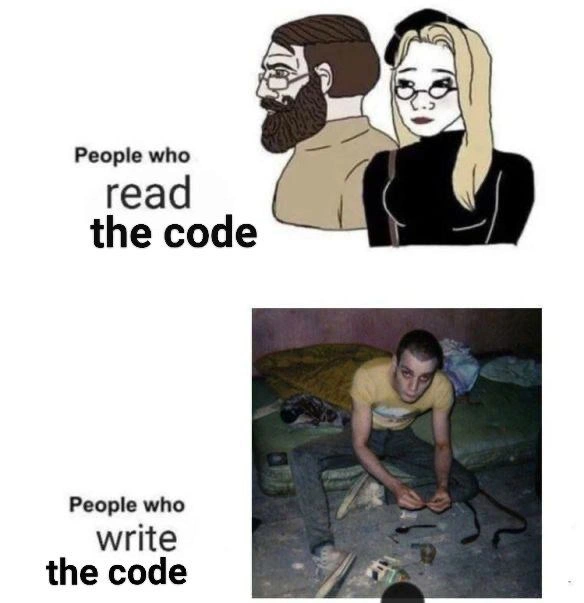
Imagine you walk into a bakery and see a beautiful, perfectly decorated cake on display. It looks delicious and everything about it is tidy. That’s like reading clean code – it’s the nice result that people see or work with. Now think about the kitchen where the chef baked that cake. During the baking process, the kitchen was probably a mess: flour spilled on the counter, mixing bowls everywhere, the chef with batter on their apron. That messy kitchen is like writing code – the process of making something can be chaotic and not so pretty. The meme shows the same idea with coding. The top picture with the well-dressed people is like seeing the nice cake (the finished, clean-looking result). The bottom picture with the guy in a filthy room is like peeking into the messy kitchen (the rough, hectic process that was behind the scenes). It’s funny because we usually only see the cake, not the messy kitchen. In coding, people who only read the code see what’s in front of them and want it to be clean, but they might not realize how messy it was to create it. The joke reminds us in a silly way that making something (writing code) can look much messier than enjoying or checking it (reading code).
Level 2: Readers vs. Writers in Code
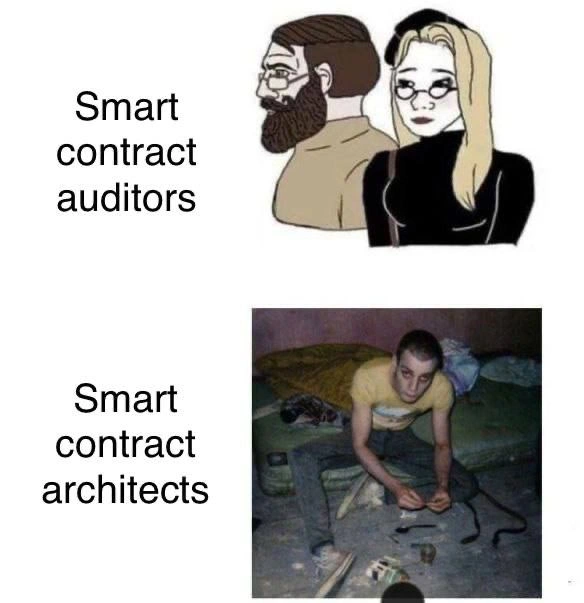
Let’s break down the joke in simpler terms. This meme shows two groups of people: those who read code and those who write code. The top picture (the cartoon man with a beard and the blonde woman with glasses) represents the readers – basically developers who are reviewing or maintaining the code. They look clean, confident, almost like strict teachers. The bottom picture (the guy crouching in a filthy room with tools and a broken mattress around) represents the writers – the developers who originally wrote the code. He looks stressed out and is literally in a mess. The captions label them clearly: “People who read the code” vs “People who write the code.” It’s a classic two-panel comparison meme highlighting a contrast in a funny way.
In real software development, code writing and code reading are two different activities, even though they both deal with the same code. When someone writes code, they are creating it – often under pressure to add a feature or fix a bug. When someone reads code, they are usually either reviewing it (before it gets merged to the main codebase) or trying to understand it later (for example, debugging or adding new updates to it). The meme suggests that the people reading code are all cool and put-together, while the people writing it are in chaos. Why would that be?
Think of a typical workflow: A programmer writes some code and then opens a Pull Request (PR) on GitHub or another platform for others to review. Now, the moment of writing that code might have been hectic. Perhaps they were on a tight deadline, or the problem was really hard, so the code isn’t very neat – maybe it’s full of quick fixes and not much documentation. This situation is often referred to as accumulating technical debt – like taking shortcuts you’ll have to clean up later. The code might run, but it could have code smells. Code smell is a term for something in the code that works but looks suspicious or messy – for example, a super long function, or repeated code (duplicate logic), or variable names like foo and tmp that don’t tell you anything. These are red flags for maintainability.
Now, enter the code reviewers – the colleagues or teammates who read through this code in the PR. Their job is to ensure code quality. Code quality means the code is not just working, but also clean, readable, and follows agreed-upon standards. These folks will add comments like, “Hey, this function is doing a lot; maybe split it into smaller functions,” or “This variable name is unclear, can you rename it to something more descriptive?” Essentially, they are trying to make the code better for the long term. They focus on code maintainability – which is how easy it is for someone else (or your future self) to understand and modify the code later.
The funny part is the contrast: the person who wrote the code might have been in “just make it work” mode, possibly late at night. The bottom image of the guy in a messy room is an exaggeration of that. It’s saying, “The coder’s process was as messy as this room.” He’s surrounded by tools and trash, which is like saying the code was put together with duct tape and random hacks. Meanwhile, the top image’s people are clean and composed, which is an exaggeration of the reviewer’s attitude: “The reviewers expect everything to be nice and clean.” In reality, those reviewers might not literally wear suits and elegant clothes to read code, but the meme uses that visual to drive the point: reading code is a calmer, more orderly task, while writing code (especially under pressure) can be turbulent and dirty.
This is a very relatable developer experience. Many of us have been the newbie who writes some messy code and then a senior engineer reviews it and basically sends back a list of things to improve. It might feel a bit like your homework getting marked with red ink! On the flip side, many of us have also tried to read someone else’s code and thought, “Wow, this is a nightmare to understand. How did they even come up with this?” In those moments, we (the readers) feel like the code should have been written more cleanly. The meme captures both sides: the frustrated code reader (wanting clean code) and the frantic code writer (just trying to get the job done).
To give an example, imagine a simple scenario: A web application breaks at 5 PM, right before everyone’s about to go home. A developer (let’s call him Bob) is tasked to fix it immediately. Bob dives into the code. He’s under a lot of stress – the website is down! He finds the issue and doesn’t have time to elegantly redesign everything, so he adds a quick patch. He might add a few lines of code in a hurry, maybe copy a snippet from Stack Overflow, hard-code a value that “should ideally be configurable,” and then he gets the site working again. Phew! Crisis averted. But Bob’s fix might not be the cleanest solution; it’s a bit hacky. Now, the next day, another developer (let’s call her Alice) reads Bob’s code change during the code review. Alice is fresh and not in crisis mode. She notices Bob’s hurried decisions: “Hmm, Bob disabled that safety check to fix the bug. That could cause other issues. And this variable name is super vague. Also, this whole part could be simplified.” Alice leaves comments pointing out these code quality issues. Bob, reading the review, might chuckle nervously because he knows the code isn’t pretty – he was essentially coding in “survival mode.” This scenario is basically what the meme is joking about, except the meme uses pictures instead of names.
The two-panel meme format makes the joke clear at a glance. It’s a common style online to show “Expectation vs Reality” or “Two types of people.” Here we have “Two types of developers.” The top are the ones who later read or critique the code (expecting it to be well-structured), and the bottom is the one who originally wrote the code under messy circumstances (just trying to solve the problem). The text labels in the image exactly identify these roles. The humor is really about empathy: if you’ve never written code, you might not realize how messy the process can get, and if you’ve never had to maintain someone else’s code, you might not appreciate why clean code matters so much. Developers usually end up experiencing both, which is why they find this so funny and accurate.
In simpler terms: writing code is like building something, and reading code is like inspecting or using that thing. The builder’s workshop might be chaotic during construction, but the inspector expects the final product to be neat and solid. The meme exaggerates that idea with the imagery of tidy people vs. a messy room. It’s a light-hearted take on a common truth in programming: making a program work can be a messy job, even though we want the end result (the codebase) to look clean and organized.
Level 3: Ivory Tower vs Code Trenches
In the top panel of this meme, “People who read the code” are depicted as polished, intellectual figures – the kind of developers who quote the Clean Code handbook over their morning coffee. These are the code reviewers and maintainers, portrayed as if they live in an ivory tower of pristine best practices. In the bottom panel, “People who write the code” shows a lone developer crouched in a grimy, dimly lit room, surrounded by debris and makeshift tools. It’s a hilariously stark illustration of the code trenches: the chaotic reality in which code often gets written. The humor comes from this jarring contrast. Seasoned engineers recognize the scenario all too well – the pull request reviewers in their calm, collected mode vs. the original coder who might have been one caffeine-fueled step away from a mental breakdown while getting the feature to “just work.”
This meme nails a classic DeveloperExperience pain point: reading code versus writing code can feel like two different worlds. The refined cartoon characters on top (a bearded man and a bespectacled woman drawn in the popular Wojak/Chad meme style) symbolize those who demand code quality and elegance when reviewing. They have the luxury of time to critique naming conventions, enforce style guides, and spot every little code smell in the commit. The bottom image – a real photograph of a disheveled guy in a squalid room – symbolizes the actual coder in the throes of implementation. It screams technical debt and crunch time: maybe this poor soul was frantically patching a production bug at 3 AM, with no time to tidy up. The room’s scattered tools and that ruined mattress are a perfect metaphor for the quick-and-dirty hacks, leftover TODO comments, and duct-tape solutions that often lurk in rushed code. It’s an exaggeration, of course (most of us don’t literally code on the floor of a dungeon), but it captures the feeling of those late-night, chaotic coding sessions.
Why is this so relatable? In real software projects, the people maintaining or reviewing code frequently have a different mindset than those who originally write it. A maintainer (or any dev reading the code fresh) approaches it with an ideal of cleanliness and clarity – after all, they have to understand and possibly extend this code base. They might say things like, “This module violates the Single Responsibility Principle,” or “We should refactor this function, it’s doing too much.” They’re the gatekeepers of CodeQuality, ensuring the codebase stays sane. Meanwhile, the original author might be thinking, “You’re lucky there’s even a function – I had 30 minutes to fix a live issue!” The meme hilariously embodies this unspoken tension. The top panel folks could be imagined sipping artisanal coffee, calmly writing up a thorough code review comment on why your variable naming should be more consistent. The bottom panel coder was more likely chugging energy drinks, fighting legacy code in a high-pressure environment, kneedeep in spaghetti code and far from any notion of a coding standard.
Experienced devs have all been in both roles. We’ve clicked “Start review” on a colleague’s pull request and left comments about elegance and clarity – then later the roles reverse, and we’re the ones getting a 2,000-line diff shredded by comments. Or worse, we’re reviewing our own old code and muttering, “What on earth was I thinking?!” This meme resonates especially with senior engineers because it pokes fun at the maintainability vs. implementation gap. That gap is the difference between how we wish code was written (carefully, with foresight) and how code often actually gets written (hurriedly, with fingers crossed). It’s a shared comic trauma: the clean-up crew versus the frantic builder. The top panel’s smug cleanliness hides the reality that writing software is often messy. As the saying goes, “Laws and sausages — and code — are things you don’t want to see being made.”
From an industry perspective, this meme highlights why code reviews exist in the first place. Modern development processes intentionally separate writing and reviewing: one person writes code under whatever messy circumstances, then another (or the same person later on) reviews it with a fresh perspective. The review phase is when all those issues born of haste get called out. It’s not that the code readers are actually superior beings – but in the moment of reading, they can afford to be choosy. They aren’t in panic mode; they can spot the hardcoded values, the missing error handling, the function that mysteriously grew to 500 lines. In contrast, the writer in the bottom panel likely had a single driving thought: make it work. They might have willingly cut corners – maybe skipping tests, using a global variable as a quick fix, or copying Stack Overflow code at 2 AM – because the server was on fire or the deadline was dawn. Later, the readers who see that code will be horrified (like walking into that wrecked room) and will demand it be cleaned up. The comedic irony is that those readers often speak with the confidence of someone who assumes they would never write such messy code. (Spoiler: they probably have, at some point.)
This image pairing also touches on the concept of technical debt and how it accumulates. The bottom dev very likely incurred some debt: perhaps leaving a // TODO: improve this in the code or using a cringey shortcut that “we’ll refactor in v2.0” (famous last words). The top devs – the ones reading – are the debt collectors, coming to make the coder pay up by refactoring and documenting. There’s an almost dark comedy in how often this cycle repeats in the software life cycle. A feature is rushed out in a chaotic sprint, later generating countless bug tickets and refactor tasks that someone else, possibly that polished reviewer, will slog through. Everyone publicly advocates for writing elegant, maintainable code from the start, but privately we all know there’s a point where “Works on my machine” is good enough for tonight.
In summary, level 3 analysis: this meme lands so well in dev circles because it exaggerates a truth we rarely admit out loud. Code readers (maintainers/reviewers) are symbolized as model professionals – perhaps a nod to how they appear when calmly pointing out flaws. Code writers (the initial authors) are shown as gremlins in a cluttered lair – a nod to the gritty reality of churning out code under pressure. It’s poking fun at our shared pain: the disconnect between the polished ideal of code and the messy reality of coding. Any veteran of a gnarly codebase looks at this and smirks, perhaps recalling that one commit from six months ago that they had to refactor mercilessly. As one battle-scarred engineer might joke to another, “Please excuse the mess in the code; you weren’t there when the dragons had to be slayed.” This meme perfectly captures that sentiment with a funny visual split between the tidy and the turbid sides of software development.
Description
Accessibility details: The meme has two vertically-stacked panels on a white background. Top panel is a simple cartoon profile of a well-groomed bearded man and a stylish blonde woman facing opposite directions; the caption beside them reads in bold: “People who read the code”. Bottom panel is a grainy, cluttered photograph of a man in a dim, filthy room crouching on the floor surrounded by tools, debris, and a damaged mattress; its caption reads: “People who write the code”. Technical context: the joke contrasts how maintainers and reviewers are perceived as polished professionals while original authors are depicted as hacking things together in a chaotic environment, highlighting real-world pain around code quality, readability, and the gulf between writing and later maintenance. It resonates with senior engineers who have experienced pristine pull-request comments masking the messy reality behind initial implementation
Comments
6Comment deleted
Reviewers wax poetic about the “elegant DI,” unaware it was forged at 3 AM between circular-import roulette and a hand-rolled retry loop that only passes CI when the moon’s in UTC
The code review comments say "elegant solution" but the git history shows 47 force pushes, three existential crises, and a commit message that just says "please work this time I have a family"
This perfectly captures the asymmetry of software development: code reviewers get to be armchair architects pointing out missing error handling and suggesting 'just refactor this into a monad,' while the original author is still debugging why their perfectly reasonable implementation causes a segfault only on Tuesdays in production. It's easy to critique the abstraction layers when you didn't spend three days fighting with dependency injection frameworks and legacy database schemas that predate the concept of normalization
Reviewers quote SOLID; the author was negotiating with a 03:00 pager - idempotence didn’t fit the hotfix SLA
Code writers: 'Crystal clear tomorrow.' Future self reading it: 'What eldritch abomination did I summon?'
Our codebase runs a readers - writer lock: unbounded readers debating purity in the PR, one writer with root shipping a 3am hotfix to keep the SLA green