Skip to content
DevMeme
5171 of 7435
Localization Gone Wild: The Spanish Factorial
Mathematics Post #5663, on Nov 15, 2023 in TG

Localization Gone Wild: The Spanish Factorial

Why is this Mathematics meme funny?

Level 1: When Math Speaks Spanish

Imagine math could talk in different languages. Normally, math speaks the same language everywhere – the symbols are universal, so everyone understands them. Now picture giving math a little Spanish twist: in Spanish writing, excited sentences start with an upside-down exclamation mark ¡ to show an excited tone right from the beginning. The joke here is pretending that a math formula, like a recipe for choosing items, suddenly follows that Spanish rule. So instead of writing a factorial as “5!” like usual, it cheekily writes “¡5!” – as if the number 5 got so excited it needed an extra exclamation at the front in Spanish!

Why is this funny? Because it’s like dressing up a very serious math rule in a playful Spanish costume. It would be as odd as seeing a stop sign that says “¡STOP!” with an upside-down sign in front of it – you just never see that! We all know math doesn’t actually change its symbols for different countries, so this idea is super silly. It makes people laugh because it mixes two things that don’t normally go together, just for a bit of fun. Essentially, the meme is saying: “What if math equations followed the same exclamation rules as Spanish sentences?” The result looks wrong in a cute way, and that unexpected mashup is what gives it a delightful nerdy humor. Even if you’re not a math expert, you can giggle at the thought of math “speaking Spanish” with upside-down exclamation marks – it’s a playful twist that anyone who’s seen “¡Hola!” in Spanish and “n!” in math can appreciate.

Level 2: Factorial Faux Pas

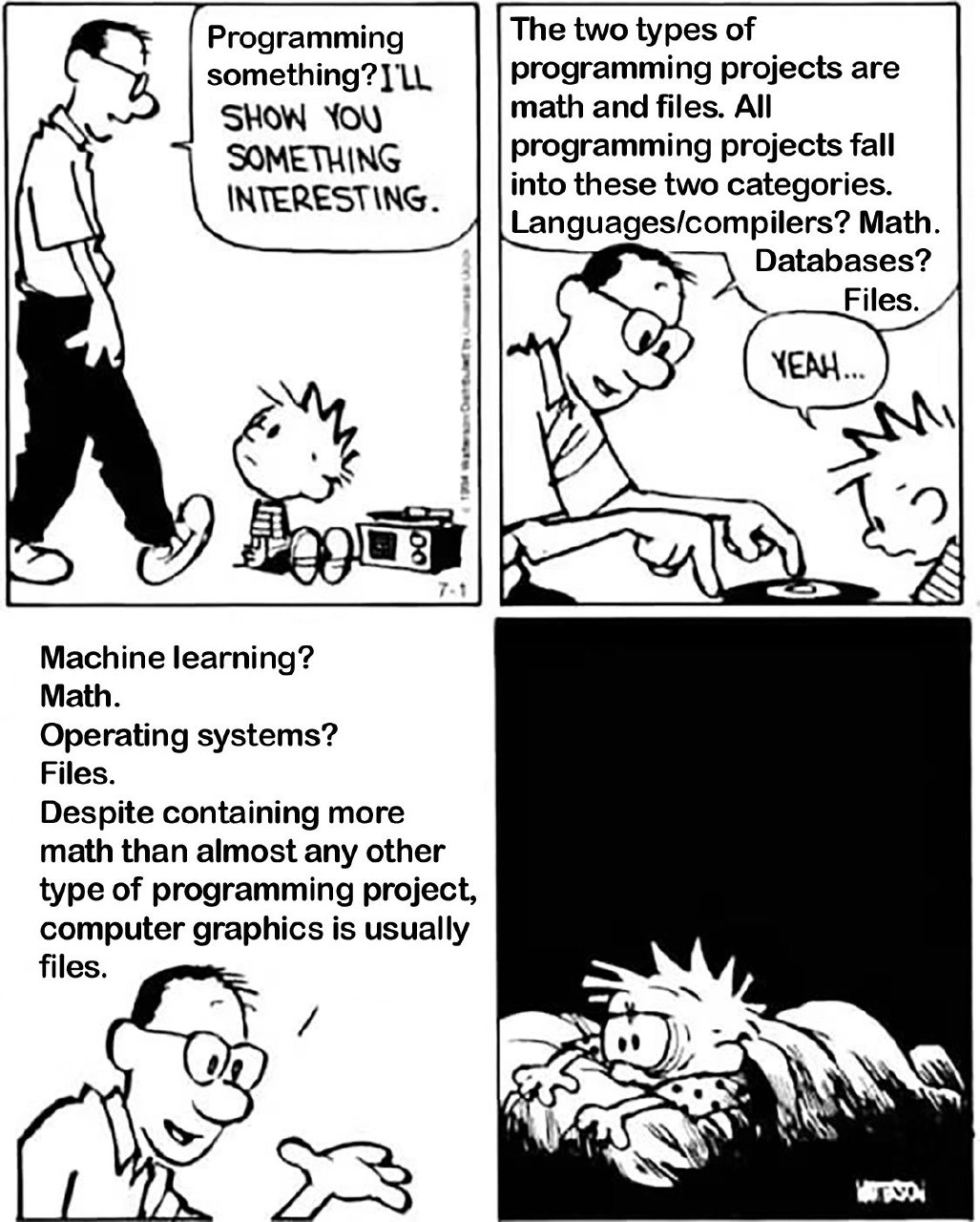
Let’s break down the pieces of this joke. First, the formula shown is for a binomial coefficient, commonly read as “n choose k.” It’s a staple of combinatorics (the math of counting combinations). The formula is:

$$ \binom{n}{k} = \frac{n!}{,k! ,(n-k)!},. $$

This means to compute the number of ways to choose k items from n items (without considering order), you take n factorial divided by k factorial times (n–k) factorial. Now, factorial – denoted by an exclamation mark “!” – is a mathematical operation where you multiply a whole number by all the positive integers below it. For example, 5! (read as “five factorial”) is calculated as:

5! = 5 × 4 × 3 × 2 × 1 = 120

So, $n!$ is shorthand for a big multiplication: $n \times (n-1) \times (n-2) \times \cdots \times 1$. Factorials grow incredibly fast and show up in all sorts of AlgorithmHumor contexts (like computing permutations or in runtime complexity jokes), so many CS students are very familiar with this “!” notation. It’s a serious math symbol, not a punctuation mark – even though it looks just like the exclamation point used in everyday writing.

Now, the fun part of the meme: Spanish punctuation. In written Spanish, exclamatory sentences are marked with ¡ at the beginning and ! at the end. For example, Spanish speakers write “¡Hola!” instead of just “Hola!” to show excitement from the start of the sentence. It’s a unique rule of Spanish orthography – similarly, Spanish questions use an opening ¿. These inverted marks alert the reader about the tone (exclamation or question) right from the beginning. It’s a clever linguistic feature, but something we don’t do in English. And importantly, it’s something you’d never do in a math formula.

The meme’s author jokes about “Spanish notation” by imagining what if factorials also needed that Spanish treatment. They rewrote the combination formula with an inverted exclamation before each factorial: $\displaystyle \binom{n}{k} = \frac{;¡n!}{,¡k! ; ¡(n-k)!},. $ Visually, it’s as if the formula is yelling in Spanish: ¡n factorial! The term factorial_symbol here is getting an extra, totally unnecessary companion. This is a classic notation_humor prank – it’s taking the rules of one system (language punctuation) and applying them in another system (mathematical notation) where they don’t belong.

Why is this a faux pas (a slip-up)? Because in reality, math symbols aren’t translated or altered for different languages. The equation $\binom{n}{k} = \frac{n!}{k!(n-k)!}$ is the same whether you’re reading a textbook in English, Spanish, Chinese, or any other language. You might see commas vs periods for decimals in different countries, or maybe a localized word in front (“Dónde” instead of “Where”), but the core symbols like +, –, =, and ! remain consistent worldwide. That consistency is what makes the meme’s “Spanish notation” so immediately silly to anyone who knows math – it’s intentionally doing something wrong. It’s as if a textbook had a translation glitch or a mischievous professor decided to “localize” math as a joke.

For a junior developer or student, it’s useful to know that internationalization (i18n) is the process of adapting content for different languages and regions – typically you translate text, adjust date formats, or swap out icons, not change math formulas! 😅 If you wrote a program to output the formula for combinations, you wouldn’t program it to insert inverted exclamation marks for Spanish users. This meme tickles us because it imagines exactly that kind of overzealous localization. It’s a gentle reminder that while spoken languages have different rules and punctuation, the language of mathematics is meant to be universal. Seeing those two worlds criss-cross gives us that “this is so wrong, it’s funny” feeling. In a way, only those who understand both the binomial_coefficient formula and Spanish’s quirky punctuation will fully appreciate why this is a Factorial Faux Pas. It’s an InsideJokes moment that combines academic knowledge with a touch of cultural flair.

Level 3: Bilingual Binomials

At first glance, this meme looks like a serious textbook snippet about combinatorics – it even starts with the classic binomial coefficient formula: $\displaystyle \binom{n}{k} = \frac{n!}{,k!(n-k)!}$ (often read as “n choose k”). That formula is fundamental in CS_Fundamentals and math, giving the number of ways to choose k items from n possibilities. But then comes the punchline: “Or in Spanish notation” – and suddenly every factorial symbol ! is prefixed with an upside-down exclamation ¡. It’s a notation_humor mashup of math and language rules that only an insider would think to combine. Experienced developers and mathematicians find this hilarious because it’s like mixing oil and water: math notation is supposed to be a universal language, while internationalization (i18n) usually applies to natural language text, not equations.

In software terms, this joke is akin to an i18n bug where someone naively localizes syntax. Imagine a codebase where a well-meaning but misguided translation script sees every “!” and tries to put a “¡” in front of it for Spanish locales – ¡disaster! 😅 In real life, no one translates the factorial symbol for different languages; n! means the same thing whether you’re in New York or Madrid. That’s why seeing “¡n!” in a formula is immediately absurd to a senior engineer or academic: it violates the unwritten rule that math is a universal dialect. It reminds seasoned folks of those InsideJokes where mixing contexts exposes something silly – like the classic “¡Hello, world!” if programming languages were Spanish, or using an inverted question mark in code (¿if (x > 0) { ... }). We chuckle because we’ve grappled with real internationalization challenges (like Unicode quirks or locale-specific decimal commas), and here’s a playful “what-if” scenario: What if mathematical notation had to obey Spanish punctuation rules?

The humor also touches a bit of academic history. The factorial symbol “!” has been in use since the early 19th century (credit to mathematician Christian Kramp) and has nothing to do with excitement – it’s just a concise notation for a product sequence. Meanwhile, Spanish inverted punctuation (like “¡…!” for exclamations) dates back to the 18th century as a way to signal tone in long sentences. These two worlds never interact, so seeing them collide on the page creates a delightful cognitive dissonance. It’s like discovering a new species in the wild: the Spanish factorial, a creature that logically shouldn’t exist. For seasoned devs and mathematically inclined folks, this meme is a perfect little TechHumor gem – blending a bit of math lore with linguistic culture and revealing the absurdity when you apply one domain’s rules to another. In summary, it’s AcademicHumor at its finest: you need to know both the algorithmic formula and the language quirk to get the joke, and when you do, you can’t help but smirk at the nerdy brilliance of it.

Description

This image is a close-up of a page from what appears to be a mathematics textbook, presenting a joke based on notation. The page first displays the standard formula for combinations, or the binomial coefficient, written as '(n k) = n! / (k! * (n - k)!)'. Immediately below this, it introduces a humorous variation with the text 'Or in Spanish notation'. The subsequent formula is identical, but with inverted exclamation marks (¡) prepended to each factorial term in the numerator and denominator, as in '¡n! / (¡k! * ¡(n - k)!)'. The joke lies in the absurd misapplication of Spanish grammar - where an inverted exclamation mark begins an exclamatory sentence - to mathematical notation. There is no such 'Spanish notation' for factorials; the meme cleverly satirizes the concept of localization by applying language-specific punctuation rules to universal mathematical symbols, creating a piece of academic-looking nonsense
Comments

25
Anonymous ★ Top Pick This is what happens when you let the frontend intern who just learned about i18n libraries contribute to your math rendering engine. I'm just waiting for the Arabic version where the entire equation is right-to-left
  1. Anonymous ★ Top Pick

    This is what happens when you let the frontend intern who just learned about i18n libraries contribute to your math rendering engine. I'm just waiting for the Arabic version where the entire equation is right-to-left

  2. Anonymous

    Brilliant - now the n-choose-k function needs a LocaleAwareFactorialProvider; tomorrow the French will file a ticket for a space before every '!'

  3. Anonymous

    After 20 years of debugging off-by-one errors in combinatorial algorithms, the real bug was assuming mathematical notation was universal. Wait until you see how different countries handle null termination in their pseudocode

  4. Anonymous

    Finally, a localization bug that's mathematically provable. Now we just need to wait for the PM to ask why our factorial calculations are throwing 'UnsupportedLocaleException' in production, and explain that Spanish notation requires bidirectional factorial evaluation. At least it's better than the time someone tried to implement right-to-left factorials for Arabic localization

  5. Anonymous

    PM said 'internationalize everything'; someone localized the lexer - now factorial is a Spanish prefix operator and the AST screams ¡undefined!

  6. Anonymous

    n! for theorems, j!/i! for prod - CFE beats BigInt overflow every sprint

  7. Anonymous

    Flip to es-ES and your parser upgrades O(n!) to O(¡n!) - classic i18n turning punctuation into semantics

  8. @CcxCZ 2y

    Makes sense though. If you removed the now redundant parenthesis.

    1. @MVA_ONE 2y

      Exactly my thought

  9. @Sp1cyP3pp3r 2y

    Every time I see ¡! in Spanish I imagine colorful skeleton shaking maracas 😭💀🪇

  10. @delimitry 2y

    Jajaja 👍🏻

  11. @srferrero 2y

    Jajajajaja we will get rid of it some day

    1. @SamsonovAnton 2y

      Not before British Imperial units are replaced with metric system worldwide!

  12. @Eco_azul 2y

    I hope we don't. Opening and closing marks are superior to only closing marks. Have you ever read a very long sentence and found out only at the end that you were using the wrong intonation? Well, that's a problem we do not have.

    1. @CcxCZ 2y

      LISPer confirmed :P (Or rather, oldschool ALGOLian: IF…FI DO…OD etc.) (Yes, Paul Bourne picked a lot of this up, except for the already existing utility names like od for Octal Dump, hence we have do…done in sh)

    2. @srferrero 2y

      Yes happened to me many times, lost 3 jobs, my wife and kids due to this.. take it serious

      1. @pixelsex 2y

        rip Parenthesita

      2. @RiedleroD 2y

        is that why you're T-posing at the ocean?

      3. @Eco_azul 2y

        No surprise there. I am sure the wife must have dumped you for another gentleman who writes in a language with opening and closing marks. A lady with good taste indeed.

        1. @srferrero 2y

          I wish I knew, she just left a note with a ¿ in it.. spent months trying to figure it out…

          1. @SamsonovAnton 2y

            Wrong encoding maybe. Try changing your locale. 🤪

  13. @yuriy_the_man 2y

    Nobody expects Spanish notation

  14. @mag_aleg 2y

    ¿Queres?

  15. @Eco_azul 2y

    You were probably holding it upside-down.

  16. @srferrero 2y

    Hahahahhahahahhahaha

Use J and K for navigation