Skip to content
DevMeme
6188 of 7435
A Stark 'Cringe vs. Based' Meme Comparing Terrestrial and Asteroid Mining
IndustryTrends Hype Post #6788, on May 23, 2025 in TG

A Stark 'Cringe vs. Based' Meme Comparing Terrestrial and Asteroid Mining

Why is this IndustryTrends Hype meme funny?

Level 1: Digging vs Dreaming

Imagine two kids talking about digging for treasure. One kid points at the garden in their backyard and goes, “Ugh, digging here in the dirt is so boring.” Instead, they point up at the night sky and say, “Let’s go dig treasure on the Moon, that would be so cool!” – even though the Moon is unbelievably far away. This is funny because obviously the kid’s dismissing the easy, sensible idea (digging in the backyard where you actually can find worms or rocks) and getting excited about an over-the-top crazy idea (building a rocket ship to mine the Moon for treasure).

In the meme, saying “Terrestrial (Earth) mining is cringe” is like that kid saying the backyard dig is lame. And “Asteroid mining is based” is like saying mining in outer space is the awesome way to do it. We laugh because the comparison is silly: why ignore the simple solution and daydream about something wildly impractical? It reminds us of when people call normal things uncool just because they’re normal, and brag about a far-fetched plan just because it sounds exciting. The humor is really about being overly imaginative to the point of being impractical – kind of like deciding a regular car is too dull so you’d rather build a spaceship to get to school. It shows the gap between being realistic and chasing a wild dream, and we find it funny because the choice is so exaggerated and extreme.

Level 2: Cringe vs Based Basics

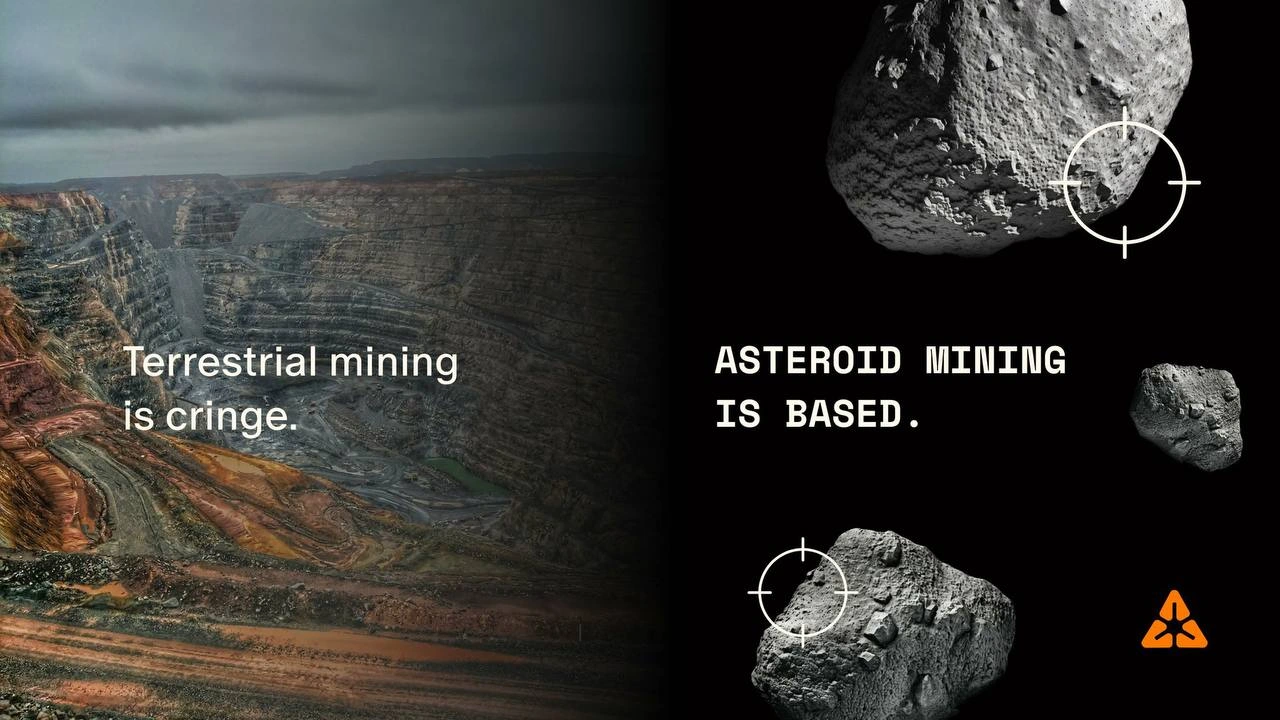
Let’s break down the meme’s elements and lingo in plain terms. On the left, we see a real-life terrestrial mining site: basically a giant pit in the ground where people mine minerals here on Earth. It looks gritty and industrial under a gray sky. The overlaid text says “Terrestrial mining is cringe.” Here cringe is internet slang meaning something is embarrassing, uncool, or just not good. So the meme is jokingly calling regular Earth mining uncool or lame. On the right, we have a stark black background with images of asteroids – rocky little planets – and even crosshair graphics as if we’re targeting them. The bold text there says “ASTEROID MINING IS BASED.” Now based is the slang opposite of cringe; it means something is admirable or cool (in a sort of boldly confident way). So asteroid mining is being called super cool. The meme format “X is cringe, Y is based” comes from MemeCulture online, where people compare two things and label one bad (cringe) and one good (based), often in an exaggerated or ironic way.

So why these two things? It’s hinting at a bigger idea in tech. Asteroid mining – literally mining minerals from asteroids in space – is a real concept that’s been floated in the tech and space community. It sounds like science fiction, but startups and even big names have hyped it up as a future industry (especially about a decade ago). It represents a futuristic, ambitious project. In contrast, mining on Earth is old, dirty, but proven. This mirrors how in technology, an everyday, proven solution (like running your own servers or using established tech) might be seen as old-fashioned, whereas a cutting-edge idea (like space-based anything) gets everyone excited. The meme exaggerates this by literally saying the normal way is “cringe” and the sci-fi way is “based.” The humor comes from that exaggeration – obviously it’s not that simple, but it feels like how hype is communicated sometimes.

This connects to the TechHypeCycle and industry trends. The tech hype cycle is the pattern where a new technology gets a ton of buzz (everyone says it will change the world), then reality sets in and people realize it wasn’t a magic fix for everything. Here, asteroid mining stands in for any hyped technology that’s at the peak of excitement. For example, think of how cryptocurrency or blockchain was hyped a few years back: some folks called older finance systems cringe and said blockchain was the based solution to literally everything. Or how in corporate IT, using your own servers (called on-premises or on-prem) became “uncool” once cloud computing came along. A few years ago, companies were saying, “Why maintain your own data center? That’s cringe – move everything to the cloud, that’s based!” The cloud (like Amazon Web Services, Microsoft Azure, etc.) means renting servers and storage from big providers over the internet instead of owning the hardware. It was the hot new thing. And indeed, cloud tech is great, but the hype made it sound like on-prem was stone-aged. The meme takes that vibe and pushes it to the extreme: not just cloud, but space – serverless_in_space levels of extreme!

Let’s explain serverless too: it’s a cloud computing concept where you run your code without managing the server yourself. The name is a bit misleading (there are still servers behind the scenes, you just don’t deal with them). People joke that “serverless” really means the servers are simply someone else’s problem. By extension, saying “serverless in space” is a humorous jab – as if the code isn’t even running on Earth anymore, it’s so hands-off that it’s literally off-planet! This ties into the meme’s asteroid theme. It’s like saying the ultimate cool-serverless setup is having your code executed on an asteroid data center orbiting above. Orbit_latency_joke refers to the fact that if you really did run things in space, the signals (data) have to travel far, which introduces delay (latency). For example, communicating with a satellite in low Earth orbit might add tens of milliseconds of delay; a satellite further out (like geostationary orbit) could add half a second! In other words, “based asteroid extraction” would come with some hilarious practical downsides, like your website taking an extra second to load because it’s literally fetching data from orbit. That’s part of the tongue-in-cheek joke here: the based solution might sound awesome but would have obvious issues.

The meme’s IndustrySatire is poking fun at how tech and startup culture often chase the next big TechTrend. A venture_pitch_deck is a slideshow that startup founders show to investors to raise money. Those decks are notorious for hype – they’ll call everyday stuff outdated (cringe) and present their wild “moonshot” idea as the future (based). The phrasing “tech hype leaves low-orbit” in the title is a play on words: usually we say something “reached escape velocity” or “went orbital” to mean it got out of control. This meme is literally showing hype going orbital (asteroid mining!). It’s a cheeky way to say the tech hype has gone really, really far.

In simpler tech terms, think of on_prem_vs_cloud_metaphor: on-prem is like mining in your own backyard (you control it, it’s tangible), cloud is like getting resources from somewhere else (like importing materials). The meme jokingly extends that metaphor: if cloud is still on Earth (just someone else’s computer), what’s even more next-gen? Mining from outer space! It’s a send-up of the way people sometimes overuse analogies like “This isn’t just cloud, it’s like cloud in space!” just to sound cutting-edge. And indeed, space_hype is a thing – with companies like SpaceX popularizing Mars plans, other startups try to piggyback on space as the cool frontier.

Finally, notice that little orange triangular logo at the bottom-right of the image. It looks like a warning symbol (kind of like a radiation hazard icon). In meme design, that might just be for style, to give it an edgy, “hazardous idea” aesthetic. It reinforces the vibe that this is "dangerously based," or it could be a reference to some in-joke (maybe a fictional “Based Department” stamp). It’s not a standard tech logo – more of a visual flair to underline the satirical tone.

All together, each element – the cringe vs based text, the mining vs asteroid imagery, the crosshairs and hazard icon – is crafted to lampoon how our industry can favor flashy tech trends over proven solutions. Anyone new to tech should recognize this pattern: there’s always a buzzword of the year, and suddenly anything that isn’t that buzzword is labeled old news. The meme is just a hyperbolic example: calling Earth itself obsolete and space the new hotness. It’s absurd, which is why it’s funny, but it’s rooted in a real tendency people have to get carried away by TechHypeCycle promises.

Level 3: Mineshaft vs Moonshot

On a senior engineer’s wavelength, this meme nails the pattern of tech hype cycles where the mundane solution is dismissed as “not cool enough” (cringe) and an outrageous alternative is glorified as “based”. The left side’s giant open-pit mine labeled “Terrestrial mining is cringe” represents the tried-and-true approach – it’s ugly, it’s old-school, it gets the job done here on Earth. In tech terms, that’s your stable on-premise system or a plain SQL database: reliable but unsexy. The right side’s asteroids with crosshair overlays and the proclamation “ASTEROID MINING IS BASED” capture the flavor of every overhyped moonshot project. This is the shiny new architecture or paradigm that gets the CTO giddy in a venture pitch deck – think of proposals like “Why use boring local servers when we can put our entire infrastructure on a satellite in space? So innovative!” It’s essentially on-prem vs. off-planet, the ultimate exaggeration of on-prem vs cloud debates a decade ago.

Seasoned devs chuckle because we’ve all seen this movie: a well-understood solution is labeled legacy (read: cringe) and some futuristic idea is sold as the future (based). The meme’s language borrows from internet slang, but the scenario is pure IndustrySatire. We’re reminded of meetings where someone calls your dependable in-house data center outdated, insisting the company must embrace the latest fad – whether that’s moving everything to “The Cloud™”, going serverless, or, why not, launching code into orbit. Terrestrial mining is cringe is that attitude of dismissing the “grounded” solution. Asteroid mining is based is the absurd extreme of chasing hype.

It resonates as an IndustryTrends_Hype joke because many of us have suffered through hype-driven rewrites and over-promised roadmaps. Remember when “on-prem” became a dirty word and CloudEverything was dogma? Companies were calling their trusty servers obsolete and throwing money at cloud projects just to seem modern. Sure, the cloud brought real benefits, but the hype often went into low-orbit: some execs acted like if you weren’t using Kubernetes on day one, you were doing it wrong. This meme takes that to the next level – oh, you use Earth resources? How cringe, we’re targeting asteroids now. It’s poking fun at the TechHypeCycle where ideas leave reality behind.

We also sense the ghost of past “next big things.” Veteran devs recall the dot-com bubble, the rush into blockchain for everything, or the craze for Web3 and crypto startups promising to upend basic services with magic tokens. For example, it’s like calling a simple payment system cringe and proposing a blockchain-based orbital finance platform as based – the pattern is the same. The meme distills that absurdity: the bigger and more futuristic the pitch, the more some folks hype it. We smirk because we know these “based” ideas often crash back to Earth (pun intended). There’s a trough of disillusionment waiting when reality hits. In real terms, that asteroid mining startup might raise millions on promise, only to realize a few years later that, shockingly, rocket launches and space robotics are really hard and expensive (who knew?).

The satire cuts at the culture of venture capital and internal corporate pitches. The orange triangular radiation-style logo in the corner even gives off that edgy, “warning: radioactive levels of hype” vibe. It’s as if the meme is stamped with a hazard symbol for BS. We laugh, a bit ruefully, because we’ve been in the trenches when a hotshot leader said something akin to “This old database is cringe; we need a AI-powered, cloud-distributed, blockchain-secured, serverless asteroid mining solution by Q4.” Meanwhile, the so-called cringe solution was working fine and meeting users’ needs. It’s gallows humor for devs: we know that chasing the shiny thing often ends in late-night emergency fixes, blown budgets, and “I told you so” moments.

By framing it as cringe vs based, the meme taps into MemeCulture that even tech folks use to cope. It’s ironic – calling something “based” usually signals it’s praiseworthy in a kind of contrarian way. Here it underscores how backwards the priorities can get. The pragmatic reality vs orbit-high roadmap tension is real in many companies. You might have perfectly serviceable legacy code or on-prem servers (the earthy mine) but management calls it legacy cringe. Next thing you know, there’s a project to reimplement everything on a bleeding-edge platform (the asteroid plan) and you’re sitting there thinking, “This will end in tears – or at least on-call pages.”

In essence, the meme is a nod to the battle-scarred engineers out there. It says: We see the absurdity, we’ve lived it. It compresses that collective eye-roll into a simple image. TechHumor at its finest – using an absurd exaggeration (literally moving from Earth to space) to highlight how far tech hype can depart from practical sense. It’s funny because it’s true enough to sting: at some point or another, we’ve all heard an “asteroid mining”-level crazy idea in a meeting and had to smile through it, thinking “wow, this is leaving orbit.”

Level 4: Exceeding Escape Velocity

At the extreme technical end, this meme hints at fundamentals of physics and computing that limit wild ideas. Consider the raw physics of asteroid mining: launching heavy machinery into space and hauling ore back is constrained by the Tsiolkovsky rocket equation. This equation essentially says you need an exponential amount of fuel to lift more mass off Earth, setting a brutal upper bound on feasibility. It’s akin to hitting a combinatorial explosion in an algorithm – costs blow up exponentially with scale. In computing, we face analogous limits: you can’t cheat the speed of light for data transfer, and you can’t cheat the CAP theorem for distributed systems consistency. Proposing to put your servers or data on an actual asteroid would mean huge latency delays as signals trek thousands of kilometers. Even in the best case (say a low-earth orbit data center), you’re staring at tens to hundreds of milliseconds of extra ping time due solely to physics. That’s like downgrading from an $O(\log n)$ solution to $O(n)$ – it might still work, but the inefficiencies are unavoidable.

This “escape velocity” of hype is where ideas leave the gravity of reality. In fact, the industry uses the term moonshot for ventures that require near-magical leaps in tech. Pushing computation or resource extraction off-planet means fighting literal gravitational wells. We have the concept of data gravity in cloud architecture: large datasets “pull” compute toward them because moving data is costly. Well, Earth’s gravity is the ultimate data gravity – it holds everything down. Trying to do mining in space (or massively distributed compute across planets) means overcoming that gravity at tremendous cost. Just as a veteran engineer knows there’s no infinite scaling without trade-offs, a rocket scientist knows there’s no free delta-v without dumping mass or burning fuel. The meme’s humor emerges from this clash: it slyly recognizes that certain limitations – whether physical laws or fundamental computing constraints – make the “based” solution absurdly impractical, no matter how cool it sounds in theory.

Yet tech hype often blithely ignores these limits. It’s reminiscent of the Gartner Hype Cycle’s Peak of Inflated Expectations, but here the peak is literally in orbit. The meme exaggerates this to cosmic levels: leaving behind a proven Earth-bound solution to pursue a cosmic-scale project. To an expert, it’s a tongue-in-cheek reminder that laws of physics and first principles ultimately rule. No matter how “based” the slide deck claims an idea is, you can’t repeal Newton’s laws or distributed system fundamentals with optimism alone. In short, the meme achieves a kind of orbital irony: highlighting that tech proposals lose contact with reality once they exceed a certain escape velocity of hype.

Description

This is a split-panel meme contrasting two methods of resource extraction. On the left, under a gloomy, overcast sky, is a vast, terraced open-pit mine carved into the earth, with the superimposed text: 'Terrestrial mining is cringe.' On the right, against a stark black background representing space, are three detailed illustrations of asteroids. Two of the asteroids are marked with white target-like reticles. The text on this side reads, 'ASTEROID MINING IS BASED.' In the bottom-right corner, there is a small orange logo for AstroForge. The meme uses popular internet slang ('cringe' for something undesirable, 'based' for something admirable and authentic) to frame a complex industrial and environmental issue. For a technical audience, this image directly addresses the immense challenge of sourcing the critical materials required for modern hardware and infrastructure, contrasting the environmentally damaging legacy method with a futuristic, high-tech alternative. It's a bold, almost audacious, piece of marketing for the emerging field of space resource utilization
Comments

7
Anonymous ★ Top Pick Good luck debugging a stuck robotic drill rig with 12-minute light-speed latency. The ticket will just say 'Check logs,' but the logs won't arrive until after your on-call shift ends
  1. Anonymous ★ Top Pick

    Good luck debugging a stuck robotic drill rig with 12-minute light-speed latency. The ticket will just say 'Check logs,' but the logs won't arrive until after your on-call shift ends

  2. Anonymous

    Sure, on-prem feels like strip-mining servers, but the board heard ‘serverless asteroid mining’ and now thinks 20-minute light-speed latency is a feature - TAM is measured in astronomical units anyway

  3. Anonymous

    Just like how we moved from on-prem to cloud, the next migration is from Earth's crust to the asteroid belt - except this time the latency is measured in years and your SLA includes orbital mechanics

  4. Anonymous

    When your startup's pitch deck includes 'disrupting the mining industry' but your MVP is still calculating delta-v requirements in a Jupyter notebook while burning through Series A funding faster than a Falcon Heavy burns RP-1. Meanwhile, terrestrial miners are shipping actual product with 99.99% uptime, but sure, let's optimize for the edge case where we've colonized the asteroid belt and need sub-millisecond latency for ore processing

  5. Anonymous

    Terrestrial mining is on-prem; asteroid mining is multi-region autoscaling - until finance models the Hohmann transfer window as your lead time and calls it eventual consistency

  6. Anonymous

    Earth mining: ACID transactions. Asteroid mining: BASE consistency - no wonder it's based

  7. Anonymous

    That product meeting where index tuning is ‘cringe,’ but a Series‑B pitch for a distributed, serverless, AI‑driven asteroid‑mining platform is ‘based’ - because nothing amortizes tech debt like escape velocity

Use J and K for navigation