Skip to content
DevMeme
5013 of 7435
Apple's Generous Open Source Contribution
OpenSource Post #5485, on Sep 22, 2023 in TG

Apple's Generous Open Source Contribution

Why is this OpenSource meme funny?

Level 1: Big Company, Tiny Tip

Imagine a public library that lets anyone come in, read books, and even photocopy pages for free – it’s open to all. Now picture a really rich author who uses that library every day to research and write a best-selling book. He makes millions from his book. When the library holds a fundraiser to buy new books, that author walks in and drops a $20 bill in the donation box and leaves. Technically, he did give something back, but it’s such a tiny thank-you compared to how much he gained.

That’s exactly what’s happening in this meme. Apple is the rich author, FreeBSD (the open-source project) is the library, and the $24 is the little donation. The joke is funny because we all know Apple is super rich (like the author who made millions), and FreeBSD gave Apple a lot of valuable “knowledge” or code for free (like the library did for the author). Seeing Apple give only a few dollars in return is like watching someone tip just a few coins after getting a huge free benefit – it’s absurd and a bit cheeky. Even a kid can get the silliness: it’s as if a friend helped you build an entire treehouse for free, and when they need a new hammer, you give them a single nail and say, “there you go!” 😅. It’s not against any rules, but everyone can see it’s not a fair trade, and that’s why we smirk at it.

Level 2: No Strings Attached Code

Let’s unpack this meme in simpler terms, and explain some of the jargon and context:

  • FreeBSD: This is an open-source operating system, a close cousin of Linux and part of the BSD family (Berkeley Software Distribution). It’s known for being reliable and permissively licensed. Many companies have used bits of FreeBSD in their products because it’s high-quality code that comes with very generous terms. The FreeBSD project is supported by the FreeBSD Foundation, a non-profit that raises funds to keep development going (pay for servers, developer grants, conferences, etc.). They rely on donations from users and companies who benefit from FreeBSD.

  • Apple’s use of FreeBSD: Apple’s macOS (the operating system on Mac computers) and iOS (on iPhones/iPads) are built on a core called Darwin. Darwin includes a kernel named XNU, which combines technology from an old Mach microkernel and parts of the FreeBSD operating system (like FreeBSD’s networking code, file system, and other Unix-like components). In plain terms, Apple borrowed a lot of code from FreeBSD to build the foundation of macOS. This was completely allowed because of the license FreeBSD uses. Apple didn’t have to write all that low-level code from scratch – they could take FreeBSD’s code, tweak it, and use it internally. Apple does publish some of the Darwin source code (to comply with a few open-source components they use and as a gesture), but they are not required to publish all their source or to share their own developments on top of it. So, Apple gained a huge benefit (a stable OS core) essentially for free.

  • BSD License (permissive): The code from FreeBSD is released under the BSD license. What does that mean? It’s a very permissive open-source license – “permissive” in this context means if you use the code, there are almost no obligations. Typically, BSD license says: you can use the code however you want, even in proprietary (closed-source) products, as long as you give attribution (credit) to the original source and don’t sue the authors, etc. It’s sometimes summed up as “no strings attached” because you’re not forced to open-source your own code or contribute back changes. This is great for companies because it imposes no licensing fees or strict conditions. They can treat BSD-licensed code as a free resource.

  • Copyleft License (e.g., GPL): For contrast, consider another kind of license: copyleft licenses, the most famous being the GNU GPL (General Public License). GPL is also free/open-source, but it has a big condition: if you modify GPL-licensed code or build it into your software and then distribute that software, you must release your software’s source code under the same GPL license. In short, you have to give back by sharing your improvements or any combined code. It’s often described as “free as in freedom, not just free as in price”, ensuring that the software remains free for all future users. Companies generally avoid using GPL code in proprietary products because they don’t want to reveal their proprietary source code – that’s like a poison pill for proprietary software. Apple, for instance, prefers permissive licenses; in fact, Apple has moved away from GPL-licensed components (for example, switching the macOS default shell from GPL-licensed bash to a more permissively licensed zsh) to avoid those obligations.

  • Free-rider problem: This is originally an economics term, but it applies perfectly here. A “free rider” is someone who benefits from a resource without contributing their fair share to its upkeep. In open source, a company is a free rider if it uses a project (gets lots of value from it) but doesn’t help the project maintainers – not with code contributions, not with funding, nothing or very little. The risk is that if too many big users don’t pitch in, the maintainers might burn out or the project might languish due to lack of resources. It’s called a problem because if everyone tries to freeload, the common resource (here, the codebase) could suffer or disappear.

  • Token contribution: This means a very small contribution that is more about show or formality than actual support. It’s like giving a token gift – something so small that it feels symbolic. Apple donating $24 to the FreeBSD Foundation is a great example of a token contribution. For a company of Apple’s size, $24 is like literally the coins under a couch cushion. By giving that, Apple can technically say, “We donated!” but the amount is almost comically low. It’s the absolute minimum to get their name listed as a donor.

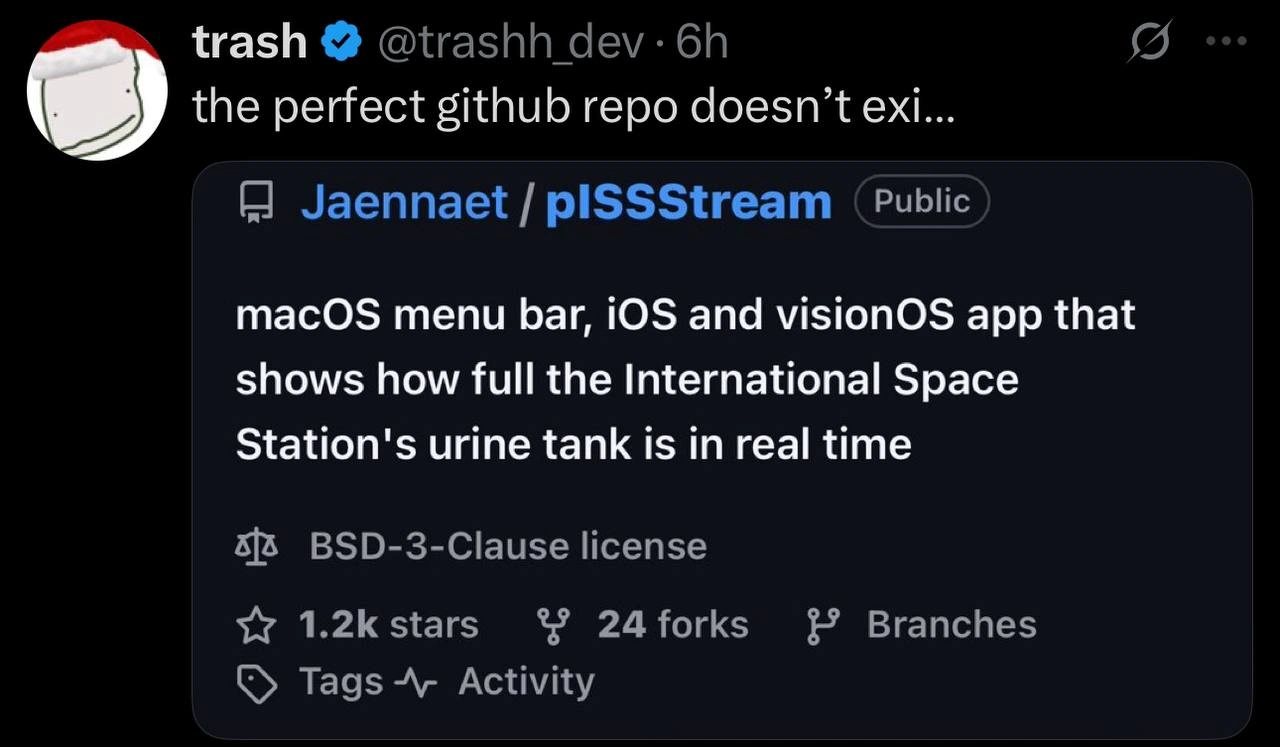
  • Donation tier $5–$24: Non-profits often categorize donors by how much they give. In the screenshot (from freebsdfoundation.org’s donors page), $5–$24 is the lowest tier of donation – meaning those donors gave at most $24. Above that might be higher tiers ($25-$99, $100-$499, etc., usually increasing). Apple being in the $5–$24 tier means Apple chose to give an amount in that range (likely the top of it, $24, to maximize being cheap but not one cent more). It’s funny because you’d expect “Apple Inc.” to maybe appear in a sponsor tier or at least a high donor tier, not rubbing shoulders with people who might have given just five bucks. Someone even highlighted Apple’s name in red in the screenshot to make sure we don’t miss it!

Now with those basics explained, the meme’s story becomes very clear:

  • Apple uses a bunch of FreeBSD code (because it’s free and open-source). After benefiting from it, someone at Apple says, “We should contribute back to be nice.” However, since the code is under the BSD license, Apple has zero obligation to share any of their own code or pay any money. This realization leads to Apple deciding to give just a tiny donation instead of something substantial – because they can. Apple figures, hey, it’s legally permissible and financially smart to minimize costs, so why not donate a token amount and call it a day?

  • The meme’s right-hand comic illustrates that plan in a funny way. The “Apple HQ” panel shows the internal discussion: we used their code, should we give back? and the response we have a loophole thanks to the BSD license, so let’s exploit it. The next panels show the act of donating: a big pipeline is humorously drawn to make it look like Apple is delivering something significant across the globe. But at the end of the pipe, only a single $24 coin pops out, which a cartoony FreeBSD rep eagerly catches. It’s a slapstick way to say: Apple’s return flow is literally one coin.

  • The left-hand screenshot is the receipts – proof that Apple really was listed as a donor in the “$5–$24” category. This grounds the joke in reality. It’s not purely hypothetical; Apple did donate somewhere in that range to the FreeBSD Foundation, which is almost embarrassingly low given Apple’s size. The fact that Apple’s name shows up there publicly is both hilarious and a bit outrageous to developers aware of how much Apple benefited from FreeBSD. It’s like seeing a millionaire tipping the valet with loose change – technically a tip, but come on!

For a junior developer or someone new to open-source culture, what’s key to understand is:

  • Open-source projects often depend on goodwill. Some licenses (like BSD/MIT) are very lenient, basically saying “here’s our code for free; do awesome things, and if you feel like it, contribute back or at least mention us.” Other licenses (like GPL) enforce sharing changes.
  • FreeBSD’s license allowed Apple to do what they did without breaking any rules. This was all legal and above board. Apple didn’t steal code – they followed the license. The license just didn’t demand any payback.
  • The comedic outrage is about the ethical or community expectation: sure, Apple didn’t have to give anything, but many people feel that if you gain huge advantages from a community project, you should at least support that project in a meaningful way (financially or with code contributions). Apple giving only $24 feels like when a huge celebrity shows up at a charity bake sale and buys one cookie. It’s technically support, but far below what they could do.

So the meme is basically a tongue-in-cheek lesson in open-source licensing and corporate behavior. It highlights the difference between permissive licenses (no strings attached, which can lead to minimal contributions back) and copyleft licenses (strings attached to ensure sharing). It also sheds light on how corporate culture might prioritize profits over altruism – a big company will happily use free code because it lowers their licensing costs, and then some will only give back if it makes them look good or if it benefits them directly.

In summary, Apple used BSD-licensed code from FreeBSD to build macOS/iOS (huge benefit), and then when it came time to “repay” or support the FreeBSD project, Apple made a token gesture. The #memeFriday post is poking fun at this imbalance. It resonated with developers because many have seen similar patterns: big companies riding on the backs of open-source projects and offering meager support in return. Understanding this gives you insight into why license choice matters for open-source projects and why some devs are cautious about overly permissive licenses – they’ve watched the richest companies in the world take free rides on community labor.

Level 3: Trillion-Dollar Token

This meme strikes a chord with seasoned developers because it’s industry satire at its finest – calling out how even the richest tech giants sometimes give back only symbolic amounts to the open-source projects they rely on. Here, Apple Inc., a company with a market cap measured in trillions, made it onto the FreeBSD Foundation donor roll in the $5–$24 bracket. Yes, you read that right – Apple’s name is literally listed alongside individual donors who gave twenty bucks or less. It’s like spotting a luxury superyacht in a sea of rowboats. The humor comes from that extreme contrast: a Big Tech giant doing the absolute minimum required (or in this case, not required but just enough for optics) to “repay” an open-source foundation. It’s a prime example of CorporateHumor mixed with IndustryIrony – the kind of joke that makes developers smirk and shake their heads because it’s both funny and disappointingly true.

Let’s break down the meme’s panels. On the left, we have a screenshot of the FreeBSD Foundation’s donor page (commemorating their 20th anniversary). In the $5–$24 donation tier, among a list of individual-sounding names, there’s a red highlight around “Apple Inc.”. This is not photoshopped – Apple really was listed in that humble tier. The right side is a four-panel MS Paint-style comic dramatizing the scenario:

Panel 1 (Caption: Apple HQ): A stick-figure Apple executive proclaims, “We used BSD code, now it’s time to contribute back.” A smaller figure interjects, “Hold on, it’s BSD licensed, right? I have an idea.”

This first panel sets up the joke. The exec’s ostensibly noble intention to contribute back meets the Legal Department/Accounting mindset: “Wait, since it’s BSD-licensed, we don’t actually have to give back much at all.” The phrase “it’s BSD licensed, right?” is the linchpin – it implies Apple’s legal team remembered that BSD’s permissive license means no obligation to share changes or profits. The cheeky idea forming in that smaller figure’s mind is basically: “Let’s appear to be good open-source citizens, but let’s do it on the cheap.”

Panel 2 (Caption: FreeBSD donation pipeline): A big green pipeline extends across a world map, presumably carrying Apple’s contribution towards the FreeBSD Foundation.

This is a visual metaphor: Apple initiating a “pipeline” to send something back to FreeBSD. It hints that a donation or some support is flowing… but given the setup, we know it’s not going to be much. The world map implies the money is traveling from Apple’s HQ (Cupertino, USA) to wherever the FreeBSD folks are (the Foundation is based in Colorado, but FreeBSD contributors are worldwide). It’s a playful way to show Apple’s global impact reduced to a tiny stream.

Panel 3: The end of the pipe is shown pointing downward, about to deliver whatever is coming through. There’s anticipation – maybe the FreeBSD community is waiting below for Apple’s generous payback?

Think of this like a cartoon trope: a huge pipe that you’d expect to gush out something big. Given Apple’s size, one might hope for a flood of support (maybe funding a team of FreeBSD developers, or at least a hefty check). But the suspense is part of the comedy – experienced devs know what’s coming will be comically small. This panel builds that expectation versus reality gap without words.

Panel 4: A crudely drawn, grinning face (representing a FreeBSD developer or the Foundation) is positioned under the pipe. Out of the pipe drops a single coin, labeled “$24”. The figure joyously catches the coin in his mouth, with an exaggerated eager expression. The caption floating near the coin simply says “$24”.

And there’s the punchline! Apple’s “contribution pipeline” yields a solitary $24 coin – the absolute maximum of that lowest donor tier and effectively pocket change for Apple. The grinning face catching the coin adds an extra layer of dark humor: it’s drawn to look overly grateful (perhaps absurdly so) for this measly donation. It satirizes how open-source maintainers might have to be thankful even for scraps, because often that’s all they get. The meme skewers the imbalance: Apple gets to build on FreeBSD (which is a robust open-source OS) gaining immense value, and in return FreeBSD’s community gets a token donation just big enough for a couple of pizzas at the meet-up. It’s IndustrySatire that hits close to home for those who know how common this scenario is.

From a senior developer’s perspective, this hits on real-world dynamics: Apple’s macOS and iOS are built on a core called Darwin, which includes a modified FreeBSD kernel and userland components (alongside the Mach microkernel). In other words, Apple’s engineers didn’t reinvent the wheel – they leveraged decades of work from the FreeBSD project (network stack, file systems, libraries, etc.) which came under a BSD license. Apple does fulfill the license requirements by crediting the open-source code they used (if you dig into Apple’s open source acknowledgements, you’ll find BSD components listed). But because of the license’s permissive nature, Apple never had to open source their own proprietary modifications or share any revenue – unlike, say, if they had based their OS on GPL-licensed code, which would have forced them to release their changes publicly. Apple obviously prefers the BSD route: it got a Darwin kernel with no strings attached.

So what did Apple give back? Not much, apparently. Sure, Apple has occasionally contributed some improvements back to open source projects it uses (they’re not 100% free-riders – e.g., they’ve open-sourced portions of macOS in their Darwin releases and contributed to LLVM/Clang, WebKit, etc., which align with their interests). But in the case of FreeBSD, the meme suggests Apple’s support was frivially small. We see “Apple Inc.” listed in the $5–$24 donor tier – the lowest public tier on the FreeBSD Foundation’s site. It’s as if someone in Apple’s finance or PR department said, “Throw them a bone so we can say we donated, but keep it under $25, please.” In corporate accounting terms, $24 is so low it might not even need managerial approval – it’s petty cash.

For context on how absurd $24 is: Apple’s annual revenue is on the order of hundreds of billions of dollars. In Q3 2023, Apple had roughly $20 billion in profit – that’s about $154,000 of profit per minute. $24 is what Apple makes in profit in about 9 milliseconds (literally the blink of an eye). So Apple’s donation to FreeBSD might be, figuratively, the earnings from a few milliseconds of iPhone sales. This stark mismatch is why developers find it both funny and exasperating. It’s the permissive license loophole incarnate – a Fortune 500 player taking full advantage of “free as in beer” software and leaving what amounts to a tip.

The meme’s dark comedic tone – that grinning face waiting for a single coin – resonates especially with veteran open-source contributors and system engineers. Many of us have seen similar dynamics: a huge enterprise uses an open-source library or tool to save probably millions in development costs, yet the maintainers of that project are scraping by on a few GitHub sponsors or one-time donations. (Remember the incident with OpenSSL’s Heartbleed bug: the software securing a large portion of the internet was maintained by only a couple of people on a shoestring budget, even though giant corporations depended on it. It took a crisis for big companies to finally pour money into it.) In the same vein, here’s Apple shipping millions of devices running a FreeBSD-based OS, and giving the FreeBSD project a token contribution.

This is why the meme feels so spot-on as IndustryIrony. It’s funny because it’s true: corporate use of OpenSource often far outpaces corporate support for it. Apple paying the absolute minimum to the FreeBSD Foundation is a perfect illustration of that free-rider phenomenon. The meme exaggerates it in a jokey format, but not by much – it’s pretty much depicting reality. And as a cynical veteran might note with a smirk, at least Apple bothered to donate something and put their name on it – they could have just remained an anonymous user of the code and given $0 (which many companies do). The sad, funny reality is that by donating ~$24, Apple actually did just enough to be able to say, “See, we support open source!” while keeping a straight face. It’s the bare minimum form of goodwill, and the meme brilliantly calls them out on it.

To sum it up, Apple’s $24 donation is the “trillion-dollar token” that symbolizes how a permissive license lets a company’s LicensingCosts be essentially nil. Seasoned devs chuckle (or groan) at this because it’s emblematic of how corporate culture can pay lip service to “giving back” without materially supporting the projects they depend on. The meme uses a simple comic and real evidence (that donor page) to deliver a scathing punch: Open source may be free, but that doesn’t mean big companies will part with more than coffee money to support it. It’s a biting commentary on the relationship between tech giants and the open-source communities that power them.

Level 4: Tragedy of the Commons Code

At the highest level, this meme exposes a free rider problem in the open-source ecosystem – essentially a tragedy of the commons scenario for code. The BSD license is a classic permissive license, meaning it imposes minimal restrictions on how code can be used. Companies can take BSD-licensed code, integrate it into proprietary products, and aren’t obliged to contribute back any changes or funding. This is by design: the license’s philosophy is “free as in do whatever you want, just give us a bit of credit.” In academic terms, BSD-licensed code is a public good – non-excludable (anyone like Apple can use it) and non-rivalrous (one’s use doesn’t prevent others from using it), but it suffers from the free-rider issue: if everyone takes and nobody gives back, the maintainers might struggle to sustain the project.

This permissive vs copyleft tension has deep historical roots in OpenSource culture. The meme’s situation is practically a case study vindicating the copyleft camp (e.g. the GNU GPL license). Copyleft licenses were created exactly to prevent this kind of scenario – they say, “Sure, you can use our code, but if you distribute something based on it, you must share your improvements under the same terms.” It’s a reciprocal deal ensuring the community benefits from corporate use. The BSD license takes the opposite approach: it maximizes freedom for the user (even if that user is a trillion-dollar corporation), trusting that they might voluntarily contribute back. The paradox is that while permissive licensing encourages widespread adoption (because companies love not having strings attached), it also enables such spectacularly lop-sided outcomes: Apple can incorporate enormous amounts of BSD code into macOS/iOS and give almost nothing in return, entirely legally.

From a theoretical perspective, this is open-source economics 101. The humor here is laced with a bit of pain: it highlights how CorporateCulture can game the “no strings attached” model of permissive licensing. It’s the software equivalent of a billionaire using a public resource and leaving a crumpled dollar bill as a thank-you. This isn’t a technical constraint like the CAP theorem or an NP-hard problem – it’s a cultural and licensing issue. The constraints are legal and ethical: the BSD license’s generosity creates a loophole where companies can appear benevolent by following the letter of the license (maybe giving a token donation or credit) while violating what many see as the spirit of open collaboration. The meme’s punchline – Apple’s $24 donation – poignantly illustrates the outcome of that permissive ethos. It’s a reminder of why copyleft licenses were invented, and why open-source maintainers sometimes feel like they’re living the tragedy of the commons: everyone benefits from the shared code commons, but almost no one pays the maintenance costs.

Description

This is a two-part meme criticizing Apple's minimal financial support for the FreeBSD project, whose code is a foundational part of Apple's operating systems. The left side of the image is a screenshot of the FreeBSD Foundation's donor page, specifically the '$5-$24' donation tier. Highlighted in a red box within this list is 'Apple Inc.', providing a factual basis for the meme. The right side is a four-panel rage-style comic. The first panel, labeled 'Apple HQ', shows executives deciding to 'contribute back' for using BSD code, with one having an 'idea' upon realizing it's BSD-licensed. The subsequent panels depict a massive 'FreeBSD donation pipeline' stretching from Apple to the open-source community, which ultimately delivers a paltry '$24' to a greedily waiting developer. The joke contrasts the immense value Apple derives from FreeBSD with its comically small donation, satirizing corporate attitudes towards open-source dependencies
Comments

11
Anonymous ★ Top Pick Apple using a BSD license is the ultimate 'It's not a bug, it's a feature' for their legal and accounting departments
  1. Anonymous ★ Top Pick

    Apple using a BSD license is the ultimate 'It's not a bug, it's a feature' for their legal and accounting departments

  2. Anonymous

    Apple’s CFO: “According to our cost model that’s $0.0000003 per shipped line of BSD - congratulations team, we’ve achieved negative CAPEX on open source.”

  3. Anonymous

    Apple's $24 donation to FreeBSD is like pushing a hotfix that only updates the copyright year - technically a contribution, but everyone knows you're just checking a compliance box while your entire kernel subsystem depends on their decades of work

  4. Anonymous

    Apple's entire OS stack sits on decades of BSD work - Darwin kernel, userland utilities, network stack - yet their FreeBSD Foundation contribution is literally less than a Netflix subscription. It's technically legal under the BSD license, but it's the engineering equivalent of taking the entire buffet home in Tupperware because the sign said 'all you can eat.' Meanwhile, FreeBSD maintainers are debugging race conditions in code that powers a $3 trillion company for the price of a large pizza. The permissive license giveth, and the quarterly earnings taketh away

  5. Anonymous

    The BSD license: where “give back” is an optional callback - Apple executed it with a 24‑byte payload

  6. Anonymous

    BSD licensing is basically UDP - Darwin streams out, and the only ACK you get back is $24

  7. Anonymous

    Apple HQ's BSD donation: The kernel of their success, returned in pocket change

  8. @ahmubashshir 2y

    why did u assume it's $24, not $5?

    1. @pod1425 2y

      ye, 5 sounds more like apple tho i think it was 5 on paper, 2 in reality

  9. @ZgGPuo8dZef58K6hxxGVj3Z2 2y

    Which year?

  10. @prirai 2y

    IPhone 15 so $15.

Use J and K for navigation