Skip to content
DevMeme
6130 of 7435
Necrobotics: The AI-Powered Zombie Spider Surgeon You Didn't Ask For
Robotics Post #6720, on Apr 29, 2025 in TG

Necrobotics: The AI-Powered Zombie Spider Surgeon You Didn't Ask For

Why is this Robotics meme funny?

Level 1: Creepy-Crawly Doctor

Imagine you have something very delicate that needs fixing – say, a tiny splinter in your eye (ouch!). Now, would you feel okay if the “doctor” that comes to help is basically a robot made from a spider’s body? 😨 It sounds like a spooky story: a little spider that’s no longer alive being moved around by a computer to act like a tiny surgeon. This is why the meme is both funny and scary – because trusting a spider-robot to work on your eyeball is like trusting a zombie bug to do a super important job. It’s a bit like if someone took a dead bug, turned it into a remote-controlled toy, and said “Sure, this will fix you right up!” Most people would jump back and say, “No thanks!”

The humor here comes from how outrageous that idea is. It mixes something really gross and creepy (dead spider) with something very serious and delicate (eye surgery). Normally, we want a skilled human doctor or at least a high-tech clean robot for something like eye surgery. The thought of an eight-legged creepy-crawly, even if it’s controlled by a smart computer, doing the operation is so bizarre it makes you giggle and shiver at the same time. It’s a bit like a scene from a cartoon Halloween special where a mad scientist uses a spider to stitch up a doll – you’d watch through your fingers, half laughing, half cringing. In simple terms, the meme is asking: How far can science go before it’s just too weird for comfort? And the answer it hints at is: probably about this far! The question “Would you trust it?” makes us all shake our heads with a nervous laugh, because the idea is both cool (in a science way) and totally eeeew (in a normal person way).

Level 2: Robotics Meets Roadkill

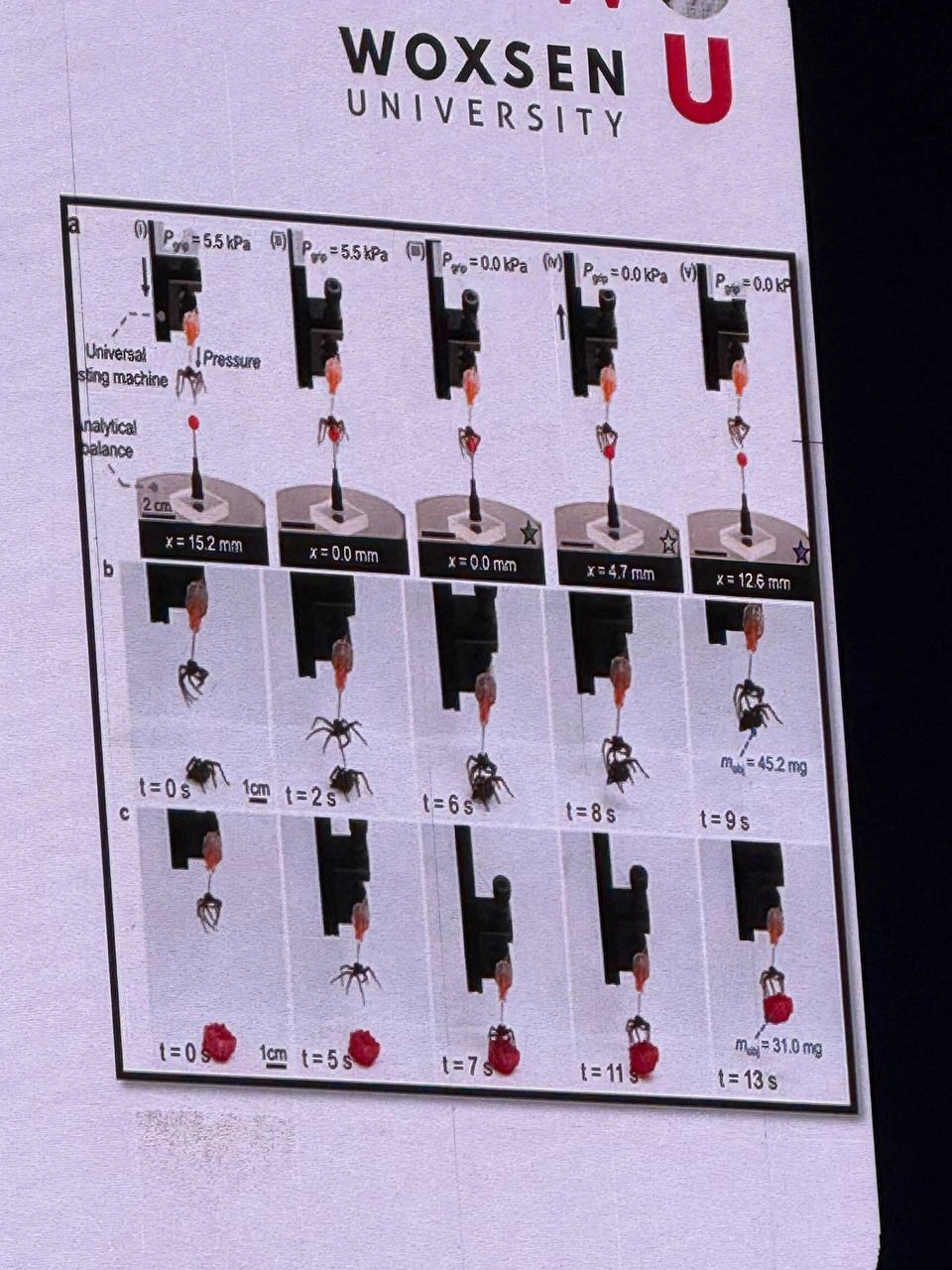
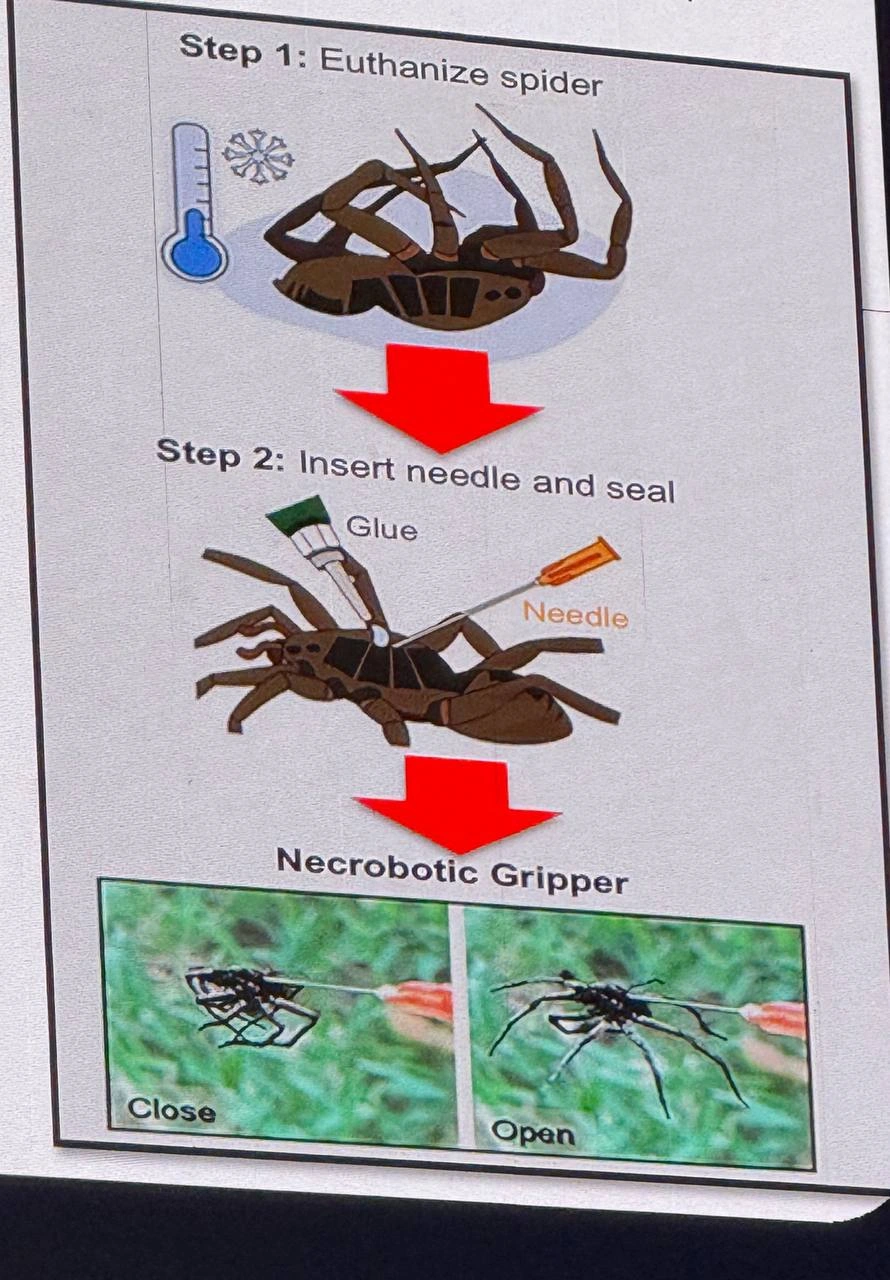
So, what exactly is going on in this meme? Let’s break down the core idea in simpler terms. Necrobotics is a mash-up word from “necro” (meaning dead, like necromancy) and robotics. It literally means using dead organisms or their parts as robotic components. In this case, scientists took a dead spider and turned it into a robot gripper — essentially a tiny mechanical claw that can pick up and manipulate objects. Why a spider? Spiders have a nifty natural design: their legs are like little hydraulic arms. When the spider was alive, it would pump fluid into its legs to stretch them out and move. After it’s dead, the legs don’t move on their own, but if you manually inject fluid (or air) into the right spot, the legs will extend as if the spider were alive and trying to grab something. It’s a bit like if you found a deflated balloon-powered toy and realized you could blow air into it to make the parts move again. The researchers basically did that: they inserted a tiny needle into the spider’s body, sealed it with glue (as one slide shows “Step 2: Insert needle and seal”), and then used that setup as a “necrobotic gripper” to pick up very small objects. Those photos with labels like “x = 152 μm” and tiny weights (in milligrams) are showing how far the spider’s legs moved and how much weight they could lift in tests. It’s a real experiment — they measured that a spider gripper could lift something like 6.5 milligrams (which is extremely light, about the weight of a few grains of sand, but hey, for a dead spider that’s impressive!).

Now, the meme specifically asks: Would you let this thing do surgery on your eyeball? That’s where the humor and horror mix. AI-controlled surgery is a serious field — hospitals use robotic tools for precision, and sometimes AI helps guide surgeons or even directly control micro-movements that are too subtle for human hands. But those are usually shiny, purpose-built metal instruments, not, you know, former living creatures. The thought of an AI (or any computer) controlling a spider-corpse-turned-robot to work on your eye is super creepy. It’s like something out of a Halloween version of a tech demo. Yet, according to the tweet, the speaker in the talk said it’s not theoretical — implying some research might be considering such an application. Perhaps for very precise micro-surgery on something like an eyeball, a spider-leg gripper could hypothetically have the right gentle touch. In practical terms, though, this crosses a big yuck-factor line.

To a junior dev or someone new to robotics, this also highlights how AI and robotics can venture into really unconventional territory. We often imagine robots as rigid metal things or maybe sleek soft plastic machines. Here we have a robot that’s basically part hardware, part real dead animal. It’s a kind of bioengineering that feels “wrong” at first gut reaction, which is why people find it funny and freaky. Think of it this way: engineers are tasked to solve problems with whatever tools they have. Need a tiny gripper? Well, Mother Nature made millions of tiny grippers that work great (spider legs) – so one maverick solution is to use that. It’s unorthodox, but it’s an actual solution being explored. This meme also taps into tech humor about how far engineers will go. It’s like the ultimate example of “using a hacky solution to fix a problem.” You can almost imagine an engineer saying, “We didn’t have the budget for a fancy micro-robot hand, so we… uh… improvised with a spider from the lab.” In a way, it’s resourceful and innovative – a bit like using strange libraries or hacks in code to solve a problem quickly, except here the “library” was once crawling in a web.

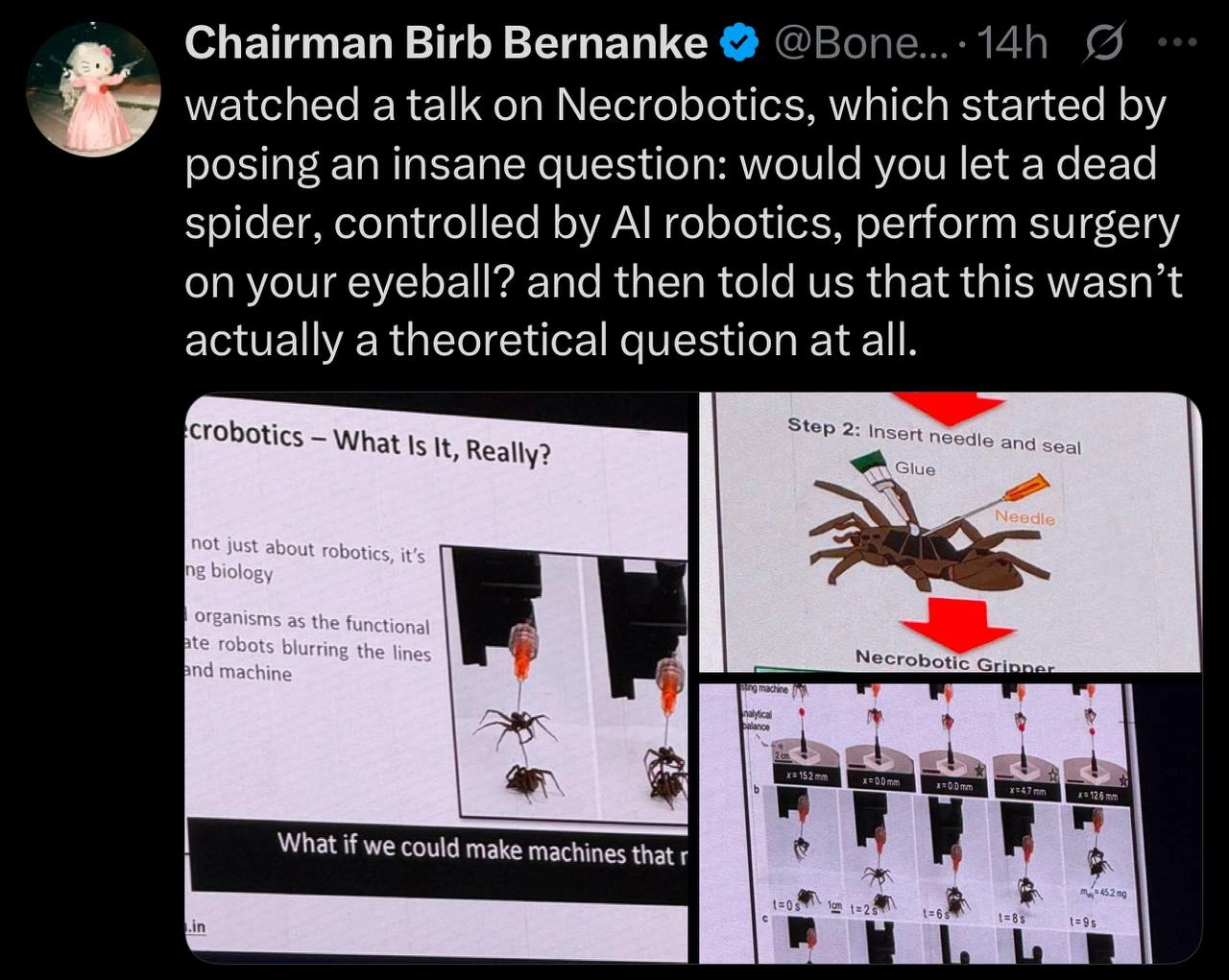
The tweet format (dark-mode Twitter screenshot) also clues us in that this whole scenario is being shared as a wild anecdote from a conference. The Twitter user’s tone (“posing an insane question… and then told us it wasn’t theoretical at all”) is very much “you won’t believe what I just heard.” In developer circles, we share crazy talk highlights or demo fails in exactly this way. It’s part of tech culture to be a little sensational when debriefing a conference talk that blew your mind or freaked you out. Tags like #nightmare_fuel and #cyberpunk_reality in the context are basically saying: this is the stuff of dystopian science fiction, but it’s happening now. And indeed, “necrobotics” sounds like a plot element from a cyberpunk novel – merging dead creatures with AI control is edgy and provocative. For someone newer to tech, it’s a lesson that innovation isn’t always comfortable or pretty. Sometimes it involves spiders and needles and things that make you squirm, but it can still be cutting-edge engineering.

Level 3: Nightmare Fuel Engineering

For seasoned developers and engineers, this meme hits that sweet spot of “hilarious in theory, horrifying in practice.” The tweet sets us up with an outrageous hypothetical – “would you let a dead spider, controlled by AI, perform surgery on your eyeball?” – which sounds like a drunk techie’s attempt at a spooky campfire story. The punchline (or plot twist) is that it’s not hypothetical at all: some intrepid researchers actually did the first steps of this by turning dead spiders into working grippers. The comedic horror here stems from the juxtaposition of a clinical PowerPoint slide deck with what is essentially a scene from a low-budget cyberpunk horror film. We’ve got formal conference slides calmly explaining “Necrobotics – What Is It, Really?” right next to a Twitter user (with a cheeky handle, Chairman Birb Bernanke) basically screaming “WTF, this is real!” in disbelief. Every senior engineer has experienced a moment where a wild idea from sci-fi or a hackathon suddenly becomes a legit project, and the initial reaction is: They’re actually doing that?! This meme captures that exact feeling.

Let’s unpack the elements: AI_ML and Robotics are tags, so we’re talking about applied artificial intelligence and engineering. In practice, “AI-controlled surgery” is already a thing (think surgical robots like the da Vinci system), but the “dead spider” twist catapults it into the absurd. AIHype comes in because everything cool these days is attributed to AI – perhaps the spider robot has a fancy AI vision system to guide its creepy little legs on your delicate cornea? Or maybe calling it AI is just marketing flair when it’s really a grad student with a joystick (we’ve all seen projects where “AI-powered” is more buzzword than reality). The meme pokes fun at how far the hype can go: from self-driving cars to… self-moving deceased arachnids? It’s as if engineering has a checkbox: “Is it powered by AI? Is it a robot? Is it absurd enough to go viral on Twitter? Great, ship it!”

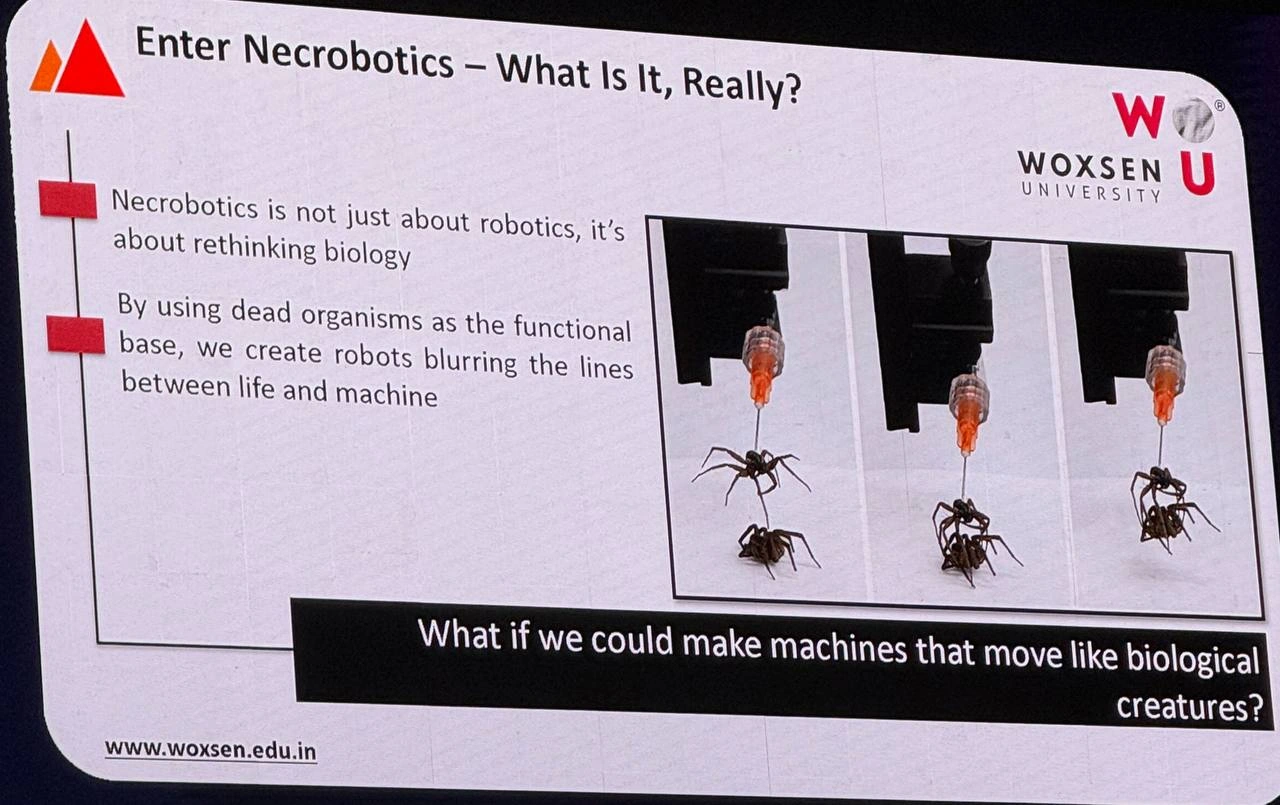
For those in robotics, the engineering absurdity here is both amusing and admirable. On one hand, building a necrobotic gripper is the ultimate mad-scientist flex – you know some PhD students in a lab basically said “Hold my beer” and literally glued a syringe to a spider to see what happens. On the other hand, it actually addresses a real problem: micro-manipulation. Seasoned hardware engineers know how hard it is to create tiny, delicate grippers for tasks like microsurgery or assembling microelectronics. Traditional small-scale robots struggle with power, precision, and fragility. So the slide’s subtext “What if we could make machines that [use biological organisms as functional parts]” points to an outside-the-box solution: use nature’s own micro-tools. It’s engineering ingenuity, albeit with a side of nightmare fuel. This contrast — brilliant solution versus horrifying mental image — is where the meme’s humor lies. It’s the same laugh we let out when someone says “it’s not a bug, it’s a feature” about something truly horrifying in the codebase, except here it’s literally a bug (well, an arachnid) being the feature.

The conference talk vibe in the slides also resonates with tech folks. We’ve all sat through talks where the intro slide asks a provocative question to hook you in. Usually, it’s something tame like “Would you trust an AI to drive your car?” but here they cranked the dial to 11: eyeball surgery via zombie spider-bot. That’s a room-awakener for sure. And then the speaker coolly reveals, “Not only is this possible, we did it.” Cue half the audience laughing nervously and the other half frantically taking notes for their own future crazy projects. This meme captures that collective “holy crap, they actually built it” moment. It also reflects a bit on our trust in technology. Robotics and AI in medicine require immense trust — people already hesitate with laser eye surgery performed by a machine; imagine telling them the machine has eight legs and used to crawl on the ceiling. Even among jaded engineers, there’s an unspoken line of absurdity, and this crosses it in the funniest way. It’s the ultimate hardware humor: the project that makes you ask “Who signed off on this?!” while secretly you’re glad someone tried it, just to see if it could be done.

Level 4: Bio-Mechanical Resurrection

In the deepest technical sense, this meme touches on the frontier of biohybrid robotics – a field blurring the line between living organic components and machines. The idea of using a dead spider as a robotic gripper isn’t just sci-fi provocation; it’s rooted in clever biomechanics. A spider’s legs aren’t moved by muscles alone – they function via hydraulic pressure. In life, a spider pumps fluid into its legs to extend them, and relaxes pressure to contract (which is why a dead spider’s legs curl inward – the pressure is gone). Researchers realized they could reanimate that hydraulic system by injecting fluid into a dead spider’s prosoma (the central body where the legs attach) and effectively turn the spider’s curled legs into a working set of mechanical claws. It’s a mind-bending example of leveraging nature’s own mechanical design: the spider’s leg architecture is a ready-made micro-actuator with millions of years of R&D (via evolution) behind it. Why painstakingly engineer tiny hinged grippers for delicate micro-surgery when evolution’s already perfected a flexible, gripping appendage at millimeter scale? That’s the shockingly pragmatic logic here – use biological hardware for tasks our synthetic hardware struggles with.

From a theoretical perspective, this is biomimetics taken to its extreme conclusion: not only imitating nature’s design, but directly integrating once-living components into robots. We’re co-opting nature’s optimized solutions (like the spider leg’s force-to-weight efficiency) beyond what our current microfabrication can achieve. This raises fascinating questions in robotics and control theory. Consider the control system needed: you have a non-linear, squishy hydraulic mechanism (the spider’s leg) now rigged to a pump under computer control. Traditional robotic control loops (PID controllers, etc.) have to account for the compliance and unknown variables of biological tissue. The AI angle implies using advanced control models or even machine learning to manage this unconventional actuator – perhaps calibrating pressure vs. grip force through trial data, adapting as the biological material degrades. Yes, degrades: unlike steel or silicone, a dead spider leg’s material properties will change (dry out or break) over time, adding a layer of complexity in reliability. It’s the literal embodiment of "single-use component" if each spider gripper can only perform so many operations before wear and tear (or, well, decay) sets in. In formal terms, engineers might have to consider the mean time between failure of a necrobotic gripper, akin to how many cycles a mechanical part can perform, except here the part is a once-living tissue.

There’s also an implicit nod to cybernetics and even philosophical notions of what constitutes a machine. By repurposing dead organic matter as machinery, we’re in a space where classical robotics intersects with biology and even a bit of horror. It’s as if Dr. Frankenstein took an engineering elective: resurrecting an animal limb to serve as a tool. If we abstract away the unsettling source, it’s an elegant solution to a hard engineering problem (micro-actuation). But it also forces us to confront the ethical and theoretical limits: is the future of micro-robotics going to be a morbid menagerie of repurposed critters, or will this remain a thought experiment to inspire fully synthetic analogues? The meme’s scenario – AI-controlled dead spider performing eyeball surgery – underscores how far this concept pushes into the uncanny valley of technology. The uncanny valley usually refers to humanoid robots looking almost human and freaking us out; here it’s using real body parts in robots that triggers our deep-seated unease. It’s a cutting-edge convergence of mechanics, biology, and AI control theory, and it has all the makings of an academic fever dream that somehow crawled out of the lab and into real life.

Description

This image is a screenshot of a tweet combined with images from a scientific presentation about 'Necrobotics.' The tweet, from user Chairman Birb Bernanke, describes watching a talk that posed the question: 'would you let a dead spider, controlled by AI robotics, perform surgery on your eyeball?' The tweet adds that this was not a theoretical question. Below the tweet are several images from the presentation. One slide is titled 'Necrobotics - What Is It, Really?' and discusses using organisms as functional robots. Another slide provides a diagram of a 'Necrobotic Gripper,' showing how a needle is inserted into a dead spider to control it. A third image shows a time-lapse of the necrobotic spider successfully gripping a small object. The post juxtaposes a genuinely horrifying, visceral application (eyeball surgery) with the stark, academic reality of a new and unsettling field of robotics. This is real research from Rice University, where scientists use the natural hydraulic pressure in spiders' legs to turn their corpses into grippers. For a technical audience, it's a fascinating, if terrifying, look at the extreme edge of bio-robotics and the ethical questions that arise when we blur the lines between organism and machine
Comments

7
Anonymous ★ Top Pick Debugging this is simple. If the patient screams, roll back the deployment. If the spider screams, you've discovered a much bigger problem
  1. Anonymous ★ Top Pick

    Debugging this is simple. If the patient screams, roll back the deployment. If the spider screams, you've discovered a much bigger problem

  2. Anonymous

    Necrobotics: because why rewrite when you can strap AI to a dead spider and call it “serverless surgical tooling” - the hardware equivalent of slapping a GraphQL façade on a 2003 SOAP endpoint and trusting it with your eyeball

  3. Anonymous

    Finally found a use case for all those spiders in production that's scarier than the ones in our dependency graphs

  4. Anonymous

    Ah yes, the classic engineering pivot: 'What if we could...' immediately followed by 'Wait, we already did.' Necrobotics perfectly captures that moment when you realize the most horrifying part of a tech demo isn't the ethical implications - it's that someone already got funding for it. Nothing says 'move fast and break things' quite like reanimating arthropod corpses for precision surgery. At least when your CI/CD pipeline fails, it doesn't involve explaining to your stakeholders why you're using deceased arachnids as actuators. Though honestly, given some production incidents I've seen, a dead spider gripper might be more reliable than our current deployment process

  5. Anonymous

    AI-controlled dead spider for eye surgery: the only production system where a failing liveness probe is “healthy” by design

  6. Anonymous

    Only in 2025 could an architecture review end with: “approved, pending IRB - please document glue rollback and the eyeball canary.”

  7. Anonymous

    Necrobotics: reviving 'dead on arrival' hardware with glue - the legacy systems playbook for soft robotics

Use J and K for navigation