Necrobotics 101: It's Not a Bug, It's a Feature (Literally)
Why is this Robotics meme funny?
Level 1: Creepy-Crawly Claw Machine
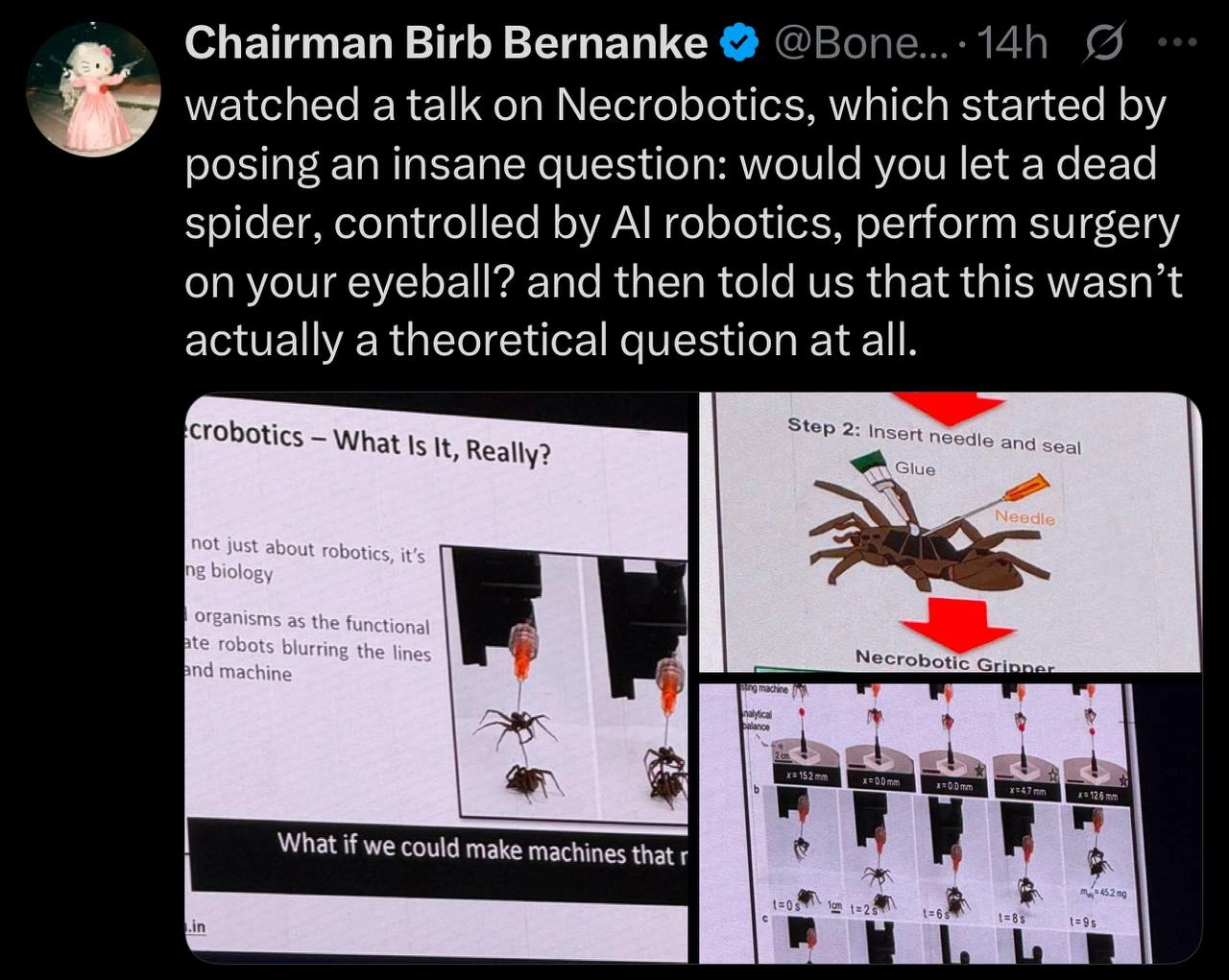
Imagine you have a little claw toy – you know, like the arcade game where a claw picks up a prize. Now, instead of a metal claw, picture using a real spider’s leg as the grabbing tool. 😮 Sounds like a Halloween trick, right? In this meme, people actually did that in real life! They took a spider that had died (no more spidery life in it) and used its natural leg mechanism to make a tiny grabbing machine. It’s like if you found a neat nature-made tool and said, “Hey, I can use this!”
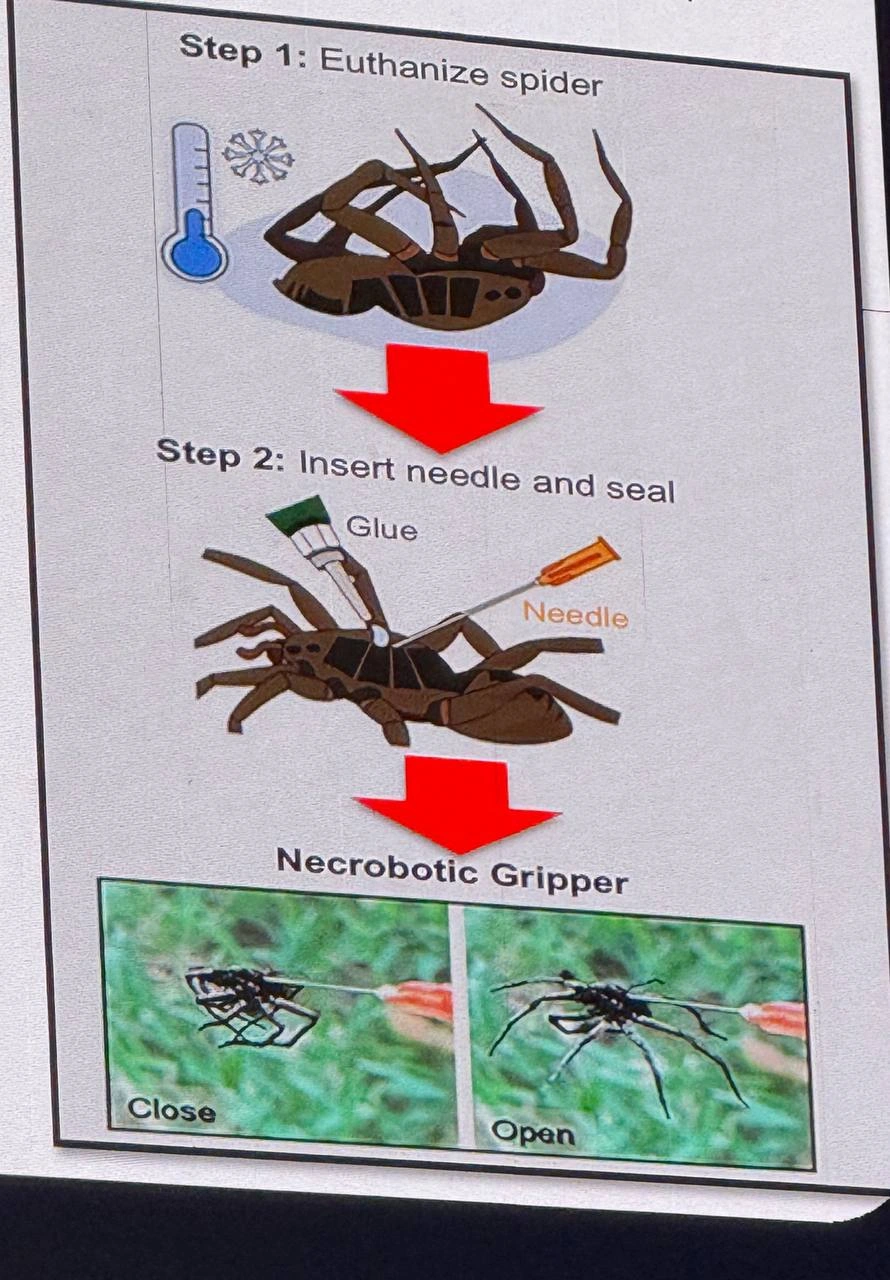
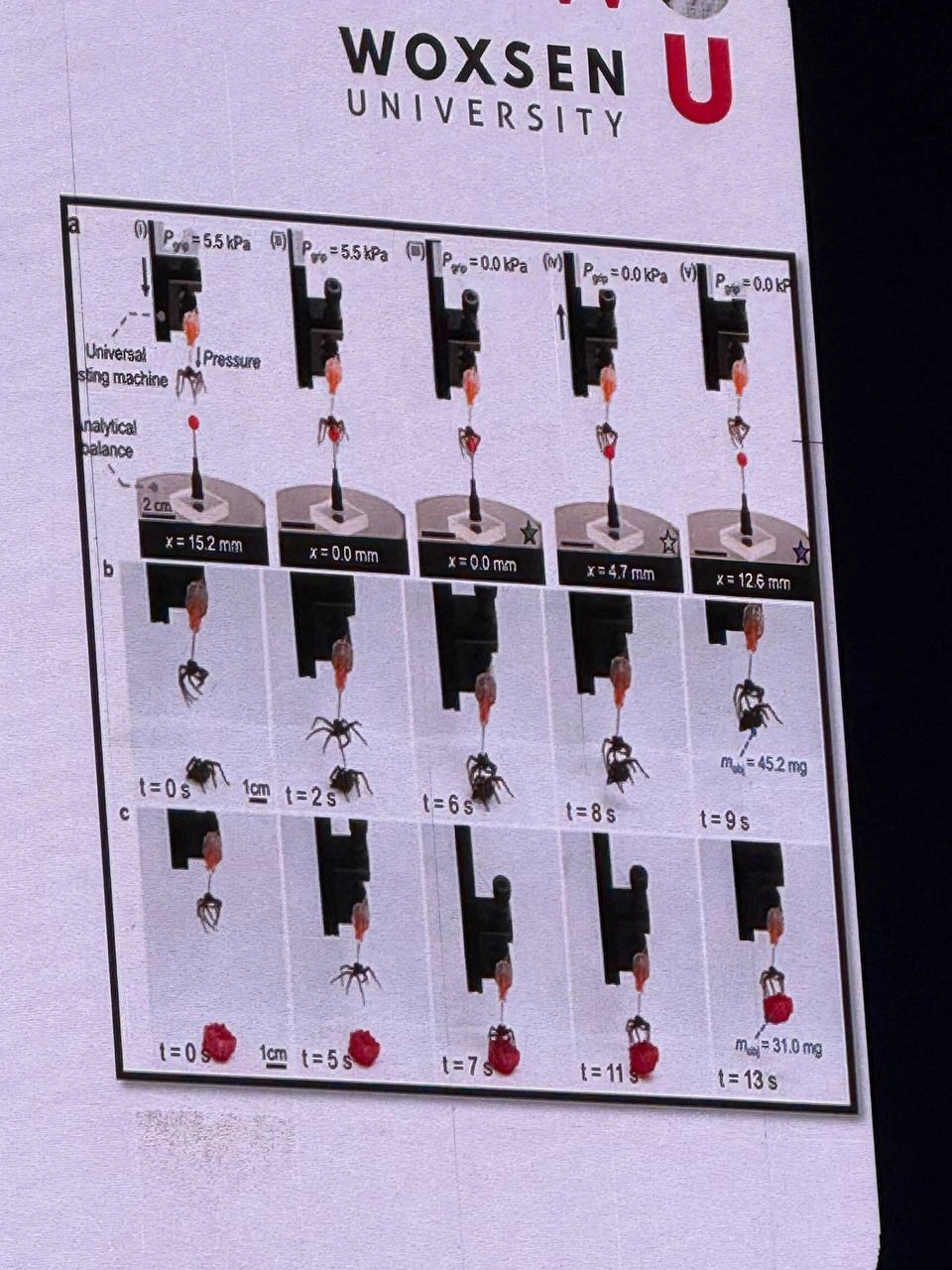
Here’s a super simple analogy: think of a water balloon that opens a flower’s petals when it fills up, and the petals close when the water is let out. The spider’s legs are a bit like those petals. By pushing a little air or fluid in (using that orange-tipped syringe you see in the picture), the legs spread out and open. Take the pressure away, and the legs go limp and close around whatever they’re touching. So it works like a small claw that can pick something up when it closes. The funny/strange part is what they used – a spider that used to be alive. It’s both clever and a bit creepy, kind of like a zombie toy.
Why is it amusing or fascinating? Because usually robots are shiny metal or plastic and built from scratch. Here someone said, “Let’s recycle a dead spider as a robot part!” It’s such a weird idea that you can’t help but chuckle and say “Ew, but cool?” at the same time. Essentially, the meme’s question “What if machines could move like biological creatures?” was answered by literally using a piece of a biological creature to make a machine move. It’s a mix of science and silliness that even a kid can find interesting: they made a spider’s body into a gadget. It shows how inventive (and surprising) engineering can be – sometimes inventors will use anything, even a creepy crawly, to solve a problem or to show what’s possible.
Level 2: Nature's Robot Parts
Dropping down a notch, let’s explain some of these ideas more plainly. Necrobotics (necro = dead, robotics = robots) means using dead organisms or their parts as robot components. In this meme’s case, the part is a spider’s legs acting as a robot gripper. A gripper is like the claw at the end of a robot arm – it grabs and releases items. Normally, a gripper might be made of metal or plastic with tiny motors or pneumatic bladders. Here, the spider already has built-in grabbing legs, and all we need is a way to move them. That’s done with a syringe pushing air or fluid into the spider, working kind of like a syringe pump. This is possible because spiders are basically little hydraulic machines: they extend their legs by pumping fluid inside, and when the fluid pressure drops (like when it’s dead or when it wants to retract), the legs curl. The researchers took advantage of this natural mechanism – poke a needle into the spider’s body (the prosoma, or front part of its body, basically the engine housing the leg hydraulics) and use air pressure to force the legs open, then release and the legs close around an object. HardwareEngineering often looks at nature for inspiration (we call it biomimicry), but this takes it a step further by using nature’s actual materials. It’s not even bio-mimicry, it’s literally bio-usage.
Now, about those terms and why people find this funny or intriguing: OverEngineering is when you solve a problem in a more complicated or excessive way than necessary. Using a whole deceased spider to make a grabby tool might be seen as over-engineered (or perhaps creatively engineered) because, well, you could also build a small claw with existing tech. It feels like using a wild solution for maybe a simple need – kind of like building a smart toaster with AI to do the job of a $5 toaster. It’s humorous because engineers sometimes do ridiculously elaborate things just to see if they can (and to publish a cool paper!).
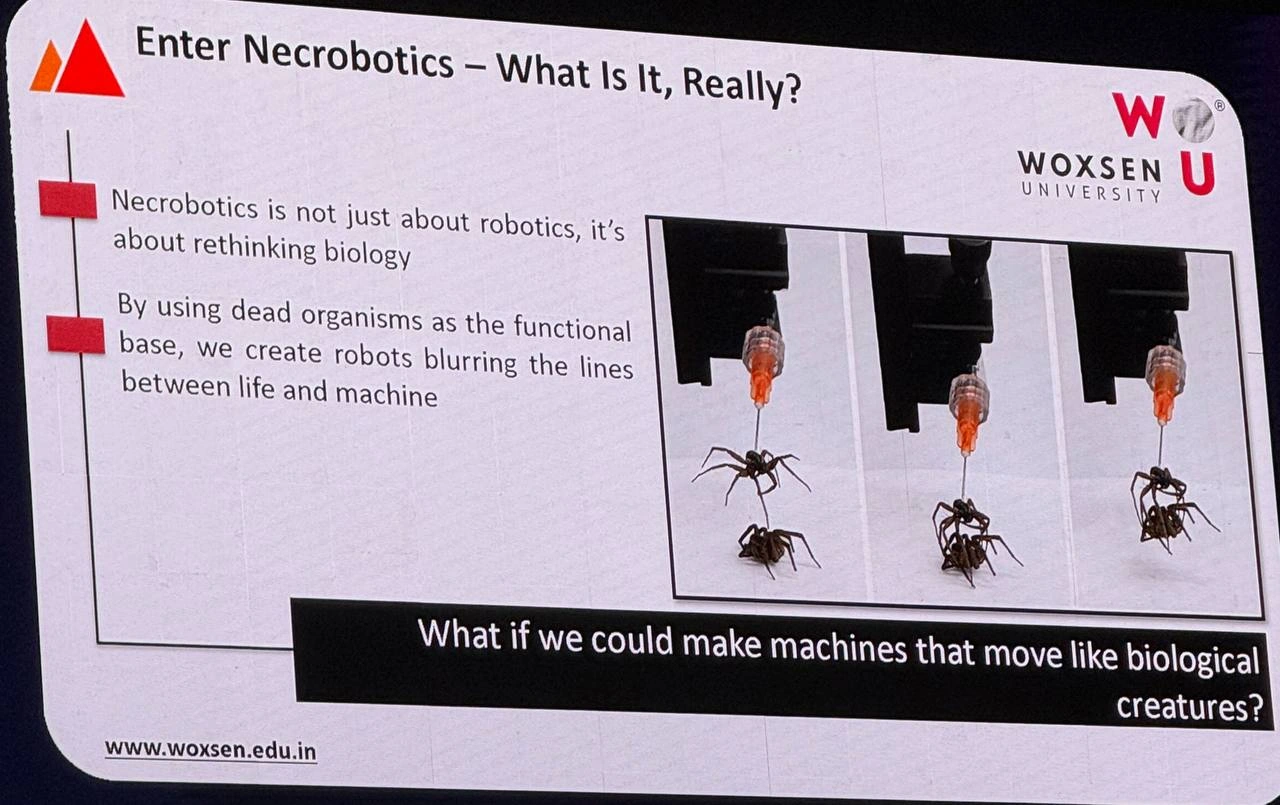
EngineeringEthics comes into play because this approach makes us consider: is it okay to use dead animals in our machines? There’s no clear answer – some will say “the spider’s dead anyway, and it’s for science, so why not?”, while others get the heebie-jeebies thinking about reanimated corpses in robotics. This isn’t a sentient being, just a mechanical use of remains, but it’s a new territory. That black question on the slide, “What if we could make machines that move like biological creatures?” speaks to that life_machine_blur: the line between what’s alive and what’s a machine is getting fuzzy. We already had biohybrid_robots like robots with living muscle cells or cyborg insects with implants, and this spider gripper is a provocative addition to that list.
Within robotics (which falls under Hardware in tech categories because it’s about physical machines), there’s also the concept of soft robotics – making robots from squishy, flexible materials or even using living tissue, to move more like natural organisms. A dead spider is more of a soft-ish robot part (its exoskeleton joints are flexible when the hydraulics work). So you can see this project as part of that cutting edge experimentation.
From a junior engineer’s viewpoint, this meme might also be a bit about the TechHypeCycle. That’s a model describing how new technologies often get wildly hyped early on, then face a reality check. Necrobotics could be in that “wow hype” phase – it sounds super futuristic (“robots made from dead spiders!” headlines) – but will it become common? Hard to say. Early-career folks might recall other hyped tech that got lots of attention but didn’t pan out immediately (like Google Glass, or more relevantly, other bio-robots that haven’t escaped the lab yet). So there’s a tongue-in-cheek sense that this spider idea is cool, but also maybe just an academic flex or a fun science story rather than something that will be in every factory next year. It’s HardwareHumor in that it shows the extreme things hardware tinkerers come up with.
To put it concretely: imagine you walk into your university lab as an undergrad intern, and your professor is casually using a syringe to puppet a spider’s legs. It’s equal parts “Whoa, that’s genius!” and “Are we the baddies?” 😅. The meme captures that vibe on a conference slide: formal title, university logo, and then this crazy spider contraption. It’s a perfect recipe for an internet share because it’s visually striking and conceptually shocking. As a junior dev or engineer, you learn that innovation sometimes means coloring way outside the lines – and that can be both inspiring and a little disturbing.
Key terms in plain speak:
- Robotics: building robots – machines that can sense, move, and do tasks.
- Hardware: the physical parts of technology (as opposed to software). Here, hardware includes the robot parts and apparently a spider’s body.
- Actuator: a component that moves or controls something. (In robots, motors or pistons are actuators. In the spider, its legs act as actuators when fluid is pumped in.)
- Gripper: the “hand” of a robot, used to pick things up. The spider’s legs collectively function as a tiny four-fingered hand.
- Necrobotics: using once-living things in robots. It’s a new term, kind of a spooky cousin of biomaterials in engineering.
- Biohybrid robot: a robot that is part biological, part synthetic. This spider gripper is biohybrid because the spider is biological (though dead), and the syringe apparatus is synthetic.
- Life-machine blur: a phrase reflecting how it’s getting hard to say what’s purely alive or purely a machine. When you have living cells in robots or robots controlling living creatures (like cyborg cockroaches used in search-and-rescue experiments), you’re mixing the two worlds. Here, using a dead spider as a machine part also blurs that line in a different way.
- Engineering ethics: the field where we ask “should we do this?” about technology. It covers everything from safety to environmental impact to, yes, using dead spiders as tools. Good engineers consider ethics when doing crazy new things.
- Over-engineering: doing something in a more complicated way than necessary. Often done for fun, learning, or showing off. This spider gripper could be seen as over-engineered or cleverly bio-engineered, depending on your perspective. It definitely isn’t a solution most people would think of first!
To sum up this level: the meme’s scenario is real cutting-edge robotics experimentation presented with a mix of hype and academic flair, and it’s funny/interesting because it’s such a strange solution. It teaches newcomers that engineering can take really unconventional paths – and that each new idea, especially the freaky ones, comes with questions about practicality and ethics that the whole community gets to discuss (often with a dose of humor).
Level 3: Spiders as Servos
At the high end of complexity, this meme is pointing to a wild intersection of robotics and biology that has even seasoned engineers raising an eyebrow (and maybe eight more on the spider’s behalf). The slide boldly introduces necrobotics – essentially using dead organisms as robot components – with a straight face. This isn’t just sci-fi movie fluff; it's real research where a dead spider is repurposed into a mechanical gripper. Why would anyone do this? Well, a senior robotics geek would explain that spider legs are basically natural hydraulic actuators. Inside each leg, spiders use fluid pressure (their blood, called hemolymph) to extend them. When a spider dies, it loses pressure and the legs contract (ever seen a curled-up dead spider? That’s why). These researchers stuck a syringe into the spider’s body, pumped in a bit of air, and voila – the legs unfurl and can grip objects again, like a claw machine from the underworld.
From a seasoned developer’s perspective, the humor – and horror – comes from the overengineering and the ethical tinkering on display. We have countless hardware engineering solutions for tiny grippers (micro-servo motors, 3D-printed claws, soft robotic fingers made of silicone...), yet here someone said, “Let’s use a literal spider instead.” It's both brilliant and bonkers. There’s a hint of Tech Hype Cycle absurdity: academics demo a jaw-dropping biohybrid robot at a conference, the crowd and press go wild about “blurring the lines between life and machine,” and half the engineers watching are thinking: Is this the next big thing or have we all gone mad science today? 🕷️
The meme’s slide even bears a university logo and website, as if this is proudly sponsored innovation. An experienced dev or roboticist might chuckle darkly because it blurs engineering ethics: it raises questions like, “Just because we can reanimate a spider, should we? Are we comfortable turning once-living creatures into tools?” It’s a textbook EngineeringEthics debate dressed up as a tech demo. The black footer asks, “What if we could make machines that move like biological creatures?” The senior crowd might answer: We can, and we did – but at the cost of literally using biological remains. This tension – equal parts fascination and creep-out – is exactly why the meme sticks. It highlights how far engineers will go to solve a problem (or to create one) and gets a laugh from anyone who’s seen hype outpace practicality. After all, it’s a fine line between innovation and over-engineering gimmickry. A veteran dev might joke that somewhere Frankenstein is getting an honorary engineering degree, because this “Necrobotics” idea is basically Frankenstein’s lab meets hardware lab. In short, at this level the meme humor lands in the overlap of “wow, cool!” and “yikes, that’s edgy.” We’re confronted with a very literal life_machine_blur – turning dead stuff into gizmos – which is both a technical feat and an eerie commentary on the future of robotics.
Description
This image is a close-up photograph of a presentation slide from Woxsen University, titled 'Enter Necrobotics - What Is It, Really?'. The slide defines the concept, stating: 'Necrobotics is not just about robotics, it's about rethinking biology' and 'By using dead organisms as the functional base, we create robots blurring the lines between life and machine.' To the right, a series of three diagrams illustrates the principle: a syringe-like mechanism is attached to a dead spider, which is then used as a gripper to pick up another spider. A question at the bottom of the slide asks, 'What if we could make machines that move like biological creatures?'. This is a direct look at the emerging field of 'necrobotics,' where biological materials and organisms are repurposed for robotic tasks. The slide effectively explains the core value proposition: leveraging the complex, pre-existing mechanics of an organism instead of building them from scratch. For a senior technical audience, this represents a paradigm shift in robotics, moving from purely mechanical systems to hybrid bio-mechanical ones, raising fascinating questions about efficiency, biodegradability, and ethics
Comments
7Comment deleted
The ultimate green computing: the hardware is fully biodegradable. The firmware, however, is a nightmare to update and occasionally haunts the lab
Necrobotics: the hardware version of wrapping a 2003 SOAP endpoint in a GraphQL façade and calling it “serverless” - just with eight more dangling dependencies
Finally, a robotics framework where "deprecated" means something died in production and "zombie processes" are the actual design pattern
Finally, a use case for all those production bugs we've been collecting. Turns out 'necrobotics' isn't about reviving legacy COBOL systems - it's literally reanimating dead spiders with syringes. This gives 'debugging in production' a whole new meaning, and I'm pretty sure this violates at least three sections of our incident response playbook. On the bright side, when stakeholders ask if we can 'make it more organic,' we can now take them literally. Just wait until they discover the MTBF metrics on biological actuators
Dependency injection, but literal: a syringe into a dead spider for a biodegradable end‑effector - finally a hardware analog to our zombie microservices
Necrobotics is just hardware legacy modernization: strap a pneumatic adapter on a dead spider, pump air like JSON, and declare you’ve wrapped the COBOL monolith with a REST API
Necrobotics: Legacy hardware reuse at its finest - zero BOM cost, infinite compliance, until it desiccates like that 2012 codebase