
Encryption vs Legal Orders Meme Explained
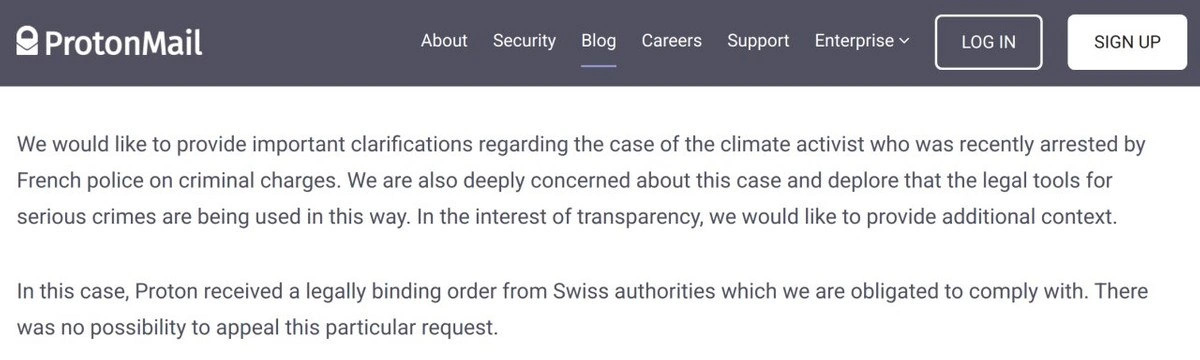
A ProtonMail blog screenshot about a Swiss legal order is captioned “law > encryption.” The dive explains that E2EE protects message contents, not provider-side metadata or compliance duties, and why privacy needs a real threat model—not just a slogan.
Level 1: Locked Letter, Known Mailbox
This is like putting a letter inside a locked box so nobody can read it, but leaving the box at a post office that can be ordered to say when you came in. The funny part is sad: the lock still works, but the world around the lock can still give you away.
Level 2: Privacy Has Layers
Encryption means data is transformed so only someone with the right key can read it. End-to-end encryption means the service provider should not be able to read the message contents because encryption and decryption happen at the users' ends. That protects the inside of the message.
But email services still run servers, accounts, login systems, abuse prevention, billing, and legal compliance processes. Those systems can create metadata, which is information about communication rather than the message body itself. Examples include when an account logs in, what network it uses, and what account is being investigated.
The screenshot is funny in a grim way because many users hear "encrypted email" and imagine total invisibility. The visible ProtonMail text shows a different reality: a provider can be unable to read encrypted content and still be required by local law to comply with a specific order. For developers and security teams, this is why privacy promises need precise wording. "Private" is not one feature; it is a stack of technical, legal, operational, and human assumptions.
Level 3: Threat Model Beats Slogan
The post caption reduces the whole incident to:
law > encryption
The screenshot shows ProtonMail explaining that it received:
a legally binding order from Swiss authorities
and that:
There was no possibility to appeal
That is why the meme stings. Privacy products often communicate through simple promises: encrypted, secure, private, protected. Legal systems communicate through orders, jurisdiction, compliance duties, and consequences. The ugly lesson is that encryption can protect message contents while still leaving a service provider exposed to legal compulsion around metadata, account records, or future logging. Encryption is powerful. It is not a force field around the company operating the service.
The senior security reading is that this is a threat model failure, or at least a threat-model mismatch. End-to-end encryption answers one question: can the provider read the encrypted email body or attachment? It does not automatically answer: can the provider see login IPs, account creation details, recovery addresses, payment trails, notification tokens, browser fingerprints, or the times an account connects? It also does not answer whether a court can order the provider to start collecting data it did not normally retain. The meme's bleak arithmetic is simple: crypto protects ciphertext; law talks to organizations.
This is why privacy engineering is harder than marketing copy. E2EE is meaningful, but anonymity is a different property from confidentiality. A service can keep your message unreadable and still know that a particular account connected from a particular network at a particular time. A provider can be honest about its encryption while users still misunderstand what it protects. Security people spend years writing threat-model documents for exactly this reason, and then someone compresses the whole thing into a navbar screenshot and a crying emoji. Honestly, not the worst incident report format.
The organizational dynamic is also familiar: teams want clear product positioning, legal teams require compliance, security teams know the caveats, and users remember the slogan. When a high-profile case appears, everyone rediscovers the gap between data privacy, cyber law, and actual operational control. The joke is not that encryption is useless. The joke is that encryption was never the only layer in the system, and the layers with lawyers attached tend to have root access to the roadmap.


End-to-end encryption protects the message; it does not usually come with a jurisdiction escape hatch for the logs.
Ehh these privacy fairytales
What?
Could Proton avoid its new policy? It's not a rhetorical question, I honestly wonder if it is so
What if telegram sends private data to Russian gov without the world knowing
https://fossbytes.com/protonmail-privacy-climate-activist-case/ Btw encryption isn't related to this at all because protonmail have disclosed only ip not emails
Such things never happened before and here it goes again 🤣
Also, makes a point that Swiss jurisdiction is not "ideal" or "perfectly safe" by any means.
Daily reminder: fuck politicians who talk about climate change, they will put us all in digital jail
That's beautiful and very good news. These climate activists are one of the worst kind of any activists. They do what the want, destroy property, assault people and etc and etc.
lol, no
Telegram banned Navalny's bot today
Tg is much less transparent and trustworthy than protonmail IMO
telegram probably considers your desktop to be way too insecure for this purpose
It's not like they gave away our messages!!