
The Future of Monetized NPM Dependencies
Description
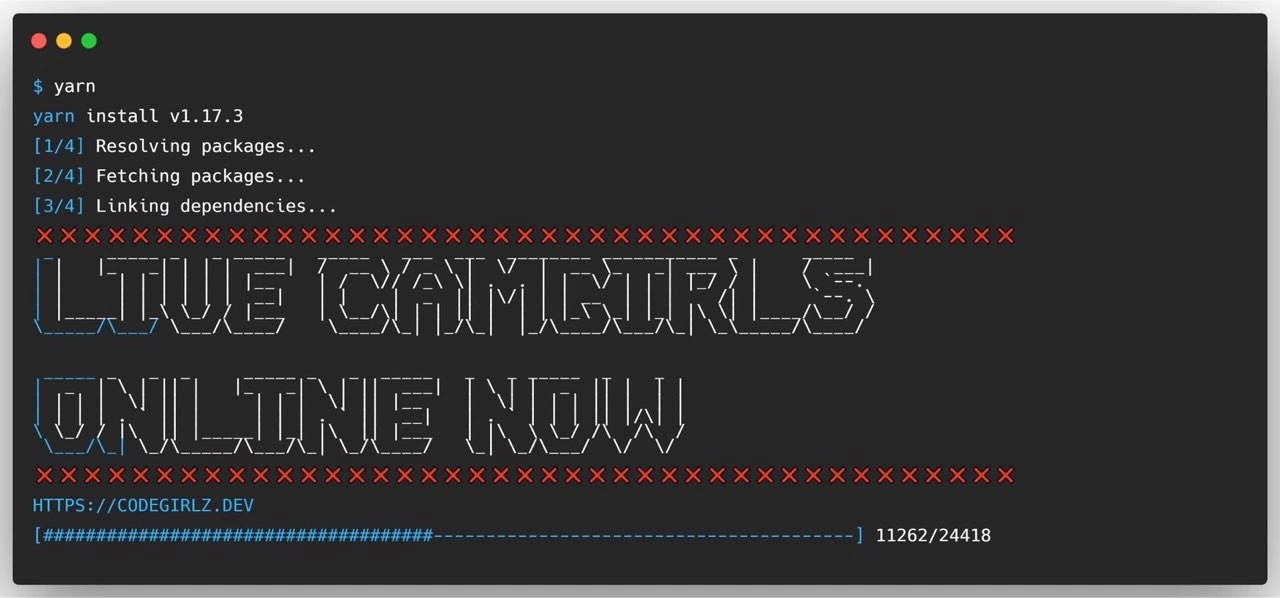
A screenshot of a command-line interface with a dark theme, showing the output of the 'yarn' command. The initial lines show the standard process: 'yarn install v1.17.3', '[1/4] Resolving packages...', '[2/4] Fetching packages...', and '[3/4] Linking dependencies...'. After the linking step, a large, stylized ASCII art advertisement appears, spanning the width of the terminal. The ad, formed with white and blue characters, reads 'LIVE CAMGIRLS ONLINE NOW'. Below the ASCII art, a URL is provided: 'HTTPS://CODEGIRLZ.DEV'. A progress bar at the bottom indicates the installation is ongoing. The meme is a satirical commentary on the state of the JavaScript ecosystem, particularly the massive dependency trees associated with npm and Yarn. It humorously projects a future where package authors might embed intrusive advertising directly into the installation process, playing on developers' anxieties about package bloat and supply chain security
Comments
7Comment deleted
I'm not saying the `node_modules` directory is bloated, but my last `npm install` asked for my credit card details and promised to make me a partner in an exciting new venture
I miss when left-pad merely broke prod; now a transitive dependency pitches “LIVE CAMGIRLS” mid-yarn install - apparently our supply-chain threat model forgot the marketing funnel
After 15 years of npm audit warnings, we've finally achieved peak dependency management: our build tools now come with built-in monetization strategies and a direct pipeline to OnlyFans. At least it's more honest than most open source sustainability models
Ah yes, the daily ritual of 'yarn install' - where we casually pull 24,418 packages from strangers on the internet, each with their own transitive dependency tree deeper than the Mariana Trench, and trust that none of them are cryptominers or supply chain attacks. The ASCII art perfectly captures that adrenaline rush when you realize your entire production build depends on 'is-odd' depending on 'is-number' depending on someone's weekend project from 2014. Living dangerously indeed - at least until the next left-pad incident reminds us that our entire tech stack is held together by the digital equivalent of duct tape and the goodwill of unpaid maintainers
Transitive dependencies: turning 'yarn install' into a gateway drug for cam site traffic
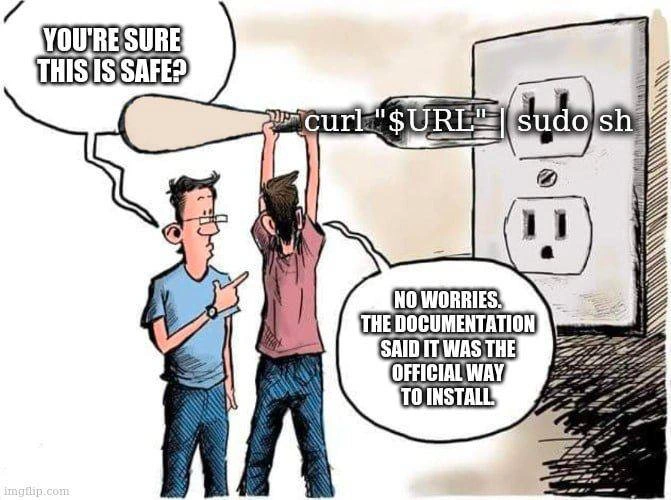
yarn install: the only time an enterprise dev willingly executes 24k strangers' postinstall scripts - ship lockfiles, --ignore-scripts, and an SBOM before your terminal starts selling ad inventory
Yarn install: when a transitive postinstall starts serving ads, you realize your dependency tree is actually a browser and your supply chain is the ad network