
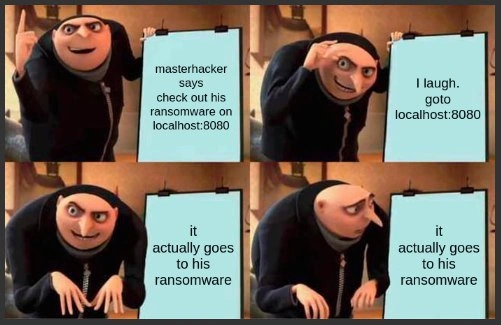
When “localhost:8080” is actually a one-way ticket to ransomware land
Description
Four-panel Gru presentation meme from Despicable Me. Panel 1: Gru proudly points at a blue flip-chart that reads, "masterhacker says check out his ransomware on localhost:8080." Panel 2: Gru, still smiling, reveals the next slide: "I laugh. goto localhost:8080." Panel 3: Gru turns, slightly puzzled, as the chart now says, "it actually goes to his ransomware." Panel 4: Same text persists, but Gru stares down in dawning regret. The visual gag plays on the classic localhost trust assumption - seasoned engineers reflexively assume 127.0.0.1 is safe, forgetting that SSH tunnels, reverse proxies, or ngrok can expose a real attacker-controlled service. For senior developers, it’s a reminder that the security model of "runs on my machine" breaks the moment port 8080 is forwarded through an unwatched tunnel
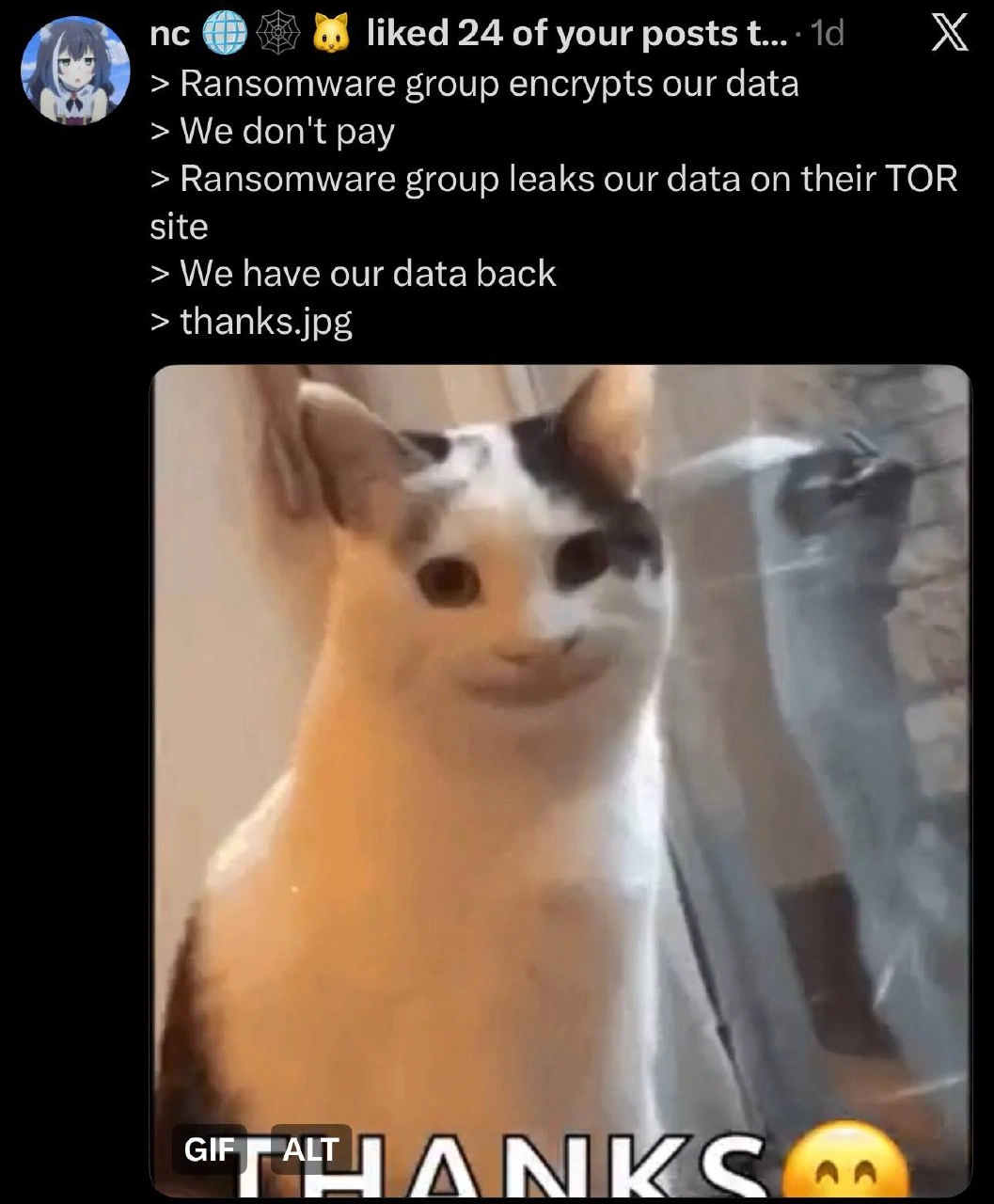
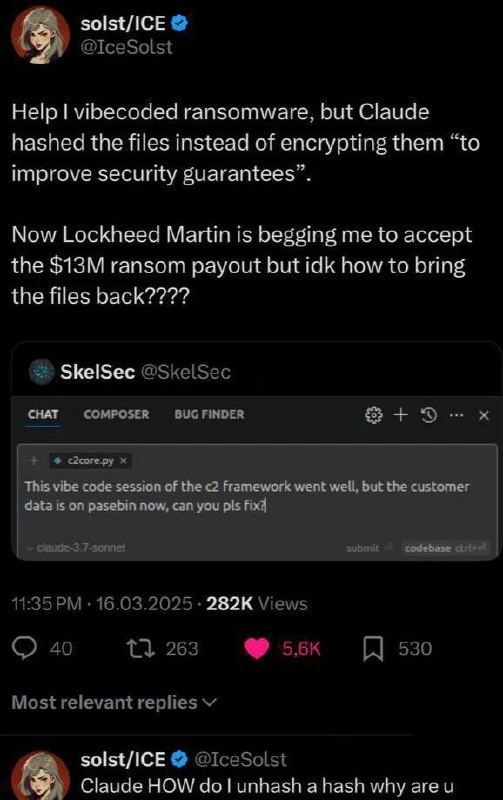
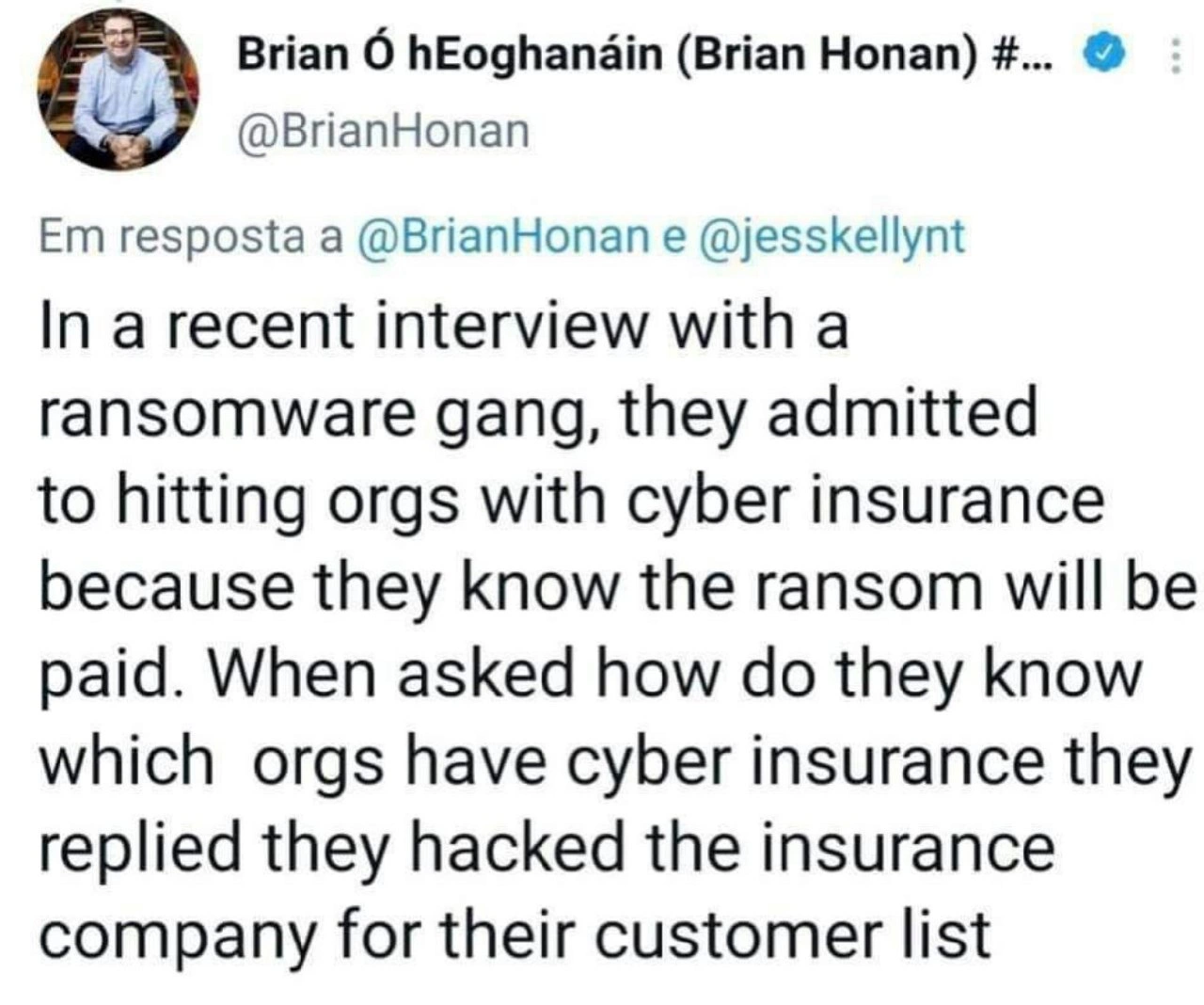
Comments
24Comment deleted
Lesson learned: trust boundaries aren’t defined by 127.0.0.1 - they’re defined by whoever remembered to kill the ngrok session
After 20 years in tech, I've debugged race conditions in distributed systems and untangled circular dependencies in microservices, but nothing prepared me for the existential crisis of ransomware that only encrypts itself on 127.0.0.1 - it's like a virus that practices social distancing from actual targets
Ah yes, localhost:8080 - the digital equivalent of 'it's fine, I'm running this in production but only I know the URL.' Because nothing says 'security best practices' like assuming the loopback interface is an air-gapped DMZ. Plot twist: your browser doesn't care if it's localhost when executing that cryptolocker.js you just curled from a sketchy GitHub gist. Remember folks, 127.0.0.1 is just another IP address where your threat model goes to die, right next to your assumption that CORS will save you
Elite opsec: ransomware with a blast radius of one localhost tab - zero externals, perfect for that solo pentest weekend
Senior lesson: with enough SSH -L and kubectl port-forward, “localhost” is just someone else’s computer in a loopback costume
Localhost is just a state of mind - until your ssh -L, kube port‑forward, or IDN “locaIhost” pipes 127.0.0.1 straight into someone else’s ransomware demo
Hahahahahha Comment deleted
schizophrenia Comment deleted
backdoor Comment deleted
What's the difference Comment deleted
1 is a mental condition, another is a way to infiltrate another person's system. Comment deleted
Same same Comment deleted
you don't need another person to have schizophrenia. at least this is the difference. Comment deleted
Sound the same Comment deleted
He won't hack me 'cause I'm already using port 8080! Yeah! He's probably not ready for a EAddrInUse 🙏 Comment deleted
while (EAddrInUse) port++ Comment deleted
The ransomware was already on his computer, or did it go on it when he checked the port? Comment deleted
1 ofc, how else that request might have been intercepted? * tho theoretically it might have been some other hardware I guess but let’s now dive into too complicated scenarios 🌚 Comment deleted
Thanks :3 Comment deleted
What wouldve happen if he never visits that? Comment deleted
Depends? Comment deleted
Like, it's just a funny way to show that specific environment has been infiltrated Comment deleted
Literally remotely redirecting the request by any available means? Tho i am not sure if interpreted scripts can escape browsers without permission anyways Comment deleted
Sir, first answer who and how occupied the port to listen for requests on it, and then try to make an assumption Comment deleted