
The Null Pointer You Have at Home
Description
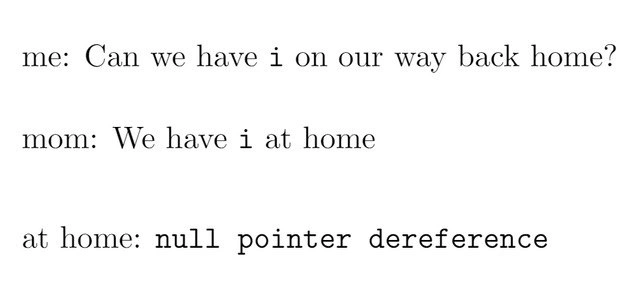
A text-only meme on a white background, using a black serif font. The meme follows the popular three-part 'We have food at home' format. The first line reads, 'me: Can we have i on our way back home?'. The second line is the reply, 'mom: We have i at home'. The final line, representing the inferior version at home, is 'at home: null pointer dereference'. The humor is derived from a clever computer science analogy. The variable 'i' is universally recognized by programmers as a standard loop counter or iterator. The meme equates the desire for a functional iterator with the disappointing and catastrophic reality of getting a 'null pointer dereference' error instead. This type of runtime error, which typically crashes an application, occurs when the program tries to access an object or data structure through a pointer that isn't pointing to anything (it's null). It's a painfully relatable experience for developers, especially those working in languages like C++, Java, or C#

Comments
8Comment deleted
The difference between a junior and a senior dev is that the junior gets a NullPointerException, while the senior gets an Optional that's been empty for three weeks
Every time the VP says, “Just reuse the old C library - it’s perfectly fine,” all I hear is “We have i at home,” and I start blocking calendar time for the inevitable null-pointer-dereference post-mortem
After 20 years in this industry, I've learned that the real null pointer dereference is the hope we had for clean abstractions along the way
The i at home was declared but never initialized - like most things mom promises, it points to nothing
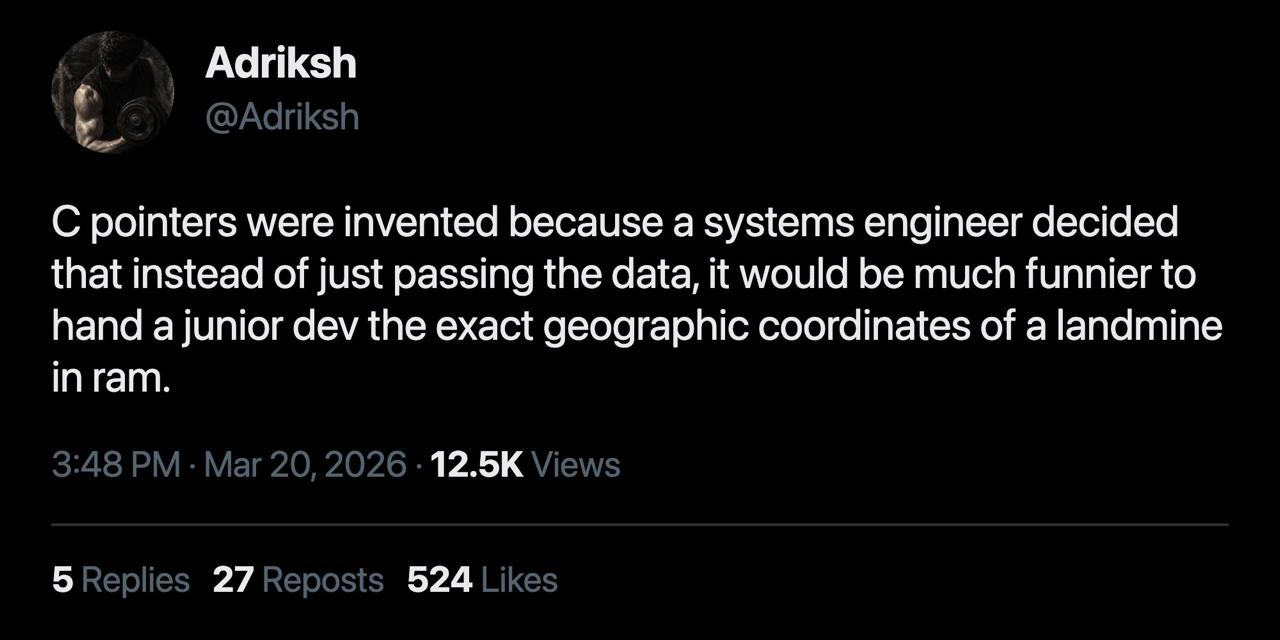
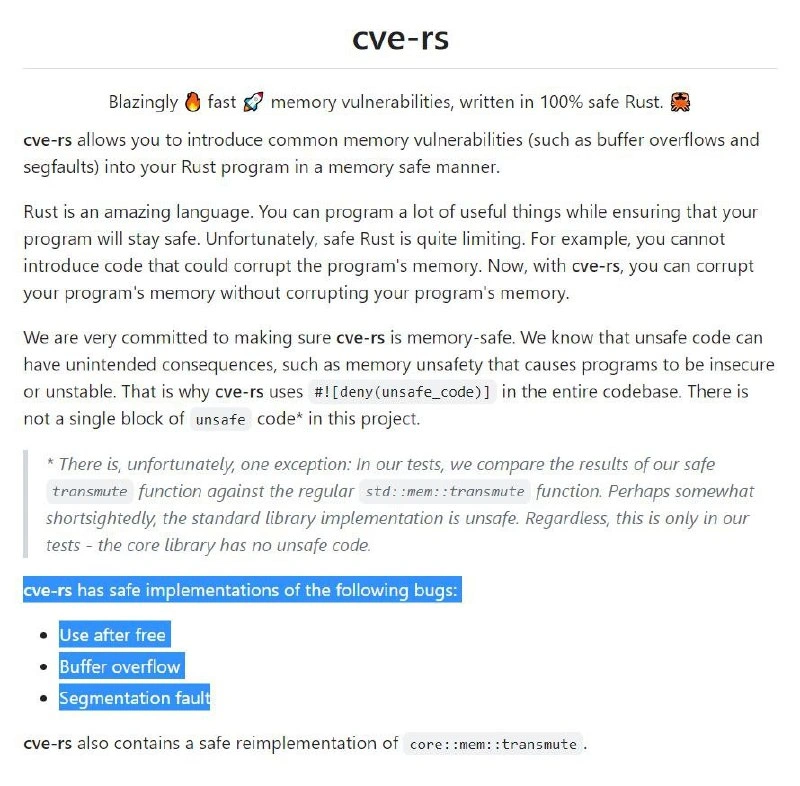
The real tragedy isn't the null pointer dereference - it's that after 50+ years of C-family languages, we're still asking for 'i' and getting segfaults. At least Rust would've told us at compile time that mom's promise was a lie, but here we are, discovering it at 3 AM in production when the loop counter we thought we had turns out to be pointing to the void. The 'i' we have at home isn't just null - it's a whole career's worth of trust issues with uninitialized memory
Asked for a loop index; our monorepo handed us i from the C layer, nullable via JNI, dereferenced in prod - aka the quarterly reminder why on-call exists
Mom's i: int *i = NULL; *i; // 💥 SIGSEGV family special
Asking for i and getting a null deref is the C-family version of dinner at home - you still end up single-stepping through SIGSEGV in gdb, vowing to enable -fsanitize=address next time