
UX UI Post #4893 · source on Telegram
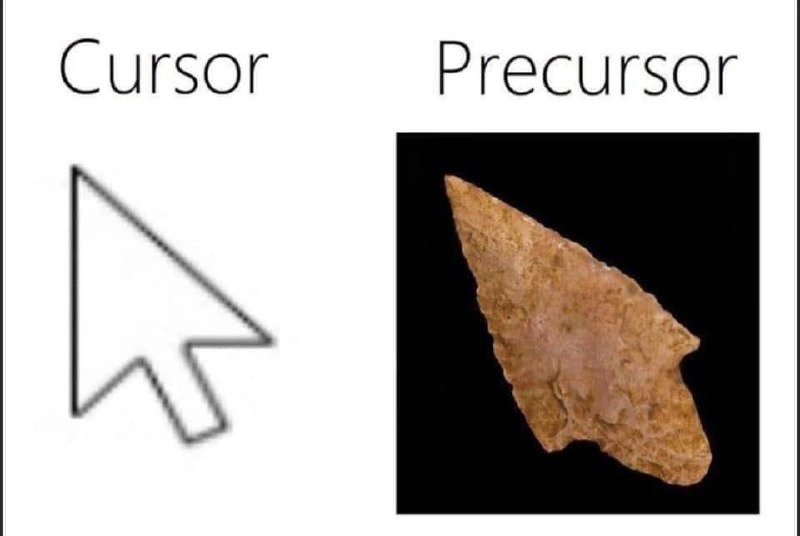
Cursor vs Precursor: a stone-age take on modern UI pointers
Description
Two side-by-side panels deliver a visual pun. On the left, a bold black-outlined computer mouse pointer is captioned "Cursor." On the right, under the heading "Precursor," a photograph of a tan, chipped stone arrowhead sits against a solid black square. The joke plays on the linguistic overlap while hinting that the prehistoric arrowhead is the ancestral version of today’s GUI pointer, humor familiar to front-end and UX engineers who spend their days chasing pixels and cursors. It blends UI design history, wordplay, and developer humor into an accessible meme
More like this
More like this in UX UI →
Use J and K for navigation
Comments
6Comment deleted
Prehistoric pointer spec: 0 DPI, single-threaded, real-time haptics, and every click triggered an irreversible state transition - makes today’s UI thread jank feel quaint
After 20 years of explaining pointer arithmetic and cursor positioning to juniors, I finally understand why our ancestors gave up on stone tools - at least a segfault doesn't require bandages, and you can't accidentally commit a flint arrowhead to production
Before we had pointer events and mouse listeners, we had actual pointers that listened for mammoths. The cursor has come full circle: from hunting megafauna to hunting memory leaks, but the fundamental problem remains the same - trying to hit a moving target while your hand cramps up
Cursor vs precursor: the original pointer was non-null, single-owner, move-only - Rust would approve; undo wasn’t in the spec
Proof we’ve been dereferencing pointers since the Paleolithic - same Fitts’s Law, different drivers; the original hardware cursor shipped with zero DPI and 100% on‑prem
Precursursor: zero npm deps, survives ice ages, but try hot-reloading that flint