When Your GitHub Repo with 3 Stars Makes You an Open-Source Influencer
Why is this OpenSource meme funny?
Level 1: Small Prize, Big Brag
Imagine a kid in school who got three gold star stickers on his homework. He’s super proud – so proud that he runs around telling everyone he’s basically the smartest kid in the class now. The funny part is, lots of other kids have way more star stickers from their homework, but this kid is acting like he won a big trophy. In reality, three little stickers aren’t a huge award, but he feels like a champion. This meme is just like that: someone did something small and got a tiny bit of praise (3 stars), and now they’re bragging as if they’re a famous expert. It’s amusing because we all know the difference between a small win and actually being a superstar, and seeing someone mix those up makes us smile.
Level 2: Chasing GitHub Stars
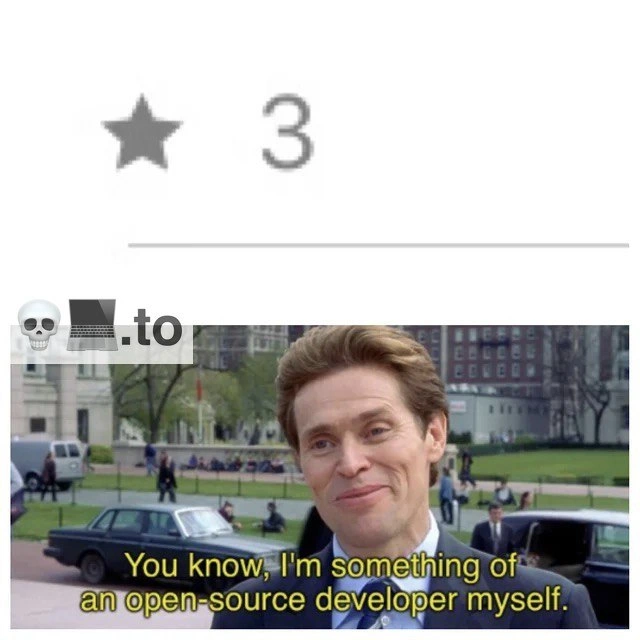
Let’s break down the joke in simpler terms. On GitHub (a popular website where developers share code using the Git version control system), users can “star” a project they like. Think of a GitHub ⭐ star like a Facebook like or a bookmark for a cool code repository. It’s a quick way for people to show appreciation or interest in an open-source project. The number next to the star icon (in the top panel of the meme it’s 3) shows how many people clicked that button. So, a three_star_repo literally means only three people thought the project was interesting enough to star it. In the world of OpenSource projects, 3 is a very small number – many useful projects have hundreds or thousands of stars.
Now, open-source software means the code is public and anyone can view, use, or contribute to it. An open-source developer is someone who creates these public projects or contributes to others. Open-source is a big part of modern developer communities (DevCommunities): people volunteer their time to build free tools, libraries, or frameworks that everyone can use. There’s a bit of a culture around it – developers often feel proud of their contributions, and having a popular project can earn you respect. One way people gauge popularity is by looking at the star count on GitHub. It’s a quick form of feedback from the community.
The meme pokes fun at a person who is bragging about being an open-source developer despite having a project that only a few people have noticed. In the bottom panel image, we see actor Willem Dafoe with a self-satisfied smile. This is from a well-known scene in the Spider-Man movie (2002) where his character, Norman Osborn (who later becomes the Green Goblin), says:
“You know, I’m something of a scientist myself.”
This line has become a popular Internet meme template. People replace “scientist” with something else to joke about someone proudly (and often prematurely) calling themselves an expert. Here it’s changed to “open-source developer,” shown in the yellow subtitle. So the character is humorously saying, “I’m something of an open-source developer myself,” with a smug face. The top panel showing ⭐ 3 sets up why that’s funny – the guy only has 3 stars on GitHub, which is a tiny achievement, yet he’s acting like he’s a big deal.
It’s a relatable dev experience for many programmers. Think about the first time you ever shared a project online. Even if only a couple of people showed interest, you probably felt excited. Maybe you told your friends, “Hey, I have people using my code!” That excitement is totally normal. But here the meme exaggerates it: the person with 3 stars is acting as if he’s a legendary coder, an open source legend, when really almost no one knows about his project. This is a form of open_source_bragging – boasting about contributions to open source, but in a way that’s out of proportion to the actual impact.
The phrase “legend in his own mind” from the title is key. It means someone who thinks they are very important or talented (in their imagination) even if the world doesn’t agree. So while this developer might feel like a hero for putting code on GitHub and getting a couple of stars, objectively 3 stars aren’t significant. It’s like if a new YouTuber got 3 subscribers and started calling themselves a famous content creator. Other developers find this funny because we usually measure a project’s success by things like how many people use it, contribute to it, or how it solves a real problem – not just by a small star count.
Let’s clarify a few terms from the tags: OpenSourceContribution simply means contributing to open-source projects (for example, writing code for a library that others use). GitHub is the platform where these contributions often happen, and Git is the underlying tool that tracks code changes. DeveloperHumor or CodingHumor refers to jokes that programmers find funny – often about our tools, our habits, or the tech culture. This meme is a piece of TechMemes culture combining a movie reference with a programming in-joke. It’s funny to developers because it lightly teases the tendency to seek validation through GitHub stars. Anyone new to open source might not realize it, but getting only a handful of stars is extremely common and not a big deal – so claiming superstar status from that is humorous.
In summary, the meme uses an easy-to-recognize Spider-Man quote to highlight a common situation: a developer is overestimating their open-source fame. The green_goblin_meme format (with Norman Osborn’s smug face) perfectly captures the tone of someone puffing out their chest. For a junior dev or someone just starting in open source, the takeaway is: it’s okay to be proud of a project, but remember that a few GitHub stars are just the start. True open-source success comes from building something useful and growing a community over time – not from quick praise. And if you ever catch yourself saying “I’m something of an open-source developer myself” after a minor win, well… now you know why other devs might be grinning. 😉
Level 3: Legend in His Own Repo
Behold the open-source rockstar with a whopping three GitHub stars to his name. In the realm of OpenSource projects, this is the equivalent of a garage band gig – yet our developer is strutting around like he headlined Coachella. Seasoned engineers in DevCommunities immediately recognize the joke: conflating trivial GitHub fame with true coding clout. The humor here comes from that absurd mismatch between vanity metrics and reality. Everyone knows a repository’s star count is a flimsy measure of success, but that doesn’t stop some folks from treating it like the tech equivalent of an Olympic medal.
This meme captures a familiar sight in OpenSourceCulture – a developer proudly touting their barely-noticed GitHub repo as if it’s Linux or React. The top panel shows the GitHub star icon with the number 3, indicating a three_star_repo (i.e. only 3 users found it worth a click). For context, popular open-source projects often have thousands of stars. Three stars might just be the author’s coworkers or a couple of sympathetic strangers. Yet the bottom panel parodies a famous Spider-Man scene, with actor Willem Dafoe (as Norman Osborn, who becomes the Green Goblin) smirking proud as ever. The subtitle reads, “You know, I’m something of an open-source developer myself.” That line is a spiderman_quote_parody of the movie’s original “I’m something of a scientist myself”. It’s a perfect fit: the character’s smug grin mirrors a dev’s self-congratulation after publishing a pet project and getting a few pity stars.
Why is this so instantly funny to experienced devs? Because we’ve all encountered open_source_bragging in the wild. Maybe it’s the junior engineer who pushes one tiny npm package and starts adding “Open Source Contributor” to their bio. Or a developer who treats a GitHub star count like a Stack Overflow reputation score, inflating their ego with each ⭐. The veteran eye-roll comes from knowing that real open-source “legends” are usually too busy fixing issues at 3 AM to brag. In fact, truly successful projects come with headaches: feature requests, bug reports, angry users, and the unglamorous grind of maintenance. Meanwhile, here’s this guy flexing with his 3 stars, blissfully unaware of what real open-source fame entails. It’s a classic case of Dunning-Kruger in tech – a little positive feedback leading to a lot of overconfidence.
There’s also an inside joke about how GitHub has turned software development into a bit of a popularity contest. Stars are meant as a simple bookmark or “like” for repos, but they’ve become a bragging right. It’s social proof: a high star count can make a project look impressive at a glance. But insiders know stars can be deceiving. Some projects get thousands of stars overnight because they hit the front page of Hacker News, only to be forgotten a week later. Other truly impactful tools quietly power major systems with hardly any stars to show. OpenSourceContribution isn’t about chasing applause; it’s about building something useful and fostering a community. This meme laughs at the inversion of priorities: counting stars instead of users or contributors.
To put those github_stars in perspective, consider how star counts often correlate with reality:
| GitHub Star Count | Self-Proclaimed Status | Reality Check |
|---|---|---|
| 0 – 5 stars | “Rising open-source legend, watch out world!” 😎 | Mostly friends (or the dev’s alt accounts) starred it. |
| ~50 stars | “My project’s trending, I’m basically a community leader.” | A small niche group finds it useful; plenty of work ahead. |
| ~500 stars | “Famous maintainer here, prepare for my Tech Talk.” | Moderate popularity, yes, but also more bug reports rolling in. |
| 5,000+ stars | [No boasting; too busy merging PRs] | Actual widely-used project, real responsibility and endless maintenance. |
Our meme hero is firmly in the first row: a legend in his own mind because a few people clicked a button. The irony is palpable. Seasoned devs chuckle because we’ve either seen this trope or been there ourselves in earlier days. It’s a gentle roast of that eager enthusiasm every developer has when discovering the world of open source – a mix of pride and naïveté. After all, getting even one stranger to appreciate your code is exciting! But declaring oneself an “open-source developer” on the level of, say, Linus Torvalds (who created Linux and has literal tens of thousands of stars on his projects) after a mere weekend experiment… well, that’s where the DeveloperHumor kicks in. This joke hits home as RelatableDevExperience: many of us remember the first time we pushed code to GitHub, got a star or two, and fantasized about tech stardom, only to later realize that sustainable open source is a marathon, not a sprint.
In short, the meme lampoons the gap between perceived status and actual impact in open-source. It’s pointing out with a smirk that bragging about “something of an open-source developer myself” when your project’s still obscure is CodingHumor gold. The experienced folks aren’t laughing at open source newbies, but rather nodding knowingly at the overzealous confidence we’ve all witnessed. After years in the trenches of pull requests and issue trackers, you learn that humility comes free with every production bug. So when a dev crowns themselves a legend for a three-star repo, the absurdity is delicious. This is tech satire aimed at the culture of self-promotion, reminding us that in code as in life, quality and community mean more than shiny stars.
Description
A two-panel meme that contrasts a developer's modest reality with their inflated self-perception. The top panel displays a minimalist UI element from a site like GitHub, showing a gray star icon followed by the number '3', indicating a project has only three stars. The bottom panel features the well-known 'I'm something of a scientist myself' meme, where Willem Dafoe as Norman Osborn from 'Spider-Man' smiles smugly. The caption is altered to say, 'You know, I'm something of an open-source developer myself.' A small watermark with a skull, laptop, and '.to' is visible between the panels. The humor stems from the vast disconnect between having a barely-noticed project (three stars is a very low count, often just the author and a friend) and the proud, self-important declaration of being an 'open-source developer.' It's a relatable jab at the tendency to feel immense pride in small personal projects, and it gently mocks the desire for recognition within the developer community
Comments
11Comment deleted
My open-source project has 3 stars. One from my personal account, one from my work account, and one from a GitHub Action that auto-stars the repo on every commit. It's basically enterprise-ready
Three GitHub stars in and he’s already drafting the CNCF graduation checklist - meanwhile the CI still fails on a clean clone
It's the developer equivalent of updating a README typo in kubernetes/kubernetes and then casually mentioning at conferences that you've 'contributed to critical cloud-native infrastructure' - technically true, practically meaningless, but the green square on your GitHub profile doesn't discriminate
Ah yes, the classic 'open-source developer' with 3 GitHub stars - probably from that one README typo fix in 2019, a fork they never touched, and their mom's account. Meanwhile, their LinkedIn claims they're 'passionate about contributing to the OSS community' and lists 'Open Source Maintainer' as a skill. The real kicker? Those 3 stars are on a repo that's just their dotfiles, and two of them are self-stars from when they were testing if the feature worked
Three GitHub stars - the canonical distribution: you, your alt, and the CI bot; stars are vanity, unresolved issues are reality
Three GitHub stars - me, my work account, and the SRE who filed a P1 when my patch broke semver; apparently that counts as “community adoption.”
Three stars on my repo: two from alt accounts, one pity fork from a bot
I have one star on my project Comment deleted
Same) Comment deleted
Let's make stars to each other here Comment deleted
Dtop your projects, i will star ya Comment deleted