Skip to content
DevMeme
6218 of 7435
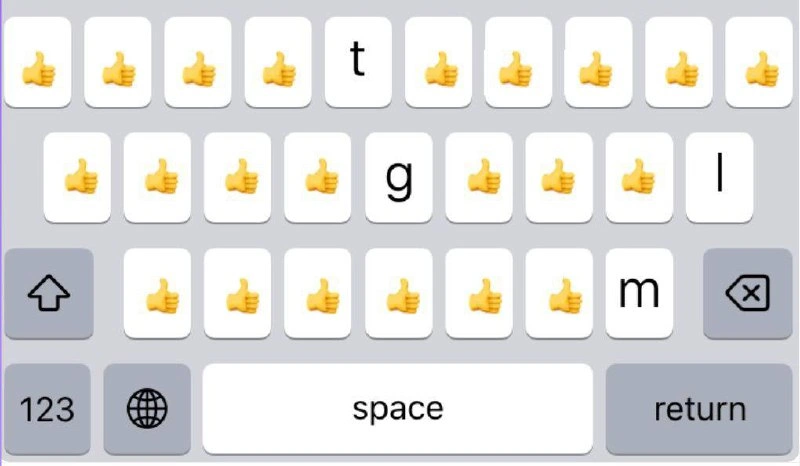
Rubber-stamp code review keyboard: only 👍 and spares letters for 'LGTM'
CodeReviews Post #6816, on May 27, 2025 in TG

Rubber-stamp code review keyboard: only 👍 and spares letters for 'LGTM'

Why is this CodeReviews meme funny?

Level 1: Always Thumbs Up

Imagine if your teacher gave every student an A+ and a big thumbs-up 👍 on their homework without even reading it. It would feel good because everyone gets praise, but nobody would find out if they made a mistake or could do better. This joke is like that: the person who’s supposed to check the work just says “Looks great!” every time, so any problems that are there never get caught.

Level 2: Stamp of Approval

For a newer developer, here’s what’s going on in this meme in simple terms. It pokes fun at a code review scenario where the reviewer seems to only give blanket approvals using a thumbs-up and the phrase “LGTM”:

  • Code review: A practice where another developer examines your code changes (often via a pull request) before they are merged. The goal is to catch mistakes, suggest improvements, and maintain quality.
  • Pull Request (PR): A feature on platforms like GitHub where you ask to merge your changes into the main codebase. Team members then review the PR and either request changes or approve it. It’s the usual place where code reviews happen.
  • “Looks Good To Me” (LGTM): A common quick comment meaning “I approve this.” It’s basically reviewer shorthand for “I didn’t find any issues” (or sometimes “I didn’t really look for any”). In text or chat you’ll often just see LGTM as the entire review comment.
  • Rubber-stamp approval: This term comes from literally stamping a document without reading it. In code review, rubber-stamping means approving code with minimal or no actual scrutiny. It’s like saying “sure, whatever, it’s fine” to every change without checking.
  • Thumbs-up emoji (👍): The thumbs-up is a universal symbol for “yes” or “good job.” On developer platforms and team chats, teammates often react with a 👍 to indicate agreement or approval. It’s a quick way to say “okay.” However, just giving a thumbs-up gives no details – it doesn’t explain why something is good or if anything was actually checked.

In the image, an iPhone keyboard is humorously shown with almost every key turned into a 👍 emoji, except the letters l, g, t, m. This means the reviewer can basically type out “LGTM” and not much else (aside from the thumbs-up icons). The joke here is that some reviewers do exactly that: they don’t type any useful feedback or ask questions; they just say “Looks good to me” or hit an approve button and drop a thumbs-up. It’s poking fun at a code review culture where the only response you ever get is a generic approval. Essentially, the meme is saying: “This is the only response you’ll ever get from certain reviewers.” It’s funny because it’s exaggerated – in reality no one’s keyboard is actually stuck like this – but it highlights a real frustration. Instead of giving helpful comments, the reviewer is providing virtually zero info, just a blanket 👍. That makes the code review feel like a meaningless formality. The result is a bit of a communication gap: the developer who wrote the code doesn’t learn anything or get any suggestions, they just see a big “approved” stamp. While it’s nice to have your work merged quickly, doing it this way might be too easy – it skips the chance to catch mistakes or improve the code. It’s essentially showing a pain point in team collaboration: if everyone just rubber-stamps changes, problems in the code can slip through unnoticed.

Level 3: LGTM-Driven Development

At first glance, this rubber-stamp code review keyboard is an absurd exaggeration – every key on the iOS keyboard is a 👍 (thumbs-up emoji) except the four letters needed to type lgtm. In other words, the only input a reviewer can give is “Looks Good To Me” and an approving emoji. It’s a tongue-in-cheek portrayal of code reviews that have devolved into a rubber-stamp ritual, where every pull request gets an automatic "LGTM" without real scrutiny.

For seasoned engineers, the humor cuts close to the bone. We’ve all seen a Pull Request spanning hundreds of lines get approved with nothing more than a LGTM comment or a solitary 👍 reaction. This meme nails that painful truth: sometimes code reviews are treated as a perfunctory checkbox rather than a genuine quality gate. It’s as if the reviewer’s IDE had a macro to rubber-stamp every change – or in this case, as if iOS itself had a bizarre glitch or auto-suggest failure that transforms your entire keyboard into an LGTM machine. (Perhaps some predictive algorithm noticed the only thing you ever type during reviews is “LGTM 👍” and decided to optimize accordingly!)

The scenario being satirized is one many experienced devs recognize. You submit a carefully crafted piece of code hoping for feedback, or at least a catch of any subtle bug. Minutes later, the PR gets merged because a colleague quickly hit the approve button with a standard “Looks good, ship it.” On the surface, it’s great for velocity – fewer questions asked means releases reach production quicker. In fact, the meme’s caption slyly promises: “Make your releases reach prod quicker with that little trick!” The trick, of course, is to eliminate any actual review. The Developer Experience (DX) of such a team seems fantastic: zero friction, instant approvals, code flowing to mainline like water. But the veteran coder in me is cringing, because we know the flip side: when that un-reviewed code introduces a nasty bug, it’s also going to make your on-calls reach production quicker – at 3 AM with pagers blowing up. In short, a culture of rubber-stamp reviews is virtually an incident waiting to happen.

This meme also jabs at the modern reliance on emoji for communication in developer tools. On platforms like GitHub, GitLab, or Slack, it’s become normal to give a 👍 reaction as a lightweight approval or acknowledgment. An emoji is quick and universal – a tiny dopamine hit of agreement. But here we see the overuse taken to the extreme: literally 👍 thumbs_up_everywhere as the keyboard default (an emoji spam layout of approvals). It’s highlighting a communication breakdown in code reviews: instead of typing out any suggestions, questions, or even a minor nitpick, the reviewer just reacts with an emoji or types the four-letter all-clear. No nuance, no explanation – just “good to go.” For a senior engineer, this is a bit of dark humor because we’ve learned (often the hard way) that skipping dialogue in code review can come back to bite. Sure, nobody loves the meticulous reviewer who leaves ten comments about edge cases and naming conventions, but that annoying thoroughness is what saves you from deploying a crash loop or a subtle memory leak glaring production issue down the line.

There’s an unspoken industry anti-pattern depicted here: LGTM culture. It’s the phenomenon where team members habitually approve each other’s changes with minimal oversight – sometimes due to trust and sometimes due to sheer review fatigue or sprint pressure. It’s essentially peer review theater: all the motions (or keystrokes) of approval with none of the substance. A cynical veteran will tell you many horror stories birthed from this culture. For example, a developer might slip in a seemingly harmless logic tweak that actually breaks an edge case – but everyone was in a rush, so the PR got an instant rubber stamp. Fast forward a week: that edge case hits production, and now the entire team is scrambling to patch a bug that should have been caught in code review. One could almost picture the post-mortem meeting: “Why did no one notice this issue?” and someone sheepishly shrugs, “Because all we got was an LGTM and a 👍.”

Historically, the idea of code review was meant to emulate the rigor of academic peer review or formal inspections. Early software engineering practices in the 1970s involved literal code inspection meetings where reviewers would painstakingly examine printed code line by line – a far cry from dashing off an emoji from your phone. The meme brilliantly contrasts that ideal against today’s reality. In 2025, with distributed teams and continuous integration, reviews often happen asynchronously and sometimes on mobile devices. A senior dev might literally review your commit on their phone while grabbing lunch, and the easiest response there is a quick "LGTM" typed out with one hand (hence that mobile UI vibe of the image). The keyboard of all thumbs is basically saying: “We’ve optimized away the cognitive overhead of code review – now it’s as mindless as tapping a stamp.” From a DevOps perspective, it’s almost like treating code review as a no-op to speed up the pipeline – akin to removing safety checks to go faster. And any old-timer will wryly note that this is exactly how you speed-run to a production fiasco.

In essence, the humor here comes from how relatable yet ridiculous this extreme scenario is. Relatable, because many developers have encountered “approvals” that felt just this superficial. Ridiculous, because no one would openly admit to replacing actual feedback with a rubber stamp – yet the meme suggests we might as well, given how sparse some reviews are. It’s a poke at our worst instincts in team collaboration: when checking the code becomes a cursory glance and a reflexive “Looks fine, let’s merge.” The keyboard with only 👍 and LGTM keys is basically the senior engineer’s nightmare and guilty habit rolled into one image. It’s saying: look how silly (but uncomfortably true) it is that we sometimes reduce a serious engineering safeguard to a single emoji. And if you’re a grizzled dev who’s been burned by an LGTM that should’ve been an “actually, let’s rethink this,” you can’t help but smirk (and maybe groan) at how accurately this meme nails the issue.

Description

The image shows a light-gray iOS virtual keyboard. Every alphanumeric keycap is replaced by a yellow thumbs-up emoji except four keys that still display the lowercase letters “l”, “g”, “t”, and “m”. Standard modifier keys - shift, “123”, globe, a large white “space”, and gray “return” - appear unchanged. Visually, the sea of 👍 icons leaves just enough glyphs to type the reviewer’s cliché “LGTM”, humorously implying that all feedback has been reduced to blanket approval. For senior engineers accustomed to meaningful peer review, it’s a tongue-in-cheek jab at rubber-stamping pull requests and the over-use of emoji reactions in modern tooling like GitHub or Slack

Comments

27
Anonymous ★ Top Pick If your entire keyboard is just 👍 plus the letters for LGTM, your CI pipeline isn’t the only thing that’s fully automated
  1. Anonymous ★ Top Pick

    If your entire keyboard is just 👍 plus the letters for LGTM, your CI pipeline isn’t the only thing that’s fully automated

  2. Anonymous

    After 15 years of architecting distributed systems, I've learned that the ratio of thumbs-up emojis to actual code review comments is inversely proportional to how close we are to the quarterly release deadline - and directly proportional to how many P0 incidents we'll handle next sprint

  3. Anonymous

    The keyboard layout perfectly captures the evolution of every senior engineer's code review process: start with thorough analysis, gradually optimize to 'LGTM 👍', and eventually achieve peak efficiency where muscle memory just auto-approves everything. Bonus points if your PR approval rate inversely correlates with the number of files changed - because who has time to review that 47-file refactor when there are three single-line typo fixes waiting for their dopamine-inducing green checkmark?

  4. Anonymous

    Solved PR latency by issuing reviewers a keyboard with only ‘LGTM’ and 👍 - p95 review time vanished, p95 rollbacks now handle the feedback loop

  5. Anonymous

    Branch protection needs two approvals; the LGTM+👍 keyboard delivers 2x throughput and 0x feedback

  6. Anonymous

    All keys 👍 - the fleeting moment before CAP theorem reminds us not everything stays consistently available

  7. @deadgnom32 1y

    "mmmm" [Rejected]

  8. @StalinLivesInUSA 1y

    L [Rejected]

  9. @Algoinde 1y

    gg [Rejected]

  10. @decide_later 1y

    llm [rejected due to the excessive vibe coding]

  11. @Unomi 1y

    Grand touring le mans?

  12. @NaNmber 1y

    gm 👍

  13. @dst212 1y

    👍👍 m👍 g👍👍

    1. @ZgGPuo8dZef58K6hxxGVj3Z2 1y

      "Oh my god"?

  14. @Artkash 1y

    mlg👍

  15. @ZgGPuo8dZef58K6hxxGVj3Z2 1y

    Dear Pdsnrc, Wait till you realize all germans advertiseme LG at the end of their e-mails. LG, つづく

    1. @RiedleroD 1y

      LG when MfG enters the room

      1. @ZgGPuo8dZef58K6hxxGVj3Z2 1y

        Aaaaaaaaa

      2. @ZgGPuo8dZef58K6hxxGVj3Z2 1y

        I @-ed you before I saw you

  16. @ZgGPuo8dZef58K6hxxGVj3Z2 1y

    g👍👍l👍 👍👍👍👍 👍👍t👍

  17. @sysoevyarik 1y

    L👍T👍👍👍LL👍 👍👍TL👍R

  18. @ZgGPuo8dZef58K6hxxGVj3Z2 1y

    Lmao, its pretty common tho to say "LG" for "Liebe Grüße". @RiedleroD may or may not confirm

    1. @RiedleroD 1y

      hehe

  19. @SamsonovAnton 1y

    That commit message does not fit in the log, milord!

  20. @phobosperi 1y

    👍👍GG👍👍

  21. @vadiohead 1y

    MGMT👍

  22. @Sp1cyP3pp3r 1y

    g👍👍 👍👍👍 m👍t👍👍👍👍👍👍👍👍g 👍👍gg👍👍 👍👍ll 👍👍👍👍l👍

Use J and K for navigation