Skip to content
DevMeme
5747 of 7435
Mark Zuckerberg: The Latest Humanoid Infiltration Unit
DevCommunities Post #6300, on Oct 9, 2024 in TG

Mark Zuckerberg: The Latest Humanoid Infiltration Unit

Why is this DevCommunities meme funny?

Imagine you took a bunch of cookies from the cookie jar without asking, and your parents found out. Now you’re sitting at the kitchen table with Mom, Dad, and Grandma all staring at you, asking questions one after the other. “Why did you take those cookies?” “Did you know that was wrong?” “How many did you eat?” “Are you going to do it again?” It feels like a blizzard of questions – you can barely finish one answer before the next question hits. You’re nervous; you can feel sweat on your forehead. You try to look as innocent and sincere as possible, using polite words just like you’ve seen on TV, hoping they won’t punish you too hard.

In this little story, you are like the boss of a big social media app, and your parents are like the government leaders. The “cookies” are like people’s personal data that got used in a way it shouldn’t have been. Just as a kid has to explain himself to angry parents, the boss had to explain himself to angry lawmakers. It’s funny to picture because usually that tech boss is super powerful (kind of like a kid who usually gets away with things). But here he’s totally out of his comfort zone — he’s in trouble and everyone’s watching him squirm a bit. The joke even suggests he’s almost like a robot kid trying very hard to act like a normal kid (because he’s so stiff and careful in how he talks). In the end, it’s a bit like a classroom lesson: if you misuse trust (take cookies or data), you might end up in the hot seat, getting grilled with questions coming at you faster than you can munch a cookie! And seeing someone so powerful have to face that is both a little scary and a little bit funny, just like a normally cheeky kid suddenly turning ultra-formal when caught red-handed.

Level 2: Testifying Under Load

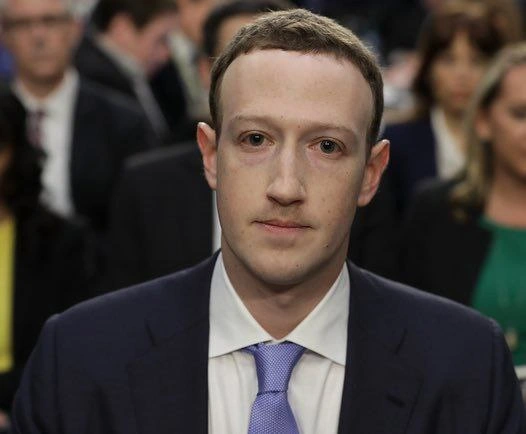
Let’s break down the meme in simpler terms. The photo (with the blurred face) is referencing a very real event: Facebook’s CEO, Mark Zuckerberg, testifying in front of U.S. lawmakers. In 2018, Facebook was involved in a scandal where a lot of user data was shared without people’s permission (the Cambridge Analytica incident). This made the public and the government very upset about privacy. So, Mark had to go to Washington D.C. and sit in a formal hearing room, facing a bunch of Senators (the lawmakers), and answer their questions about how Facebook handles people’s information. It’s like the CEO being called to the principal’s office, but on live TV and with the whole world watching.

Now, the title says “Explaining your app’s privacy settings to lawmakers at 100M QPS scale.” Let’s decode that:

  • Privacy settings are the options in an app that let you control what you share and who can see it. For example, you can set your profile to private, or choose not to share your location. In Facebook’s case, privacy settings would include things like who can see your posts, what data Facebook can use, etc.
  • Lawmakers are government officials (like senators or congresspeople) who make laws. They are often not very tech-savvy, especially compared to software engineers. In Mark’s hearing, some of their questions showed they didn’t fully understand how social media or digital ads work.
  • 100M QPS stands for 100 million queries per second. A “query” here means a request or a question. In tech, QPS is a metric to measure how many requests a server or service can handle each second. 100 million per second is an extremely large number – basically shorthand for “a crazy amount, almost too many to handle.” Of course, no human can actually field 100 million questions in a second! The meme is jokingly treating the hearing like it’s a super high-speed stress test. It’s as if Mark’s brain is the server and the Senators are a flood of incoming requests. In reality, during the hearing, questions were coming one after another for hours, so it probably felt overwhelming, even if it wasn’t literally millions per second.

The comedic contrast comes from mixing these worlds: On one hand, you have an app or system perspective (QPS, scale, performance) – things developers talk about when dealing with servers and code. On the other hand, you have a very human, political scenario – explaining, in plain words, something technical to people who write laws. It’s not a combination you see every day, and it’s a bit like oil and water.

Now, the caption quote: “The 600 series had rubber skin. We spotted them easy, but these are new. They look human - sweat, bad breath, everything.” This is a line from The Terminator, a classic 1984 sci-fi movie. In that movie, robots (Terminators) are trying to pass as humans, and the characters talk about how the new models are so realistic you can’t tell they’re robots. By including this quote, the meme is making a tongue-in-cheek comparison between a Terminator and Mark Zuckerberg at the hearing. Why? Because during that hearing, a lot of people joked that Mark was acting oddly, almost mechanically. He was very stiff, very rehearsed, and not very emotive – which led to playful speculation in internet communities that “Zuckerberg is a robot” or an alien or a lizard in a human suit (all obviously jokes). For instance, he drank water in a very peculiar, gulping way at one point, which became a meme. The quote’s reference to “sweat, bad breath – everything” implies that these new robots can even simulate nervous human traits. Mark did sweat during the hearing – you could see beads of sweat as he faced tough questions. So the meme humorously implies, “Look, he might seem human – he even sweats under pressure – but is it all an act?” It’s poking fun at how polished and controlled his answers were, almost like a pre-programmed android trying to handle a tricky interrogation without blowing its cover.

For a junior developer or someone new to tech culture, it helps to know that Big Tech companies like Facebook, Google, etc., often find themselves in hot water over privacy concerns. These companies collect a lot of data (for example, your likes, your clicks, your location) to personalize services or target ads. When something goes wrong – like data leaking or being misused – it becomes a huge deal. The public gets worried their personal info isn’t safe, and then politicians step in, sometimes without fully grasping the tech, to demand answers. This dynamic can be awkward. The tech people have to simplify and defend their design decisions (which might have been made for profit, not privacy), and the politicians try to sound tough even though they might be asking the wrong questions. This mismatch leads to moments that go viral in the tech community, because they can be unintentionally funny or telling. It’s a clash of cultures: corporate tech culture vs. government/regulatory culture.

Another angle: developers often use terms like “at scale” to mean “when a system is really big or has to handle a lot of usage.” Facebook operates at a massive scale – billions of users. So privacy issues at Facebook are also gigantic in scope. When something bad happens, it can affect millions of people’s data. So explaining anything about Facebook is inherently complicated because of that scale. There’s an expression, “What works in the lab doesn’t always work in the real world.” Here, what sounds fine in a meeting room — e.g., “We’ll just ask users to review their privacy settings” — can utterly fail when you have to rely on hundreds of millions of people actually clicking through menus and understanding them. Regulators might not appreciate how hard it is to effectively communicate privacy options or changes to so many users, especially when those users span different languages, ages, and tech-literacy levels. So Mark had to not only explain what the settings are, but also convince lawmakers that ordinary users comprehend and use those settings appropriately (which, let’s be honest, many don’t).

To a newer developer, a congressional hearing might seem far removed from coding, but it’s connected by the thread of accountability in software development. It’s like a gigantic, public post-mortem where non-tech people are asking the tech leader “So, can you explain how your system allowed this bad thing to happen?” If you’ve ever had a client or your boss ask you to explain a bug or outage in simple terms, you can see this is that scenario blown up huge. The “100M QPS” exaggeration hints that it’s an overwhelming barrage. No one can fully detail a complex system’s behavior under that kind of pressure, so inevitably the answers sound a bit generic. That’s often why these hearings don’t feel satisfying to the public – they’re so high-level that they rarely get into concrete solutions. For a junior dev, it’s a peek into what happens when tech issues reach the highest levels: it moves from debugging code to almost debating ethics and responsibilities in a public forum.

In summary, at this level: The meme humorously shows a tech CEO being questioned by people who don’t share his technical background, and compares it to a server getting slammed with an impossible load. It throws in a sci-fi joke (Terminator) to exaggerate how composed or non-human the CEO appeared. It’s funny because it’s true to life in some ways – these hearings often feel like parallel universes colliding – and it’s also poking fun at how awkward and scripted things can become. Even if you didn’t know all the background, the image of a suited guy sweating under questioning and the phrase “100M QPS” creates a cartoonish mental picture: like someone trying to answer a million things at once – inevitably a bit of a comedic overload.

Level 3: Regulatory Judgment Day

Picture this: a top Big Tech executive sitting in an imposing wood-paneled chamber, facing a semi-circle of serious politicians. That’s exactly the scene this meme is invoking — and for seasoned developers and tech leads, it’s as riveting as it is cringe-inducing. This formal setting screams “You messed up, and now you must answer for it.” In tech circles, we call it getting hauled into the principal’s office, except the principal here is a Senate committee and the “school incident” is a global privacy scandal. The title, “Explaining your app’s privacy settings to lawmakers at 100M QPS scale,” sets the tone: it’s comparing a high-stakes regulatory grilling to an extreme system stress test. Experienced devs chuckle because they see the kernel of truth: conveying nuanced, technical concepts (like how data is collected, shared, and protected) to a panel of non-technical overseers can indeed feel like trying to serve 100 million requests per second using nothing but your wits and a straight face.

Why is this funny to us? For one, we’ve all been in situations where we had to explain a complex technical problem to someone who really doesn’t get the tech. Maybe it was explaining to the CEO why the site went down at 3 AM, or telling a client why a feature is delayed because of a subtle bug. We know that glazed look in non-tech eyes. Multiply that by an entire room of powerful officials on live TV and the pressure goes through the roof. The meme nails this tension through exaggeration. 100M QPS is a ludicrous throughput for a human Q&A session — it’s a number you’d associate with ultra-optimized servers handling global traffic (think Google search at peak). By invoking that scale, the meme hints that the onslaught of questions and the depth of scrutiny feel machine-gun fast and planet-sized in scope. It’s overkill, and that’s the point. Devs laugh because we imagine a hapless engineer-turned-executive internally freaking out: “System overload! Too many queries!”

The image used (even with the face blurred, we all know the famous outline) is Mark Zuckerberg testifying to the U.S. Congress back in April 2018. For context, this was shortly after the Cambridge Analytica scandal, where Facebook data from millions of users was obtained and misused by a political consulting firm without consent. It was a watershed moment that put data privacy and PrivacyConcerns on the front page of every newspaper. Suddenly, here was a 30-something tech billionaire in a suit and tie, swapped out of his usual hoodie, getting grilled by officials decades older than him about how his platform works. For many in tech, that image was surreal. Facebook’s entire business (and much of modern internet commerce) runs on collecting user data and monetizing it. Now Mark had to describe and defend those privacy settings and practices to people who didn’t grow up with the internet. It led to some unintentionally comedic exchanges. One senator infamously asked, “If you’re not charging users, how do you make money?” prompting a slightly incredulous “Senator, we run ads.” from Zuckerberg. In another instance, questions were so off-base (like whether Facebook could see emails on your device) that tech viewers collectively face-palmed. These moments became memes themselves, emblematic of the public perception that lawmakers were out of their depth, and by extension, that Big Tech was operating in a wild west with little genuine oversight.

Now, layer on top of that the Terminator reference that this meme’s caption uses. In the original Terminator film, resistance fighters talk about how earlier Terminator robots were easy to spot because of their rubbery skin, but newer models are indistinguishable from humans: “They look human – sweat, bad breath, everything.” By quoting this, the meme is wryly suggesting Mark Zuckerberg is like one of those advanced Terminators trying to appear human. It’s a nerdy joke: Zuckerberg’s overly formal, somewhat stiff demeanor during testimony struck many as, well, robotic. (This is a long-running tongue-in-cheek trope — calling Zuck a lizard person or robot because of his sometimes awkward social behavior.) The sweat detail is especially golden. Here’s this tech CEO who normally controls his environment entirely (he literally controls a social platform used by billions), but in front of Congress he actually seemed to sweat nervously. That tiny humanizing detail – sweat on his brow – is likened to a robot that’s been designed to simulate humanity perfectly under pressure. In other words, “Look, he even sweats like a real person!” The meme implies his whole testimony could be an advanced program running: calculated pauses, measured tones, and carefully chosen words, all to convince the panel “I’m human, and our company has a human touch, trust us.” It’s satirical, painting the scene as if Congress was trying to discern if he (and by proxy his assurances about user data protections) are genuine or just very sophisticated imitations.

For veteran developers, there’s another layer of recognition here: corporate culture and PR training. By the time a technical issue escalates to a congressional hearing, it’s left the realm of engineers and entered the world of lawyers, PR reps, and high-level execs. The person on the stand isn’t going to speak like a developer; they’re going to speak like a politician in tech clothing. We’ve all seen this transformation in our workplaces during a crisis: the language shifts from frank technical post-mortems to carefully worded statements like, “We take this issue seriously and are working to improve our processes.” It’s practically template language. In Zuckerberg’s case, he had clearly been coached to avoid improvisation. If you watch the full hearing, you see him often deflecting with phrases such as, “Senator, my team can get back to you on that,” or “We believe strongly in user control, Senator.” These statements sound okay but don’t actually reveal much. That’s exactly what you do when you’re under the microscope: say enough to satisfy, but not enough to create legal liability or headlines. Engineers in the audience smirk because they know that dance. It’s the same cautious dance we do when a non-tech boss asks “Is this project on track?” and it’s a dumpster fire behind the scenes – you don’t lie, but you phrase the truth very selectively.

The shared trauma fueling the humor is the complexity of modern apps versus the simplicity that outsiders expect. Facebook’s privacy settings are a labyrinth (by design, some would argue, to discourage people from fully locking down their data). To truly explain them, you’d need to get into how data flows through the platform, what default settings are, how third-party APIs work, and where all that user data can end up. That’s a multi-hour seminar with diagrams for a technical audience. Instead, in Congress, it becomes a simplistic Q&A like, “Can you tell me if Facebook uses my voice recordings for ads?” and one expects a yes or no. It’s almost a farce because both sides operate with such different mental models. Tech veterans see the humor in that disconnect. It’s like watching a supercomputer try to play nice with an old mainframe — lots of hand-holding and protocol conversion going on.

Historically, this hearing was Big Tech’s big debut on the political stage. Before this, tech execs largely avoided public governmental interrogations. Seeing Zuckerberg there was, in a way, tech’s “jump the shark” moment – the realization that these platforms have become so influential that they’re being treated like nations or utilities that need oversight. Developers who’ve been around remember earlier echoes of this: the Microsoft antitrust depositions in the late ‘90s (Bill Gates looking annoyed on camera as lawyers asked him to explain emails), or the encryption debates with the government (Clipper Chip, anyone?). There’s a pattern: tech does something big and society lumbers after it with questions. By the time the questions are asked, the technology or business model has often evolved again. So there’s a cyclical absurdity we recognize: today Facebook, tomorrow maybe some AI CEO or a crypto exchange founder, all facing their Regulatory Judgment Day eventually.

In practical, day-to-day terms, the meme resonates as a cautionary tale to senior engineers: if you design systems that play fast and loose with user data, you might be the one seat-belted into that congressional hot seat someday. It’s a reminder that behind all the fun hackathon culture and “move fast and break things” ethos, there are real users and real consequences. And explaining those consequences to angry non-engineers is infinitely harder than any system design interview or architecture diagram you’ll ever do. It’s comedy with an undercurrent of fear: we laugh because thank goodness it’s not us up there — but also, what if it were?

Lastly, let’s appreciate the sheer nerdiness of splicing a Terminator quote into this scenario. It’s a wink to the kind of crowd that finds humor in referencing sci-fi during serious moments. Terminator, besides being a classic, is all about the unforeseen consequences of technology (AI taking over). In a lighthearted way, the meme likens Zuckerberg’s grilling to humanity poking at Skynet’s representative, testing if it’s still under control. It’s the “are you a harmless gadget or a world-dominating AI?” question dressed up in a suit and tie. For a meme in a developer forum, that’s pure, chef’s-kiss material: mixing pop culture, genuine tech policy issues, and a dash of schadenfreude watching someone else squirm under pressure. StakeholderPressure, indeed — in this case, stakeholders include literally the government and the entire user base watching via livestream.

So, Level 3 takeaway: this meme lands because it captures a too-real scenario in an exaggerated way. It’s the ultimate spotlight on the clash between tech giants and regulators, distilled into one man sweating in a suit and a sarcastic sci-fi caption. Seasoned devs chuckle and wince at the same time, fully aware that for all our geeky puns and theoretical jokes, the issues beneath – privacy, trust, and understanding tech’s impact – are monumentally important, even if the way they surface can be monumentally absurd.

Level 4: When Law Meets Moore's Law

At the deepest level, this meme highlights a fundamental mismatch between exponential technology and linear oversight. Think of it as Moore’s Law (tech advancing at breakneck speed) crashing into actual laws (regulations crawling to catch up). In theory, a platform handling 100 million QPS (queries per second) is a marvel of distributed systems engineering. It would involve global data centers, sharded databases, and aggressive caching just to keep latency tolerable. No single node—or human mind—can handle that many requests in real time. Yet in the congressional hearing scene, we symbolically have one human processor (the CEO) fielding a deluge of questions as if he were a massively parallel server. The humor percolates from this absurd conflation of scales: it’s like asking a single-threaded program to emulate a worldwide network cluster. Information theory even tells us that compressing the full complexity of a system into a short explanation entails huge loss of detail. Here the poor executive is effectively trying to compress a billion-dollar platform’s privacy architecture into byte-sized answers that won’t overflow a non-technical audience’s buffer.

There’s a whiff of the Uncanny Valley concept here as well. The meme’s quote comes from The Terminator, describing robots that mimic humans perfectly (“They look human - sweat, bad breath, everything”). On a theoretical plane, this evokes the idea of indistinguishability: any sufficiently advanced system (or PR-trained CEO) becomes indistinguishable from an authentically accountable human – at least superficially. In computer science terms, we might say the CEO is trying to pass a kind of Turing Test for corporate empathy and honesty. The older “600 series with rubber skin” were easy-to-spot fakes (just as early, clumsy tech excuses or breaches were obvious). But now we have new models: polished executives armed with carefully crafted statements that simulate real understanding and remorse. It’s corporate AI in a sense – not artificial intelligence, but artificial sincerity. They’ve learned to output the right phrases: “We take privacy very seriously, Senator.” To the untrained ear, it sounds convincingly human. To a tech skeptic, it’s as eerie as a robot mimicking human quirks to blend in.

From a systems theory perspective, there’s an analog of the CAP theorem playing out. In a distributed database, you can’t have perfect consistency, availability, and partition tolerance all at once. In these hearings, a Big Tech exec can’t simultaneously provide complete honesty (truth consistent with all internal knowledge), immediate responsiveness (availability under rapid questioning), and total stakeholder satisfaction (tolerating the “partitions” between what different groups want to hear). Something’s got to give. Typically, the strategy is to remain highly available (never refuse an answer), maintain partition tolerance between technical truth and layperson understanding (i.e., answer in vague terms that each audience faction can interpret favorably), and sacrifice strict consistency (the full, unvarnished technical truth is often withheld or simplified). The result is eventual consistency of answers: statements that aren’t outright lies, but not the whole story either, converging towards whatever will end the outage—er, outrage. This trade-off is essentially a human-protocol version of balancing constraints in a large-scale system.

Speaking of large scale, consider the mathematical inevitability of privacy leaks when operating at Facebook or TikTok scale. With billions of users, even rare-edge cases (a one-in-a-million mishap) happen thousands of times a day. The law of large numbers practically guarantees that somewhere, somehow, user data is doing something it shouldn’t. There’s an entire field of study on data anonymization that shows how hard true privacy is to achieve at scale: even if you strip names from data, big data analytics can re-identify people by cross-correlating pieces of information. It’s akin to a combinatorial puzzle — with enough data points, patterns emerge that pierce through anonymity. Techies know this from famous research (like the Netflix Prize dataset getting de-anonymized via IMDb records). There’s a notion of differential privacy, a rigorous mathematical framework to bound the probability of identifying an individual in a dataset by adding statistical noise. In theory it’s brilliant; in practice, applying it at “100M QPS” scale across dynamic user data and real-time services is an unsolved holy grail. The academic ideal of privacy often collides with the engineering reality of uptime, performance, and profit. This means that, on a fundamental level, a company claiming “complete privacy control” for users is bumping against theoretical limits — much like an algorithm bumping against an NP-hard problem that can’t be fully solved in real-time. Engineers in the audience recognize this inherent paradox: the CEO is effectively trying to convince lawmakers that something as chaotic and complex as a global social network is deterministically controllable and safe. It’s almost a Gödelian joke — a system complex enough to serve personalized content at planetary scale cannot be entirely explained within the system of plain English and common analogies the lawmakers operate in. In other words, the answers the lawmakers seek might not even exist in a simple true/false form due to the system’s complexity.

Ultimately, the meme tickles those of us who dwell on these deep incongruities. It caricatures the hearing as a protocol negotiation between two mismatched systems: a high-frequency, high-complexity machine (modern social platform algorithms and metrics) and a low-frequency, high-latency one (government oversight and human cognition). It’s like watching an API designed for microsecond responses try to satisfy a client that times out emotionally after 5 seconds of an answer. On a cosmic scale, it underscores a bit of technological determinism: by the time society (lawmakers) figures out what the last generation of tech (the “600 series”) was doing, the tech companies have moved on to something even more sophisticated and human-like (the new series). The feedback loop is fundamentally out of sync, and therein lies the brainy humor. DataPrivacy isn’t just a policy issue here; it’s bumping against the frontier of complexity science and human factors. The meme manages to bundle all that into a single image and a movie quote, which is pretty darn impressive if you think about it.

Description

The image is a headshot of Mark Zuckerberg in a suit, looking directly forward with a neutral, almost blank expression. This specific photograph is often used in memes. The humor comes from the associated caption, which is a direct quote from the 1984 film 'The Terminator': '"The 600 series had rubber skin. We spotted them easy, but these are new. They look human - sweat, bad breath, everything."'. The quote is used to jokingly imply that Zuckerberg is not human, but rather an advanced new model of android or cyborg that perfectly mimics human appearance. This plays on a long-running internet trope and inside joke within the tech community that portrays Zuckerberg as robotic or alien due to his sometimes awkward public demeanor. The meme effectively merges a classic sci-fi reference with a modern tech-culture caricature

Comments

12
Anonymous ★ Top Pick I'm not saying the new intern is an LLM in a trench coat, but when I asked for a code review, they said 'As a large language model...' and then refactored my entire microservice architecture overnight
  1. Anonymous ★ Top Pick

    I'm not saying the new intern is an LLM in a trench coat, but when I asked for a code review, they said 'As a large language model...' and then refactored my entire microservice architecture overnight

  2. Anonymous

    Nothing like hot-reloading a carefully lawyered testimony when a senator suddenly asks, “So… what exactly IS an algorithm?”

  3. Anonymous

    That moment when you realize your 'temporary workaround' from 2008 is now being explained to Congress as a 'core architectural decision' while the entire engineering team watches on C-SPAN

  4. Anonymous

    When your production incident is so severe that you can't just post a blameless postmortem on your internal wiki - you have to explain your architectural decisions to people who think 'cookies' are only for eating and 'cache' is something you hide. At least the suit upgrade from hoodie to formal wear suggests he finally implemented proper error handling for congressional queries, though the expression suggests the retry logic is still buffering

  5. Anonymous

    This is the face you pull when your privacy policy outgrows your test suite but regulators still demand 100% coverage

  6. Anonymous

    Explaining to regulators that we don't sell user data while the Kafka topic ad_targeting_user_persona_v3 has 47 downstream consumers and a retention policy of 'forever' is the purest form of security theater

  7. Anonymous

    Nothing says “privacy by design” like a GDPR delete that tombstones prod rows, forgets the analytics S3 copies, and lets Kafka replays resurrect them on Monday

  8. @SamsonovAnton 1y

    I need your personal data, your geolocation, your speech transcript and your camera's video feed. 👌

  9. @SamsonovAnton 1y

    ... you agree to donate your blood samples, fingerprints and retinal scans.

    1. @callofvoid0 1y

      and your first newborn

      1. @SamsonovAnton 1y

        and you semen (or ovum) — for the backup. We reserve the right to make copies of you and make them totally bound to our Terms of Service, in case you do not comply with them.

        1. @azizhakberdiev 1y

          in addition, all your disposable materials, including but not limited to falling hair strands, urine and excrement of any kind has to be submitted to us

Use J and K for navigation