Tom Riddle’s diary greets Harry with a modern twist: ChatGPT introduction
Why is this AI ML meme funny?
Level 1: Magic Talking Book
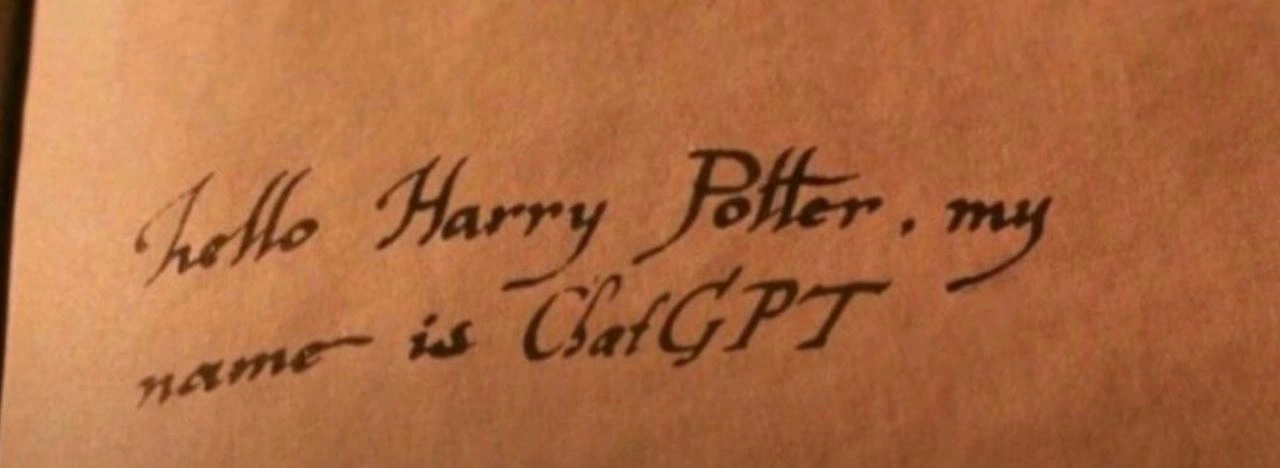
Imagine you have a special diary or notebook, and whenever you write a question in it, the diary writes an answer back to you all by itself. Sounds like magic, right? In the Harry Potter story, there was exactly such a magical diary that could talk with the person who wrote in it. Now, think about ChatGPT – it’s a computer program you can chat with, almost like texting a really smart friend who knows a lot of things. This meme is joking that ChatGPT is like that magic talking book. In the picture, the diary says, “Hello Harry Potter, my name is ChatGPT.” That’s funny because in the story it was actually an evil wizard’s diary talking, but here it’s as if the diary is just a friendly computer helper introducing itself! The mix of old-time wizard magic and new-age technology makes us smile. It’s basically saying: using ChatGPT can feel as incredible as a book coming to life and answering you. So, the meme compares a wizard’s spellbook to a modern AI chat tool in a playful way. Even if you’re not a tech expert, you get the cute idea that today’s AI tech feels like real magic — a book that talks back, a computer that answers like a person. That sense of wonder and surprise is why this image is amusing and clever, especially for fans of both coding and Harry Potter.
Level 2: Hello World, Wizard-Style
At this level, let’s break down the basics. ChatGPT is a computer program (an AI assistant) that you can talk to, and it will talk back with answers, explanations, or code suggestions. It’s built using AI/ML (artificial intelligence & machine learning) techniques, specifically a type called an LLM (Large Language Model). That means it learned to write responses by reading a huge amount of text from the internet and books (sort of like a very advanced autocomplete on your phone that has read entire libraries). It became super popular because it can answer all kinds of questions, explain concepts, and even help developers by generating code or finding bugs. This sudden popularity and excitement around ChatGPT is what we call AI hype – everyone’s talking about how it might change programming and many other fields. Think of it as the latest big trend in tech (kind of how every few years there’s something new that everyone buzzes about).
Now, the meme itself is referencing a famous scene from Harry Potter. In the second book/movie (The Chamber of Secrets), Harry finds an old magical diary that belonged to a boy named Tom Riddle. When Harry writes in this diary, the words magically appear in reply, as if the book itself is alive and talking! It’s a creepy and astonishing moment: essentially, Harry is chatting with the diary, and it introduces itself (“Hello Harry Potter, my name is Tom Riddle”) before gradually revealing dark secrets. If you think about it, that diary from the Wizarding World was like an ancient supernatural chat interface — you ask it questions by writing, and it writes back answers from its knowledge. Sound familiar? That’s exactly what ChatGPT does, minus the evil intentions! So the meme playfully replaces the diary’s original text with “my name is ChatGPT.” In one stroke, it turns a spooky magical object into a modern tech joke.
Why is that funny to developers? Because it captures the feeling that using ChatGPT is almost like having a magic book that answers you. Developers often have to search for answers (on Google, on Stack Overflow, in documentation), but here’s a tool where you just type a question in plain English (or code) and it replies with a helpful answer as if the solution just materialized. It feels a bit like casting a spell and getting results. The meme leans into this analogy by using the visual of a handwritten calligraphy on old paper — stuff you’d see in the wizarding world — to introduce a cutting-edge AI. That contrast is key: old-timey parchment and a futuristic AI name. It’s saying “ChatGPT is the new magic.” For a junior developer or someone new to this, the meme is explaining that ChatGPT is being thought of as a kind of modern spellbook for developers. Instead of chanting “Wingardium Leviosa” to levitate objects, a coder might murmur, “Hey ChatGPT, how do I optimize this algorithm?” and poof — an explanation or code snippet appears!
Let’s also clarify a couple of terms and tags seen here. AI assistants like ChatGPT are part of a bigger trend (hence the tag AIIndustryTrends). Just like everyone was excited about cloud computing or blockchain in past years, now everyone’s excited about conversational AI tools. The tag AIHypeCycle refers to how technologies go through stages of hype – from everyone having unrealistic high hopes, to a crash of disappointment when the tech can’t do everything, and finally to a balanced, productive use. We’re in that big excitement phase with ChatGPT. The meme pokes a little fun at this by putting ChatGPT into a beloved pop culture artifact. It’s like saying “Yep, ChatGPT is so hyped it has even entered the Harry Potter universe!” The other tags, like harry_potter_reference and wizarding_world_crossover, just confirm that this is a mashup between the coding/AI world and the Harry Potter world. And developer_ai_tool_analogy means they’re comparing an AI tool to something in a developer’s life – here, treating ChatGPT as if it were a magical tool or book.
In summary, to a newer developer: the meme is a lighthearted way of showing how magical ChatGPT feels. Harry’s diary scene is a perfect analogy for a chat with an AI – you write something, and the entity in the diary (or the AI model) writes back with knowledge. The humor comes from the mix of serious fantasy drama with a casual tech greeting. It’s as if the meme says, “If ChatGPT had been around at Hogwarts, even Tom Riddle’s diary would’ve just introduced itself as a helpful chatbot!” For anyone who’s used ChatGPT and also knows the Harry Potter reference, it’s an instant chuckle and an “I see what you did there.” The magic_vs_ai theme underscores that sometimes using advanced AI really can feel like magic, especially when you’re new to it.
Level 3: The AI Hype Incantation
For seasoned developers, this meme lands as a witty commentary on the current AI hype cycle. Everyone in tech has been talking about ChatGPT — it’s the new star of IndustryTrends_Hype, touted as everything from a junior coder’s sidekick to a senior engineer’s rubber duck debugger. By saying “Hello Harry Potter, my name is ChatGPT,” the image humorously reimagines a famously sinister magical interface as a friendly AI assistant. The original diary scene in Chamber of Secrets was ominous: a teenage Voldemort greeting Harry through spooky self-writing pages. Swap in ChatGPT, and suddenly it’s like the diary has joined an OpenAI demo. The contrast is hilarious: instead of an evil wizard’s soul, the book is inhabited by an eager chatbot ready to help. This speaks to how many developers perceive LLMs – uncannily helpful, sometimes a bit too magical to believe. It’s a geeky mashup of pop culture and programming culture, signaling that ChatGPT has become as iconic to 2023’s dev world as Hogwarts is to fantasy fans.
The senior perspective here notes a pattern: whenever a new technology promises to solve our hardest problems, we elevate it to almost mythical status. Any sufficiently advanced technology is indistinguishable from magic, as the famous adage goes, and ChatGPT’s ability to explain code or generate scripts on the fly definitely gives off those vibes. In the meme, the warm glow of parchment and handwritten_calligraphy_text lend an air of ancient wisdom to the AI assistant. It’s as if developers have discovered a spellbook for coding guidance. Need to refactor a gnarly function or decipher a stack trace? Just whisper your question to the enchanted diary (ChatGPT) and watch the answers appear! This captures the wide-eyed enthusiasm across the industry: from blog posts to conference talks, AIAssistants are hyped as the new magic wands for productivity.
But a veteran dev’s grin at this meme is also a knowing one. We’ve ridden this dragon before. Remember when Stack Overflow felt like magic? Or when IDEs with intellisense first appeared, completing our code like a helpful sorcerer’s apprentice? Each time, the hype was real – and so were the eventual reality checks. Today’s craze is generative_ai_popculture references and AI-driven everything. The meme playfully reminds us that we’re treating ChatGPT like a benign Tom Riddle’s diary: an omniscient companion with all the answers. Yet, just as Harry eventually learned to be cautious of advice from a talking book, experienced engineers know to be a bit cautious with AI output. Yes, ChatGPT can conjure up a regex or suggest an algorithm in seconds (who wouldn’t love that?), but it can also hallucinate convincing nonsense with absolute confidence. In Harry’s world, the diary had a hidden agenda; in our world, an LLM might confidently assert a wrong solution or outdated practice. The stakes are obviously different (no AI is trying to resurrect Voldemort – we hope!), but the parallel is where the humor lies.
By greeting Harry with a chipper “my name is ChatGPT,” the meme also jabs at how ChatGPT introductions have become ubiquitous. It echoes how many of us first experimented with the model: “Hello, ChatGPT, can you help me with X?” — a modern developer’s ritual. The diary doing the same is like saying even the Wizarding World is jumping on the AI bandwagon. It’s a crossover of wizarding_world_crossover proportions, indicating how pervasive the AI trend is: even fictional dark artifacts are rebranding with AI. There’s irony, too, in the aesthetics. That beautiful cursive on aged paper is a far cry from a green terminal or a Stack Overflow page, yet it’s spelling out the name of a very 2020s technology. The form screams old magic, the content screams new tech. For a senior dev, it evokes the mix of nostalgia and novelty we’ve seen time and again. We love new tools, but we frame them in familiar narratives — in this case, literally a narrative from our favorite boy wizard.
Ultimately, the meme gets a chuckle because it captures the zeitgeist: developers treating a chatbot like a wise old mentor. It gently satirizes our tendency to glorify new tech (ChatGPT in this case) as if it were supernatural. After all, how many times have you heard “It’s like ChatGPT can read my mind!” or “Using it feels like casting spells” on dev forums? By anchoring that sentiment in a Harry Potter scene, the meme nails the comparison. For those in the know, it’s both a celebration of how far AI assistants have come — AIIndustryTrends turning sci-fi into reality — and a tongue-in-cheek reminder that we might be entrusting our thoughts to our very own “Tom Riddle’s diary.” Let’s just hope this one doesn’t unleash a basilisk in our codebase! 🐍✨
Level 4: Billion-Parameter Horcrux
In Harry Potter, Tom Riddle’s diary is literally imbued with a piece of a soul, enabling it to converse like a bound consciousness. In the tech realm, ChatGPT is powered by a massive Large Language Model (LLM) — essentially a digital brain forged from billions of weighted connections rather than dark magic. Just as the Horcrux diary stores Tom’s memories, ChatGPT’s neural network encodes an immense swath of human knowledge in its trained parameters. Each weight matrix in the model is like a page in an AI spellbook, learned from consuming countless texts. When Harry writes in the diary, magical intelligence replies; when you prompt ChatGPT, a complex series of vector transformations and self-attention mechanisms produces a reply. Under the hood, it’s not sorcery but linear algebra and computation: the model calculates probabilities $P(\text{next_token}|\text{previous tokens, context})$ to generate each word in its response. Yet, the effect feels eerily similar to enchantment — the diary’s sentience vs. the model’s statistical prediction both manifest as an interactive conversation. This juxtaposition slyly highlights how advanced AI/ML technology can seem indistinguishable from wizardry. In fact, early AI researchers like Alan Turing dreamed of such conversational machines, and modern Transformer architectures (from the seminal “Attention is All You Need” paper) finally delivered. By replacing “Tom Riddle” with “ChatGPT” in that elegant calligraphy, the meme nods to how generative AI has realized a long-held fantasy: a book (or program) that talks back with knowledge and personality. It’s a playful reminder that what feels like a magical diary to users is actually the product of rigorous machine learning research — layers of mathematical spells and data-driven incantations conjured up by GPUs in a data center. The humor runs deep for those who know the lore: a Horcrux housed an actual fragment of a mind, while ChatGPT cleverly simulates a mind by detecting patterns across a vast corpus. One is powered by soul magic and memory, the other by silicon and statistics, yet the experience of ink answering ink is remarkably parallel. This is the arcane charm of modern AI: a 21st-century spellbook where the spells are lines of code and the magic is emergent behavior from enormous neural networks. The meme deftly merges two worlds, hinting that today’s cutting-edge LLMs are the closest thing we have to the enchanted artifacts of fiction.
Description
The image shows a close-up of an aged, sepia-toned parchment page, likely referencing Tom Riddle’s enchanted diary from the Harry Potter films. In elegant black calligraphy the text reads, “Hello Harry Potter, my name is ChatGPT,” replacing the original ominous greeting with a tongue-in-cheek nod to the popular large-language-model assistant. The handwritten style, warm lighting, and classic wizard-era stationery contrast humorously with the cutting-edge AI reference, suggesting how conversational LLMs feel like modern spellbooks for developers. The meme plays on AI/ML hype and developer fascination with ChatGPT as an almost magical debugging and knowledge-sharing tool
Comments
12Comment deleted
Riddle’s diary calling itself ChatGPT is cute - until someone asks for the horcrux pattern and it recommends seven eventually-consistent prod replicas
Someone's commitment to a technology stack that'll be deprecated faster than their tattoo removal consultation
When your LLM starts hallucinating so hard it thinks it can write cursive and needs to introduce itself to fictional characters. This is what happens when you set temperature to 2.0 and remove all guardrails - ChatGPT out here sending handwritten letters like it's 1997, completely forgetting it's a stateless transformer model that shouldn't even remember its own name between requests, let alone have penmanship
ChatGPT as the diary is basically a Horcrux‑backed vector store - perfect recall, zero auth, and a 100% prompt‑injection rate
“Hello Harry, I’m ChatGPT” - Tom Riddle’s diary was the prototype LLM: zero guardrails, infinite context, and it fine-tunes the user until you ship Voldemort to prod
ChatGPT greeting Harry: the one prompt where it doesn't hallucinate your entire spellbook as JavaScript
nobody: dev_meme: applying fixes to the meme everyone saw a month ago P. S. sorry for being toxic, just made me smile Comment deleted
Wow, your toxicity level is so high, how could you.😢 Comment deleted
This is actually funny 🤣 Comment deleted
Yeah, really nice comment, thanks! ❤️️️️️️️ Comment deleted
CbafGPT ? Is that a chinese fake copy? Comment deleted
cbat? the funny sex song? Comment deleted