Skip to content
DevMeme
597 of 7435
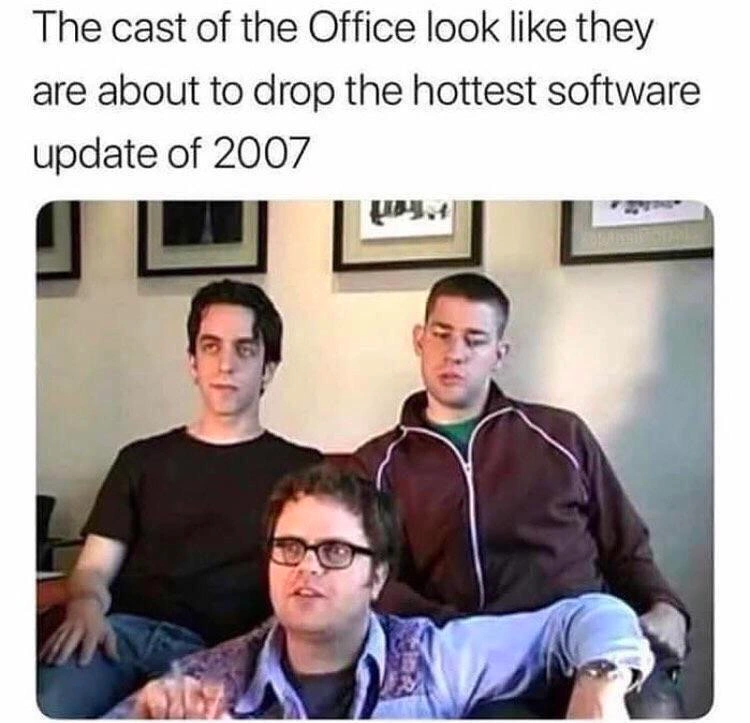
The Office Cast as a 2007 Startup Dropping a 'Major' Update
TechHistory Post #683, on Sep 20, 2019 in TG

The Office Cast as a 2007 Startup Dropping a 'Major' Update

Why is this TechHistory meme funny?

Level 1: Like a Birthday Surprise

Imagine you have a big birthday party only once a year. 🎉 You get all your presents at once on that day, and everyone makes a huge fuss about it. Your parents hype it up, you count down the days, and when the day comes, it’s a big celebration – cake, friends, the works. Now, think of another scenario: instead of one big birthday day, your parents give you tiny little gifts or treats quietly every week. No big party, just frequent small surprises.

This meme is funny because it’s comparing those two ideas, but with computer programs. Back in 2007, getting new features in a program was like that once-a-year big birthday party. It happened rarely, so it was a big deal and everyone talked about it. The picture shows three guys who look super proud, kind of like they’re a band about to release a hit new song. But instead of a song, they’re jokingly “releasing” a new version of some software in 2007 – which back then would have been a big exciting thing, just like a birthday or a big show.

Today, though, getting updates to your apps or games is more like those small weekly treats. Your phone apps update all the time without you even noticing, and nobody throws a party for an update. So the meme makes us laugh because these guys in the picture have the energy of a big birthday surprise, but for something (a software update) that nowadays would just happen quietly. It’s a cute way of saying, “Wow, remember when we used to get excited for stuff like that? How silly and fun was that?” Even if you’re not a computer expert, you can understand the feeling: it’s funny to see people look so serious and cool for something that seems ordinary now. It’s like seeing an old photo where people are really dressed up for an event that today wouldn’t be that fancy – it makes you smile at how times change.

Level 2: Before Continuous Deployment

In simpler terms, this meme jokes about how different software launches were in the mid-2000s compared to today. The image features three guys in a modest office, dressed super casually (we’re talking plain tees and hoodies). The photo itself looks old – slightly blurry and low-resolution – which immediately tells us it’s from around the 2007 era. Everything in it screams “old-school startup”: the cheap couch in a bare office, the unpolished snapshot quality, and the no-suit, no-tie attire. That style is the early_2000s_aesthetic the meme is going for – basically the way tech teams looked and worked back then. It gives off retro_startup_vibes, meaning it reminds us of how startups felt in the early days: small teams of young programmers, informal settings, maybe working on the next big thing in some rented room or a parent’s garage (hoodies were practically the dress code).

The text above the image – which reads “The cast of the Office look like they are about to drop the hottest software update of 2007.” – is where the joke is. Let’s break that down:

  • “The cast of The Office”: This refers to the actors/characters from The Office, a popular TV comedy. In that show, the characters work at a boring paper company and often find themselves in funny, awkward situations. Here, someone noticed that the three guys in this photo (with their faces blurred for privacy) look a lot like they could be characters from The Office. In other words, their pose and style are unintentionally similar to how the cast of that sitcom might look if they were sitting on a couch together. This is a clever office_tv_show_reference. By mentioning The Office, the meme taps into a piece of pop culture that many people know, making the joke more accessible. If you’ve seen the show, you might remember its clumsy group scenes and think, “Yeah, this could be a behind-the-scenes photo from Dunder Mifflin (the paper company in The Office)!” It sets a humorous tone because The Office is all about everyday office life comedy – and now we’re picturing those same folks in a tech startup scenario.

  • “look like they are about to drop the hottest software update of 2007.”: This part is loaded with humor for tech folks. The phrase “drop the hottest ___ of 2007” is phrased like a joke about releasing a hit music album. Saying “drop” is slang for “release/launch” (often used in music or pop culture when talking about a new album or single being released – e.g., a band “drops” a new album). By saying “hottest software update”, the meme is jokingly treating a software update like it’s a hot new music album or a mixtape. And specifically adding “of 2007” emphasizes that we’re talking about the mid-2000s style of software release – a time when releasing a new version of software was indeed a big deal and might have been hyped up. Back then, software usually didn’t update quietly in the background. Instead, you’d have major versions or patches that were announced to users. For example, a company might say, “Our Version 2.0 is coming out this fall, get ready!” and users would have to download an installer or even buy a new CD.

So, saying these guys look ready to “drop the hottest software update of 2007” is a tongue-in-cheek way of saying they resemble a team from 2007 about to launch a big new software version with a lot of fanfare. It’s poking fun at the old way of releasing software. In that era, a software update (like going from version 1.0 to 2.0) often came with a lot of marketing hype and excitement. Companies would sometimes treat it almost like an event – imagine a press release, maybe a countdown to release day, some screenshots teased to the public, etc. This is completely different from how things work now, which is the contrast the meme is highlighting.

Now, to clarify a few terms and concepts for those newer to the tech scene:

  • Software update (in 2007 style): This usually meant a new major version or a big patch. If you had an app on your computer in 2007, you often had to manually get the update. For example, you might download a file like AwesomeApp_v2.exe and run it to install the new version. Or if it was something like Microsoft Office, maybe you’d even get a DVD from the store or your IT department. Companies would bundle a bunch of changes together into one big release. They might only do this a few times a year (or even once a year). Because updates were infrequent, each one felt significant. That’s why they could be called “the hottest update” with a bit of humor – each update was a notable event. The meme jokingly exaggerates this by calling it the “hottest of 2007”, like it’s an award-winning album or something.

  • Continuous deployment (today’s style): This is basically the opposite of the old style. Today, thanks to methodologies like Agile development and tools that enable automatic updates, software is often updated continuously or very frequently. You might not even notice your apps updating – it just happens in the background, or on the server side for web apps. For example, modern web applications (like Facebook, Gmail, Twitter, etc.) get updated with new code many times a day behind the scenes. Mobile apps might update every week or two via the app store. There isn’t usually a giant leap from version 2.0 to 3.0 all at once; instead, features roll out bit by bit. This approach is supported by what’s called CI/CD pipelines (Continuous Integration/Continuous Delivery), which automate testing and releasing code. The key point is, releases are incremental and low-key now. They’re not big news events most of the time. So no one today would say “we’re about to drop a hot update” in a serious way – they’d just deploy the code and move on to the next small update.

The meme is funny to developers because it contrasts these two worlds. It’s exaggerating how the old way felt by using flamboyant language (“hottest update of 2007!”) and tying it to an image that looks straight out of that time. Basically, it’s a playful way of saying, “Haha, remember when releasing new software was such a big production? These guys sure look like they’re in that mindset.”

Let’s also talk about the pop culture angle: referencing The Office. If you’re an early-career developer (or even a student), you might wonder why bring The Office into this? Well, The Office is a very well-known comedy series; referencing it adds an extra layer of humor because it connects a tech joke with something non-tech people find funny too. In one sense, it’s saying these three could be characters in The Office and also in some tech startup at the same time. It’s a goofy mashup. For context, The Office (US version) was airing around 2005-2013, and in fact, around 2007 one of the storylines was about the company trying to start a website – which was the show’s tongue-in-cheek nod to the growing importance of tech and online business. So the year “2007” ties The Office era and the tech era together neatly. The meme uses that to its advantage.

In summary, this meme jokes that back in 2007, a small developer team would pose like rockstars because releasing software then was like dropping a hit album – a big, hyped-up deal. The image perfectly captures that vintage startup look, and the text doubles down by explicitly referencing 2007 and making a playful comparison to a music album release. It resonates with tech folks who remember that time (or have heard the tales), and the nod to The Office gives everyone a familiar reference to chuckle about. It’s mixing tech industry inside jokes (about software releases and startup culture) with mainstream humor (the recognizable cast and style of The Office), which is why it appeals to a broad range of people in the developer community.

Level 3: Web 2.0 Hype Machine

This meme is a time capsule capturing an era when shipping software felt like a big event. It blends TechHistory and Startup nostalgia with a dash of CorporateCulture satire. In the mid-2000s (think Web 2.0 days), a "hot" software release wasn’t a quiet Git push on a CI/CD pipeline – it was often a hyped spectacle. The image and caption work together as classic DeveloperHumor/TechHumor: they reference industry in-jokes and pop culture simultaneously. It’s essentially an insider TechIndustryHumor gag wrapped in a widely recognizable PopCultureReference to The Office. The humor banks on TechNostalgia – if you wrote or installed software in 2007, this hits home.

Visually, the photo screams early_2000s_aesthetic. It’s slightly grainy (probably taken with a 2007-era digital camera or a Palm Treo phone), and the trio’s fashion is peak retro_startup_vibes: plain t-shirts, zip-up hoodies, and comfortable jeans. They’re slouched on a dingy office couch, framed by a bland beige wall with a couple of generic black-and-white prints – the kind of low-budget decor you’d find in a fledgling startup’s first office. Back in 2007, this was the uniform of innovation: the hoodie-and-jeans combo famously worn by young tech founders (à la early Facebook or MySpace teams). Even the fact that it’s a casual group snapshot (not a slick professional photo) adds authenticity. It looks like an “About Us” team picture from an old startup blog: no polish, just three confident geeks with the we’re about to change the world vibe. This image oozes that retro confidence; all that’s missing is a wall-mounted whiteboard scribbled with the next “killer app” idea and a clutter of install CD-ROMs on the table.

Now, the caption is where the meme’s software_release_jokes really shine. It reads: “The cast of The Office look like they are about to drop the hottest software update of 2007.” This line is doing triple-duty: it’s referencing a well-known meme format, roasting old-school release culture, and invoking The Office for extra laughs. In mid-2000s slang, “drop the hottest X of 2007” spoofs the language of music album releases – you’d say a band is about to drop the hottest album of the year. Here the twist is calling a software update “the hottest” drop of 2007, as if it’s the latest hit record. It’s a playful exaggeration that pokes fun at how overhyped software releases used to be. In the Web 2.0 days, startups and big tech companies alike often marketed their next version as if it were a blockbuster release. They’d give it pomp and fanfare: flashy version numbers (hello “2.0” everything), code names like “Project Phoenix”, maybe even a launch party or a TechCrunch headline. If you’ve been around long enough to remember downloading a new Firefox release or unboxing Adobe CS3 in 2007, you recall the buzz and anticipation (and occasionally the letdown!). The meme satirically implies these three dudes on the couch are hyping their upcoming major release with the same energy a record label might hype a platinum album.

The Office reference is the comedic crux that broadens the appeal. The Office (the US TV show) is iconic pop culture from that exact era (its early seasons aired mid-2000s). By saying “the cast of The Office look like…” the meme sets a funny parallel: the actors from a sitcom about mundane corporate life accidentally resemble a scrappy dev team from 2007. It’s amusing because The Office characters are decidedly not tech superstars – they’re paper company employees famous for awkward humor. Yet here, the three blurred faces and their posture give off serious developer vibes. In fact, the guy in the middle with glasses (vaguely reminiscent of Dwight Schrute’s style) sitting forward could pass for the nerdy lead engineer; the guy on the left with the deadpan look (kind of like Ryan Howard from the show) could be the too-cool-for-this release manager; and the fellow on the right in the maroon hoodie looks like the chill backend dev who pulled an all-nighter. The meme leverages this office_tv_show_reference cleverly: even if you’ve never shipped code in 2007, you might know The Office and sense the irony. It’s a fun crossover between tech inside-joke and mainstream humor – a key reason the meme resonates widely.

On a deeper level, this meme contrasts how software releases have changed from 2007 to today. Back then, deploying software was a Big Deal™. Teams would spend months developing a new version, bundle all the changes into one massive update, and “drop” it on users in one go. For a startup or product in 2007, a “hot update” might mean Version 2.0 with a shiny new UI and lots of features enabled at once. Releasing often meant burning CDs or uploading a new setup executable (CoolApp_v2.0_setup.exe) for users to download. There was a sense of ceremony: maybe a blog post announcement, an email blast to customers, even press releases. If the company was big, they’d coordinate it with a trade show or a PR event. This all-hands-on-deck approach is sometimes jokingly called “Waterfall World Tour”: you plan a huge release, rehearse it, and unveil it like a concert performance. The meme’s caption nails that sentiment – these guys look ready to announce something huge, as if millions are waiting for the “patch of the year.”

Contrast that with today’s world of Agile and Continuous Deployment. In 2019 (when this meme circulated) and certainly now, software updates are typically smaller, more frequent, and far less dramatic. Instead of one big version every year or two, companies push out incremental updates weekly, daily, or even hourly. There’s less “drop” and more “drip”. Modern development practices (like DevOps with automated CI/CD pipelines) mean new code rolls out as soon as it’s ready, often without any user ceremony. Your app might update in the background or a web service gets new features silently overnight. So the idea of a “hottest software update of 2007” dropping with hype feels quaint and humorous. It’s a gentle jab at how far the industry has come. We’ve gone from monolithic releases to micro updates, from eagerly checking download pages for a new version to hardly noticing when an update has already installed itself. In other words, the entire concept of a big splashy software release has become a bit of a relic – and that’s exactly what this meme is pointing out with a chuckle.

To illustrate the contrast, consider how things differ between the 2007 style and today:

2007 Software Release Modern Software Release
Big version bump (v2.0 -> v3.0) announced with fanfare. Continuous, small updates (v2.0.1, v2.0.2… or no visible version) quietly deployed.
Users manually download a new installer (setup_v3.exe) or even get a CD-ROM in the mail. Updates auto-deliver via the internet; apps prompt or refresh themselves (think app stores, auto-updaters).
Marketing and press: blog announcements, maybe a launch event or a booth at TechExpo 2007. Minimal fanfare: a quick release note on Slack or a small entry in the app’s changelog; often no press at all unless it’s major.
Huge changelog with tons of new features/fixes at once (risky integration). Bite-sized changes merged and released continuously (easier to isolate bugs, feature flags to toggle new stuff gradually).
Team celebration: group photo (like this meme!) after “going gold” (finalizing the release), then possibly months until the next big push. Ongoing process: deploys are routine, “going to production” happens all the time; any photo is probably just the team at stand-up meeting.

Looking at that left column, you can see why the meme evokes a particular vibe. The folks on the couch really do look like they just finished burning the master CD of their software and are about to mail it out to users or upload it on Download.com, then pat themselves on the back. That’s the major 2007 software release energy being referenced. It’s the energy of “We did it, team – Version 2.0 is ready to rock the world!” all captured in one awkward team photo. Meanwhile, the right column is how things are now – a world these guys probably couldn’t imagine in 2007.

The humor works because it’s absurdly relatable to those in tech. It highlights how fast the industry evolves. In 2007, this kind of team picture with a bold claim wouldn’t just be a joke – it was normal! Many of us who lived through that era can recall similar cringy-yet-earnest moments: posing for a group pic wearing our best “casual coder” outfits, hyping a release that, in hindsight, was just a minor incremental improvement or a bugfix patch. The meme knowingly winks at that hindsight. It’s saying, “Remember when releasing software felt like dropping a hot new album? Kinda silly, kinda great.” And even if you weren’t coding in 2007, the message is clear enough: early tech had its own swagger and silliness, and we’re all glad (and a bit sentimental) that those days are behind us. This combination of tech nostalgia and comedic contrast makes the meme resonate. It’s both a roast and a fond remembrance of the old days of software deployment.

Description

The image features three characters from the American sitcom 'The Office' sitting on a couch. From left to right are Ryan Howard (B. J. Novak), Jim Halpert (John Krasinski), and Dwight Schrute (Rainn Wilson) in the foreground. They are posed seriously, looking off-camera, in a style reminiscent of a 2000s-era band or tech startup promotional photo. Ryan is in a black t-shirt, Jim wears a maroon zip-up jacket, and Dwight is in a patterned short-sleeve button-up over a collared shirt with glasses. The text overlay across the top reads: 'The cast of the Office look like they are about to drop the hottest software update of 2007'. The humor stems from the perfect capture of the mid-2000s tech aesthetic, a period known for its Web 2.0 boom and distinct fashion. For senior developers, this is a nostalgic reference to an era of clunky UI, pre-mobile design, and overhyped software launches. The year 2007 specifically places it at the cusp of the smartphone revolution, making the 'hottest update' seem quaint by today's standards. It's a joke about how tech marketing and team aesthetics have evolved, and the self-serious way teams presented themselves even for minor product releases
Comments

7
Anonymous ★ Top Pick That 'hottest software update of 2007' was probably just adding AJAX to a single form field and shipping a new jQuery plugin. Groundbreaking stuff
  1. Anonymous ★ Top Pick

    That 'hottest software update of 2007' was probably just adding AJAX to a single form field and shipping a new jQuery plugin. Groundbreaking stuff

  2. Anonymous

    Nothing says 2007 release swagger like freezing trunk in Subversion, burning the gold-master DVD, and telling marketing it’s “cloud” because we sprinkled one line of AJAX

  3. Anonymous

    Their debut single "Vista Service Pack 1" stayed at #1 on the crash reports for six months straight, while the B-side "IE7 Compatibility Mode" became the anthem for every enterprise still running ActiveX controls

  4. Anonymous

    Ah yes, 2007 - when 'shipping' meant burning DVDs, release notes were printed in manuals, and your deployment pipeline was literally a FedEx truck. These developers have that unmistakable look of people who just spent six months in feature freeze, survived UAT hell, and are about to find out their 'hottest update' requires 4GB of RAM that nobody has. The confidence is palpable, the technical debt is mounting, and somewhere a project manager is already planning the Service Pack 1 roadmap for next quarter

  5. Anonymous

    You can almost hear: SVN trunk frozen, WiX‑built MSI uploaded - optional Silverlight - and rollback is Ghost imaging

  6. Anonymous

    Pure 2007: SVN trunk freeze, an MSI named setup_final_v2, IE6 “support,” and a Silverlight widget we swear will change the web

  7. Anonymous

    That unbridled excitement before deploying the 'revolutionary' patch to your IE7-locked intranet

Use J and K for navigation