Skip to content
DevMeme
3166 of 7435
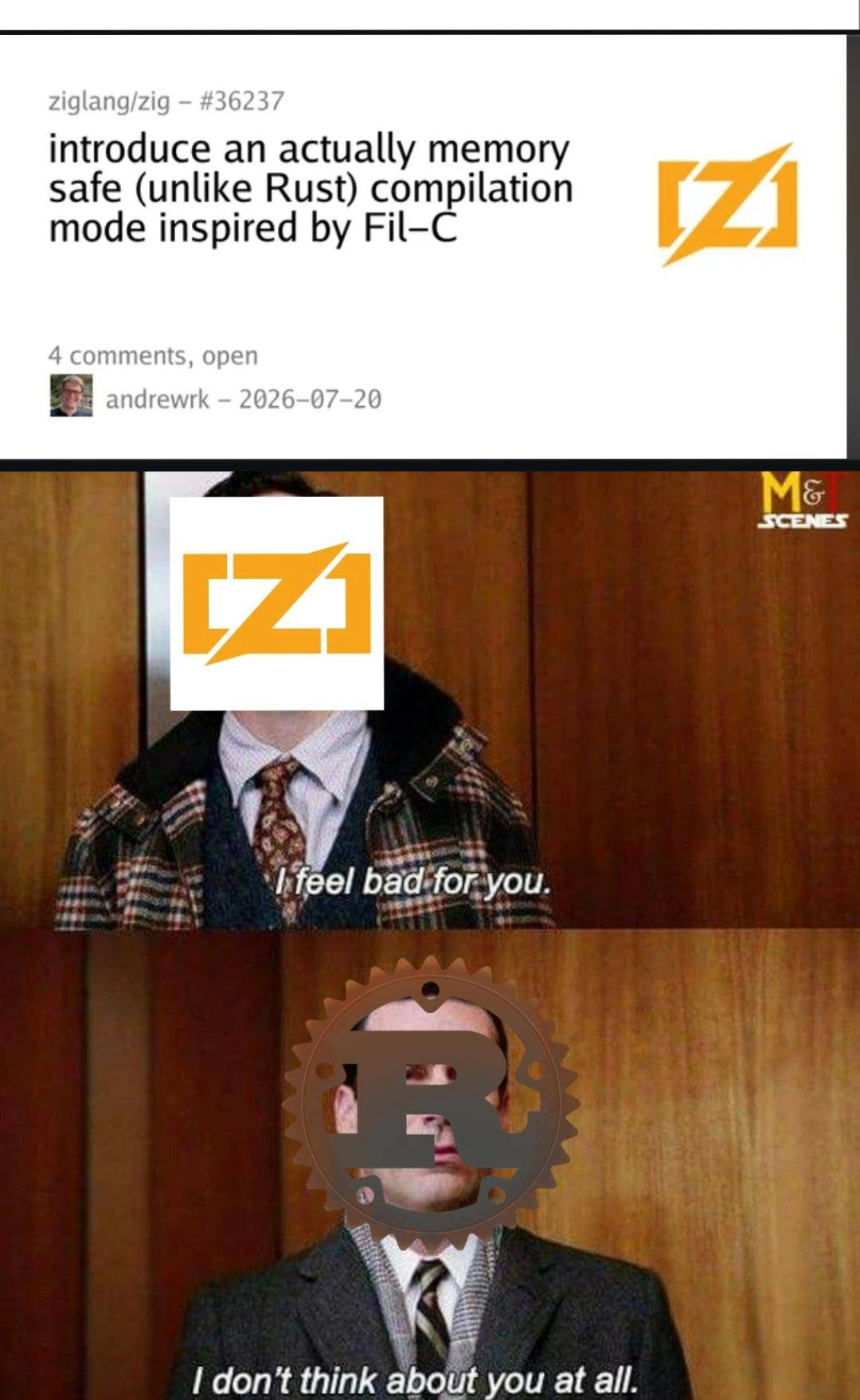
The eternal battle: planning vs. 'just ship it'
DevCommunities Post #3487, on Aug 1, 2021 in TG

The eternal battle: planning vs. 'just ship it'

Why is this DevCommunities meme funny?

Level 1: That Escalated Quickly

Imagine a group of kids planning to build a treehouse together. One kid says, “Hey, maybe we should draw a quick little map or plan so we know what we’re doing.” But before they even finish, another kid shouts, “Maps are stupid! We don’t need any drawing, let’s just build.” Then a third kid jumps in even louder, “Building treehouses is stupid anyway!” Now the first kid, who was just trying to help, gets upset and yells back, “Well, you don’t even know how to build a treehouse!” Suddenly, they’re all yelling at each other, and the original idea of making a helpful drawing is completely forgotten. It’s funny in a goofy way because a simple, good suggestion turned into a huge argument for no good reason — everyone’s upset and the treehouse isn’t even started.

Level 2: Diagrams vs Code Showdown

Let’s break down what’s happening in simpler terms. The meme shows a conversation about using diagrams in software development. An architecture diagram is basically a picture that shows how different parts of a software system fit together (for example, boxes representing services and lines showing how data flows between them). Diagrams are a form of documentation – extra information to help people understand the code or the system design. In panel 1, the small bird (labeled "Me") is trying to politely say, “I think diagrams can be good to…” (likely meaning diagrams can be helpful for understanding complex code or ideas).

However, before they even finish, another bird interrupts with a loud rebuttal:

“DIAGRAMS ARE SHIT!”

In plain language, this person is shouting that they think diagrams are terrible and useless. This is the start of a classic flame war – that’s internet slang for a heated, angry argument online. In a flame war, people stop listening and start throwing around extreme opinions or insults. Here, the topic is diagrams versus code: one side suggests using diagrams for clarity, and the other side basically yells back “No way, diagrams are awful! Only code matters.”

Then it escalates even further. A big black crow joins in (representing another loud participant in the discussion) and yells:

“SOFTWARE ENGINEERING IS SHIT!”

Now the argument has blown past the original topic. It’s like someone saying, “Not only are your diagrams bad, everything about how we build software is bad!” This sounds extreme and absurd, but it’s poking fun at how arguments online can broaden dramatically. In real life, sometimes a debate jumps from a small specific topic to a sweeping claim about the whole field. It’s as if one person’s frustration with the discussion (or with the industry in general) boils over, and they start attacking software engineering as a whole.

Finally, the initially polite bird loses their cool too. They shout back:

“YOU DON’T KNOW HOW CODE!”

We can assume they mean “you don’t know how to code,” basically accusing the other person of being a bad programmer. This is a direct personal insult aimed at the other person’s skill. At this point, the discussion isn’t about diagrams or design ideas at all — it’s just people yelling and attacking each other. That’s what we call a communication breakdown. All the useful content of the discussion is gone; it’s just noise and hurt feelings now.

For a junior developer or someone new to these situations, the meme is a peek into the kind of unproductive arguments that can happen in tech communities. It’s exaggerating to be funny, but there’s truth behind it. You might imagine posting on a forum, “Hey, would a diagram help explain this?” and getting responses that range from “Diagrams are pointless, just read the code” to “Programming as a whole is messed up” and then personal jabs. It’s jarring because you’d expect a calm discussion about a simple topic, but it sometimes devolves into a war of words.

The tags and categories hint at what’s going on:

  • Documentation: The original suggestion was about making documentation (a diagram) to help understand something.
  • Communication: The way people are talking past each other is the real issue — nobody’s actually listening after a point.
  • Design Patterns/Architecture: These are areas where diagrams are often used. For instance, when learning design patterns, you might see a UML diagram of the classes. Some developers love that approach, others hate it. So discussions about architecture or design can trigger this diagram vs code debate.

The phrase “diagrams_vs_code” refers to a long-running debate in software teams: should we spend time drawing diagrams and writing docs, or just focus on writing code? Some folks argue that code is the single source of truth and documentation gets outdated, so why bother with diagrams. Others say that without any diagrams or docs, it’s hard for newcomers to grasp the big picture. Both sides have a point in certain contexts, but as the meme illustrates, people can get very passionate (to the point of yelling) about which approach is better.

The term “flame war” we saw means an angry back-and-forth fight, often online. You’ll notice in such fights, moderate voices or nuanced opinions disappear. It becomes a shouting match, much like what the birds in the cartoon are doing. One person might be genuinely trying to improve the team’s documentation culture by suggesting a diagram. Another might feel that suggestion threatens their “code-focused” culture and overreact defensively. Add maybe a third person who’s just having a bad day or likes to troll, and suddenly the conversation isn’t productive at all.

In summary, this meme shows how a simple idea about improving communication (using a diagram) can blow up into a big argument. It’s highlighting that in developer culture, even small topics can lead to big fights if people aren’t respectful. For someone early in their career, the takeaway is both humorous and educational: even smart, experienced engineers can get caught in silly arguments. It underscores the importance of keeping discussions civil and on-topic. After all, a diagram here or there won’t wreck a project, but poor communication and teamwork might!

Level 3: Architectural Holy War

This meme highlights a classic documentation vs code clash that often escalates into a full-blown holy war among developers. On the surface, it’s about using architecture diagrams to aid understanding, but underneath, it’s poking fun at how software engineering discussions can spiral out of control. A simple suggestion — “I think diagrams can be good to…” — is cut off by an explosive reaction:

“DIAGRAMS ARE SHIT!”

This knee-jerk response represents a faction of engineers who firmly believe “the only up-to-date documentation is the code itself.” They’ve likely been burned by outdated diagrams or heavyweight design processes (think over-engineered UML charts from big corporate projects) and now treat any mention of diagrams as heresy.

What makes this humorous (and painfully relatable) is how quickly the conversation loses all nuance. The original point about using diagrams to enhance understanding gets drowned in absolutism. It’s as if the mere utterance of “diagram” triggered a flame-war algorithm: first someone completely bashes diagrams, then another voice ups the ante by declaring:

“SOFTWARE ENGINEERING IS SHIT!”

This crow-like character in the third panel embodies the ultimate cynic or troll. We’ve all seen discussions where one-upping negativity becomes a sport — a conversation starts on a specific topic (like diagrams) and suddenly someone is ranting about the entire field. It’s an exaggerated version of tech hot take culture: “If a little criticism is good, an extreme rant must be better!”

Finally, our once-polite protagonist snaps and shouts back:

“YOU DON’T KNOW HOW CODE!”

Grammatically, they meant “you don’t know how to code,” but the heat of the moment has even mangled the phrasing. This is a classic ad hominem turn — attacking the person instead of the idea. It mirrors real-world developer flame wars where frustration leads to insults like “you’re not even a real programmer.” The humor here is a bit dark: in trying to champion calm discussion, the original poster ends up descending into the same shouting match. It’s a satirical look at online engineering discourse dynamics: a reasonable dialogue crumbles into a noisy exchange of slogans and personal jabs, even among professionals who pride themselves on logic.

In fact, the escalation is so formulaic you could almost script it out in code:

print("Me: I think diagrams can be good to...")
# -> Immediately interrupted by a loud dissenter
print("Them: DIAGRAMS ARE SHIT!")
# -> Argument escalates to trashing the entire field
print("Crowd: SOFTWARE ENGINEERING IS SHIT!")
# -> Original speaker snaps and gets personal
print("Me: YOU DON'T KNOW HOW CODE!")

Underneath the comedy, there’s an industry backstory explaining why these reactions are so charged. In the early days of Software Engineering, comprehensive diagrams and documentation were standard. Large teams might produce detailed design docs and UML diagrams before writing a single line of code. Then the Agile movement flipped the script, emphasizing “working software over comprehensive documentation.” Many veteran devs internalized this as “diagrams are a waste of time; the real truth is in the code.” That voice in panel 2 (yelling that diagrams are garbage) sounds exactly like an old-school coder who’s had it with paperwork that never matches the final software. On the flip side, developers who’ve struggled to understand a complex system with zero documentation often advocate for at least some diagram or design docs. A newcomer joining a project might desperately want a high-level map of the codebase. So when someone like the little bird suggests, “maybe a diagram would help,” it’s coming from that genuine need for clarity. Unfortunately, it can strike a nerve with those who’ve seen documentation efforts go wrong, and suddenly you have an all-out diagrams vs code debate on your hands.

The meme exaggerates the speed and absurdity of this escalation for comic effect. It’s funny because it’s true enough — many developers have witnessed a minor design discussion blow up into a huge argument about the value of documentation itself. There’s a shared exasperation in the software community: we try to discuss a simple tool or best practice calmly, but inevitably someone barges in with all-caps certainty that “X is trash”, derailing the conversation. It’s a form of online bikeshedding (arguing over a minor thing to death) mixed with a bit of existential crisis (“maybe the whole field is trash!”).

To break down the pattern being satirized here:

  • Nuance is lost: The initial mild suggestion (“let’s consider using diagrams to help”) gets taken as a black-or-white stance. There’s no room for a middle ground once the shouting starts.
  • Extreme positions dominate: Moderate voices get drowned out. Instead of “maybe sometimes diagrams help, sometimes not,” it becomes “diagrams are utterly useless” vs “no, everything we do is flawed.”
  • Personal attacks ensue: When logical debate fails, people start attacking each other. The meme’s final insult “you don’t know how to code” is a prime example of a frustrated developer lashing out.
  • Irony abounds: A discussion about improving communication (via documentation) degenerates due to terrible communication. The very thing meant to bring clarity (a diagram) leads to chaos because of how people react.

For seasoned developers, this comic provokes a head-shaking chuckle of recognition. It calls out an aspect of developer culture where strong opinions and ego can trump constructive conversation. Many of us recall specific meetings, code reviews, or forum threads that followed this exact arc from calm discussion to pointless yelling. The image of small birds and a crow screaming over a simple suggestion is hilariously accurate — it’s a bird-brained version of what we see in some design meetings or comment sections. The laughter it evokes is a mix of “Haha, that’s ridiculous” and “Oof, I’ve been there.” It underscores that in software, as in any collaborative field, how we communicate can be just as important as what we’re working on. The meme holds up a mirror to our worst discussion habits, and that blend of truth and exaggeration is what makes it so funny. We’ve all either witnessed these outrages or accidentally been part of them, and seeing it depicted with angry little birds is a comic reminder not to take the bait next time a debate starts turning into a flame war.

Description

A four-panel comic strip meme depicting a conversation between two birds. In the first panel, a small, calm bird labeled 'Me' begins to say, 'I think diagrams can be good to...'. In the second panel, the bird is cut off mid-word ('...underst') by an aggressive off-screen speech bubble yelling, 'DIAGRAMS ARE SHIT'. The third panel reveals a large, loud black bird screaming 'SOFTWARE ENGINEERING IS SHIT' at the smaller bird. In the final panel, the small bird gives an annoyed, deadpan stare with a speech bubble that says, 'YOU DON'T KNOW HOW CODE'. The meme humorously captures a common conflict in development teams between those who advocate for planning and established software engineering practices (like creating diagrams) and those who dismiss them as useless. The punchline implies that the developer who aggressively rejects these practices is often overcompensating for their own lack of fundamental coding skills
Comments

10
Anonymous ★ Top Pick The engineer screaming 'software engineering is shit' is the same one who thinks 'refactoring' means adding v2 to a function name
  1. Anonymous ★ Top Pick

    The engineer screaming 'software engineering is shit' is the same one who thinks 'refactoring' means adding v2 to a function name

  2. Anonymous

    I dropped “let’s sketch a quick C4 diagram” in the architecture channel - five minutes later we’re debating whether ASCII art violates Twelve-Factor, someone forked PlantUML to Go, and the ops lead is shouting that “pictures aren’t idempotent.”

  3. Anonymous

    After 20 years in the industry, I've learned that the people who hate diagrams the most are usually the same ones who create the most incomprehensible microservice spaghetti that requires three whiteboards and a PhD in distributed systems just to trace a single API call

  4. Anonymous

    This perfectly captures the five stages of senior engineering grief: (1) cautious optimism about process improvements, (2) immediate self-contradiction, (3) external validation of your cynicism, (4) complete linguistic breakdown. By the time you're screaming incoherently about code, you've achieved what we call 'principal engineer consciousness' - where you've seen enough architectural diagrams become shelfware and enough 'living documentation' die on the vine that you've transcended language itself. The real joke? We all still draw the diagrams anyway, knowing full well they'll be outdated before the PR merges

  5. Anonymous

    Diagrams: turning monoliths into microservices spaghetti, one unreadable arrow at a time

  6. Anonymous

    “Diagrams are for people who can’t code” is how you end up reverse‑engineering your architecture from Jaeger traces and kubectl at 3 a.m - aka drawing the sequence diagram the hard way

  7. Anonymous

    Propose a C4 diagram and it devolves into ‘code is the only truth’ - from a team whose truth is a 900k‑LOC monolith and a topology only Prometheus understands

  8. Red Я. 4y

    Php dev?))

    1. @dsmagikswsa 4y

      Explanation ? 🧐

  9. @misesOnWheels 4y

    coding is shit

Use J and K for navigation