Skip to content
DevMeme
685 of 7435
The Sloth Coder's Creed: A Vow of Endless Debugging
MentalHealth Post #777, on Nov 3, 2019 in TG

The Sloth Coder's Creed: A Vow of Endless Debugging

Why is this MentalHealth meme funny?

Level 1: No-Time-for-Fun Fable

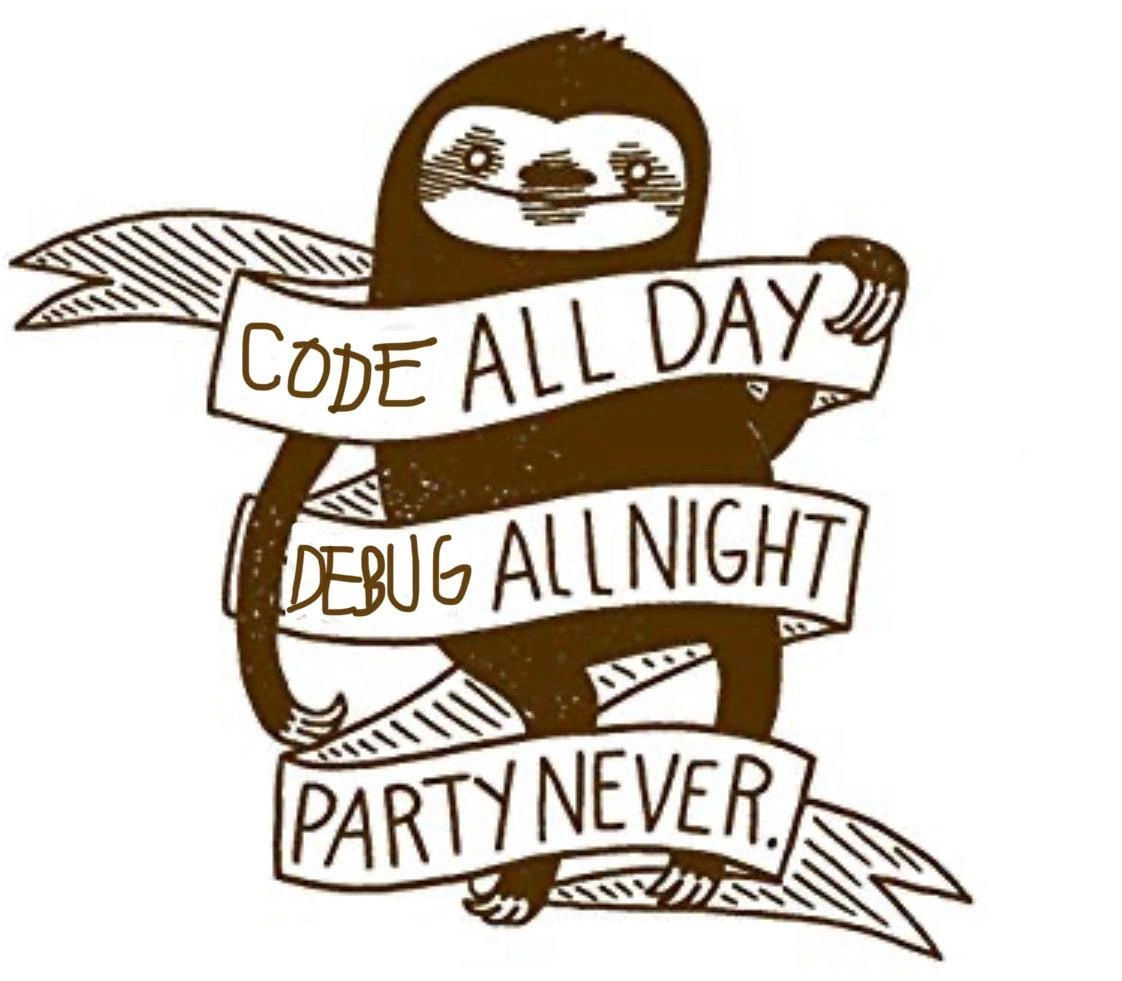
Imagine you have to do homework all day and then chores all night, and you never get to play or relax. That’s what this meme is joking about, but for a grown-up who writes computer programs. The picture shows a smiling sloth holding a ribbon with words on it. A sloth is a very slow, sleepy animal, which is funny here because the words say the person is busy all day and night. The ribbon’s message “Code all day, debug all night, party never” is like a silly schedule: work in the daytime, fix problems in the nighttime, and no time for any fun (no parties, no hanging out). It’s kind of like saying a student studies from morning to bedtime and never ever goes outside to play – pretty sad and tiring, right? The reason it’s funny is that it’s so exaggerated and true for some people that it makes us laugh a little. The sloth looks happy hugging the banner, which is goofy because in real life, if you had to work all the time with no fun, you’d feel exhausted, not happy. So the meme is using a cute animal and an extreme slogan to poke fun at how overworked some programmers feel. It’s like a cartoon saying, “Hey, I’ve been doing nothing but work, work, work – I’m as slow and done-in as a sloth now!” Even if you’re not a programmer, you can relate to the idea of having too much to do and no time to enjoy yourself. The joke reminds us that everyone needs a break, no matter how much we love what we do.

Level 2: Infinite Sprint Loop

Let’s break down the elements of this meme in simpler terms. The banner says “Code all day, debug all night, party never,” and it’s being held by a cartoon sloth. Each part of that slogan highlights a different aspect of a developer’s routine gone haywire:

  • Code all day: This refers to spending the entire day writing code. In a normal work schedule, a developer might write and test new features during the day. Here it’s exaggerated to literally all day coding, suggesting an intense workload. During an Agile sprint (a short, focused development period usually 1-2 weeks long), developers often feel pressure to get a lot done before the sprint ends. “All day” coding implies that even a full day isn’t enough to finish the tasks.
  • Debug all night: Debugging is the process of finding and fixing bugs (errors or problems) in the code. “All night” implies that after coding all day, the developer is now spending the entire night fixing issues. This is a scenario many programmers dread but know well: you deploy some new code or finish a feature, only to discover it breaks something, and then you stay up very late (sometimes until morning) to troubleshoot. Late-night debugging sessions often happen when something goes wrong in production (the live environment users rely on) and it’s urgent to fix. Being on-call means a developer can be paged or alerted at odd hours to handle such emergencies. So “debug all night” paints a picture of a programmer at 3 A.M. bleary-eyed, combing through error logs or stepping through a debugger to track down a problem.
  • Party never: This final part means there’s no time for fun or social life. If you’re coding all day and debugging all night, when would you hang out with friends or relax? “Party never” humorously exaggerates that a person following this routine doesn’t get to enjoy any leisure activities. It’s a nod to the stereotype (and sadly, sometimes the reality) that programmers can become so consumed by work that they skip all the parties, miss family events, or generally have WorkLifeBalance issues. In coding terms, one might say their social life is // commented out – which is exactly what the meme description joked: social life permanently commented out. In code, commenting something out means that it’s in the code as a reference but won’t execute – similarly, the person’s social plans exist only in theory and never actually happen.

Now, why use a sloth to deliver this message? Sloths are known for being super slow-moving, sleepy creatures (they sleep a lot and don’t move much). The sloth in the illustration looks calm, even content, while holding a banner that describes an exhausting, unhealthy routine. This contrast is part of the visual joke. The sloth might represent how a developer feels after doing this cycle for too long – slow, exhausted, maybe mentally foggy, like a sloth climbing in slow motion after sleepless nights. Or it could simply be a playful mascot: a laid-back animal representing a not-so-laid-back lifestyle. The art style (brown line art with a ribbon banner) gives the vibe of a classic emblem or motto, almost like something you’d see on a quirky T-shirt or sticker. It’s formatted like a proud manifesto or life creed, which adds irony: usually people make motto banners about positive or aspirational things, but here it’s about burnout and overwork. That’s intentionally silly and dark humor combined.

Some key concepts referenced in this meme, explained:

  • Sprint: In Agile software development, a sprint is a set period (often 2 weeks) during which a team works to complete specific tasks or features. At the end of the sprint, ideally, the work is done and there’s possibly a review or release. The phrase “typical sprint weekend” implies that the weekend is affected by sprint work — meaning the sprint probably didn’t finish on Friday as it should, and work spilled into the weekend. This is unfortunately common if the team overcommitted on tasks or unexpected bugs popped up. It’s a hint that the team is in crunch mode (working extra hard to meet the deadline).
  • Context-switching: This means switching between different tasks or modes of work. It’s hard because your brain has to stop focusing on one thing and start focusing on another. In this meme’s scenario, context-switching could refer to going from writing new code (a creative task) to debugging (a problem-solving task) without rest. Constant context-switching, especially under stress, is very tiring. For example, imagine spending your day building a new feature for a web app, and just when you think you’re done, you get an alert that something is broken in yesterday’s update. You then have to switch mental gears and dive into detective mode on a completely different problem at night.
  • Heisenbug: The description mentioned “hunting heisenbugs by moonlight.” A Heisenbug is a fun term programmers use for a bug that behaves oddly – specifically, a bug that seems to disappear or change when you try to investigate it. (The name comes from the Heisenberg Uncertainty Principle in physics, which, loosely speaking, says the act of observation can change what’s being observed.) In practical terms, a heisenbug might be a bug that only shows up in the real system, but when you run the code in debug mode or add logging, the bug goes away and everything works. These can be incredibly frustrating to chase, often happening in concurrent or timing-sensitive code. The meme mentioning heisenbugs emphasizes that the night-time debugging isn’t straightforward — it’s the worst kind of debugging, the kind that makes you tear your hair out at 2 A.M.
  • Burnout: This falls under the mental health aspect. Burnout is a state of chronic stress and exhaustion (mental, physical, emotional) caused by overwork or continuous pressure. When someone follows the “code all day, debug all night, party never” routine for too long, they’re at high risk of burnout. Signs are feeling drained, having trouble concentrating, losing motivation, and often becoming cynical (like you stop caring about the work quality or you feel nothing will ever improve). The meme is essentially illustrating a path to burnout in a jokey way. The sloth can symbolize that burnt-out feeling – barely moving, surviving on minimal energy. It’s a warning wrapped in humor: SleepDeprivation and zero relaxation will eventually slow you down (just like a sloth).
  • Work-Life Balance: This is the idea that one should balance work with personal life, rest, and hobbies to stay healthy and happy. A good work-life balance means you have time for work and time to “party” (or whatever you enjoy – spending time with family, friends, or just relaxing). The meme bluntly states there’s no balance at all (“party never”). New developers often hear tips about maintaining work-life balance, because it’s easy to get sucked into coding for long hours, especially if you love programming or if a project is urgent. But as the meme humorously shows, ignoring balance can lead to a monotonous, unhealthy life. Tags like WorkLifeBalanceTips exist because people in tech actively discuss how to avoid the kind of scenario this meme describes.

In essence, the meme uses simple language but references a bunch of developer in-jokes and experiences. LateNightCoding and LateNightDebuggingSessions are practically a rite of passage in software development. Many junior devs will have their first “all-nighter” either in college (cramming code for a project) or on the job when something goes wrong. It might even feel exciting the first time – like you’re a hacker in a movie, up late with a hoodie and caffeine. But when it becomes a frequent expectation, it quickly turns from exciting to exhausting. The phrase “party never” is a nod to the reality that if you’re always doing this, you’re probably too tired (or simply have no remaining time) to enjoy the fun parts of life.

The meme being funny comes from exaggeration and recognition. As a junior developer, you might laugh because you’ve pulled a late night and joked the next day, “ugh, code zombie today.” Seeing a sloth cheerfully hold a “party never” banner is absurd, so it makes you smile. Yet, it also carries a little warning: don’t let this become your norm. It’s relatable – maybe you haven’t done an all-night debugging marathon yet, but you can imagine how rough it would be, and you’ve heard older devs joke about “zero life during crunch time.” And if you have done it, you’re probably nodding and thinking of that bug that kept you up until dawn. The meme wraps up this shared experience (and cautionary tale) in one compact, humorous image.

Level 3: Work-Life Balance 404

In the sloth manifesto meme, the slogan on the banner reads “CODE ALL DAY, DEBUG ALL NIGHT, PARTY NEVER.” This tongue-in-cheek motto hits home for seasoned developers who’ve endured the infinite sprint cycle. By day, you’re shipping features under tight deadlines, and by night, you’re frantically fixing the bugs (sometimes heisenbugs – those elusive bugs that vanish when you try to observe them) that inevitably surface. It’s a darkly comic exaggeration of the on-call lifestyle: shipping code by daylight, hunting production issues by moonlight. The humor comes from just how true it feels in high-pressure dev environments. Everyone laughs, but it’s the been-there, debugged-that kind of laugh.

The sloth as a mascot adds a layer of ironic wit. Sloths are famously slow and chill, yet here our sloth clings to a banner proclaiming nonstop hustle. After countless all-nighters, a developer can feel as slow as a sloth in the morning – mentally exhausted, running on stale coffee and sheer willpower. The sloth’s relaxed expression contrasts with the brutal message on the ribbon, highlighting the absurd normalcy of burnout in tech. It’s like the sloth is totally okay with this crazy routine, reflecting how developer culture often normalizes working around the clock. The “party never” line is the fatalist punchline: any semblance of social life has been permanently deleted commented out of the schedule. Seasoned engineers chuckle at that with a mix of pride and regret, recalling weekends sacrificed to critical deployments and overnight debugging sessions that felt like fighting fires in slow motion.

This meme also pokes fun at Agile gone awry. A sprint is supposed to be a short, sustainable burst of development, but in reality it can devolve into a marathon by the weekend. The phrase “typical sprint weekend” suggests that burning Saturdays and Sundays to meet Monday’s release has become routine. Senior devs recognize this anti-pattern: last-minute scope creep or build breaks on Friday leading to emergency fixes through the weekend. It’s a perpetual crunch mode that contradicts work-life balance principles – hence Work-Life Balance 404, as in “not found.” There’s an implicit criticism of planning and process here: if you’re coding all day and debugging all night, something in the pipeline or project management is broken (likely along with the code!). But instead of a serious lecture, the meme delivers this truth with sarcastic humor. It resonates because behind the sloth’s goofy grin is the collective experience of devs who’ve watched sunrise from the office parking lot.

On a technical level, the continuous context-switching is brutal. One moment you’re writing new feature code (creative mode, brain firing on all cylinders with architecture and logic), and the next moment you get a 3 A.M. PagerDuty alert because the feature crashed production – now you’re in detective mode, poring over logs and stack traces. This day/night split between coding and debugging is a productivity killer and a fast track to developer burnout. Veterans have war stories of all-night debugging sessions fueled by energy drinks and despair – database connections mysteriously dropping at 2 A.M., or that one thread-safe issue that only appears under high load. “Party never” really means no relief, no celebration when the code finally works, because by then you’re too exhausted (and it’s probably Monday morning and time to “code all day” again). It’s a vicious loop. The meme’s dark comedy lies in treating this unsustainable cycle as a proud slogan, as if it were printed on the team T-shirt. It’s funny because we recognize the absurdity: we shouldn’t live like this, and yet so many of us have, at least for a crunch period.

In summary, the sloth manifesto meme uses cute imagery and a snappy slogan to satirize a serious developer lifestyle problem. It combines DeveloperHumor with a cautionary tale. Seniors see the ribbon-wrapped sloth and smirk knowingly: it’s a caricature of our worst habits. The meme holds up a mirror to the heroic coder myth – the idea that real devs pull all-nighters and have no life outside of code – and laughs at it, even as it empathizes with those caught in that grind. It’s a reminder (delivered with sarcasm and a sloth’s slow-burn smile) that the LateNightCoding culture, the endless LateNightDebuggingSessions, and the sacrificial “no party” mindset are all too common…and really, really unhealthy.

Description

An illustration of a brown, cartoonish sloth against a plain white background. The sloth has a serene, almost proud expression. A white, flowing banner is wrapped around its body in three sections, each bearing a part of a motto in a hand-drawn, capitalized font. The first section reads 'CODE ALL DAY', the second 'DEBUG ALL NIGHT', and the third 'PARTY NEVER.'. The image serves as a humorous and relatable emblem for the developer lifestyle, satirizing the often all-consuming nature of software development. The choice of a sloth, an animal known for its slowness and inactivity, provides an ironic contrast to the relentless work cycle described, perhaps hinting at the slow, methodical pace of debugging or the feeling of being trapped in a slow-moving project. It's a dark-humor acceptance of the work-life imbalance that can plague the tech industry, resonating with experienced engineers who have endured their share of crunch periods and all-night bug-fixing sessions
Comments

7
Anonymous ★ Top Pick I've automated my social life. It's a cron job that runs every first of never and pipes /dev/null to my calendar
  1. Anonymous ★ Top Pick

    I've automated my social life. It's a cron job that runs every first of never and pipes /dev/null to my calendar

  2. Anonymous

    The sloth still manages to ship faster than our monolithic integration test suite

  3. Anonymous

    After 20 years in tech, I finally achieved perfect work-life balance: the work consumed the life, so now they're perfectly balanced at zero

  4. Anonymous

    The sloth perfectly captures the senior engineer's reality: you spend all day writing elegant, well-architected code, then spend all night debugging the 'impossible' edge case that only manifests in production at 2 AM when you're three timezones away from the nearest stakeholder. The 'PARTY NEVER' isn't antisocial - it's just that your idea of a party is finally resolving that race condition that's been haunting the logs for weeks, and honestly, that dopamine hit is better than any social gathering could provide

  5. Anonymous

    Circadian rhythm with eventual consistency: writes in daylight, reads stack traces at night - ‘party’ is a tombstoned record in the schema

  6. Anonymous

    Our SDLC is perfectly pipelined - daytime to accrue tech debt, nighttime to pay the interest in stack traces; the party thread is starved by high‑priority PagerDuty interrupts

  7. Anonymous

    CAP theorem for devs: Code Availability + Debug Partitioning, Party Consistency forever unavailable

Use J and K for navigation