Skip to content
DevMeme
3836 of 7435
Pondering the Divine Mandate of a 16-Color Elephant
TechHistory Post #4178, on Feb 7, 2022 in TG

Pondering the Divine Mandate of a 16-Color Elephant

Why is this TechHistory meme funny?

Level 1: Magical DIY Computer

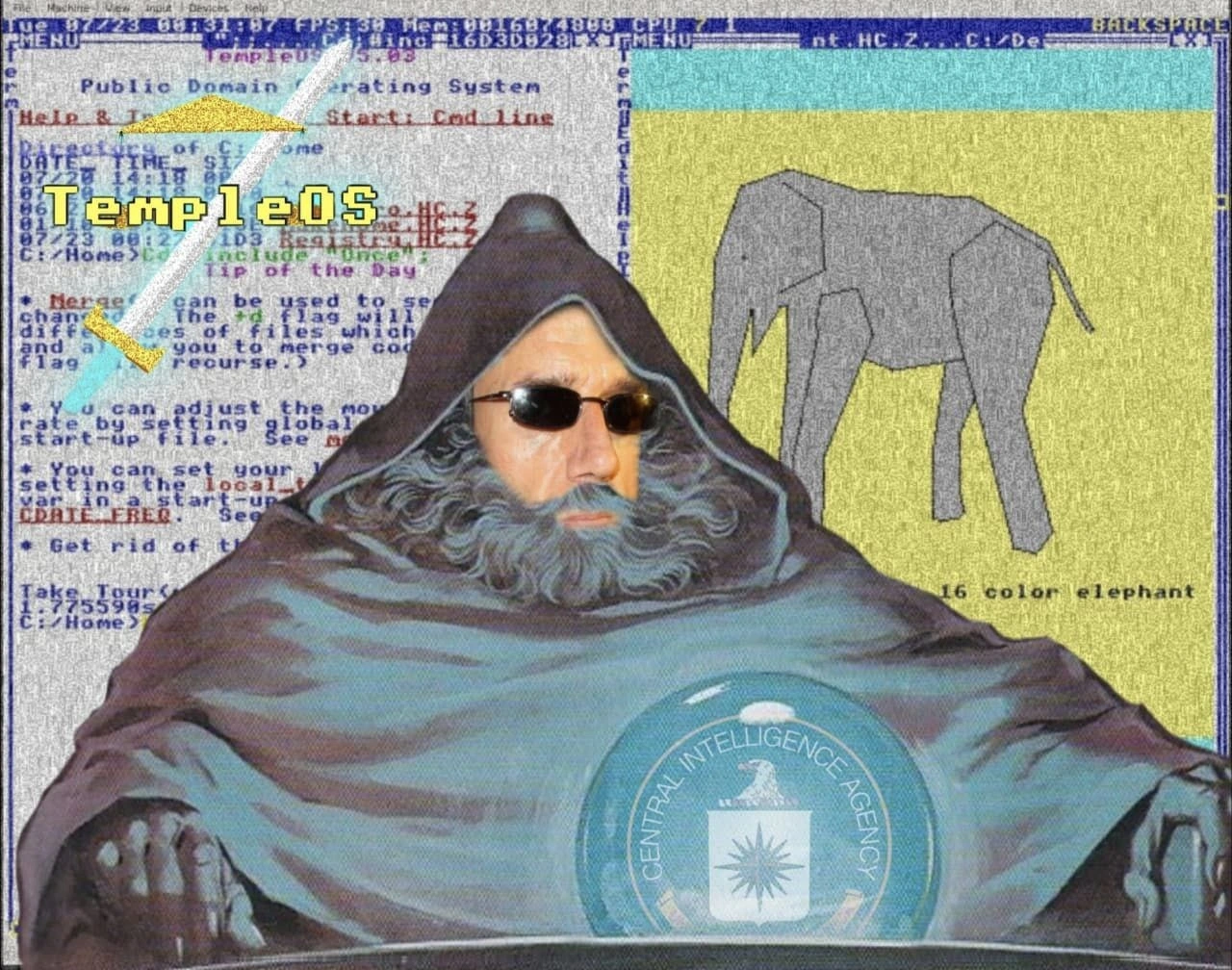
Imagine a wizard who decides to build his very own little computer world all by himself, using old-style tools and only a handful of colors. He makes everything look like an old video game or a retro cartoon – very simple graphics, only 16 bright colors, kind of like the drawings you’d see on an old arcade machine. This wizard is incredibly proud because creating a whole world (or in this case, a whole computer system) alone is a huge task, like building an entire castle out of Lego bricks with no help. It’s a bit magical how he pulls it off. But here’s the funny part: the wizard also believes that secret spies are watching his work through a crystal ball! Picture someone who has done something amazing and difficult, yet also has some quirky ideas that seem a little silly – like thinking the CIA is snooping on his magical computer. In the meme, the wizard leaning over the crystal ball with the CIA logo shows that mixed-up situation. It’s both impressive and amusing: we’re amazed that he built his own “temple” of technology from scratch (wow, that’s like a miracle!), and we giggle because he’s also mumbling about spies and mysteries as if he’s in a fantasy story. The whole scene is funny in the way a tall tale or fairy tale might be – one part awesome achievement, one part goofy imagination, all wrapped in an old-fashioned, colorful style that makes it feel charming and lighthearted.

Level 2: Retro OS 101

Let’s break down the meme in simpler terms. TempleOS is an operating system – the main software that runs on a computer, like Windows or Linux – but it’s very different from those you know. TempleOS was created entirely by one person, a programmer named Terry Davis, as a personal project. Usually, operating systems are huge projects with many developers, because an OS has to control hardware, manage memory, and provide a base for other programs. Terry did all of that alone, which is why people in tech circles are amazed by it. He even made his own programming language for it called HolyC (a playful reference to the C programming language, with a “holy” twist to fit the religious theme of the project). HolyC is the language you’d use inside TempleOS to do things, kind of like how you might use Python or Bash on other systems, except Terry wrote this language himself. TempleOS is also public domain, which means he released it with no copyright – essentially giving it away with no restrictions. That’s uncommon (most open-source projects still have licenses), so it shows how he wasn’t doing it for money, just passion and his personal mission.

This meme highlights TempleOS’s retro computing style. The screenshot on the left side with the blue text interface and only 16 colors looks like something from the 1980s or early 90s. In fact, TempleOS intentionally uses a 16_color_gui (graphical user interface) with a fixed 16-color palette and a screen resolution of 640x480 pixels. That’s tiny and limited compared to modern displays, but back in the day, early IBM PCs with CGA/VGA graphics had similar limitations. Those bright blues, reds, and yellows you see are the exact hues we old-timers remember from MS-DOS programs and ancient games. So the meme is poking fun at how TempleOS feels like a time machine: it’s running on a modern 64-bit PC, but it looks and behaves like an old-school computer. The text from TempleOS’s help menu in the image (like “Start Cmd Line” and “You can adjust the mouse rate...”) shows that it doesn’t have a fancy graphical settings window or anything – you adjust the system by typing commands or editing text configs, very much the way you had to in older systems. There’s even a crude pixel art drawing of a grey elephant on a yellow background labeled “16 color elephant.” Pixel art means an image drawn at a very low resolution, where you can see each pixel (little square) clearly – this was common when computers couldn’t display high detail. Here it’s both an example of TempleOS’s limited graphics and a playful symbol (the meme literally includes an elephant to emphasize the “elephant in the room” joke about the 16-color limit). For a newer developer, imagine running an operating system today that looks like a classic NES game or a DOS application – that’s the vibe TempleOS gives off.

Now, what’s with the wizard and the CIA logo in the crystal ball? This is where the meme mixes tech humor with Terry’s personal quirks. In programming culture, calling someone a “wizard” is a fun way to say they are extremely skilled – like they can do magic with code. Here the hooded wizard in front is essentially representing Terry Davis, showing that he was like a wizard-level programmer for building an entire OS by himself. The SystemsProgramming and KernelDevelopment aspects (the really low-level stuff like writing device drivers, managing CPU processes, etc.) are often seen as a form of “black magic” by less experienced developers, so the wizard imagery fits perfectly. He’s depicted as an old grey-bearded wizard hunched over as if casting a spell. It’s an exaggeration of course, but it conveys that TempleOS was not a normal feat – it was as if he conjured it from thin air.

The CIA reference comes from the fact that Terry, later in his life, had some mental health issues and believed in various conspiracies. One of his beliefs was that the CIA (Central Intelligence Agency) was somehow out to get him or sabotaging his work. He would mention the CIA frequently in his online posts and videos in a paranoid manner. This became a well-known part of the TempleOS lore. So, the meme creators included the CIA seal inside the crystal ball as a tongue-in-cheek reference to those conspiracy rants. It’s basically saying, “here’s our wizard, but oh look, he’s also obsessing over the CIA in his crystal ball.” It’s a bit silly – mixing a spy agency logo into a magical scene – but that absurd combination is exactly why it’s funny. It reflects the real-life odd mix of genius programming and bizarre conspiracy that surrounded TempleOS.

In simpler terms, what this meme is doing is celebrating a famous hobbyist operating system (TempleOS) that looks deliberately old-fashioned and was built by a single person with very unusual inspirations. It points out the retro_gui_aesthetic (the old look and feel), shows an example of the simple graphics (the elephant), and then humorously portrays the creator as a powerful but quirky wizard figure who’s peering into “mysteries” like the CIA. If you’re a junior dev or just someone learning about tech, the key things to know are: TempleOS is a one-of-a-kind, one-man OS known for its throwback design and the eccentric story of its maker. The meme assumes you know those tidbits and plays them up. But now that we’ve explained it, you can see why developers find it both impressive and amusing. It’s like an inside joke about someone who did something very hard (writing an OS) in an unusually old-school way, and had some rather unique personal beliefs that became part of the whole package.

Level 3: The Legend of TempleOS

For seasoned programmers, this meme hits like a lightning bolt of nerd nostalgia and reverence. It’s riffing on the legendary story of TempleOS and its eccentric creator, Terry A. Davis – a saga practically every low-level programming enthusiast knows. The collage format mashes up so many inside references that an experienced dev can’t help but smirk. On the left, we see an authentic TempleOS text-mode screen with that unmistakable 16-color retro GUI and menu text. If you ever spent time with early PCs or DOS applications, those bright blue backgrounds and pixelated fonts are a direct trip down memory lane. It looks like a frozen moment from 1989, except TempleOS was actually developed in the 2010s. That dissonance is part of the joke: a modern 64-bit operating system deliberately styled to look three decades out of date. It’s tech history meeting the present in the quirkiest way.

Now, overlay a hooded wizard in the foreground, and you’ve got the perfect metaphor for Terry Davis himself. Among veteran coders, Terry is often affectionately dubbed the “wizard” or the “mad prophet” of programming. He was this bearded, super-intense guy who single-handedly conjured up a whole operating system – something normally achieved by large teams of engineers – purely out of personal passion and some decidedly unique inspiration. The wizard’s blurred face even wears dark sunglasses, which is a nod to Terry’s real-life appearance (he was often seen with shades on, even in his webcam videos). The wizard motif suggests arcane mastery of low-level systems programming: to write an OS from scratch you practically have to perform black magic with pointers and interrupts. And indeed, Terry’s feat with TempleOS has a mythical status. It’s the stuff of folklore that grizzled kernel hackers share: “Remember the guy who built a 64-bit OS alone in his garage because God told him to? Absolute wizardry.”

Speaking of God, notice that glowing crystal ball emblazoned with the CIA seal under the wizard’s hands. This is comedic gold for those who know the backstory. Terry Davis infamously believed that the CIA was monitoring and harassing him, and he often referenced it in his online rants. He also proclaimed that God directly commanded him to build TempleOS as a modern Third Temple. Yes, this story has everything: conspiracies, divine missions, and code. The meme winks at Terry’s CIA conspiracies by literally putting the agency’s logo inside a crystal ball, as if the wizard is divining some secret from Langley. It’s absurd and hilarious – imagine Gandalf if he were extremely paranoid about government spies. For a senior developer who might have caught Terry’s eccentric posts or videos on forums, that image immediately triggers a knowing chuckle. It encapsulates the mix of genius and instability that made the TempleOS tale so infamous in tech circles.

Then there’s the text on the TempleOS screen itself, which the meme maker carefully included. Lines like “Public Domain Operating System” and menu items such as “Help & Tour”, “Start Cmd Line”, or the snippet “Merge can be used to ...” come straight from TempleOS’s interface or documentation. This adds authenticity – any TempleOS fan recognizes those quirky help pages and menu texts. They read like something out of a time capsule, with references to merging files, manually adjusting mouse rates, and tweaking startup variables. It’s very low-level and hands-on, almost like the OS expects you to tinker under the hood. Modern OSes hide these details from users, but TempleOS unabashedly puts them front and center (after all, the only user is likely the programmer themselves). So, an experienced dev sees that and nods: yep, that’s TempleOS being its old-school self. It’s both a tribute and a gentle poke – celebrating the OS’s authenticity while laughing at how unpolished and archaic it appears by today’s standards.

The “16 color elephant” on the right side of the image is literally an elephant drawn in chunky 16-color pixel art. This is a playful jab at the graphical limitations Terry chose. In an age of millions of colors and 4K resolution, TempleOS sticking to 16 flat colors at 640x480 is almost comically primitive. So of course the meme highlights it with an elephant – perhaps a sly reference to the phrase “the elephant in the room.” Here the 16-color elephant in the room is that TempleOS looks like something from the MS-DOS era. Everyone can see it; it’s huge and it’s grey and it’s standing on a glaring yellow background! Senior devs often have fond (or foggy) memories of making CGA graphics or ASCII art, so this elephant is both a roast and a toast. It roasts TempleOS’s graphical prowess (or lack thereof) while toasting the nostalgic charm of pixel art. Honestly, that elephant could have walked straight out of a 1980s ANSI art BBS board, and we love it for that.

What ties it all together is the mash-up humor. This meme is juggling a lot of elements: retro computing aesthetics, one-man project heroics, mental health quirks, and even government conspiracy lore. For those of us who have been around the tech block, it’s hilarious because it’s all true. TempleOS and Terry’s saga is something you couldn’t invent if you tried – it’s too outlandish, yet it happened. The meme celebrates that reality by elevating Terry to the level of a wizard in a fantasy collage. It’s saying, “this guy was basically a sorcerer of code, weaving an OS out of thin air, but also he might tell you the CIA is after his magic.” It’s equal parts admiration and tongue-in-cheek satire.

In the developer community, we also recognize a subtle subtext: building an OS solo is the ultimate in kernel hacking bravado. It’s the kind of project you dream about as an ambitious teenager reading K&R C or Tanenbaum’s OS book — then you get a job in software and realize just how insane that undertaking is. Terry actually did it. So there’s a bit of hero worship among senior devs, even if TempleOS is more a curiosity than a usable system. The meme captures that heroic folklore vibe. The TempleOS title rendered in a gold NES-style pixel font with a glowing sword underneath makes it feel like the title screen of an old fantasy video game. It implies Terry’s journey was an epic quest. Experienced devs get a kick out of that because, in a sense, TempleOS is an epic quest from a bygone era of computing, undertaken in modern times. It’s as if someone today decided to build a steam engine locomotive from scratch while everyone else is building electric cars – impractical, but undeniably cool and hardcore.

The wizard imagery and retro screen also echo the idea that low-level programming (like writing kernels, messing with assembly, building your own compiler) is akin to sorcery to most developers. It’s not taught much beyond college, and only enthusiasts venture there. So when we see it represented with an actual wizard, it resonates. We chuckle because, yeah, sometimes dealing with a memory segmentation fault or debugging an interrupt handler at 3 AM does feel like conjuring spells and fighting demons. TempleOS’s creation had to involve plenty of such late-night demon-slaying: one man wrestling with device drivers, boot loaders, and compilers all alone. The meme implicitly nods to that struggle. The wizard’s stoic posture over the crystal ball could be Terry gazing into the abyss of code or seeking divine inspiration to squash a particularly pesky bug. And given Terry’s well-known religious context – he literally claimed God was guiding his coding – the image works on that level too. It’s practically depicting him channeling some otherworldly guidance while programming.

In summary, for the initiated, this meme is a rich tapestry of tech history and in-jokes. It spotlights the absurdly impressive achievement of a one_man_os project like TempleOS, and it wraps it in nostalgic visuals and a sprinkle of absurdity (CIA and wizards and elephants, oh my!). It’s funny because it’s an homage to something real and legendary, exaggerated just enough to show we’re laughing with affection. Any systems programmer or retro computing buff looking at this will likely crack a grin and maybe feel a tiny pang of emotion – a mix of admiration for the late Terry Davis’s dedication, and amusement at how bizarre and colorful the whole tale is. In the pantheon of programmer folklore, TempleOS is that strange, shining artifact, and this meme manages to both honor and lampoon it in the same breath. That’s why it lands so well with those of us who know the story: it’s effectively saying, “remember this crazy thing? wasn’t it awesome and completely nuts?” – and we can’t help but nod in agreement.

Level 4: Ring 0 Rituals

At the highest complexity, we delve into the arcane underpinnings of TempleOS as if deciphering ancient kernel grimoire. TempleOS is essentially a one-man operating system built from scratch, and under the hood it flaunts design choices that break from modern OS orthodoxy in fascinating ways. For starters, it operates entirely in CPU ring 0, the most privileged level where the kernel normally resides. In TempleOS there is no separation between user space and kernel space at all – every process is running with full privileges in a single address space. This unusual design (or lack of design by conventional standards) means there’s no memory protection: any code can access any memory. To a systems engineer, that’s sacrilegious for stability and security, but it massively simplifies the architecture. By dispensing with rings and protection barriers, the kernel becomes monolithic and simple, akin to how MS-DOS or early home computers worked. The developer essentially said “no multi-user guarded palace here – this is a single sacred temple, one room only.”

The result is a monolithic kernel that’s startlingly compact and cohesive because one person wrote the entire thing without needing to accommodate third-party abstractions. All device drivers, the graphics interface, and even the compiler are part of this one integrated system. There’s an irony here: in open-source terms, TempleOS embodies the “Cathedral” style of development (as in The Cathedral and the Bazaar essay) quite literally. One architect (or wizard-priest, if you will) built this temple from the ground up, rather than the collaborative “bazaar” model like Linux. This yields a consistency and singular vision at the cost of ignoring many modern conveniences. For example, TempleOS deliberately has no network stack – that’s right, it cannot connect to the Internet at all. Cutting out networking and multi-user complexity avoids entire classes of code (no TCP/IP, no complex scheduling for multiple users, no security layers for remote exploits) and makes the OS far more feasible for a lone developer. It’s as if the architect decided that the temple should stand isolated in the desert – pure, unconnected, and safe from modernity outside interference.

Graphics-wise, TempleOS boldly embraces a retro aesthetic that also simplifies the engineering. The meme’s screenshot reveals the classic 16-color CGA palette and a blocky GUI. The OS runs at a fixed 640x480 resolution with 16 colors, essentially a VGA mode from the late 1980s. This isn’t just for nostalgia; using a well-known standard video mode means the graphics code can be lean and hardware-friendly. In an advanced sense, running in a simple video mode lets TempleOS avoid dealing with GPU drivers or mode-setting complications – it can write directly to a known section of video memory or use BIOS interrupts to draw text and shapes. Each pixel on that “16 color elephant” is represented by just 4 bits in memory (2^4 = 16 possible values), which harks back to the era of planar video memory. The elephant graphic in the meme exemplifies how even something as hefty as an elephant must obey the 4-bit pixel law of TempleOS’s universe. To those versed in old PC graphics, that grey elephant on a mustard-yellow field is practically an homage to IBM PC art circa 1985. It’s nerd nirvana: the system’s very constraints (like the limited palette) become part of its charm and folklore.

Another layer of this system’s arcana is the custom programming language, HolyC. TempleOS doesn’t use a standard Bash shell or Python scripts; it actually integrates its own C-derived language into the kernel. HolyC is a curly-brace language Terry Davis designed, essentially a superset of C/C++ with built-in graphics and sound support for TempleOS’s environment. Because everything runs in Ring 0, when you write HolyC code and execute it, you’re effectively extending or modifying the OS on the fly – there’s no user-land sandbox. This is reminiscent of Lisp Machines or early systems where the user could drop into a REPL with full access to the OS internals. The language is compiled just-in-time by the OS itself and can directly call kernel routines or poke hardware. Imagine writing a script that directly manipulates memory-mapped I/O or VGA buffers – in TempleOS that’s not a hack, it’s the intended use case. For instance, printing text to the screen in HolyC can tap into the same low-level routine the kernel uses, because in truth it’s all one big code realm. The barrier between “operating system code” and “user code” is basically nonexistent. In a modern OS like Linux or Windows, such unity would be unthinkable – you’d risk crashes or security nightmares – but here it’s like a small personal sandbox where the programmer-priest is trusted with the keys to every chamber of the temple.

From an academic angle, TempleOS’s architecture evokes research concepts like single address space operating systems (SASOS) that were explored in the 1990s. Those experimental OSes posited that with 64-bit addresses, maybe we don’t need separate address spaces for processes; we can give each program a partition of one giant shared address space. TempleOS pretty much does that on a practical level: it runs on x86-64 in long mode, likely using identity-mapped paging (virtual addresses equal physical addresses) so that addressing is simple and uniform. There’s essentially no distinction between a pointer in a user program and a pointer in the kernel – they’re all just memory in one big flat map. The trade-off is obvious: a wild pointer or bug can corrupt anything anywhere (much like in early DOS days or writing kernel drivers), but the benefit is lighter context-switching and simpler memory management logic. With no need to constantly switch CPU modes or swap page tables on system calls, TempleOS can be surprisingly fast at certain operations despite its simplicity. It’s pulling a design lever straight out of computing history and cranking it to the max in a modern 64-bit context.

Let’s not forget the file system either: TempleOS comes with a unique file system (cheekily named the Red Sea filesystem) that avoids complexities like permissions and multi-user directories. It’s a flat, public space, reflecting the OS’s single-user, one-developer focus. Adding to the lore, many system calls, data structures, and naming conventions in the code are biblical or Old Testament-themed – a quirk that in practice has no technical effect, but contributes to the mythical aura around the project. This is kernel hacking meets folklore. The meme’s text snippets like “Merge can be used to…” or “You can adjust the mouse rate…” appear to be lines from TempleOS’s built-in help or tutorial, printed in bright blue text with red asterisks. They hint at how even documentation in TempleOS has this old-school, low-level flavor: talking about merging files or manually setting variables in startup files. It’s very far from polished user experience – more like reading notes from some ancient DOS manual or a BBS-era text file, where the user is expected to tinker under the hood.

Overall, this collage meme humorously highlights the arcane engineering decisions inside TempleOS. Seasoned systems programmers will smirk at references to things like 16-color mode and ring-0 everything – these are the kinds of things one learns are “wrong” or outdated in a conventional context, yet here they are embraced to serve a quirky, singular vision. It’s a reminder that computing history often moves in cycles and strange tangents: sometimes we revisit old ideas (like simple UIs and single-address-space kernels) not out of ignorance, but as an act of creative freedom or retro homage. TempleOS is both a throwback and an oddball innovation. The meme captures that duality on a technical level – it’s practically winking at those of us who appreciate how unorthodox the whole affair is. To build an OS alone you almost have to be part genius, part mad wizard, bending rules that big teams never dare to. TempleOS bent those rules with gusto, and the result is a bizarre yet enlightening artifact in operating system design – the kind that makes kernel developers raise an eyebrow and grin at the sheer audacity.

Description

A composite meme featuring Terry A. Davis, the creator of TempleOS, depicted as a wizard in a dark hooded robe and sunglasses, gazing into a glowing orb emblazoned with the CIA logo. The background is a screenshot of the TempleOS interface, characterized by its 16-color, 640x480, retro aesthetic. Visible text includes 'TempleOS', 'Public Domain Operating System', and various command-line entries. To the right, a simple, grey, 16-color vector graphic of an elephant is displayed with the caption '16 color elephant'. This image is a deep-cut reference for seasoned developers, combining the 'Pondering my Orb' meme format with the lore of Terry A. Davis, a brilliant and tragic figure known for creating an entire operating system from scratch as a divinely-inspired mission. The inclusion of the CIA orb alludes to his well-documented struggles with schizophrenia and paranoia involving government agencies, making the meme a complex blend of humor, tragedy, and respect for a unique piece of computing history

Comments

12
Anonymous ★ Top Pick Compiling my kernel with divine intervention is the only way to ensure it's free of CIA backdoors. The random number generator is God talking, which is why my keys are truly secure
  1. Anonymous ★ Top Pick

    Compiling my kernel with divine intervention is the only way to ensure it's free of CIA backdoors. The random number generator is God talking, which is why my keys are truly secure

  2. Anonymous

    TempleOS reminds me that with 16 colors, a homemade compiler, and a crystal ball labeled “CIA,” you can skip the entire CI/CD pipeline - just commit straight to ring-0 and call it divine deployment

  3. Anonymous

    When you've spent 20 years debugging production systems and someone asks if you've ever built an OS from scratch, but you realize Terry Davis did it alone in HolyC while we're still arguing about whether to use spaces or tabs in our CRUD apps

  4. Anonymous

    One man shipped an OS, a compiler, a filesystem, and a 16-color elephant with zero dependencies and zero standups; meanwhile your team of twelve needs a quarter to upgrade Node. The crystal ball says the CIA isn't in your kernel - but npm definitely is

  5. Anonymous

    TempleOS: where 'sudo' is replaced with prayer, the entire OS runs in Ring 0 because God doesn't need memory protection, and the 16-color palette limitation isn't a bug - it's a divine aesthetic choice. Terry Davis built an entire operating system, compiler, and HolyC language from scratch while the rest of us struggle to center a div. The real conspiracy isn't the CIA - it's how one person achieved what most enterprise teams with unlimited budgets couldn't: shipping a complete, working OS with zero dependencies, zero technical debt, and zero meetings about sprint velocity

  6. Anonymous

    CIA's secret weapon: An OS that fits on a floppy, hallucinates elephants, and laughs at your bloated container orchestrators

  7. Anonymous

    Architecture review: single‑address‑space, ring‑0‑only, 640×480/16‑color UI - the threat model is “whoever can reach the keyboard,” but the elephant demo renders at interrupt latency

  8. Anonymous

    TempleOS energy: one dev ships a ring-0 OS with a 16-color elephant; our 200-engineer platform needs a task force to choose a CI. Turns out we optimized for the wrong CIA

  9. @v1lezor 4y

    os author now

  10. Deleted Account 4y

    Rip Terry

  11. @feskow 4y

    imagine if he learned about bezier curves

  12. @ZgGPuo8dZef58K6hxxGVj3Z2 4y

    Just add networking and accelerated graphics and I will support that os

Use J and K for navigation