Skip to content
DevMeme
983 of 7435
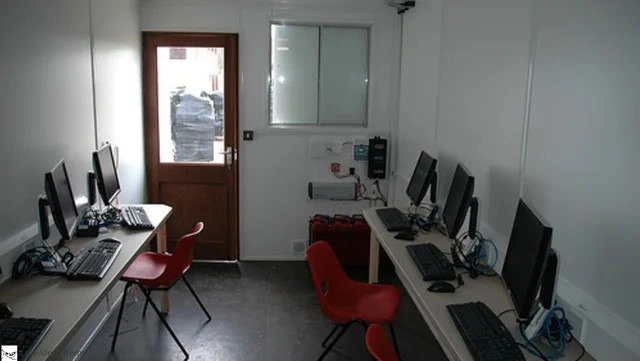
Makeshift dev office with kid-sized red chairs and tightly packed workstations
DeveloperExperience DX Post #1107, on Mar 6, 2020 in TG

Makeshift dev office with kid-sized red chairs and tightly packed workstations

Why is this DeveloperExperience DX meme funny?

Level 1: Tiny Chairs, Big Problems

Imagine you’re a grown-up asked to do a big important job, but you have to sit at a kid’s school desk the whole time. Your knees don’t fit under the table, the chair is so low that you have to reach up to use the computer, and you feel cramped and silly. That’s exactly what’s happening in this picture! The company set up a computer room on a super small budget – basically like turning a storage box into an office. They didn’t even get normal adult chairs; they grabbed little plastic ones like you’d see in kindergarten. It’s funny in the way it’s funny to see an adult drinking from a tiny teacup – it just looks wrong. But it’s also a bit sad for the people who have to work there, because it’s uncomfortable and distracting. Think of trying to do your homework while sitting at a toddler’s table – you’d probably get frustrated or your back would hurt after a while. The humor here comes from that over-the-top contrast: serious work being done in a not-so-serious setup. It’s like asking someone to run a marathon in flip-flops. Sure, they can try, but it’s going to be awkward and painful. In the end, the picture makes us laugh and groan at the same time, because it shows how a bad workspace (tiny chairs and all) can turn even simple tasks into a big challenge.

Level 2: Budget Office 101

What exactly are we looking at here? It appears to be a makeshift_dev_office set up in a trailer or portable cabin – basically a narrow, rectangular room that might literally be a converted shipping container. Along the walls are two long desks with several computer workstations. Each workstation has the usual components: a black monitor, a full-size keyboard, and a mouse. Those coiled blue cables are Ethernet cables, which provide wired network connections (likely plugging into that router or network switch mounted on the wall). This kind of setup is common in temporary training rooms or low-cost offices where Wi-Fi might be unreliable, so they run physical cables to ensure each machine connects to the internet or company network. On the wall, you can spot power strips and possibly a small network router or switch (the box with blinking lights) distributing network access to all those PCs. In essence, it’s a computer lab jammed into a tight space on a tight budget.

Now, the star of this meme is undeniably those tiny red plastic chairs. These are the kind of chairs you’d find in an elementary school classroom for 6-year-olds, not in a professional office. They are bright red and kid_sized_chairs – way too small for an adult’s comfort. The desks here are standard height for grown-ups, so when an adult sits on a kiddie chair, the desk is chest-high or higher. That’s a recipe for sore arms, strained neck, and DeveloperPainPoints of the physical kind. Ergonomics is the science of designing a workplace that fits the worker’s needs – things like adjustable chairs, monitors at eye level, proper keyboard height, etc. In this photo, ergonomics have effectively been thrown out the window. The chairs can’t be raised, the monitors likely aren’t adjustable, and there’s no room to stretch. A junior developer might not realize it at first, but after an hour or two of coding in this setup, they’ll definitely understand why good chairs and proper desk setup matter! It only takes one day of hunching over like a gargoyle to feel that back pain and wrist strain.

The term DeveloperExperience (DX) refers to the overall experience of developers in their work environment, including tools, processes, and yes, the physical workspace. A positive DX means developers can focus on coding and problem-solving without unnecessary frustrations. Here, the DX is pretty negative: the environment itself is a hurdle. Imagine trying to debug code while constantly shifting in your seat because your knees are near your chest – not fun. DeveloperProductivity can suffer when you’re distracted or uncomfortable. It’s similar to how a good chef needs a well-organized kitchen; a programmer benefits from a comfortable and well-equipped workspace.

From a newcomer’s perspective, this scene might come as a shock. Perhaps you’ve seen glamorous tech offices in TV shows or read about big companies with nap pods and standing desks. This is the opposite – it’s a scrappy, “we had to make do with what we have” lab. BudgetConstraints means the company or team didn’t allocate much money for this setup. They probably repurposed an old space (like a site container_workspace or storage room) and grabbed spare equipment from storage. Those computers might even be thin clients – lightweight terminals that connect to a more powerful server in the back – which companies use to save costs on having full PCs at every station. The presence of a central router/switch and identical setups could mean it’s a controlled environment for things like training sessions or test labs, where each user logs into a central system. It’s functional, but far from fancy.

This image is a bit of an inside joke for developers because many of us have experienced a gap between what’s ideal and what’s provided. Early in your career, you might be excited to join a project, only to find your “office” is a re-purposed closet or basement with hand-me-down furniture. It’s a rite of passage to endure a clunky CorporateIT setup: old monitors, a creaky chair, a desk with one wobbly leg, and a rat’s nest of cables. You learn to improvise – stack some old books to raise your monitor, borrow a cushion to sit on, maybe tape down the cables so you don’t trip. It’s all part of understanding real-world OfficeCulture: not every company has the budget (or the sense) to optimize the workspace. And while it’s funny to see a lab from the land of misfit furniture, it also teaches why folks in tech advocate for better gear. After a round of bug fixing in a setup like this, you start to appreciate why ergonomic chairs, proper desks, and large monitors aren’t just luxuries – they’re tools to help you work effectively and avoid burnout (and backaches).

In summary, this meme scene is a crash course in the less glamorous side of tech workplaces. It’s all there: the improvised_workstations with visible cables and power strips (telling you it was set up in a rush), the narrow_office_layout that forces people to squeeze by, and those legendary red kid_sized_chairs that make you feel like a giant. It’s workplace humor that resonates because it’s both ridiculous and relatable, especially to anyone who’s started their coding journey in less-than-ideal conditions.

Level 3: Containerizing Coders

In this makeshift_dev_office, the developers have been quite literally containerized – not with Docker or Kubernetes, but by cramming humans into a narrow container_workspace. It’s a scene every battle-worn engineer can recognize: BudgetConstraints dictate the setup, resulting in an improvised lab where ergonomics are an afterthought. The long beige desks lined with monitors and loosely coiled blue Ethernet cables scream temporary_training_lab or a pop-up corporate IT classroom. The CorporateIT department likely scrounged whatever was on hand – including those comically small red_plastic_chairs clearly built for children. The visual punchline is how out of sync everything is: full-size keyboards and monitors perched atop adult-height desks, paired with kid_sized_chairs better suited for a kindergarten. It’s a physical manifestation of DeveloperPainPoints: an environment so absurdly mismatched that it tanks DeveloperExperience (DX) and by extension, DeveloperProductivity.

This DeveloperExperience_DX horror story highlights a common CorporateCulture failure: paying lip service to productivity while providing tools and spaces that actively sabotage it. Here, the lack_of_ergonomic_setup is almost cartoonish – imagine hunching over your keyboard like Quasimodo, knees hitting the underside of the desk, as you squint upward at a monitor positioned a foot above eye level. Any developer who’s survived a crunch in suboptimal conditions will smirk (and maybe wince) at this. We’ve all heard the mantra “our people are our greatest asset,” yet scenes like this flimsy lab show how some companies practice penny-wise, pound-foolish budgeting. The cost of a proper chair and desk setup is trivial compared to a single software engineer’s salary, yet here we are in a budget_it_setup straight out of Dilbert’s nightmares.

Let’s talk consequences: beyond the obvious Ergonomics fail (and the orthopedic bills lurking down the road), think of the cognitive toll. It’s hard to stay “in the zone” coding when your lower back is staging a revolt and your elbows are at ear height. The OfficeCulture being lampooned is one where devs are expected to churn out quality code in what amounts to a physical joke. On the walls, a tangle of exposed cabling and a mounted router hint at network connectivity held together with zip ties and prayers. Sure, those blue Ethernet cables might offer gigabit speed, but good luck achieving flow state when you’re shifting uncomfortably every two minutes to stave off a leg cramp. This is workplace humor with an edge: it’s funny because it’s true — too many of us have been there, debugging mission-critical software on hardware held together by duct tape, governed by managers who think Ergonomics is a fancy chair that’s “not in the budget.”

In an industry obsessed with efficiency and throughput, the scene highlights a glaring irony. We invest in CI/CD pipelines and DevOps tooling for micro-optimizations but can’t be bothered to invest in basic health and comfort for the people writing the code. This narrow room with its improvised_workstations is essentially a metaphorical (and literal) bottleneck. DeveloperProductivity isn’t just about faster algorithms or better frameworks; it’s also about not feeling like you’re working in a clown car. As a grizzled engineer might quip, “We finally containerized our app, then they containerized us.”

To put it in code for those who appreciate a little gallows humor:

bool ergonomicSetup = false;
int backPainLevel = 0;
int productivity = 100;
while (working && !ergonomicSetup) {
    backPainLevel++;
    productivity--;
    // The developer takes a break if the pain gets too high
    if (backPainLevel > developer.maxPainTolerance) {
        takeBreak();  // maybe a coffee or a stretch
        backPainLevel = 0; // resets after break (temporarily)
    }
}
// By end of day, productivity plummets due to constant discomfort

// It's not a bug; it's a feature of the furniture.

The WorkplaceHumor in this meme stems from that shared disbelief: the notion that a company would stand up a “state-of-the-art development lab” inside what looks like a storage container, and then furnish it with the My First Classroom seating collection. It’s an absurdist highlight of how CorporateCulture can sometimes completely miss the point. After all, if you want your devs to think outside the box, maybe don’t literally seat them in one – especially not on toy chairs.

Description

The photo shows a narrow, white-walled room that looks like a converted site container. Two long beige desks run along the left and right walls, each holding several desktop setups - black flat-panel monitors, full-size keyboards, mice, and loosely coiled blue Ethernet cables. Four small red plastic classroom chairs sit at the stations (one pushed askew toward the center aisle), their height comically mismatched to the desks. At the far end is a wooden door with a window and, beside it, a small sliding window; wall-mounted power strips, a router, and exposed cabling complete the improvised feel. With no readable on-screen text, the scene parodies zero-budget corporate IT labs and highlights how poor ergonomics and ad-hoc infrastructure can tank developer experience and productivity


Comments

6
Anonymous ★ Top Pick Leadership: “Time to embrace containerization and tighter feedback loops.” Facilities: ships us a literal container, four kindergarten chairs, and says, “Congrats - your micro-pod is horizontally scalable now.”
  1. Anonymous ★ Top Pick

    Leadership: “Time to embrace containerization and tighter feedback loops.” Facilities: ships us a literal container, four kindergarten chairs, and says, “Congrats - your micro-pod is horizontally scalable now.”

  2. Anonymous

    This is where they teach you to build "scalable" systems that will eventually run on a single overworked EC2 instance because the CFO discovered AWS bills

  3. Anonymous

    When the VC funding deck promised 'lean operations' and 'efficient capital allocation,' but you didn't realize they meant literally lean - as in no standing desks, no Herman Miller chairs, and definitely no ping pong table. At least the red chairs match the production alerts

  4. Anonymous

    Procurement-driven Waterfall: the acceptance criteria said "install workstations"; UAT discovered "user reaches keyboard" was a nonfunctional requirement

  5. Anonymous

    When 'containerized environment' means the SRE team's workspace has less headroom than a Docker image

  6. Anonymous

    Leadership said we’re moving to containers; Facilities bought a literal container and shoved six desktops in it - autoscaling is adding a red chair, and the service mesh is that lone blue Ethernet cable

Use J and K for navigation