Skip to content
DevMeme
6185 of 7435
The Startup Founder's Nightmare: Becoming a Bullet Point in Google's Keynote
Startup Post #6783, on May 22, 2025 in TG

The Startup Founder's Nightmare: Becoming a Bullet Point in Google's Keynote

Why is this Startup meme funny?

Level 1: Lemonade Stand Letdown

Imagine you spent all summer running a lemonade stand on your street. You worked really hard squeezing lemons, adding the perfect amount of sugar, and you’re proud because people say your lemonade is special. Then one morning, a huge lemonade truck from a big company rolls up right next to you. This company truck gives out free lemonade that’s almost just like yours, only they have giant signs and everyone knows them. All your customers rush over to the big free lemonade truck without a second thought. You peek out, see what happened, and slowly close up your stand, feeling defeated.

That’s basically what this meme is about. The little guy (the kid with the lemonade stand, or the startup founder) finds out the big guy (the huge company, like Google) is now doing the exact same thing, but on a much bigger scale and giving it away easily. It’s a sad-funny moment. Sad, because the kid (or founder) is like “Oh no, all my work… now who will want my lemonade/company?” But also a bit funny in an ironic way: of course the big shiny lemonade truck would show up right after you found success with your stand. It’s almost like a cartoon: you can imagine the kid’s jaw dropping and then just sighing and packing up. The meme makes us smile because we feel sorry for the little guy, but we also recognize that exaggerated feeling of “just my luck!” When something big overshadows your hard work, sometimes all you can do is shrug, maybe laugh a little at how unfair it is, and figure out what to do next.

Level 2: David vs Goliath (Tech Edition)

Let’s break down what’s happening in this meme in simpler terms. We have a startup founder – basically someone who started a small tech company with a big dream. Startups are often just a few people trying to build something new and hope to become the next big thing. Here, our founder has been working on a special idea or product. Now enter Google, one of the world’s largest tech companies (the kind often called Big Tech or a tech giant). Google holds a huge keynote event each year (think of it like a big show-and-tell for all their new products and features) – for example, Google I/O is their big developer conference where the CEO and team give presentations on upcoming tech. Keynotes are where companies announce major updates in front of thousands of people in-person and millions online.

In the meme, Google’s keynote has a slide (a presentation page) listing new features, and one of the bullet points on that slide is essentially the startup’s core idea. A bullet point is just an item in a list on a slide – usually a brief phrase. So if something is a bullet point in a Google keynote, it’s presented as just one small part of Google’s many announcements. That’s a bit heartbreaking for the startup founder, because it means Google now offers for free (or as an integrated service) the very thing his entire company was built around. It’s like being officially told, “Oh yeah, we do that now too.”

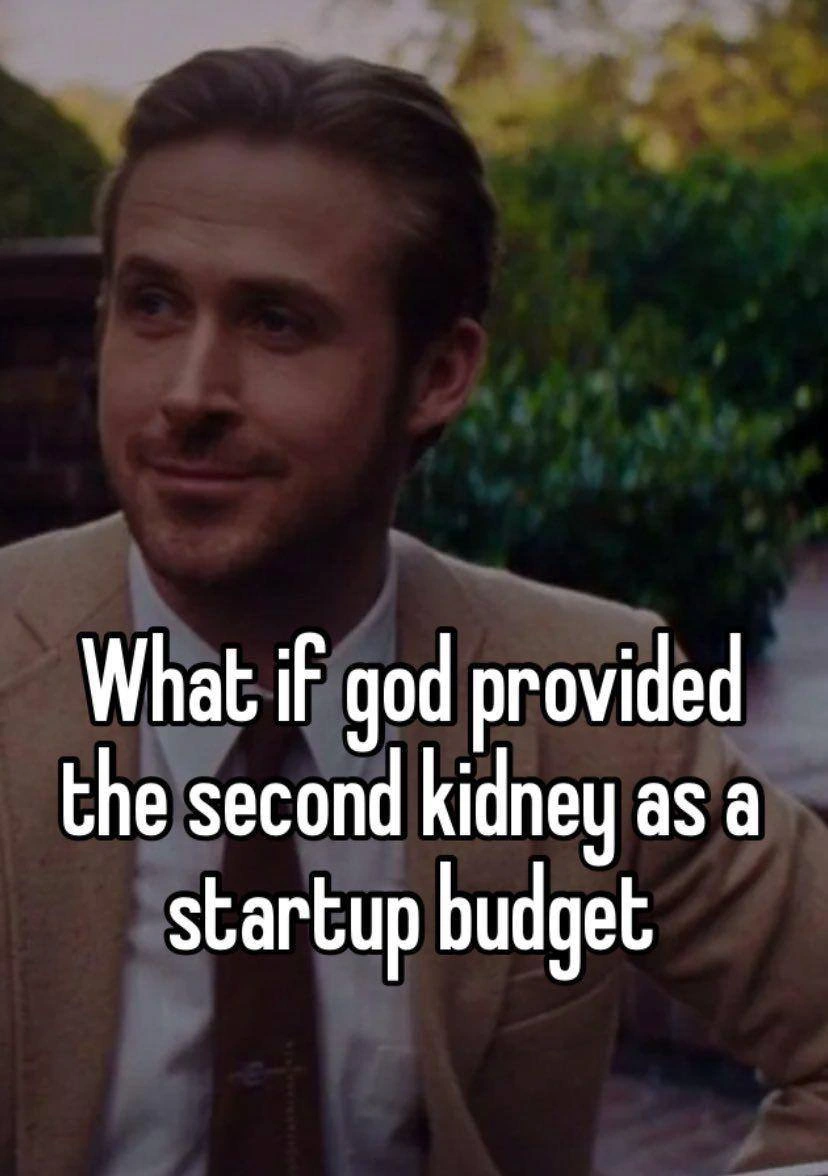
Now, why is the founder closing his laptop in the images? The meme shows two frames: first frame, he’s barely awake, opening his MacBook to check the news or the keynote replay in the morning. Second frame, he closes the laptop with a look of defeat. This captures founder_morning_regret: basically the sinking feeling and regret a founder has as soon as he learns the news that came out while he slept. He likely saw something like, “New in Google’s products: [your startup’s key feature] built-in!” and he’s like “Are you kidding me?” and just shuts his laptop, perhaps to drop his head on it in despair (hence macbook_faceplant).

For a less experienced developer or someone new to the tech scene, here’s why this is significant. A startup often lives or dies by having something unique – a special service or feature no one else offers, or at least not as well as they do. Being “a bullet point in Google’s keynote” means Google is now offering that unique thing as well, and usually at a scale or price (often free, as part of their platform) a tiny company just can’t match. It’s the tech equivalent of a David vs. Goliath battle, except Goliath doesn’t even realize there was a fight – he just stepped on David in passing. Google adding this feature might be a side note to them, but it’s existential to the startup.

This plays into the bigtech_copycat_fear common in the industry. Smaller companies often worry, “What if a big company just copies our idea?” It’s not even always intentional theft – sometimes two groups solve the same problem at the same time. But big companies have huge advantages: millions of users ready to adopt a new feature instantly, and vast resources to implement ideas. So when Google (or Apple, Amazon, Microsoft, etc.) integrate something, it’s usually game over for the little guys doing that same thing, unless they pivot (change direction) or find a new niche. For example, if you as a junior dev created a cool Gmail plugin to undo sending an email, and then one day Google announces “Now Gmail has Undo Send built-in!”, your plugin’s value drops to near zero overnight. This has happened with things like email scheduling tools, password managers, or photo apps – one day it’s a neat third-party service, next day it’s just part of the main product everybody already has.

Let’s also decode some of the specific lingo and tags:

  • StartupLife / StartupHumor: This refers to the culture and typical experiences of running or working at a startup. It’s often glamorous-sounding (innovation! ping-pong tables! big valuations!) but also full of stress, long hours, and worry. Humor from this world often highlights those stresses, like this meme does.
  • Google / BigTechCompanies: Google is one of the most powerful tech companies, and “Big Tech” refers to giants like Google, Apple, Facebook (Meta), Amazon, Microsoft. These companies have so much influence that what they do can make or break smaller companies.
  • IndustryTrends_Hype / TechTrends: The tech industry goes through trends (like artificial intelligence, social media, blockchain, etc.). Startups often ride these trends, and big companies also jump on once they see something is hot. This meme touches on the hype of new tech: if a startup’s idea was trendy (say AI-driven whatever), Google might eventually include an AI-driven feature too. The “hype” cycle often starts with startups innovating, then big players entering the fray.
  • keynote_envy: Startups might envy the attention big companies get at these keynotes. Everyone writes about Google’s announcements, while a tiny startup struggles for press. Ironically, being mentioned in a keynote in this way is not the kind of attention a startup wants! It’s like a backhanded compliment that can end you.
  • bullet_point_bury: This phrase alliteratively describes what happened – the startup got “buried” by a bullet point. In other words, relegated to such a minor mention (just one bullet in a list) that it effectively buries the company’s relevance.
  • startup_featured_in_slide: The startup’s feature made it onto a slide, but not in the way they’d dream of. Usually a startup wants to be featured as a success story (“Look, we partnered with Google” or “We got acquired”). Instead, they’re featured as “and we also added this capability [that some startup was doing].” It’s a cheeky way of saying the startup is indirectly on that slide… as a casualty.
  • bigtech_copycat_fear: As mentioned, the fear that big tech will copy your idea. This is something founders joke about nervously – you might even avoid talking about your secret sauce publicly in case a giant snoops it out (though truthfully, big companies usually have their own plans and don’t need to steal ideas one by one; it still feels that way to startups).
  • founder_morning_regret: You know those moments you wake up and immediately wish you hadn’t? That’s this. The founder is regretting checking the news, regretting not foreseeing this, maybe even momentarily regretting starting the company at all. It’s that heavy sigh moment of “well, that’s that.”

For a junior developer or someone just getting into tech, this meme is a bit of a cautionary tale, wrapped in humor. It says: Be aware of the ecosystem you’re in. If you build something that’s essentially a feature, a big platform might one day offer that feature themselves. It doesn’t mean you shouldn’t try – after all, startups do succeed and often force big companies to improve – but it’s a known risk. In fact, some startups celebrate if Apple or Google copy them, saying “See, our idea was validated!” But it’s a bitter kind of celebration because it often means pivot or perish.

The meme’s relatability comes from that very human reaction: The guy literally closes his laptop and probably puts his head down (looks like he’s practically face-planting on the MacBook). We’ve all had moments learning something that just makes us go “oh no… nope” and want to crawl back under the covers. The image is universally understandable, even if you don’t get all the tech context. But with the context: that laptop slam shut is a facepalm for the tech ages. You can almost hear the founder’s internal monologue: “Darn it. We just became a free feature of Google Workspace, didn’t we?”

In sum, at this level, you should understand the basics: A little company made something cool. A big company (Google) just announced they can do that cool thing too, very casually, to the whole world. The little company’s founder is understandably shocked and bummed out. The meme is joking about how that drama boils down to being one little bullet point in a big presentation. It’s funny because it’s true, and it’s a bit of an inside joke among tech folks about how rough the Startup vs. Big Tech game can be.

Level 3: Keynote Surprise, Startup Demise

This meme hits on a too-real scenario in tech: a scrappy startup wakes up to find that a Big Tech giant (Google, in this case) just announced their entire product as a single bullet point in a keynote presentation. It’s a punch to the gut hidden in a glossy Google I/O slide. Imagine grinding for months (or years) on an innovative feature, only to see Sundar Pichai casually mention the same idea in one line, sandwiched between other announcements. The humor here is dark and deeply relatable: your company’s pride and joy reduced to a footnote in someone else’s Keynote. Ouch.

This actually happens a lot in the industry. There’s even a tongue-in-cheek term for it: “getting Sherlocked.” Originally, when Apple’s macOS Sherlock search tool integrated features of a third-party app (Watson), it killed that app’s market. Now Sherlocked is shorthand for any big platform baking in a feature that a smaller player pioneered. Google’s guilty of it, Apple’s notorious for it, Microsoft has done it for decades (embrace, extend, extinguish, anyone?). The meme nails that TechIndustryIrony: the very innovation that made a startup special turns into a line item on a tech giant’s slide deck. It’s ironically both a form of flattery and a death knell.

In the meme’s images, a weary founder in early morning light lifts his MacBook lid with hope or curiosity, only to drop it shut in defeat moments later. That visual says it all: initial groggy interest turning into macbook_faceplant resignation. The tweet by Charmie Kapoor captioning it spells out the nightmare: “founders waking up to realize their startup is now a bullet point in Google’s keynote.” The comedic timing is perfect—one second you’re rubbing sleep from your eyes, next second you’re contemplating if your whole startup was just bullet_point_bury-ied by a trillion-dollar company’s PowerPoint.

Why is this funny to developers and founders? Because it’s a shared trauma packaged as a joke. StartupLife is already a rollercoaster of hype and anxiety. You spend all your energy drumming up IndustryTrends buzz, telling investors and friends “we’re going to be the Google of X”. Then Google itself launches “X” as a built-in service. Surprise! That pit in your stomach is familiar to anyone who’s worked at a startup – a mix of “wow, we must’ve had a great idea if Big G copied it” and “well, we’re screwed now.” It’s tragically comedic, like the universe saying “thanks for the market research, kid, we’ll take it from here.”

This RelatableDevExperience resonates especially with veteran developers who’ve seen it happen repeatedly. We’ve watched databases, APIs, browser extensions, entire app categories get steamrolled by native platform updates. Maybe your team built a great Chrome extension, and then Chrome shipped that exact feature by default. Or you offered a niche cloud service, and then AWS/GCP announced a one-click equivalent at re:Invent or I/O. It’s almost a rite of passage in the startup world to have that “oh no” moment. The meme gets a laugh (albeit a painful one) because it’s a hyper-specific situation that’s absolutely common. The bigtech_copycat_fear is real – founders constantly worry about the “what if Google/Facebook/Amazon enters our space?” question. Many an investor pitch Q&A has the classic query: “But what stops Google from doing this?” This meme is basically that nightmare come true, delivered with a side of gallows humor.

From a CorporateCulture perspective, it highlights the power imbalance. Google’s keynote likely had dozens of announcements – AI features here, privacy updates there, and somewhere in the mix: your startup’s one unique feature. To Google, it’s just another line on a slide, maybe an afterthought to round out a product suite. To the startup, it was literally the whole business. The keynote audience might clap for that bullet point while the founder is back home, staring at the screen thinking, “Did... did we just get obliterated?” The keynote_envy is palpable. Every startup dreams of being featured as a success story in a keynote, not as an “oh by the way, we also added what that little company over there does.” The envy turns to dread when you realize you’re being featured in a slide not by name but as a checkbox on Google’s feature list.

Technically speaking, there’s often nothing illegal or even improper happening – big companies often develop these ideas internally or come to the same solution independently. But the timing sure feels cruel. It’s an ongoing IndustryTrend: big companies absorb innovations either by acquisition (best-case for the startup: you get bought out) or by imitation (worst-case: you get copied out of relevance). Google particularly, with its vast resources, can implement a “good idea” relatively quickly once it’s convinced of the value. In fields like AI, cloud, or mobile apps, we’ve seen Google and others announce sweeping features that make niche players vanish. One moment a startup’s hosting panels at TechCrunch Disrupt about their novel widget, next moment that widget is just free for all Google users. It’s almost dark comedy how fast the narrative shifts.

The meme’s dark punchline is essentially a veteran truth: “Congrats, your innovative feature graduated to a bullet point at Google I/O – game over (or time to pivot).” Many of us laugh because if we don’t, we might cry – we either lived this or know someone who did. It’s a satirical snapshot of how TechTrends cycles can be brutal. As the cynical saying goes, “If your product is just a feature, expect a platform to eventually offer it for free.” The founder in the image isn’t angry or ranting; he just closes the laptop calmly, which is somehow even funnier. It’s a resigned “Welp, they got us” gesture. In startup land, that’s the equivalent of a character in a cartoon holding up a tiny umbrella as the anvil (labeled GOOGLE) falls.

For a seasoned developer (especially a Cynical Veteran type who’s seen these wars), the meme also serves as a warning with a smirk: Always have a Plan B. Maybe your code wasn’t bad, your idea was solid – it was too solid, so Big Tech wanted in. Time to refactor your business model (startup.pivot() perhaps) or join the giant and work on their implementation if they come knocking. Relatable and ruefully funny, this meme encapsulates the David vs. Goliath absurdity of the tech world, where Goliath sometimes squashes David by accidentally stepping on him during a victory lap at a keynote.

To put it in pseudo-code for the coder crowd:

// Pseudo-code illustrating the startup's fate post-keynote
if (Google.keynote.features.includes(startup.uniqueFeature)) {
    startup.marketOpportunity = 0;
    founder.morale -= 100;
    console.log("Time to pivot. Big G did it in one slide.");
}

In short, the meme draws laughs (and a few sympathetic winces) by showing how StartupHumor can be equal parts funny and painfully true. It’s the hype cycle coming full circle: one day you’re the hot new thing, next day you’re line 3 of slide 27 in someone else’s deck. The cynical veteran in all of us can’t help but chuckle and think, “Welcome to the club, kid. It’s not personal, it’s just Big Tech.”

Description

A screenshot of a tweet from user Charmie Kapoor (@charmiekapoor). The tweet's text reads, 'founders waking up to realise their startup is now a bullet point in Google's keynote.' Below the text is a two-panel meme featuring Apple executive Craig Federighi. The left panel shows him with a focused, slightly optimistic expression as he opens a MacBook. The right panel captures a moment of deflation and disappointment as he closes the laptop. This meme powerfully illustrates the concept of being 'Sherlocked' - when a major tech platform like Google, Apple, or Microsoft incorporates a startup's core functionality into its own product, often rendering the startup obsolete overnight. For founders and senior developers, it represents the existential risk of building in a competitive ecosystem where your entire company's innovation can be reduced to a minor feature by an industry giant, a moment that turns the excitement of building something new into the dread of imminent irrelevance
Comments

14
Anonymous ★ Top Pick Some founders want a billion-dollar exit. Others just experience the billion-dollar 'delete' key when their startup's logo appears on a Google I/O slide under 'New Features in Android.'
  1. Anonymous ★ Top Pick

    Some founders want a billion-dollar exit. Others just experience the billion-dollar 'delete' key when their startup's logo appears on a Google I/O slide under 'New Features in Android.'

  2. Anonymous

    Nothing like discovering your ‘defensible moat’ is now an asterisk under “Workspace updates coming soon.”

  3. Anonymous

    The real MVP is whoever negotiated the retention bonuses before Google sunset the product six months later to 'focus on our AI initiatives' - at least the founders can sleep peacefully on their golden parachutes while their life's work becomes a redirect to a 404 page

  4. Anonymous

    The moment when your Series B pitch deck becomes a single line item in a FAANG PM's quarterly OKRs - complete with 10x the engineering resources, infinite compute budget, and distribution to 2 billion users. At least you got the satisfaction of being 'right about the market' before your runway became a footnote in tech history

  5. Anonymous

    When your seed-stage MVP earns a 24pt Arial bullet in Pichai's deck - peak startup 'success' before the integration purge

  6. Anonymous

    If your differentiator fits in a Google keynote bullet, it’s not a moat - it’s a checkbox on someone else’s OKR, and your runway just became slideware

  7. Anonymous

    Nothing humbles a startup like discovering your moat now “ships with Play Services,” and your Series A became a Chrome checkbox

  8. Алексей 1y

    explain pls...

    1. @anonusernametg 1y

      Google introduced a bunch of new AI features/stuff in their keynote. A lot of the ideas were used for startups, and now they're rendered useless because Google is going to excel at doing them

      1. @cyberoctopuss 1y

        Yeah, and swipe them all with a single click to Googlegraveyard 17 months later 😁

  9. @hy60koshk 1y

    > Google is going to excel at doing them

    1. @hafijuldev 1y

      Atleast it would steal away competition from those startups

  10. @hafijuldev 1y

    Similarly, how all MS products have been crap but still used in enterprise.

    1. Sure Not 1y

      I like that too. 😉

Use J and K for navigation