Startup Founder's Follicle Journey: From Day 0 to Series A
Why is this Startup meme funny?
Level 1: Excited to Exhausted
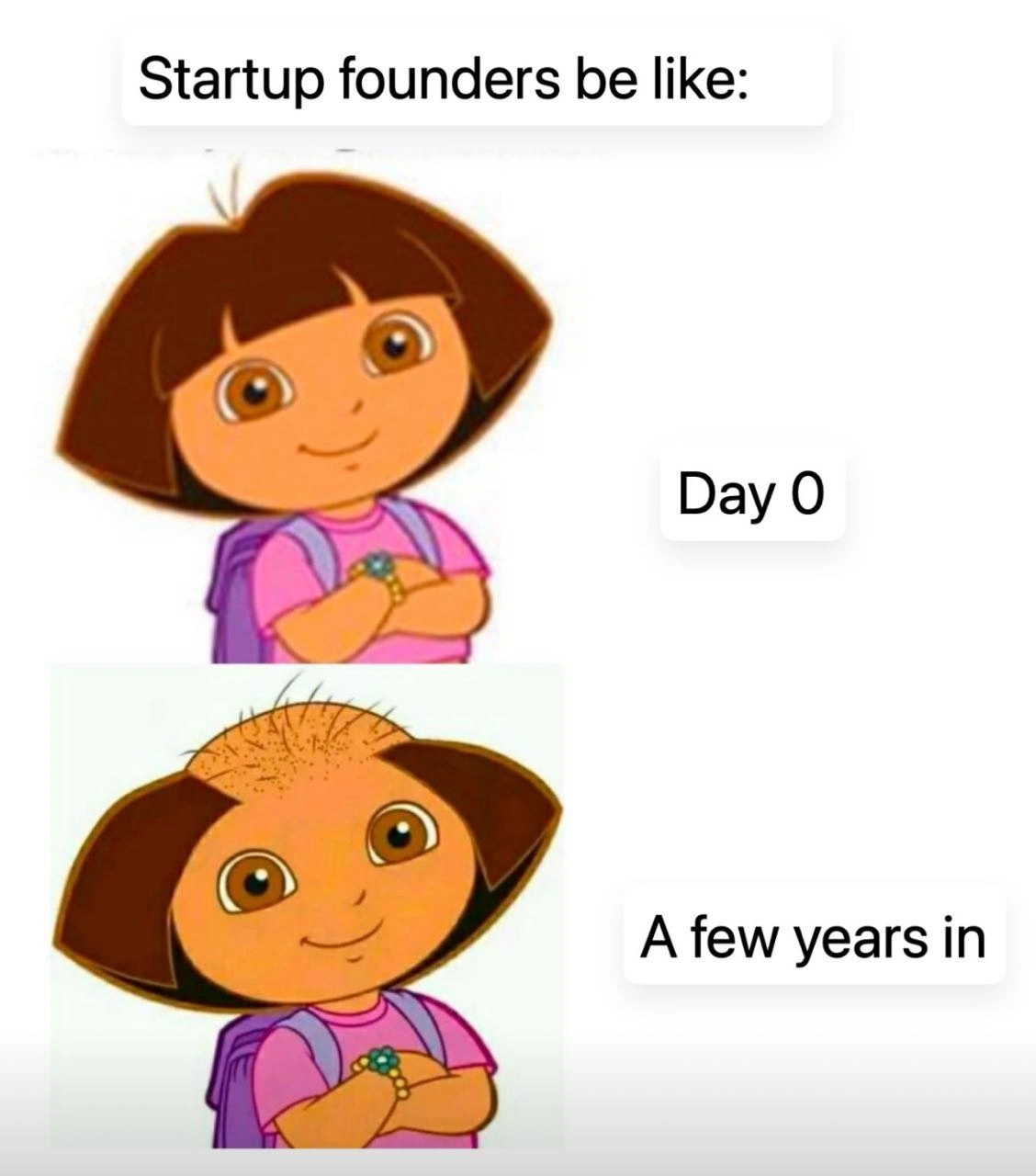
Imagine you start a big adventure feeling super happy and full of energy, just like a cartoon explorer setting out on Day 1. You’re smiling, your eyes are bright, and you feel great – kind of like Dora the Explorer when she begins a new journey. That’s how a person starting a new project or company (a startup) feels at the very beginning: excited, hopeful, and maybe a little naive (which means they don’t yet know how hard it might get). This meme shows that feeling with the first picture of Dora looking confident with her normal full hair.
Now imagine after a long, long time on this tough adventure – say a few years of really hard work – you are completely tired out. You’ve been working day and night, solving problems, facing surprises, and maybe not sleeping enough. By the end, you might feel so exhausted that you look different: heavy eyes, maybe you’ve even lost some hair because you’re so stressed! The meme’s second picture shows Dora after a few years, and she has lost most of her hair and looks worn down. It’s a funny, exaggerated way to show how stress and hard work can change someone over time.
Why is this funny? Because it’s so exaggerated and true to life at the same time. We don’t usually see a cartoon character like Dora looking exhausted or bald – she’s always cheerful on her show – so it’s a silly contrast. The top text says “Startup founders be like:” which is saying people who start companies often end up like this. It’s making a joke that when someone starts a company, they begin happy (full hair, big smile), but after a few years of struggling with the company, they turn into the tired, balding version. This is funny in the way cartoons are funny when they show an extreme “before and after.” It’s like those jokes about a president’s first day in office vs last day in office – at first they look young, later they look much older with gray hair. It’s the same idea here but with a startup twist.
So, the emotional core of the meme is about optimism turning into exhaustion. Everyone can understand that feeling a little. Think about starting a school year or a big school project: on the first day you might be all smiles and confident, but after many late nights of work and challenges, you might feel super tired, with messy hair and wanting to just sleep for a week. The meme takes that relatable feeling and pushes it to the extreme (making the character almost bald!) to make us laugh. It’s saying: “Starting something new is exciting, but boy, after doing it for a long time and dealing with all the problems, you might feel and even look totally worn out!” Even if you’re not a startup founder, you get the joke because we’ve all seen how hard work can tire people out. It uses a cartoon to make a serious point in a lighthearted way: take care, or you might end up like poor tired Dora with no hair! But mostly, it’s just funny to see such a dramatic change – and it reminds us that big adventures, whether it’s a startup or any tough project, can be really hard work that takes a lot out of you.
Level 2: Startup Stress 101
Now, let’s break this meme down for those newer to the startup scene or early-career developers. The meme shows two images of the same cartoon character side by side (actually one on top of the other). The character is Dora the Explorer, a children’s cartoon adventurer known for her brown bob haircut and optimistic attitude. In the top image labeled “Day 0,” Dora has her normal full head of brown hair, arms confidently folded, smiling as if ready to take on the world. “Day 0” means the very beginning of the journey – like the first day of starting a company. In the bottom image labeled “A few years in,” Dora’s appearance has drastically changed: most of her hair is gone, leaving a mostly bald head with just a few patchy hairs. She’s in the same pose (folded arms, a bit of a smile), but now she looks like she’s been through a lot. This before-and-after format is a common cartoon_comparison_meme to show how someone changes over time. Here it’s exaggerating how a startup founder changes after working on a startup for years.
What’s being compared? The meme text says “Startup founders be like:” implying founders (people who start new companies, often tech startups) typically begin their journey bright-eyed and hopeful (“Day 0”), but after a few years of the startup grind, they end up looking tired and even physically worn out (“A few years in”). It’s a humorous way to highlight the difference between the expectation vs. reality of startup life. On Day 0, the founder believes in their idea, is full of energy, and perhaps a bit naive about the challenges ahead. A few years later, after dealing with constant challenges, that same founder is shown nearly bald, which symbolizes high stress and aging. This is an example of RelatableHumor in tech: it’s funny to people in startups because they recognize a part of themselves or their friends in this transformation.
Let’s define some terms and concepts:
Startup: A small new company often aiming to grow quickly by creating an innovative product or service. Startup culture is known for long hours and a “do whatever it takes” attitude, sometimes called hustle culture. People in startups often wear many hats (meaning they do lots of different jobs) because the team is small. For example, a technical founder might be coding, handling customer support, and meeting with investors all in the same week. It’s exciting but can be extremely stressful.
Founder: The person (or people) who start the startup. In tech, a founder could be a developer who has an idea for a product and decides to build a company around it. Founders are passionately invested in their project’s success. In StartupHumor memes, founders are often depicted as optimistic risk-takers who become exhausted over time.
Day 0: This isn’t a formal term, but in the meme it literally means the first day of the startup or the very beginning of the project. Day 0 is when the founder is optimistic, fresh, and full of hope. They likely just decided “let’s do this!” and maybe have a small team ready to build a MVP (Minimum Viable Product, which is a very basic first version of the product to test the idea).
A few years in: This means after spending a few years working on the startup. In that time, a lot has happened. Typically, after a couple of years, the startup either has grown (maybe they got users or revenue, maybe they raised investment money) or struggled (things didn’t go as planned, many challenges came up). Often it’s a mix of both. Regardless, “a few years in” implies the honeymoon phase is over, and now it’s the gritty reality. The founder likely had to pivot (change the business strategy or product significantly) or deal with unexpected crises. All of this wears on them physically and mentally.
Burnout: This is a key concept underlying the joke. Burnout is a state of extreme exhaustion (mental, emotional, and physical) caused by prolonged stress. In tech and startups, burnout is common because people often work very long hours, under intense pressure, with little rest. Signs of burnout include constant tiredness, loss of motivation, and yes, even health issues. The meme uses hair loss as a visual gag to represent burnout. While not everyone literally goes bald from stress, chronic stress can cause hair loss for some people, and generally it makes you look tired or older. So the nearly bald Dora represents a founder who has “burned out” a bit – they’ve lost that initial spark (and some hair) due to stress.
Fundraising: The description mentions fundraising. Many startups need to raise money from investors (venture capitalists or “VCs”) to survive and grow. Fundraising is basically asking for money in exchange for a stake in the company. This is a very stressful process for founders: you have to pitch your idea over and over, deal with rejection, and if you do get funding, now you have investors who expect you to deliver big results. It’s like taking on more pressure. Founders often find fundraising one of the most anxiety-inducing parts of startup life, which can contribute to that figurative hair loss.
Product-Market Fit: This is a term meaning you’ve made a product that a specific market (group of customers) really wants and needs. Startups strive to find product-market fit because it means the idea is working and the company can potentially grow fast. However, finding product-market fit is hard and can take years of trial and error. During that time, the founder is worried that if they don’t find it, the startup will fail. That worry can keep them up at night. In the meme context, the founder’s full hair at Day 0 might assume “of course people will love our product!” but a few years in, after struggling to achieve product-market fit, that confidence has literally thinned out (like their hair).
Relentless shipping schedules: “Shipping” in tech means releasing software or features. Startups often operate with a mindset of “ship early, ship often” to iterate quickly and beat competitors. A relentless shipping schedule implies the team is constantly pushing out updates, working crazy hours, maybe doing continuous deployments. This pace can be exhilarating at first, but over years it’s exhausting. Imagine regularly staying up late to fix bugs or deploy new features because you promised an investor or need to impress a new client. That contributes to both stress and lack of sleep – and is a recipe for burnout. It’s a common cause of DeveloperBurnout where developers and founders feel they can’t ever slow down or catch a break.
All these factors – long hours, high uncertainty, financial pressure, responsibility for employees, public success/failure stakes – accumulate over a few years. The meme condenses all that into a single visual joke: at the start, the founder is healthy and upbeat (full hair symbolizes health and youth), and a few years in, the founder is an almost bald, stressed-out person. It’s a bit of an exaggeration (not everyone literally goes bald from a startup, some might just get really tired or develop dark under-eye circles), but exaggeration is used for comedic effect. The message resonates because many in tech have felt some version of this. Early-career devs might not have experienced it yet, but they’ve likely heard stories or seen seniors joke about how their startup job “aged them.”
This meme is also a commentary on mental health in tech. The dramatic change in appearance highlights the often hidden cost of the startup hustle: it can deteriorate your mental and physical well-being. It’s tagged with things like MentalHealthInTech and StressManagementInTech because it’s essentially pointing at the need for managing stress and caring for one’s health, even while joking about it. In recent years, the tech community has become more open about discussing burnout and mental health. Memes like this use humor to broach the subject: everyone laughs, but also nods, thinking “yeah, we do need to take care of ourselves better.” The fact that the once-adventurous Dora is used is quite clever. Dora’s known tagline is “Let’s go!” and she’s always ready for the next mission; seeing her a few years in looking worn out is a funny way to say “this adventure was tougher than expected.”
For a junior developer or someone not yet in the workforce, the takeaway from this meme is a light-hearted warning: startup life can be really hard on you. It’s not literally saying you’ll go bald (that’s just a visual gag), but it is saying you might feel very drained after a long time dealing with startup pressures. So, it’s relatable to anyone who’s pulled an all-nighter or who has felt the difference between how they felt at the start of a project versus after grinding on it for months. Even students might relate (think of how you feel during the first week of classes vs. final exams week – initially fresh vs. later completely exhausted and maybe looking disheveled).
In summary, this meme combines StartupHumor with a bit of dark truth. The tags like RelatableDeveloperExperience and StartupLife highlight that it’s poking fun at a common experience in the tech industry. It’s an exaggeration for sure – not every founder literally loses their hair – but it captures the essence of how a tough startup journey feels. The side-by-side Dora images are a simple, almost childlike way to communicate a grown-up reality: big dreams can come with big stress. And the fact that we find it funny means, at some level, many of us understand and have maybe even lived parts of this transformation.
Level 3: Burn Rate & Baldness
At the senior perspective, this meme lands a punch because it captures a painfully familiar founder lifecycle. On Day 0, the startup founder (here humorously depicted as the eternally optimistic Dora the Explorer) is brimming with confidence, sporting a full head of hair and a naive grin. Fast-forward “a few years in” and that same founder’s hairline has dramatically receded, leaving a patchy scalp. This exaggerated before-and-after visual is funny because it’s true: the stress of scaling a startup can age you in hyper-speed. In the tech industry, it’s joked that one year in a startup is like seven years in a normal job – a play on “dog years.” Many veterans have literally watched their hair turn grey or vanish under the pressures of StartupLife. The top caption “Startup founders be like” sets the expectation of a stereotype: bright-eyed idealism devolving into burnout-fueled weariness.
The humor draws on stark contrast. Initially, our founder is bright-eyed with big dreams of becoming the next unicorn, fueled by hackathons and enthusiasm. A few years (and several investor pitches, pivots, and all-nighters) later, reality has kicked in. Fundraising rounds might have succeeded in injecting cash, but they also injected chronic stress. Chasing elusive product-market fit under tight deadlines can feel like a never-ending boss battle. The burn rate (how fast the startup spends money) is matched only by the burnout rate (how fast the team’s energy and health get depleted). The meme gets cynical nods from experienced developers and founders because it satirizes this well-known pattern: initial passion slowly ground down by relentless pressure.
In real life, we’ve seen it happen. Think of the fresh graduate founder who lived on energy drinks in year one, then by year three is surviving on coffee and anxiety. That once full-stack optimist might now be a balding_stress case with health apps reminding him to breathe. It’s RelatableHumor for anyone who’s wrangled late-night deploys or juggled “make-it-or-break-it” demos. The cartoon style softens the dark reality: it’s easier to laugh at Dora’s missing hair than confront our own developer burnout and MentalHealthInTech struggles. But behind the laughter lies a truth startups don’t put on glossy brochures: the grind can be brutal. Many founders start out with youthful energy (and full hair), only to discover that the combination of 100-hour weeks, constant StressManagementInTech, and “grow-at-all-costs” pressure often leads to accelerated aging (if not outright founders_hair_loss). It’s not literally that every founder goes bald, of course. The bald Dora image is a comical exaggeration of the toll – but plenty of real founders do get grey hairs, weight gain/loss, or other stress effects after years in the trenches.
The irony is rich: startups market themselves as vibrant and cutting-edge (foosball tables! kombucha on tap!), yet behind the scenes the team might be falling apart. This meme points out that irony with dark humor – the founder’s outward appearance goes from youthful to haggard, symbolizing how a startup’s promising start can morph into a slog of investor calls, technical fires, and working weekends. TechHumor often laughs at pain, and here the pain is the very real burnout that early employees and founders endure. We recognize the second image’s thousand-yard stare hidden behind that forced smile. It’s the look of someone who’s been on-call for their own company, fixing production issues at 3 AM so many times that “sleep” became a deprecated feature.
In short, this startup humor meme resonates because it exaggerates a truth insiders know all too well: the journey from prototype to product can exact a physical and mental toll. It’s poking fun at the founder_life_cycle, compressing years of struggle into a simple cartoon_comparison_meme. Seeing a beloved adventurous character like Dora get visibly aged by stress drives the point home: even the most cheerful explorer isn’t safe from startup_aging. It’s a cautionary chuckle – if Dora can go from explorer to exhausted, what do you think will happen to mere mortals trying to “disrupt” industries? The subtext: take care of yourself in this grind, or you might end up like bald Dora.
Let’s break down the transformation in a way any battle-scarred developer would appreciate. Here’s a tongue-in-cheek comparison of Day 0 vs Year 3 of a startup founder:
| Day 0 (The Start) | A Few Years In (After Grind) |
|---|---|
| 😃 Full hair, bright smile. | 😅 Receding hairline, weary grin. |
| “We’re gonna change the world!” 🌍 | “We need to make payroll...😬” |
| Fueled by vision and coffee ☕ | Fueled by caffeine IV drip 💉 |
| Excited by hackathons and MVPs | Exhausted by on-call alerts at 3AM |
| Sees challenges as fun puzzles | Sees challenges as hair-loss triggers |
Every line in that table is a scenario the seasoned folks know by heart. The founder’s early optimism (“change the world!”) is practically a startup meme itself – and by year 3, that optimism often gives way to a grim focus on survival (“just make payroll”). The hackathon pizza parties are replaced with production incident post-mortems. Those “fun puzzles” (like scaling systems or tweaking the UI) become “stress triggers” when every bug could risk losing crucial customers or angering an investor. It’s funny because it’s an accurate caricature of startup life: RelatableDeveloperExperience distilled into a before-and-after joke.
Importantly, this meme also scratches at the topic of MentalHealth in tech. In a darkly comedic way, it’s raising awareness: Hey, this grind isn’t healthy. When you see Dora’s hair practically falling out, it’s a visual metaphor for DeveloperBurnout. Burnout is when long-term stress and overwork make you physically and mentally exhausted, often leading to reduced performance and health issues. We laugh at the image, but many can empathize with the feeling of being utterly spent after a few tough years. The founder in the meme didn’t literally go bald overnight – it implies successive crises and constant pressure slowly wore them down. It’s a form of gallows humor that experienced devs and founders share: “Haha, yeah, remember when we thought this would be easy? Look at us now.” Spoiler: the startup grind won, and our hair lost.
Finally, from a tech culture angle, the choice of a cartoon (especially Dora) adds another layer. Dora is known for being a cheerful kid on adventures, asking kids at home for help like “Can you say stress? ¡Muy bien! 🎉”. Here, she’s used ironically: even the cheeriest adventurer gets run-down by the real-world adventure of a tech startup. It’s a visual way to say “startups aren’t the cute adventure you imagine; they will chew you up.” For the senior folks who might have gone through an IPO or a startup collapse, the meme is painfully on-point. We’ve seen co-founders go from college kids to balding_stress cases after wrestling with AWS bills, fickle users, and perhaps a global pandemic thrown in for good measure. So we laugh – a knowing, slightly bitter laugh – at this meme because it speaks truth to power (or truth to founders). As one might jokingly sum it up: Startup founders be like -> hair today, gone tomorrow.
Description
A two-panel meme captioned 'Startup founders be like:'. The top panel, labeled 'Day 0', features a picture of the cartoon character Dora the Explorer with her signature full, healthy head of hair, looking optimistic. The bottom panel, labeled 'A few years in', shows the same character, Dora, but now she has significant male-pattern baldness, with thinning hair on top and a receding hairline, though she maintains a slight smile. This meme humorously illustrates the immense stress, burnout, and premature aging that is often associated with the high-pressure environment of founding and running a startup. The visual transformation from youthful to visibly stressed is a metaphor for the toll that 'hustle culture' and the relentless pursuit of growth can take on an entrepreneur's well-being
Comments
15Comment deleted
The first round of funding is for the MVP. The second is for payroll. The third is for a hair transplant. That's the real startup funding lifecycle
Day 0: “We’ll stay lean with serverless.” Year 3: bald from hand-rolling six Kubernetes operators just to keep our ‘serverless’ monolith breathing
The real MVP pattern in startups: Minimum Viable Protein for your rapidly depleting hair follicles. Should've negotiated for Rogaine in the Series A term sheet alongside the liquidation preferences
Startup founders are the only people who can look at a burn rate that would make a CFO weep, a product roadmap that's been 'two weeks away' for six months, three failed pivots, and a cap table more diluted than homeopathic medicine - and still pitch investors with the same wide-eyed enthusiasm they had on day zero. It's not optimism, it's a distributed denial-of-service attack on reality itself
Day 0: “we’re going serverless to avoid ops”; a few years in, the only thing serverless is my hair - Kubernetes, SOC 2, and PagerDuty did the rest
Startup life: Product iterates forward, founder's hairline pivots to escape velocity
Somewhere between “multi‑cloud microservices by Q2” and the first 3am sev‑1, the founder’s hairline adopts eventual consistency while prod consolidates into a single snowflake VM named prod
Musk did the inverse 😂🙈 Comment deleted
Durov did the inverse! Comment deleted
I was about to say Comment deleted
sure sounds like a blast not Comment deleted
@Bjastkuliar @SamsonovAnton That would be third picture when startup finally succeeds! Comment deleted
Where's my startup I'm asking 😡🤷 😅 Comment deleted
I'm already balding so where's my startup?? Comment deleted
Startup founders when their “AI powered Saas company” (A ChatGPT wrapper) that measures how much toilet paper employees use hasn’t been profitable in 6 years (they received 10 million in funding) Comment deleted