Stack Overflow Snippets: Expectation vs. Distorted Reality
Why is this DevCommunities meme funny?
Level 1: Square Peg, Round Hole
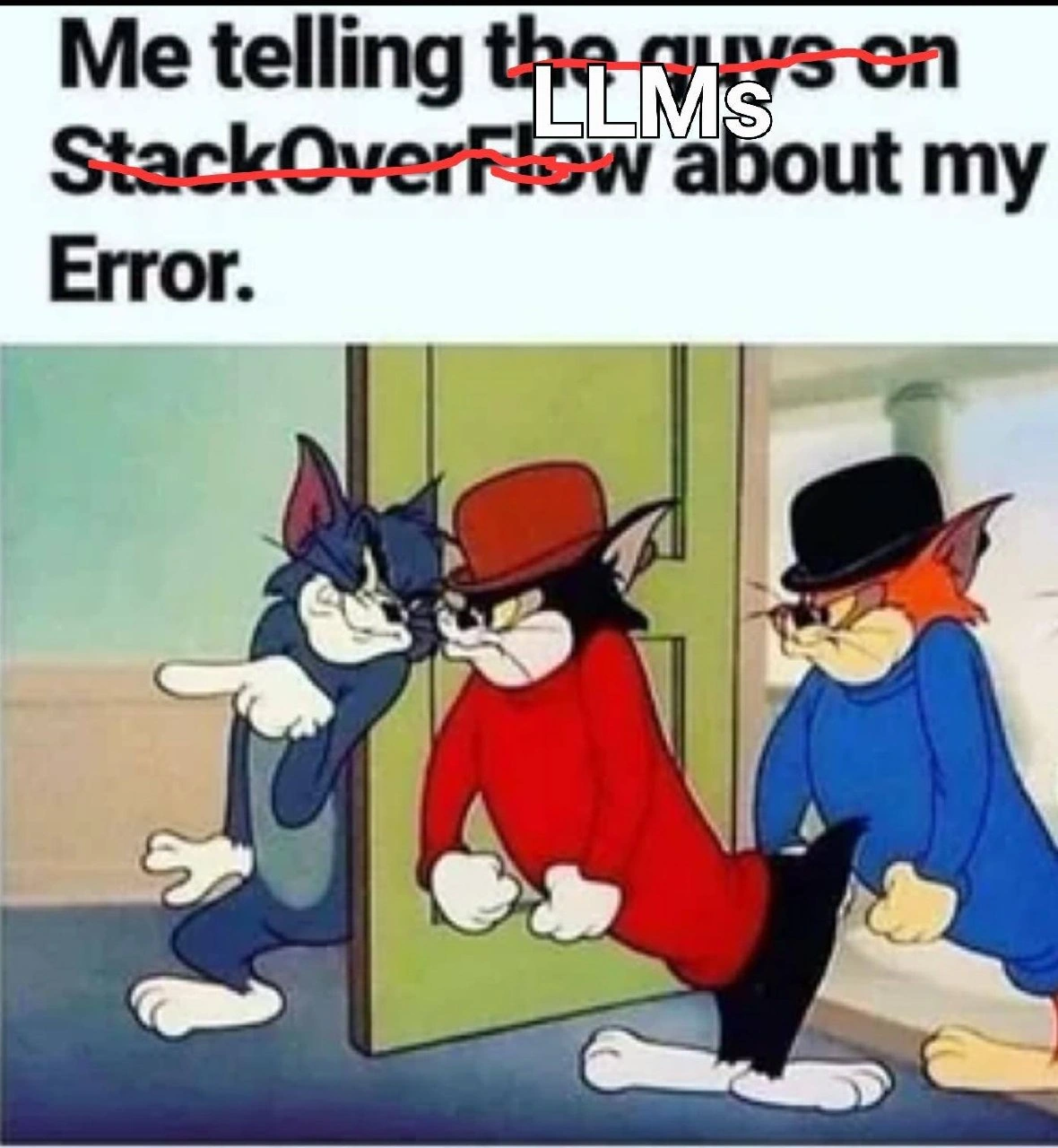
Imagine you have a key that opens your friend’s house, and you try to use that same exact key to open your own house. It doesn’t work, right? This meme is laughing at a similar kind of mix-up, but with computer code. The top text basically says, “Here’s some code I found on the internet,” and then it shows two pictures that are exactly the same. They’re labeled “How it’s meant to be used” and “How I am using it,” but since the pictures are identical, it’s like saying: I’m using this thing exactly the way it was originally used, even though my situation is totally different. It’s like taking a solution for one problem and hoping it magically works for another problem without changing anything.
In simple terms, it’s pointing out a silly mistake we can all understand. Think of it like this: your friend gives you a recipe for baking a cake (because it worked great for them), but you try to use that same recipe to cook a pasta dinner. You follow all the cake steps exactly. The result? You don’t get a tasty pasta; you get a weird cake you didn’t actually need! In the meme, both images being the same is like saying the person followed the recipe to the letter, even though it was the wrong recipe for what they wanted. It’s funny because it’s a very human thing to do: sometimes we grab a solution that someone else used and hope it fixes our completely different problem. Usually, it doesn’t end well – just like our cake-for-pasta swap. So the meme is a goofy reminder: using something in the wrong context (a square peg in a round hole) will give goofy results, no matter how perfectly you copied it.
Level 2: Stack Overflow Copypasta
Let’s break down the tech humor in simpler terms. The meme text reads “The code snippet I copied from StackOverflow:” followed by two side-by-side identical pictures labeled “How it’s meant to be used” and “How I am using it.” Even though the pictures are clones of each other (literally the same photo duplicated), the labels suggest there’s supposed to be a difference between the proper usage of the code and the way the developer actually used it. The joke is: there is no difference! The developer used the snippet exactly as it was given, without adjusting for their own situation, which is a recipe for trouble in coding.
First, what is Stack Overflow? It’s a hugely popular Question-and-Answer website where programmers ask for help and others post answers, often including small pieces of code (we call these code snippets). For example, if you’re stuck on how to sort a list in Python, you might find a Stack Overflow answer showing a quick function that does it. This site is like a giant help desk for coders — and it’s a normal part of a developer’s life to search it for solutions.
Now, copy-paste coding (sometimes jokingly called StackOverflow-driven development) is when someone takes such a code snippet from the web and pastes it into their own project without fully understanding or modifying it to fit. In theory, reusing code is fine — why reinvent the wheel? That’s called code reuse, and good developers do reuse well-tested code or libraries. But the key is context. Context means the specific situation or environment in which code runs. Code isn’t universal magic; it often assumes things about the situation. For example, a snippet from an answer might assume you have a variable named user already defined, or that you’re on a certain version of a library, or even something subtle like your list isn’t empty. If you just paste it in as-is without meeting those assumptions, you could get errors or unexpected behavior — these are the dreaded bugs (flaws or mistakes that make the program act weird or crash).
In the meme’s image, using the same photo twice emphasizes that the developer didn’t change the code’s context at all. “How it’s meant to be used” implies the original snippet was designed for a particular scenario. “How I am using it” implies the person should be doing something different, but the identical picture shows they are effectively doing the exact same thing regardless of their own needs. It highlights a misunderstanding: the developer might think they’re applying the code to a new scenario, but in reality they’re treating it just like the original scenario (because they copied it literally). If their problem isn’t exactly the same as the original, this is going to misfire.
Let’s illustrate with a simple example. Imagine the Stack Overflow snippet was something like:
# Stack Overflow snippet (intended scenario)
def calculate_discount(price):
return price * 0.9 # apply a 10% discount
total = calculate_discount(100) # Example usage in the answer
print(total) # Expected output: 90
This snippet is straightforward: it calculates a 10% discount on a price. Now, suppose the developer who copied this actually needed to add tax to a price, not give a discount. But they were in a hurry, saw this snippet labeled “calculate something with price” and pasted it without changes:
# Developer's code (misusing the snippet in a different context)
def calculate_discount(price):
return price * 0.9 # (They left this as is, thinking it somehow solves their need for adding tax)
bill = calculate_discount(100)
print(bill) # They expect maybe a taxed price, but they're actually getting a discounted price!
In this silly example, the function’s name and logic are for discounts, but the dev wanted to calculate tax (say add 10%). By copy-pasting without reflection, they’re still doing a discount. The result is wrong for their needs. The two identical images in the meme are like this – the functionality didn’t actually change, because the coder didn’t adapt it. How it’s meant to be used (discounting) vs how I am using it (supposedly taxing) ended up identical in code, therefore wrong in outcome.
The meme falls under formats like “how it started vs how it’s going” or “intended vs actual” usage memes, common in developer humor. It points out a relatable mistake especially among junior developers (people new to coding). When you’re just starting, you might not realize how important those little differences in context are. It’s easy to think “Oh, this code from the internet fixes the error message I had” and then assume it’s the correct solution. The humor (and gentle lesson) is that if you don’t tweak the code to truly fit your case, you may end up with code that technically runs (no immediate errors) but doesn’t do what you wanted — or it does something unintended. In worst cases, blindly copied code can crash your program if something expected isn’t there (like a missing variable or a different data type). For instance, copying a snippet that assumes a list has at least one element could cause an “index out of range” error in your program if your list can be empty.
Let’s talk code quality in this context. Code quality means attributes like clarity, reliability, efficiency, and maintainability of code. Pasting random code can hurt these qualities. You might introduce a bit of code that is confusing to others because it doesn’t follow the rest of the project’s style or it uses an unusual approach. If the original snippet had a subtle bug or was just a quick hack, you’ve now injected that into your code too. A common scenario: someone copies a snippet to do something like parse a date or generate a random ID, but it’s not quite right for all cases. Later, another developer is puzzling over, “Why do we parse dates in this weird way here?” It becomes technical debt (a concept for when you choose an easy solution now that causes problems later). So while reusing code is good, doing so without understanding is an obvious gotcha.
The tags like StackOverflow, CopyPasteCoding, CodeQuality, CodeReuse all revolve around these ideas. Stack Overflow is the source of the snippet. Copy-paste coding is the method used. Code quality is what suffers. And code reuse is the general practice that’s being misapplied. It’s worth noting that Stack Overflow itself isn’t bad — it’s an amazing resource with often high-quality answers. It’s how a developer uses the resource that matters. Good usage: reading an answer, understanding why it works, and then integrating the idea (or even the code) in a thoughtful way. Bad usage: blind copy-pasting, as humorously depicted in the meme.
The category Juniors is relevant: younger devs are more prone to this mistake, often due to time pressure or lack of experience. But it’s so common that it’s become a trope in DeveloperExperience. In fact, the term “copypasta” itself (internet slang for copied-and-pasted text) has infiltrated coding lingo – we talk about “copypasta-ing code from Stack Overflow” the way someone might copy a block of text meme. There’s even lighthearted advice like “beware of Stack Overflow code in production!” because of these pitfalls. And developers often share jokes like “I found our company’s CTO on Stack Overflow – half our codebase was in his answers.” Here, the DeveloperExperience_DX tag hints at the developer’s journey: early on, you lean heavily on external snippets, and part of the learning process is discovering when that can go wrong.
In essence, the meme is a funny warning. It says: If you treat a Stack Overflow snippet like a magical incantation and use it exactly as given in a different situation, you might end up with nonsense. The two identical images humorously emphasize there was no adaptation – the developer didn’t translate the solution to their problem domain. We’ve all been either this developer or the colleague facepalming at a code review asking, “Why is this code doing X? It doesn’t make sense here,” only to hear “Oh, I found it online.” It’s super relatable! So, juniors (and everyone, really) can learn: always adjust and test any copied code. Understand what it expects. When the meme says “How I am using it,” showing the same image, it’s inviting us to laugh at the mistake of treating different problems the same. The result of that can be just as identical as the pictures – nothing actually changes in your program’s outcome, or you swap one problem for another.
To sum up this level: Stack Overflow is great for help, but blindly copying code can lead to hilariously disappointing results. The meme’s humor comes from the fact that the developer’s implementation is indistinguishable from the original use-case, highlighting they did nothing to make the code fit their own needs. It’s a lighthearted poke at a real developer experience, encouraging us to always apply a bit of critical thinking (and maybe read the documentation or answer discussion) before assuming someone else’s code will work unchanged in our project.
Level 3: Cargo Cult Code
This meme nails a classic Stack Overflow scenario: a developer copies a code snippet from an answer verbatim, plops it into their project, and hopes for the best. The top text sets the stage: "The code snippet I copied from StackOverflow:" then we see two identical club photos labeled “How it’s meant to be used” vs “How I am using it.” The images are exactly the same, highlighting the joke: the dev made zero changes or understanding-based adaptations. This is a prime example of cargo cult programming – using code blindly without grasping why it works, just like a ritual one imitates expecting magical results. Here’s why seasoned engineers are chuckling and cringing in unison:
Blind reuse without context: The meme humor comes from that side-by-side sameness. It implies the developer treated the snippet as a plug-and-play fix in a completely different scenario. In reality, code isn’t a one-size-fits-all magic pill. A snippet from Stack Overflow is written for a specific problem (the intended usage), with certain assumptions about data, environment, or version. When a dev uses it unchanged in a new situation (their chaotic application), they’re ignoring all those assumptions. It’s like copy-pasting a solution for Problem A into Problem B and expecting… Problem B to be magically solved. Experienced devs recognize this pattern immediately – we’ve either seen it or (be honest) done it ourselves at 3 AM when desperation meets deadline. The identical images scream, “I didn’t modify anything!” which is the root of the issue.
Industry anti-pattern on display: This is poking fun at Stack Overflow-driven development, an all-too-common anti-pattern. Instead of understanding a problem and crafting a solution, a dev just Google-searches the error message, finds an answer with lots of upvotes, and copies the code. The intended use image represents the scenario the answer was actually meant for – the code works beautifully in that context (hence the smiling confident look of the woman in the club, everything is fine). The my usage image is identical, meaning the dev literally copied it verbatim with no adaptation – effectively using it the same way despite a different problem context. The humor is that the developer believes they’ve applied a brilliant fix, but in truth they just dropped in someone else’s code without modification, making it functionally the same as the original use-case. If the problem isn’t identical, the “fix” might do absolutely nothing or introduce a new bug. It’s a tongue-in-cheek depiction of that déjà vu feeling senior devs get when reviewing code and thinking, “This looks copied from somewhere and doesn’t even address our issue.”
Shared trauma and “it worked on their machine”: There’s a collective understanding in the dev community that copying code blindly can lead to mysterious bugs or head-scratching behavior. Many of us have felt the temptation: Stack Overflow is quick, and when you’re junior or under pressure, it’s easy to grab a snippet that “looks right.” The meme resonates because we remember the aftermath: maybe the code ran without errors (yay!), but it didn’t actually solve the problem, or worse it broke something else. The phrase “How I am using it” over the identical image highlights the chaos of this approach – it’s chaotic because it’s applied out-of-context. Everyone gets the reference to that “I’ll just use this code I found” moment. Senior devs laugh (or groan) because they’ve spent late nights debugging code that some teammate copied in haste. In those war stories, the snippet often had hidden prerequisites or was an edge-case solution that didn’t generalize. This leads to the classic “it worked on their machine (or in the Stack Overflow answer) but not in ours” scenario.
Why context is everything: The underlying lesson (wrapped in humor) is about code quality and context. Good code isn’t just about making errors disappear; it’s about doing the right job under the right conditions. The meme underscores a key point: code has implicit contracts – what input it expects, what environment it runs in, what other pieces need to be in place. When you copy a snippet without understanding those contracts, you violate assumptions. It’s like taking a perfectly good function and calling it with the wrong parameters. The results can range from no-ops (nothing happens, as likely implied by the identical images: nothing effectively changed) to catastrophic (runtime errors, security holes, data corruption). Why is fixing this harder than it looks? Because when the code inevitably misbehaves, the person who copied it might not have a clue how it works internally. Debugging effectively becomes spelunking into someone else’s logic that you never fully grokked. That’s frustrating and time-consuming – the initial time “saved” by copying can balloon into more time lost later.
Systemic causes and why it keeps happening: You might wonder, “If this is so obviously a pitfall, why do developers keep doing it?” The meme hints at a cycle in developer culture. Incentives often reward quick fixes: your boss or backlog doesn’t care how you solved the bug, just that it’s “fixed” ASAP. Stack Overflow provides an instant answer – a dopamine hit of a solution. For a newbie, seeing something compile without errors after pasting code feels like victory. Plus, not everyone has a senior engineer or mentor to pair with; sometimes it’s just you and the internet at 2 AM. Over time, better devs learn to double-check and truly integrate solutions, but early on, you may not even know what you don’t know. The result is this kind of copy-paste programming, sometimes jokingly called “programming by permutation” or “trial-and-error coding.” It’s a bit of a rite of passage to learn why this approach can backfire. And let’s be fair: even seasoned devs occasionally grab code from Stack Overflow – but the difference is, they’ll typically tweak it, test it, and make sure it fits their use-case (and at least rename the variables to make sense in their codebase!). The meme exaggerates the novice approach: doing none of that.
The identical twin images – a perfect irony: By using the exact same photo for both “meant to be used” and “how I’m using it,” the meme creator brilliantly illustrates that the developer’s “chaotic application” is basically just running the snippet exactly as-is. It’s a visual punchline. The blonde woman with the pink glow-stick necklace presumably represents the code snippet in its happy native habitat (maybe a well-lit scenario where it belongs). Copying her photo identically to the second frame says the developer didn’t adapt the code at all – they treated that snippet like a black box miracle. The humor is that, in doing so, they’ve probably changed nothing relevant to their problem. It’s a bit like saying “Look, I’m using the code totally wrong!” but showing the code being used exactly the same way – highlighting the cluelessness. Developers find this hilarious because we’ve all seen code in a codebase that looks out-of-place or misused, clearly copy-pasted with minimal thought. It’s a friendly jab: we know you meant well, but you basically changed nothing, buddy. The “chaotic” part comes in when this inevitably causes a mess in the application.
Quality degradation and long-term pain: If we go beyond the immediate laugh, there’s a serious undertone about code quality. A project littered with Stack Overflow snippets can become a Frankenstein monster of code: each piece might follow different style conventions, assume different frameworks or versions, and have varying levels of efficiency. Over time, this copy-pasta approach leads to a codebase that’s hard to maintain or reason about – because it’s not a coherent whole, it’s a collage of others’ solutions. Bugs hide in these pasted chunks, and updating one part can break something unexpectedly because the team never fully understood that code to begin with. The meme captures the moment of insertion, but any veteran dev can tell you about the aftermath – the moment months later when someone exclaims, “Who wrote this? Why does it do X?” only to find a Stack Overflow link in a comment or commit message. Thus, it humorously underscores why blindly copying code is frowned upon from a craftsmanship perspective. It might work today (maybe by pure luck), but tomorrow when something changes, it could bite you. The laugh comes with a wince of recognition of that truth.
In summary, this meme is funny-not-funny to seasoned developers because it spotlights an all-too-relatable blunder: using code in a way it was never intended, expecting miracles, and getting poetic justice when nothing improves. It’s a send-up of well-meaning but misguided quick fixes – the identical images silently screaming, “I didn’t change a darn thing, did I?” We laugh because we’ve been there, we’ve learned from it (painfully), and we know that the real fix usually starts with understanding the code, not just borrowing it. As the saying goes among battle-scarred engineers: “One does not simply copy random code into production.”
Description
A popular meme format showing a photograph in a dimly lit bar or club, captioned at the top 'The code snippet I copied from StackOverflow:'. The main image features a smiling blonde woman in a tank top, with text over her reading 'How it's meant to be used'. To her right, a mirror reflects her body, but with an older man's head seamlessly and bizarrely attached, creating a jarring image. The text over this reflection reads 'How I am using it'. This meme humorously illustrates the common developer experience of finding a code snippet online that seems perfect for a problem (the ideal, well-fitting solution represented by the woman) but implementing it in a way that is awkward, incorrect, or completely out of context (the distorted, ill-fitting reflection). It’s a visual metaphor for cargo cult programming, where developers use code without understanding the underlying principles, leading to buggy and unmaintainable software
Comments
8Comment deleted
That Stack Overflow snippet is a free function, but it has a hidden dependency: the 300 lines of context the original author didn't bother to paste. Now your codebase looks like it was put together by a reflection in a funhouse mirror
I pasted a pure, side-effect-free Stack Overflow snippet into our eventually-consistent, mutable nightmare - now we’ve got Schrödinger’s feature flag: simultaneously on and off, depending on which replica you ask
That elegant recursive solution from 2012 is now the load-bearing foundation of our payment processing system, wrapped in seventeen try-catch blocks and a prayer to the JavaScript gods
Every senior engineer knows that Stack Overflow snippet marked as 'accepted answer from 2012' isn't just code - it's a Rorschach test. The original author carefully crafted it for a specific edge case in jQuery 1.4, but here we are in 2024, wedging it into our React hooks with the confidence of someone who definitely read all 47 comments explaining why this approach was deprecated three framework versions ago. The real skill isn't finding the snippet; it's the mental gymnastics required to convince yourself that your use case is 'basically the same thing' while ignoring every architectural principle you've spent years learning
StackOverflow snippet: single-threaded happy path. Me: shove it into a multi-region saga with retries. Result: symmetric outages
Intended: Elegant O(n) utility. My version: O(n²) monstrosity with a bonus SQL injection vector
StackOverflow code is like a macro without hygiene - captures someone else’s globals and then we wonder why production deadlocks
Every damn time. 😁 Comment deleted