Skip to content
DevMeme
2065 of 7435
Hierarchy of Fear: The Production Database
Production Post #2303, on Nov 14, 2020 in TG

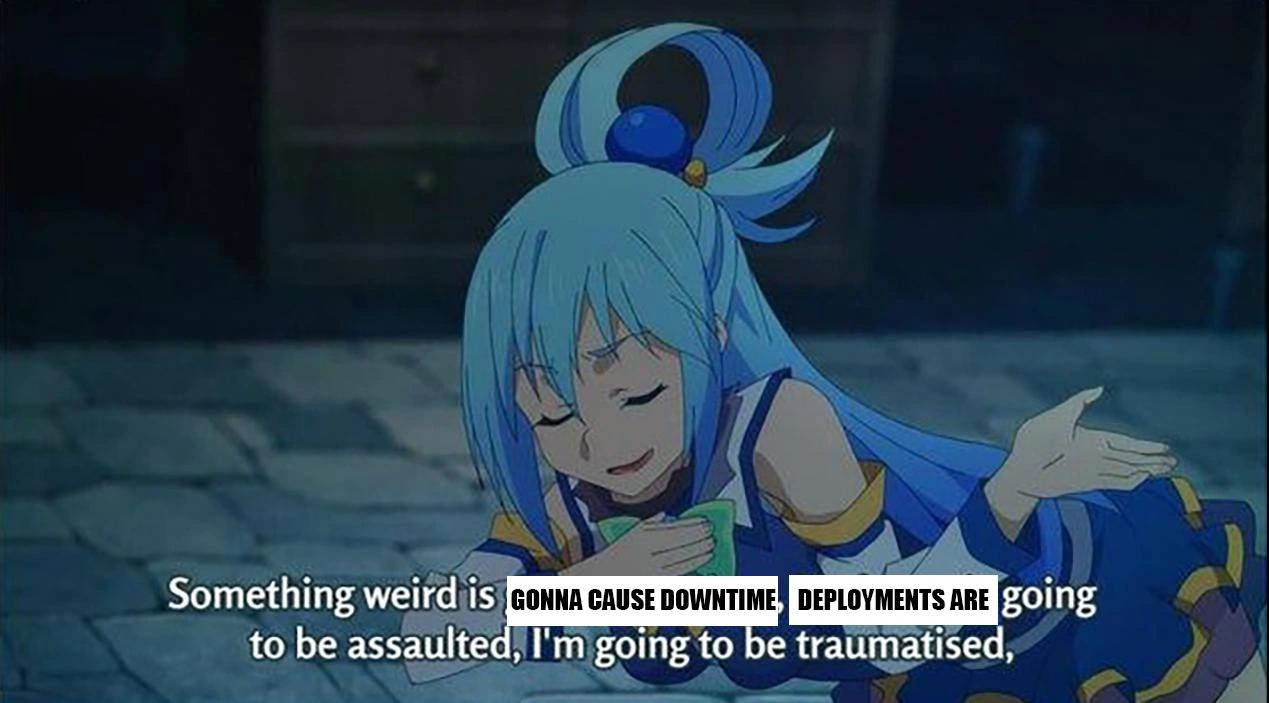
Hierarchy of Fear: The Production Database

Why is this Production meme funny?

Level 1: Don’t Touch That!

Imagine you have a big, important cookie jar on a high shelf – it’s really valuable to the whole family because it’s the only cookie jar with all the favorite cookies. Now, think of a little kid who’s super excited and sees that shiny jar. The kid reaches up to open it and grab a cookie without asking. But the parents suddenly freak out and jump in, yelling “No, don’t touch that!” Why? Because maybe that jar is perched in a risky spot and could crash down, or perhaps those cookies are needed for a big party and one wrong move could ruin things. The kid (like a brand new engineer) doesn’t know any better and just wants to explore, but the parents (like the experienced engineers) know that this particular cookie jar is off-limits for now since a small mistake could be a disaster. In simple terms, the meme is showing grown-up developers acting like those nervous parents, urgently stopping the curious new kid from playing with something very important (the “production database” is like that cookie jar, or you can think of it as a big red button that shouldn’t be pressed). It’s funny because we see the normally confident adults (the architect and senior engineer) looking as scared and protective as if the kid was about to drop something precious. Essentially, it’s saying: when you’re new, you might want to jump right in, but the older folks will hold you back for a bit – just to keep everything safe and sound.

Level 2: Guardians of the Database

Think of the production database as the primary data store that a real application uses in the wild. It’s where all the live, real-world data (like customer accounts, orders, messages, you name it) is kept. In software development, production (or “prod”) refers to the environment that actual users interact with – basically the live website or service. It’s the opposite of a test or development environment, which is where developers practice and try things out safely. A production environment is tightly managed because if it breaks or data gets messed up there, it’s a big deal. A production incident means something went wrong in that live system – for example, the website crashes or important data gets deleted – and it usually triggers an emergency response (developers rushing to fix it, alerts going off, sometimes even waking someone up at night if they’re on-call).

Now, in a typical company, you have different roles with different levels of experience and authority. A New Engineer (often a junior developer or a recent hire) is at the start of their learning curve. They might be talented and full of new ideas, but they’re still learning how the system works and what can go wrong. The meme cheekily represents the new engineer as a rabbit – perhaps because rabbits are energetic and hop quickly before you can catch them. This newbie sees the “PRODUCTION DB” bucket and might think, “Oh cool, the real database! Let me try something with it!” – not fully realizing that even a small change can have huge consequences in production.

The other characters are the Architect and the Senior Engineer. In many tech teams, an architect is a highly experienced developer (often with a fancy title) who designs the overall system structure and sets important rules and best practices. They’re like the chief builder who’s seen a lot of projects succeed and fail, so they’re very cautious about protecting core parts of the system (like the production database). The senior engineer is also very experienced – usually someone who’s been coding and running systems for years, and who often mentors the new engineers. Seniors know the system’s quirks and have probably been through a few emergencies (like databases crashing or bad deployments) before. They might even be the person on-call, meaning if something breaks at 3 AM, their phone rings and they have to jump online to fix it. So, both the architect and senior engineer have a healthy fear of anything risky happening to production because they understand exactly how bad it can get and they’re the ones who’ll have to fix it.

In the meme, the architect (the girl in the red dress) is physically pulling the senior engineer (the boy in the hoodie) back, away from the rabbit. This is a playful way to show that both of them are alarmed and trying to prevent catastrophe. It’s like the architect is saying “Hold on, don’t let the newbie (rabbit) get anywhere near the production DB!” In real situations, this “guarding” would happen as strict rules: for example, new engineers might not have permission to directly access the production database or make changes to it until they’ve gained more experience. The company might require code reviews or having a senior supervise any change that goes to production. This all falls under db_access_prevention – essentially, making sure that someone inexperienced doesn’t accidentally press the big red button that drops the database or brings down the system. It’s part of the role of senior folks (like the architect and senior engineer) to mentor juniors, which includes stopping them from learning things the absolute hardest way (i.e., breaking something big on day one 😅).

Why are the architect and senior so anxious in the picture? Because they know the production database is super important and fragile in the sense that a bad change can cause a lot of damage. Imagine a new engineer thinking, “There’s a typo in the user data, I’ll just quickly fix it directly in the database.” To the new hire, that sounds efficient. But the senior engineers know that directly editing production data without careful procedures can lead to mistakes. For example, the newbie might run a command intended to fix one row but accidentally affect every row (maybe by forgetting to specify which row to update). Real life incident: a junior once omitted a filter in a delete query and ended up wiping an entire table of customer data – definitely a ProductionIssue and a big oops! Seniors have probably seen or heard of such ProductionIncidents, so they take a “trust but verify” or rather “no, let’s triple-check that!” approach with juniors. The company’s hierarchy is at play: the new engineer will eventually be allowed to handle prod, but only after learning from the seniors and proving they won’t turn the DB into Swiss cheese inadvertently.

This dynamic is very relatable in tech teams. Early in your career, you might be the one being gently (or firmly) stopped from doing something risky. A bit later, you might be the person doing the stopping, because you remember what you almost messed up as a junior! It’s all in good humor here with the bunny and bucket, but it reflects a real practice: production databases are often locked down. Companies will have things like a staging environment (a copy of production where new folks can practice or test changes safely) specifically so new code or queries can run without endangering actual customer data. Only after those are tested do they go into prod. Also, newbies typically get read-only access at most to production data initially – so they can learn from real examples but can’t accidentally delete or modify anything. All these safeguards are essentially the real-life version of the architect and senior engineer standing guard. They want the junior to learn and contribute, but in a safe way. After all, if the production DB got messed up, it’s not just about code – it could mean lost revenue, unhappy users, and a very long day (or night) for the whole engineering team. That’s why the idea of an overenthusiastic new hire heading straight for the production system makes the seniors nervous. In the meme, that nervousness is exaggerated to the point of physical comedy – two people literally bracing themselves to stop one little bunny. It’s a funny take on a very real sentiment: “let’s not have any surprises in production today, please.”

Level 3: Hare-Brained Deploys

In this meme’s dramatized standoff, a seasoned architect and a battle-hardened senior engineer are pressed against the wall, eyes wide, shielding themselves from the small black rabbit labeled “NEW ENGINEER.” Why so scared of a cute bunny? Because that fluffy newbie is eying the production database (the wooden bucket marked “PRODUCTION DB”) like it’s a toy – and every veteran developer knows a new engineer let loose on prod can wreak havoc. It’s a scene ripped from countless Production Incidents and on-call nightmares: the innocently eager junior developer about to hop in and “fix” something in the live system, while the experienced folks react as if a grenade’s been unpinned. The humor hits hard because it exaggerates a relatable dev experience – even the most senior engineers can panic like cornered kids when someone inexperienced reaches for the company’s most sensitive database in production. This is the dark comedy of Junior vs Senior in a nutshell: the hierarchy literally clinging to the wall in fear of what the new hire might do.

From the senior team’s perspective, the production database is sacred ground – the crown jewels of the system where real customer data lives and business continuity rests. One wrong move in prod and you’re looking at immediate ProductionIssues: site downtime, angry customers, corrupted data, pages blowing up at 3 AM – the works. The meme distills this into a simple visual: the architect (the one responsible for overall system integrity) and the senior engineer (on the frontline of on-call ProductionIncidents) are guarding production with their lives. They’ve likely seen things... horrific things, like a “small tweak” that cascaded into a full outage. That black bunny might look cute and clueless, but to them it’s basically a hand reaching for the Big Red Button marked “Do Not Press (Unless You Want to Explain an Outage in Tomorrow’s Post-Mortem).” In other words, experienced devs know how easily an innocent action on prod can turn into an all-hands-on-deck crisis.

Why a bunny? The joke cleverly plays on contrast: a new engineer often appears harmless, even timid, but can unintentionally introduce chaos no less than a bull in a china shop (or rather a rabbit in a data center 🐇💣). It’s reminiscent of the Monty Python “Killer Rabbit of Caerbannog” gag – the tiny creature everyone underestimated until it started causing carnage. Here the new hire isn’t malicious of course, just naive. But in software, naïveté + production access = high-severity incident. The architect and senior aren’t truly afraid of the new engineer; they’re afraid of what the new engineer might do to the production DB out of enthusiasm or ignorance. This meme exaggerates that fear for comic effect: the two experienced folks cowering like the new guy’s about to unleash doom. (And honestly, if you’ve ever been on-call, you know that feeling when a less-experienced teammate says “I was just testing something in prod...” 😱).

Notice how the Architect is literally holding back the Senior Engineer. This detail is comedy gold for those in corporate tech: it suggests the hierarchy of caution. The architect (often a very senior technical authority) has set rules and guardrails – “Don’t let anyone jump straight into prod changes” – and is making sure even the senior dev doesn’t overreact or do something rash in panic. The Senior Engineer, crouching and wide-eyed, represents both the first line of defense and the person who’d have to clean up the mess at 2 AM if things go south. The expression on his blurred face (crying or screaming) is basically every SeniorEngineerStruggles meme distilled: “Oh no, no, no – keep that newbie away from the live database!” It’s an everyday DeveloperHumor situation taken to absurd literalness. We’ve all either been that junior excited to push a change everywhere, or we’ve been the senior with a sudden vision of the system going down in flames and desperately yelling “STOP!”. This mix of JuniorVsSenior tension and Production stakes is why the meme is both funny and a little traumatic.

Technically speaking, letting an untrained newcomer access a production DB is just begging for trouble. Best practices (which an architect would definitely preach) include strict access control, code reviews, and staging environments exactly to prevent this scenario. The meme shows what happens when those processes boil down to sheer human intervention: physical prod guarding. It’s funny because it’s true – sometimes the only thing standing between production_db_guarding success and a disastrous production incident is a senior screaming “Don’t you dare run that query!”. Consider a real-world analog: giving a junior DBA the root password on Day 1 without supervision. Even if nothing bad is intended, a simple mistake like forgetting a WHERE clause in an SQL command can be catastrophic. For example, a rookie might think, “Oh, I need to clean up some test users quickly.” and then run something like this in the production database:

-- New engineer's "harmless" cleanup script in prod:
DELETE FROM Users;
-- Oops... omitted the WHERE clause and wiped ALL user accounts in production.
-- (Time to frantically restore from backup... you *did* check the backups, right?)

That one-liner is every senior’s nightmare scenario (and yes, such things have happened in real life!). The experienced team members are paranoid for a reason: they’ve learned the hard way that nothing is truly “minor” in a Production environment. A ProductionIncident can be triggered by a single misplaced semicolon or unbounded query. They also know that when prod goes down or data is lost, on-call folks (often the seniors or SREs) will be up at dawn sifting through logs and rolling back changes while the new engineer watches in horror. In other words, the Architect and Senior aren’t just being mean gatekeepers – they’re proactively protecting the company (and frankly the newbie’s sanity and career) from a fiasco that could occur out of pure inexperience. In workplace terms, this is db_access_prevention and architect_protection in action, albeit dramatized. It’s the reason phrases like “Did you just test in production?!” are said with a mix of anger and fear in seasoned dev teams.

The meme’s comical staging underscores how role hierarchy works in such situations. The labels “ARCHITECT” and “SENIOR ENGINEER” on frightened children is an ironic twist: even top-level tech leads can feel as vulnerable as kids when a newbie goes near prod without safeguards. It’s a gentle roast of office reality: the people with big titles and experience may project calm, but deep down they harbor a healthy fear of unpredictable ProductionIssues. That bucket labeled “PRODUCTION DB” might as well be Pandora’s box or a ticking time bomb in their eyes. And the newbie bunny? Completely oblivious to why everyone’s so upset, just curious and energetic. This is exactly why onboarding exists – to teach new hires how not to blow things up. Until then, the seniors will be in full “protect the production DB at all costs” mode. The meme captures that precarious dance between enthusiasm and caution: it’s hilariously exaggerated, but any veteran dev will confirm how real and relatable that feeling is. No one wants to be the person who let the newbie fire off a query that brought down the system. So, they stand guard – anxious eyes on the innocent rabbit – ready to tackle it (figuratively, of course) before it leaps into the production data bucket. In short, the humor here comes from truth: in tech, protecting prod from well-meaning rookies is practically part of a senior’s job description. And every time it happens, you’ll see the same wide-eyed, heart-stopping look as our meme’s architect and dev – a mix of terror, disbelief, and “please, not today, not on my watch!”

Description

A meme using a stock photo of two children recoiling in fear from a small, black rabbit. The image has labels superimposed on the subjects. A young girl, labeled 'ARCHITECT', stands behind a younger, crying boy, labeled 'SENIOR ENGINEER', trying to hold him back. The seemingly harmless black rabbit is labeled 'NEW ENGINEER' (with 'ENGINEER' misspelled as 'ENGINNER'), and it is curiously sniffing at a wooden bucket labeled 'PRODUCTION DB'. The humor lies in the visual metaphor for experience and responsibility. The new engineer is naive and fearless, seeing the production database as something to explore. The senior engineer, knowing the immense potential for disaster, is terrified. The architect, with the most experience and oversight, is trying to prevent a catastrophe by restraining the team. It's a relatable depiction of the caution and reverence with which experienced developers treat live production systems
Comments

11
Anonymous ★ Top Pick The difference between a junior and a senior dev is that a junior asks 'Can I get access to the production database?' while a senior asks 'Can we get a read-only replica, an audit log, a rollback plan, and a written approval from three different departments?'
  1. Anonymous ★ Top Pick

    The difference between a junior and a senior dev is that a junior asks 'Can I get access to the production database?' while a senior asks 'Can we get a read-only replica, an audit log, a rollback plan, and a written approval from three different departments?'

  2. Anonymous

    We call it event-driven security: the instant the new hire’s shell autocompletes to “DROP DATABASE”, every senior within 50 feet forms a distributed mutex around prod

  3. Anonymous

    After 15 years in tech, you realize the real architectural pattern isn't microservices or monoliths - it's the human firewall of senior engineers physically blocking juniors from production while architects watch from their ivory towers, occasionally descending to apply 'gentle pressure' to ensure compliance

  4. Anonymous

    The architect designs a beautiful microservices mesh with event sourcing, the senior engineer cries while implementing it with the existing monolith and Oracle 11g, the new engineer is still trying to get Docker running on their machine, and the production database just sits there - a ticking time bomb of unindexed queries and missing foreign keys that everyone's too afraid to touch. Classic Tuesday

  5. Anonymous

    Real enterprise architecture is the distance you put between a new hire and the production DB - measured in VPN hops, MFA prompts, and how fast the senior can tackle them on a Friday

  6. Anonymous

    Engineers scale horizontally via hires; prod DB scales vertically in its irreplaceable barrel bunker

  7. Anonymous

    Giving the new engineer write access to the primary is our unofficial DR drill - the architect calls it empowerment, the SRE calls it point-in-time recovery

  8. Kademlia 5y

    Instructions unclear, wiped the production DB using the given manual

    1. Deleted Account 5y

      😹😹😹👌👍

  9. @romanovich_dev 5y

    Drop that fucking db!

  10. @Agent1378 5y

    Вы смеетесь, ау меня друг так сделал

Use J and K for navigation