Skip to content
DevMeme
3297 of 7435
The Heated Debate Between Schema-Less and Relational Database Advocates
Databases Post #3621, on Aug 31, 2021 in TG

The Heated Debate Between Schema-Less and Relational Database Advocates

Why is this Databases meme funny?

Level 1: Messy Room vs. Tidy Room

Imagine you have two friends playing with toys. One friend is like an ultra-organized kid – they have a special box for each type of toy: all the Legos in one box, all the action figures in another, each crayon color in its own little cup. Before playing, they like to sort everything so it’s neat. This is like the strict schema friend: everything has a place and a label, and there are rules for what goes where.

Your other friend is more of a free-spirit – they dump all the toys together in one big toy box. Legos, dolls, cars, crayons, all mixed up. When it’s playtime, they just reach in and grab whatever. They don’t plan what goes where; they decide as they play. This is like the schema-less friend: no preset rules, just do whatever feels right in the moment.

Now, if the super organized friend hears that all the toys are just mixed together with no order, they might panic. 😱 To them, that sounds like chaos – “How will we find anything? What if the crayons melt on the dolls? This is wrong!” They feel safe when there are rules and order, so a no-rules toy box is scary. On the flip side, if you tell the free-spirit friend, “Hey, you must put each toy in a labeled spot and only play with one category at a time,” they might freak out too – “That’s so boring and strict! Lighten up!” Each friend is basically scared of the other’s style.

In the meme, the characters are joking about this kind of difference but with data (information) instead of toys. One character loves to just go with the flow (throw data anywhere, deal with it later), and the other character loves to have a strict plan (a neat structure for all data). When the organized character hears about “no structure, no rules,” he gets scared like it’s a horror story. The playful friend finds this funny and teases him, shouting things like “Strict rules! Proper order!” as if telling a ghost story, making the organized friend shake with dread. SpongeBob (the one in the last panel) is basically saying “Whoa, take it easy, you’re scaring him!” Just like you might tell a kid, “Hey, stop teasing, you’re really freaking them out!”

So, the silly scene is really about how different people feel about planning and order. Some feel safe with rules and plans (they panic without them), and others feel free with no rules (they panic with too many of them). And that contrast is what makes it funny, especially to people who work with computers and data all day – they’ve seen friends and teammates react in exactly these ways when deciding how to organize information.

Level 2: What “Schema-Less” Means

Let’s break down the buzzwords and context for those newer to databases. A schema in a database is basically a blueprint or structure for how data is organized. If you’ve used a SQL database (the kind with tables, like MySQL, PostgreSQL, Oracle), you know you must define tables and columns ahead of time. For example, you might declare a table Employees with columns for name (text), hire_date (date), and salary (number). The database won’t let you put a string in the salary column because of the enforceable data types – that column is defined to only hold numbers. Also, every record/row in that table will have exactly those columns. This is a structured (schema-on-write) approach: the structure is set in stone (unless you explicitly change it with a migration) and the database ensures all data follows it. This guarantees a lot of data integrity – fancy term for “the data makes sense and follows rules.” For instance, you can set a rule that no two employees can have the same ID (a unique key constraint), or that every order must reference a valid user (a foreign key constraint). These rules act like safety nets, preventing a whole class of mistakes. A data integrity purist (like Squidward in the meme) loves these rules because they keep the data clean and reliable automatically.

Now, schema-less databases are often talking about NoSQL systems (Not Only SQL) like MongoDB, CouchDB, or Firebase. “Schema-less” doesn’t mean there’s literally no structure to the data; it means the database doesn’t require a fixed blueprint for the data upfront. You don’t have to define a table or columns. Instead, you can just start storing records as you go, and each record might look a bit different. In MongoDB, for example, you store documents (which are a lot like JSON objects). One document might have { name: "SpongeBob", role: "Developer" } and the next document in the same collection could be { name: "Patrick", favorite_food: "Ice Cream" }. There’s no database error saying “Hey, record 2 has a field that record 1 didn’t.” The database happily stores both. This flexibility is what Patrick in the meme is excited about – you “just start coding” and adjust as needed. It’s like having a big bucket where you can throw in any kind of object without sorting.

However, with great flexibility comes great responsibility. The database won’t enforce data types or required fields – it’s up to the application (your code) or your own discipline to maintain order. New developers might find this freeing: no need to think about migrations or altering table schemas when requirements change – you simply start storing a new field in the JSON documents and done! But the risk is that you can accidentally keep things inconsistent. For example, if one part of your code expects a field age to be a number, but another part of the app accidentally saved it as text “twenty-five” for some entries, you’ve introduced a bug that the database didn’t catch. In a SQL database, that second part would have errored out (trying to put text in a numeric column), alerting you immediately. In a schema-less NoSQL, it succeeds silently, and you discover the issue later (maybe at 2 AM when an aggregate query fails or, worse, gives wrong results). This potential for data integrity issues is exactly what makes the “purist” type engineers break into a cold sweat.

Let’s illustrate the difference in a simple way. Say we have a user profile we want to store:

  • In a SQL (schema) database, we’d define it upfront:

    CREATE TABLE Users (
        id INT PRIMARY KEY,
        name VARCHAR(100) NOT NULL,
        email VARCHAR(100) UNIQUE,
        age INT
    );
    

    If we try to insert a user without a name or with an improperly formatted email or a non-number age, the database will complain or reject it based on the rules we set (NOT NULL, data type INT, etc.).

  • In a schema-less NoSQL database like MongoDB, we don’t define anything upfront. We just do:

    // Inserting a document in a MongoDB collection
    db.users.insert({ 
      name: "SpongeBob", 
      email: "[email protected]", 
      age: 32 
    });
    

    That goes through fine. Now, nothing stops another part of the app from doing:

    db.users.insert({ 
      name: "Patrick", 
      email: "[email protected]", 
      age: "32 years young!" 
    });
    

    This second insert will also succeed even though age here is a string with words, not a number. The database doesn’t mind – it’s schema-less. We now have one user’s age as a number and another’s age as a text string. If later we try to sort users by age or add 10 to everyone’s age, we’ll run into trouble (a text “32 years young!” can’t be added to 10 unless we parse it somehow).

In the meme, Patrick’s stance of “I prefer schema-less DBs” is often heard from folks who value quick iteration and flexibility in backend development. Maybe they’re building something new and don’t want to be slowed down by upfront design. Squidward’s horrified question “What does schema-less mean?” comes from the perspective of someone who maybe hasn’t used NoSQL or who has and got burned by it. It’s the skepticism of a database design traditionalist: “Wait, you’re not going to plan the tables and fields? How will we ensure consistency?”

The dialogue that follows – Spongebob explaining it means “he just starts coding without planning his data models” – is basically pointing out what the purist fears: diving in without data modeling techniques is risky. Data modeling is the process of thinking through what entities (e.g., Users, Orders, Products) you have, what fields they contain, and how they relate. In a relational world, you typically do entity-relationship diagrams or at least list out columns and types before writing too much code. In a schema-less world, some developers skip that, thinking, “I’ll just store what I need, add new fields as I go.” It’s not that you can’t plan with NoSQL (you absolutely still can and should think about your data model even if the DB doesn’t force you), but the meme humorously assumes Patrick’s approach is the extreme of not planning at all.

When Patrick gleefully yells “Enforceable data types! Data Integrity!” he’s basically citing the very things a SQL/relational purist cares about. It’s like he’s mocking himself or his previous statement, depending on how you read it. The context suggests he’s ironically saying those words to freak Squidward out (or possibly Squidward is freaking out already and Patrick is doubling down). The humor is that normally those words are good things – who wouldn’t want data integrity, right? – but in the context of this meme, it’s treated like a monster under the bed for someone who’s been avoiding them. It’s a playful jab: telling a schema-averse dev about strict typing and integrity checks is like telling a scary story to a neat-freak about a messy room – or vice versa.

So, summing up the cast in simpler terms:

  • Patrick = the developer who likes NoSQL schema-less databases for their flexibility. Possibly a bit of a cowboy coder who just jumps in.
  • Squidward = the data integrity purist, likely used to SQL databases, who gets very uncomfortable at the idea of no predefined structure or rules.
  • SpongeBob = kind of the intermediary narrator here (explaining and later trying to calm things down). SpongeBob is explaining the joke, similar to how an experienced dev might humorously explain what the schema-less advocate really means. And then he’s the one saying “Stop it, you’re scaring him!” as if to say, ok, that’s enough teasing – our poor friend (Squidward) can’t handle these ideas.

This meme is categorized under Databases, Backend, CodeQuality – all of which make sense. It’s about how you design your database (databases), something every backend developer deals with, and it implicitly touches on code quality because not planning your data schema can lead to messy, brittle code down the line. Tags like DatabaseHumor or DeveloperHumor fit because you kind of need to know these developer concepts to get the joke. NoSQL is mentioned because schema-less DBs are a hallmark of the NoSQL movement. Data Modeling Techniques and DatabaseDesign are relevant tags since that’s what’s at stake in the conversation – formal design vs ad-hoc design. DataIntegrity is literally what Squidward is worried about, and part of Patrick’s teasing. The spongebob_meme_format tag just indicates this meme uses that popular SpongeBob 6-panel format where characters exchange lines in a humorous way.

For a junior dev or someone new: the key takeaway is that there’s a long-running debate in tech about whether you should design all your data structures carefully at the start (as you must with a relational database) or just use more flexible tools that let you store whatever and worry about organizing later (as you can with many NoSQL solutions). This meme dramatizes that debate as a scene from a cartoon, making it easier to digest. The humor comes from each side thinking the other’s practices are scary or absurd.

Level 3: Schemaless Schism

Experienced developers have probably lived through the NoSQL vs relational holy wars, and this meme brings those battlefield memories flooding back (with a laugh). The joke centers on the archetype of a developer who proclaims, “I prefer schema-less DBs,” and a horrified database purist who demands, “What does schema-less mean?!” It’s a humorous exaggeration of real conversations in many engineering teams. Patrick (the starfish) represents the gung-ho developer enamored with flexibility – he’ll just start coding and store data without agonizing over database schema design upfront. Squidward, on the other hand, is the conservative DBA or senior engineer who nearly faints at the thought of not planning out data models and ensuring data integrity from day zero.

Why is Squidward so alarmed? Because to a purist, “schema-less” sounds like “no rules, anything goes” for your data – which is basically inviting chaos. In the third panel, SpongeBob explains Patrick’s approach in blunt terms: “It means he just starts coding without planning his data models.” This is the nightmare scenario for any seasoned backend engineer or data architect: diving in without a design is how you get unplanned data models that become a tangled mess. It’s poking fun at a common anti-pattern in startups and hackathons: using a document database (like MongoDB, CouchDB, etc.) because it’s quick to get started – you just throw in JSON objects – but then months later you realize every record is slightly different. There’s that one record where userEmail is stored as "email" or the age field is sometimes a number, sometimes a string "twenty" because nobody enforced a rule. Querying and maintaining this data becomes a horror show. Senior devs have war stories of data integrity disasters: an app silently accepts bad or inconsistent data for months, and when it’s time to do analytics or a migration, everyone panics because there are dozens of edge cases. It’s always fun and games until production data gives you the “Gotcha!”.

When Squidward exclaims “I DO NOT!” in the fourth panel, it’s that defensive reaction we’ve all seen. It’s presumably the schema-less fan refusing to be labeled as a reckless coder. In real life, proponents of schema-less databases don’t think they’re skipping design; they’d argue they’re just iterating and will impose structure when needed. But of course, the meme implies they often don’t until it’s too late. The fifth panel has Patrick teasing with “Enforceable data types! Data Integrity!” in a gleeful tone. This is hilarious to devs because he’s basically shouting the purist’s sacred terms like they’re a spooky ghost story. It flips the script: usually it’s the strict DBA harping on about “enforced data types and integrity constraints” while the NoSQL fan rolls their eyes. Here Patrick ironically uses those terms to scare Squidward – implying that to the schema-less crowd, words like “strict schema, data type enforcement” are terrifying, or perhaps that mentioning what’s missing in schema-less setups will send a chill down a purist’s spine.

The final panel with SpongeBob yelling “STOP IT PATRICK, YOU’RE SCARING HIM!” seals the joke. We picture Squidward (the purist) in a state of panic, as if hearing about a project with no schema and no type checks is as scary as a campfire horror tale. It’s comedy born from shared experience: backend developers and DBAs have a common fear of the unknown lurking in a loosely structured database. The meme exaggerates that fear to SpongeBob-level panic for effect. It also satirizes the dynamic in meetings or code reviews – one colleague saying “eh, we’ll just use a JSON store, no need for a formal schema,” and another colleague reacting like the sky is falling: “But… but data integrity?!”

On a serious note, the humor lands because there’s truth behind it. Database design debates can get heated. NoSQL (schema-less) databases became popular for their flexibility and ease of scaling, especially when dealing with lots of unstructured or semi-structured data. They shine in scenarios where the data doesn’t fit neatly into rows and columns, or when you need to evolve the schema constantly (e.g., start-ups pivoting features every other week). You can add a new field to just one document and not break everything – try that in a rigid SQL database without a migration script and it’s impossible! This is developer freedom, and Patrick’s excitement captures that.

However, that freedom has a dark side that the “data integrity purists” know too well. Without a predetermined schema, data drift happens: different records start to have inconsistent structures or types for the same field. The burden falls on the application code to handle all those variations – and people always underestimate how messy that can get. For example, say you have a NoSQL collection of orders. Initially you store { item: "Laptop", price: 1299.99 }. Later someone stores { productName: "Mouse", price: "19.99" } (price as a string!). Nothing stops them, because hey, schema-less. Six months in, you might find half the documents use item and half use productName, and a few have price as a number while others as text. Now you have to write code to handle all these cases, and performing a simple sum of all prices becomes a mini data-cleaning project. The CodeQuality suffers because the lack of upfront structure means every developer working with the data has to mentally remember all the quirks. As the meme implies, it’s essentially “just start coding without planning,” and that can lead to ~technical debt~~ faster than Squidward can facepalm.

From an organizational standpoint, this scenario is painfully real. Maybe a team chose a schema-less DB to move fast (“NoSQL = No Schema needed, we can prototype immediately!”). The senior engineers (like our Squidward) become anxious because they foresee the chaos looming – they’ve been burned by that fire before. But often the decision comes down to trade-offs: do we prioritize rapid development and flexibility, or do we prioritize long-term consistency and clarity? The meme is funny because Patrick’s simple “I prefer schema-less DBs” is something you’d see on Slack or in a casual convo, and Squidward’s alarmed reaction mirrors the subtext in many code review comments. It’s a shared joke in developer culture: the free spirit versus the strict librarian of the data world.

In essence, the meme humorously encapsulates a key backend design question: How much upfront design is necessary? Go completely free-form (schema-less) and your future self or successor might panic at the inconsistencies. Enforce a strict schema and the present team might complain it’s slowing them down or hampering flexibility. The SpongeBob format (with the characters’ personalities) exaggerates these traits to make the point. And of course, the fearless Patrick scaring cautious Squidward by yelling “Data integrity!” is an absurd reversal – usually it’s the lack of data integrity that’s scary, but by phrasing it this way, the meme pokes fun at how each side views the other’s values as terrifying or laughable.

For seasoned devs, it’s both funny and a tiny bit traumatic: we laugh, but only to keep from crying about that one project where the schemaless database decision caused months of painful clean-up. As the saying goes in dev teams, “Sure, it’s schema-less… until you realize you’re manually enforcing a schema in 17 different microservices.” This meme gets a knowing chuckle because it’s an exaggeration wrapped around a nugget of truth that many in the industry have lived through.

Level 4: Codd vs. Chaos

At the theoretical core of this meme is a clash between the relational model and the free-form world of NoSQL. Dr. E. F. Codd, the grandfather of relational databases, laid down rules back in 1970 that demand a strict schema: every table has defined columns (attributes) with specific data types, and integrity constraints ensure consistency. This is rooted in set theory and first-order logic – each table is a set of tuples that all share the same attributes. In a relational system, you can’t just insert a new kind of field on a whim; the schema-on-write paradigm means the data’s shape (schema) must be defined first, then data is written. This guarantees that queries behave predictably and that data integrity (think: all foreign keys match, all entries respect domain rules) is automatically enforced by the database engine. Formally, concepts like normalization (reducing data redundancy through Normal Forms) are taught as gospel to avoid anomalies (e.g., update one row but forget the other – a strict schema plus constraints like primary keys, unique keys, and foreign keys prevent these consistency nightmares).

Now enter schema-less databases, which throw some of that rigidity out the window. A schema-less (more accurately, schema-on-read) system like many Document NoSQL databases still stores data, but doesn’t require a predefined blueprint for it. Each record (often a JSON document) can have a different shape. Under the hood, there is some structure (even JSON has nested key-value pairs), but the database engine isn’t enforcing uniform structure across all records. This is a bit like dynamically-typed languages in theoretical computer science: instead of the compiler (or in this case, the database) enforcing types and structure at write time, everything is more free-form until runtime (or query time) when your application decides how to interpret it. The type theory analogy is apt: a relational schema is like a statically typed program – very explicit contracts – whereas schema-less approaches are like dynamically typed or even untyped data stores – flexible but with more burden on the programmer to avoid type errors.

From a distributed systems perspective, the rise of schema-less NoSQL databases correlates with scaling out and the CAP theorem trade-offs. Many schema-less databases (e.g. early Dynamo-style or Bigtable descendants) were designed to scale horizontally and remain available under partition tolerance, often at the cost of immediate consistency. They embraced an eventual consistency model (one facet of the BASE philosophy: Basically Available, Soft state, Eventual consistency), where strict relational integrity checks (ACID transactions, foreign key enforcement) were not priority. This isn’t directly about “schema” on the surface, but it’s part of the same ethos – sacrificing some guarantees (and that old rigid structure) for flexibility and performance at scale. To a data purist steeped in formal relational theory, this feels like chaos: the idea that you might not know the exact shape of your data until you fetch it, or that two records purportedly in the same “collection” could have completely different fields, is anathema to the guarantees offered by Codd’s relational algebra. It’s as if the tidy mathematical elegance of relations is being willfully abandoned.

Yet, this chaos has its own logic. Schema-less designs lean on the idea that applications evolve – you don’t always know all the queries and data requirements upfront, so why not allow the data model to evolve too? In academic terms, it’s a shift from closed world assumptions (the schema is fixed, anything outside it is invalid) to a more open world assumption for your data store (new kinds of facts can appear as needed). The meme humorously highlights the tension: one side’s “freedom” is the other side’s worst nightmare. Data model planning ahead of time vs. embracing change on the fly is a fundamental schism in database philosophy. The deep irony is that, over time, the chaotic approach often reverts toward order – e.g., developers introduce JSON schema validations, or conventions, effectively imposing a schema when the pain of inconsistency grows. Meanwhile, relational systems have added JSON support and more flexibility to handle semi-structured data. So at the highest level, this SpongeBob scene is a caricature of an ongoing dialectic in computer science: the push and pull between structure vs. flexibility, formal integrity vs. pragmatic speed. It’s Codd’s structured world meeting the messy reality of modern app development – a confrontation of relational theory with the chaos it tried to eliminate.

Description

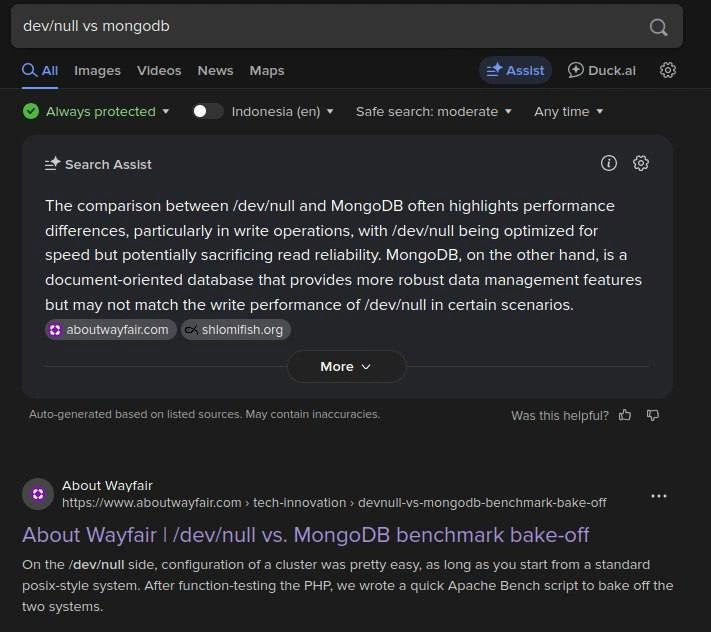
A six-panel meme using characters from SpongeBob SquarePants to illustrate a classic developer debate. In the first panel, Patrick Star confidently states, 'I prefer schema-less DBs.' In the second, a skeptical Squidward Tentacles asks, 'What does schema-less mean?'. The third panel shows SpongeBob SquarePants explaining to Squidward, 'It means he just starts coding without planning his data models,' to which Patrick defensively retorts in the fourth panel, 'I DO NOT.' The fifth panel shows Squidward losing his temper and yelling about the benefits of relational databases: 'Enforceable data types! Data Integrity!'. The final panel captures the climax, with SpongeBob screaming at Patrick, 'SPOT IT PATRICK YOU'RE SCARING HIM.' The humor stems from personifying the ideological clash between database philosophies. It satirizes the stereotype that developers favoring NoSQL databases (schema-less) are undisciplined and avoid rigorous planning, while proponents of SQL databases are zealous about structure and data integrity. The meme is deeply relatable to experienced engineers who have witnessed or participated in these passionate, often over-the-top, technical arguments
Comments

9
Anonymous ★ Top Pick Some developers prefer schema-less because it's like dynamic typing for your data - you can figure out what it is in production, during a full-table scan, while the CEO is watching the dashboard
  1. Anonymous ★ Top Pick

    Some developers prefer schema-less because it's like dynamic typing for your data - you can figure out what it is in production, during a full-table scan, while the CEO is watching the dashboard

  2. Anonymous

    Schema-less: because why model upfront when you can let SELECT DISTINCT JSON_KEYS(payload) in prod be your data architect?

  3. Anonymous

    The real horror isn't schema-less databases - it's explaining to the CTO why the production data from 2019 has seventeen different representations of 'user_id' including strings, numbers, and one inexplicable boolean that someone swears made sense at the time

  4. Anonymous

    The real horror isn't choosing a schema-less database - it's realizing six months into production that your 'flexible' data model now has 47 different representations of a user's birthdate, half your boolean fields contain the string 'yes', and your 'optional' foreign keys have created an untraceable web of orphaned records that would make a graph database weep

  5. Anonymous

    Schemaless DBs: because nothing screams 'enterprise scale' like runtime type guesses and migration marathons

  6. Anonymous

    Schema-less is just schema-later: either you pay with DDL and migrations or with 18 microservices, data-shape drift, and a 3am postmortem titled 'Why NULL is a valid enum'

  7. Anonymous

    “Schema-less” is just a schema you haven’t written down yet - now it lives in 12 microservices, three ETL pipelines, and a Slack thread titled “why did user.email become an array?”

  8. @lexore 4y

    spot it?

    1. @Vo_6V 4y

      Maybe stop it?

Use J and K for navigation