Skip to content
DevMeme
2938 of 7435
Remote Work: It Was Never Temporary, Was It?
RemoteWork Post #3245, on Jun 14, 2021 in TG

Remote Work: It Was Never Temporary, Was It?

Why is this RemoteWork meme funny?

Level 1: Staying Home Forever

Imagine your school had to close for a while (let’s say during a big storm or a time when everyone had to stay home) and you started doing all your classes on a computer from your house. You find out that you love this way of doing school: you don’t have to wake up super early, no long bus ride, and you can even wear your comfy pajamas while learning. Now, your teacher assumes this is only temporary. She smiles and says, “This is just until the storm passes, right?” You just grin silently because in your mind you’re thinking, “Actually, I wouldn’t mind if we never went back to the classroom.” When the teacher realizes you didn’t agree, she gets worried and asks, “...You will come back to school once everything is normal again, right?” It’s a funny, awkward moment. The teacher expected you’d return to the old way, but you’re secretly hoping to keep doing things the new way. That’s exactly what’s happening in this meme: the bosses expected developers to return to the office, but the developers were sitting there thinking, “Nope, we kind of want to stay home forever.”

Level 2: Pandemic Promises

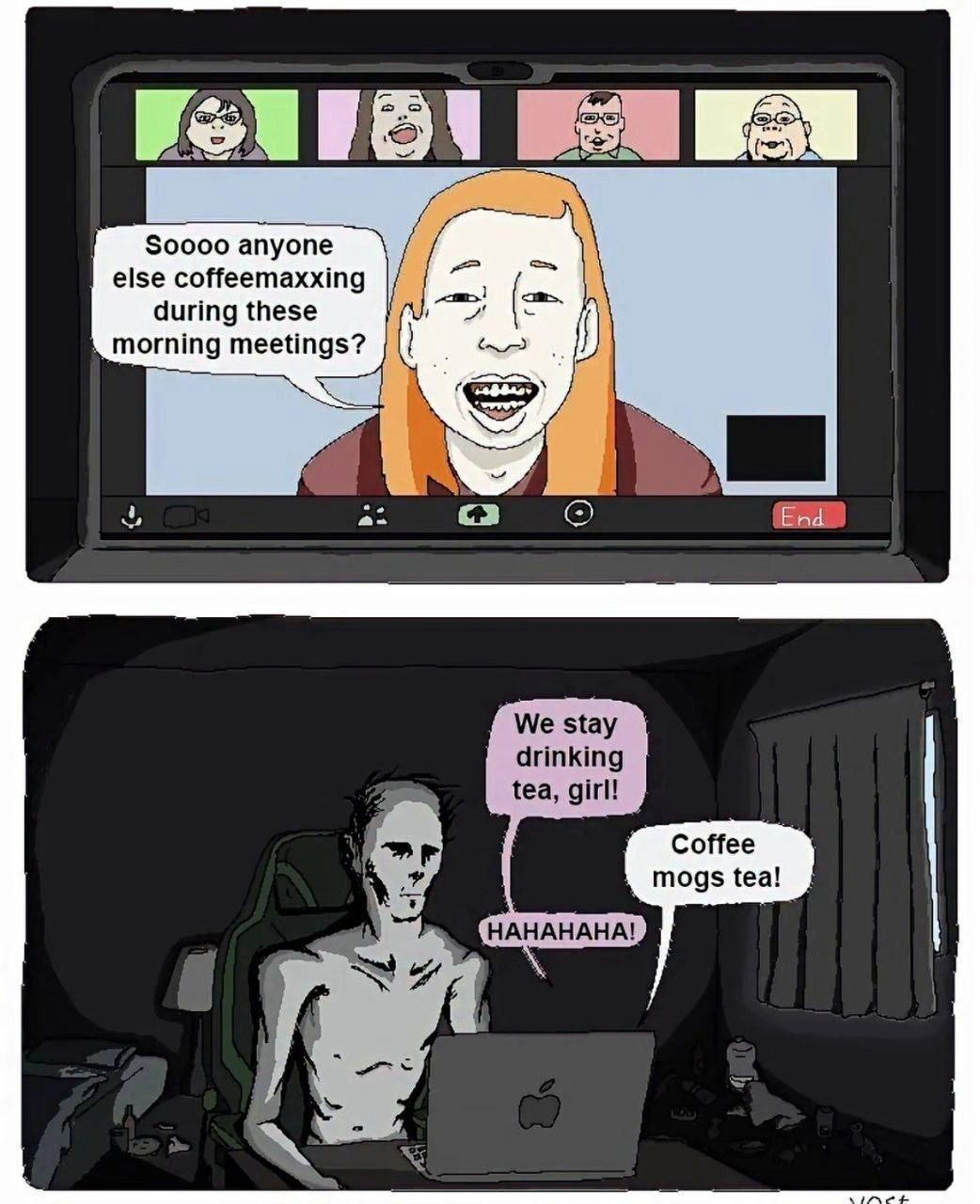
Think back to early 2020: a global pandemic hit, and suddenly offices everywhere closed. Developers (aka devs) who usually wrote code in open-plan offices found themselves working from their bedrooms and home offices. This is what we call remote work or WFH (Work From Home). Thanks to the internet, tools like Zoom (for video meetings) and Slack (for team chat), software teams kept right on building applications without stepping foot in a physical office. In the meme’s first panel, when it says “DEVS: We work remote now,” it reflects this reality – developers are proudly stating that they are working from home now, full-time.

The humor starts with the next panel’s caption: “Just until the pandemic is over, right?” This is Padmé (the manager or non-dev) responding. She assumes that working from home is only a temporary thing until the COVID-19 pandemic ends. This was a very common question in 2021: bosses and companies were asking, “You will come back to the office after all this, right?” In real life, many companies had plans for return_to_office after vaccines became available. They viewed the remote setup as a temporary solution during the crisis, often saying things like, “Once it's safe, we’ll all be back in the office again.” Padmé’s smiling question in the meme echoes that exact sentiment.

Now look at the third panel (Anakin’s face with no caption). Anakin (the dev) doesn’t answer Padmé’s question. He just smiles awkwardly. This silence is the punchline setup. It implies that, from the developers’ perspective, the remote work arrangement is not just until the pandemic is over – it might be permanent. The devs have gotten used to working from home and they’re not planning to return to the office if they can help it. But Padmé wasn’t expecting that at all.

In the final panel, Padmé looks concerned and asks again: “You’ll come back after, right…?” Now she realizes that the developer’s first statement meant he thinks remote work is the new normal. The manager character is basically saying, “Wait, you are going to come back to the office after all this is done, aren’t you?” with a worried face. This mirrors a real worry for managers: what if their employees never want to come back to the office?

To put it simply, the meme is about a misunderstanding between developers and management regarding remote work. Devs experienced the convenience of working remotely (no commute, working in comfy clothes, flexible hours). They often found they could concentrate better without the typical office distractions. For example, instead of spending an hour driving to work and another hour driving home, a developer could use that time to write more code or have more personal time. Many developers started thinking, "Hey, we’re getting our tasks done from home — do we ever really need to go back?" Some even moved to new cities or states since they weren’t tied to an office location anymore.

On the other hand, many managers and companies have a traditional view of CorporateCulture: they value having teams in the office together. They believe in-person collaboration is important for creativity and culture. It’s common for managers to worry that if people stay home, communication might suffer or team spirit will fade. So, during the pandemic, a lot of bosses reassured themselves that remote work was just a temporary arrangement. In their minds, as soon as COVID was under control, everyone would return to their desks, and things would go back to business as usual at the office.

The term “RTO” you might hear stands for Return To Office. Many companies in 2021 were announcing RTO plans – basically setting dates when employees must come back to the office either full-time or a few days a week. So when Padmé asks “Just until the pandemic is over?” and “You’ll come back after, right?”, she’s precisely talking about an RTO plan: she expects the devs to return on-site when the pandemic winds down.

The meme uses a popular Star Wars scene as its template (Anakin Skywalker and Padmé Amidala talking in a field, from Episode II: Attack of the Clones). In meme culture, this four-panel format is often used to joke about one person saying something, a second person questioning it, then an awkward silence, and finally the second person realizing something is very wrong. Here, the developer says “We work remote now,” the manager asks if it’s just temporary, then she realizes from his silence that he might never intend to return. It’s a funny way to capture that “uh-oh” moment.

So, the core of the joke is clear even without tech jargon: developers are treating remote work as permanent, while the manager was assuming it’s temporary. The manager’s hopeful smile turns into a worried frown when she figures out the devs might not come back to the office at all. This reflects a real post-pandemic work tension in many companies: employees who proved they can do their jobs from home want to keep that freedom, and employers (at least some of them) are anxious to get people back in person. The meme makes this serious workplace discussion into a light-hearted joke by showing it through a well-known movie scene and a simple misunderstanding between characters.

Level 3: Return of the Office

In this meme, the developer (Anakin in the Star Wars panel) confidently announces, “We work remote now.” It's a bold declaration born from the pandemic-era success of RemoteWork — after all, code was shipped and servers kept humming even with everyone at home. The humor ignites when Padmé (the manager figure) responds with a hopeful, “Just until the pandemic is over, right?” Her cheerful assumption that remote work is merely temporary sets up the punchline. In the third panel, Anakin’s smug grin fades into telling silence (no text needed) — an awkward pause that screams, “Actually, we meant this to be permanent.” By the final panel, Padmé’s smile has turned to alarm as she asks, “You’ll come back after, right…?” Now she realizes her CorporateCulture expectations might be totally off-base. The dramatic irony is delicious: we, the audience, know the devs have zero intention of returning to their cubicles, even as management is just starting to catch on.

For seasoned developers, this scenario hits close to home. Throughout 2020, engineering teams proved that RemoteWorkCulture could not only function but often thrive. Productivity didn't nosedive — in many cases, features were delivered faster without the daily office distractions. Developers set up multi-monitor home rigs, got used to deploying code in sweatpants, and even enjoyed a better work-life balance. It felt like a permanent paradigm shift. Meanwhile, many managers simply treated WFH as an emergency measure. They assumed that as soon as it was “safe”, everyone would snap back to the old WorkplaceReality of daily commutes, open-plan offices, and in-person meetings. This meme captures that disconnect perfectly. It’s essentially a snapshot of a return_to_office standoff: devs acting like remote is the new normal, and bosses clinging to the belief that it's temporary.

There's a lot of shared RelatablePain behind this humor. Picture countless Zoom meetings in early 2021 where higher-ups go, “when we return to the office…”, and all the devs just exchange knowing glances. Anakin’s silent, uncomfortable smile in panel 3? That’s every developer muting their mic to avoid saying, “Yeah… about that. We’re not coming back.” The truth is, by mid-2021, many devs had mentally (and even physically) moved on. Some relocated to cheaper cities or bigger houses since RemoteLife freed them from the high-rent districts near HQ. Others discovered they could be just as effective working from a quiet home office instead of a noisy open floor plan. They weren’t about to give all that up. So when Padmé/manager innocently asks if this is “just for the pandemic,” it’s funny because developers had long crossed the point of no return while management is only now realizing the rug has been pulled out from under their assumptions.

We can break down the viewpoint mismatch like this:

Developers’ Perspective Management’s Perspective
“We’ve proven we can ship code and handle releases entirely remote. Nothing crashed – if anything, we delivered more.” “Remote work was a necessary evil during the crisis. Surely everyone is itching to get back to real work at the office once things normalize.”
Enjoyed the flexibility: built home setups, avoided rush-hour traffic, even moved away from expensive tech hubs thanks to newfound location freedom. Worried about losing control and team cohesion: “If I can’t see my team, how do I know they’re working? How do we maintain our CorporateCulture if no one’s at the ping-pong table?”
Saw WFH (Work From Home) as the new normal. Daily commutes and the open-office chatter now felt like outdated nuisances for deep focus coding. Saw WFH as a temporary stopgap. Many execs believed remote arrangement was on borrowed time – tolerable for a while, but unsustainable long-term (despite evidence to the contrary).
Already made remote life permanent: some devs even declined offers that weren’t remote-friendly. “We work remote now” wasn’t a request, it was a statement of fact. Assumed that once health concerns eased, everyone would naturally flock back. Planned RTO mandates quietly, expecting little pushback – until they realized half the team might quit instead.

The clash highlighted in this meme was playing out in real companies. Tech giants began announcing hybrid schedules or full return_to_office dates around mid-2021, only to face resistance. There were internal surveys and all-hands meetings where management was stunned that a majority of engineers preferred to stay remote or at least hybrid indefinitely. Some companies (like Twitter) embraced permanent remote options early, but others were hesitant. The meme reflects that “Uh-oh” moment for a manager: when they realize their top talent might not actually return to their desks on command. It’s both funny and a bit dark – the Padmé character’s mounting worry mirrors bosses everywhere scrambling to figure out if they’re about to have a wave of resignations because they assumed “you’ll come back, right?”

Historically, the irony runs even deeper. Remote work isn’t a brand-new concept; developers have begged for it for years. But old-school attitudes died hard. Remember when Yahoo banned remote work in 2013, or when IBM (a pioneer of telecommuting) suddenly called everyone back to co-locate in 2017? Back then, management claimed that serendipitous hallway conversations and co-located teams were essential for innovation. Fast forward to 2020: those same companies had to embrace remote work, and – surprise! – the code still got written and the products still shipped. The battle-scarred developer in me can’t help but smirk. All those pre-pandemic excuses about why “it just wouldn’t work” got vaporized. Yet here we are in 2021, with some executives still in denial, trying to restore the status quo.

Not only is the content relatable, the format itself amplifies the joke. The image is the famous Anakin-Padmé four-panel meme template from Star Wars: Episode II – Attack of the Clones. It’s a staple of DeveloperMemes culture for highlighting awkward realizations. In the original film scene, Padmé asks Anakin a question, he nervously smiles without answering, and she grows concerned – perfect for situations where someone’s assumption is about to be proven very wrong. Tech folks love a good Star Wars reference (we’re all a bit nerdy that way), so this format is prime DeveloperHumor material. By using a Star Wars meme about a fundamental remote_vs_office disagreement, it blends pop culture and workplace reality into an instantly understandable joke. It's an example of WorkplaceHumor that engineers share in Slack channels to vent their frustration with a laugh.

Ultimately, this meme resonates on multiple levels: it’s poking fun at bosses who still think “WFH is just a phase,” and it’s validating developers who are thinking, “Nope, this is permanent now.” The laughter comes with a knowing sigh – we’ve seen this disconnect before. As a battle-scarred dev might say, “Here we go again, management living in a different reality.” When Padmé anxiously asks “You’ll come back after, right?” and we know the answer is a resounding “No,” it hits that bittersweet comedic note. It’s funny because it’s true: remote work opened Pandora’s box, and many devs have no intention of closing it just because the pandemic is winding down.

Description

A four-panel meme using the 'Anakin and Padmé' or 'For the Better, Right?' format from Star Wars to comment on the shift to remote work in the tech industry. In the first panel, Anakin Skywalker, labeled 'DEVS,' states, 'WE WORK REMOTE NOW.' In the second panel, a smiling Padmé Amidala asks hopefully, 'JUST FOR THE PANDEMIC, RIGHT?'. The third panel shows Anakin staring forward with a deadpan, ominous expression, offering no answer. In the final panel, Padmé's smile has vanished, replaced with a look of dawning horror and concern as she asks, 'YOU'LL COME BACK AFTER, RIGHT?'. The humor captures the significant disconnect between corporate expectations and developer desires regarding remote work. While many companies initially viewed remote work as a temporary pandemic measure, developers largely embraced it as a permanent and preferable mode of operation, a sentiment humorously conveyed by Anakin's silent, unyielding stare
Comments

7
Anonymous ★ Top Pick Management thought 'temporary remote work' was a feature branch. For developers, it was a direct commit and force-push to main
  1. Anonymous ★ Top Pick

    Management thought 'temporary remote work' was a feature branch. For developers, it was a direct commit and force-push to main

  2. Anonymous

    Leadership keeps asking when we'll toggle remote off - sorry, that was a one-way schema migration; the office table was dropped with CASCADE

  3. Anonymous

    The real phantom menace was the office lease agreements signed before 2020 - now every quarterly all-hands is just management trying to justify why that Death Star-sized headquarters isn't just an expensive Slack channel with parking spots

  4. Anonymous

    The great remote work bait-and-switch of 2020-2023: companies discovered developers could ship features from anywhere, then spent three years trying to un-discover it. Turns out the real technical debt was the office leases we signed along the way - and now management wants to amortize that cost over your commute time

  5. Anonymous

    RTO mandates: the ultimate legacy system - even COBOL devs won't maintain that monolith

  6. Anonymous

    Devs: We work remote now. Execs: Just until RTO, right? Devs: Recovery Time Objective or Return To Office - because only one reduces downtime

  7. Anonymous

    RTO was pitched as “more collaboration bandwidth,” but all I see is a daily 120‑minute blocking I/O and a higher interrupt rate - throughput unchanged, badge-scan metrics up and to the right

Use J and K for navigation