Skip to content
DevMeme
5611 of 7435
The Rational Fear of the Quantum Crypto-Apocalypse
Cryptography Post #6156, on Aug 14, 2024 in TG

The Rational Fear of the Quantum Crypto-Apocalypse

Why is this Cryptography meme funny?

Level 1: Monsters Under the Bed

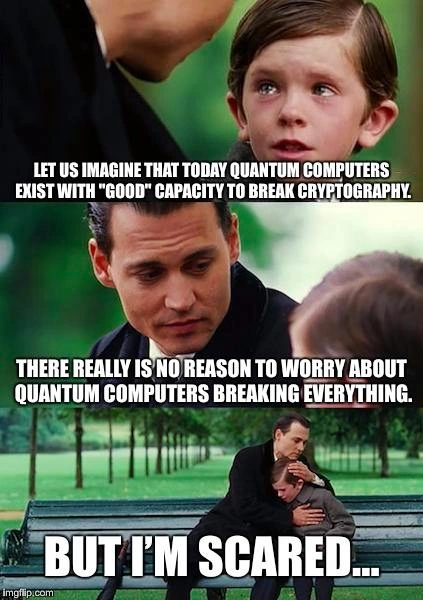
Imagine a little kid who just heard a spooky story about a monster under the bed that could come out at night. He’s really scared 🌙👹. Now, his dad comes in, kneels down, and gently explains: “Look, I checked under the bed. There’s no monster. Monsters aren’t real, and even if they were, our doors are locked and I have a plan to keep us safe.” That’s reassuring, right? The kid listens and knows his dad is smart… but you know what? The kid is still scared of the dark room! He can’t help it – the idea of the monster just feels so frightening, even if logically he understands it’s not there. In the end, the dad gives him a big hug on a bench to comfort him, and the kid cries, “I’m still scared...”.

This meme is exactly like that, but with computers. The “monster” is a super-powerful future computer that could break all our secret codes (encryption). The “dad” or adult is an experienced developer telling the “child” (junior developer), “Don’t worry, that monster isn’t real today, and we have new locks and plans so it won’t hurt us in the future.” The child knows the adult is probably right, but he’s still afraid because the whole idea is spooky. It’s funny and cute because we see the caring adult trying to calm the kid, but the kid still just wants to cling and cry. In simple terms: sometimes a fear isn’t easy to get rid of, even when someone explains everything. The meme makes us smile because we’ve all been that kid with a wild imagination, and we’ve all needed a hug and some reassurance when we’re scared of something new and unknown.

Level 2: Quantum with Kid Gloves

Let’s break down the technical buzzwords in this meme in simpler terms, like how a senior developer might actually explain it to a junior colleague who’s new to these concepts. The topic here is quantum computing and why it matters for cryptography (encryption).

Quantum computers are a new kind of computer that work on completely different principles than the computers we use every day. A normal computer uses bits that are either 0 or 1. A quantum computer uses qubits, which can be 0, 1, or a mix of both at the same time (that mix is called superposition). Qubits can also be linked together through something called entanglement, which means their values can be correlated in spooky ways even if they’re far apart. What all this means is that a quantum computer can process a lot of possibilities simultaneously, in parallel, because of the qubits’ special physics. This doesn’t make it faster for everything, but for some problems, a quantum computer can be dramatically faster than a regular computer. One of those problems happens to be breaking certain encryption.

Now, encryption is like the lock-and-key system of the digital world. When you see the little padlock in your web browser (for HTTPS), or when you send an encrypted message, there’s math making sure that only someone with the right secret key can unlock (decrypt) the information. One very common encryption system is RSA, which is used in things like secure web browsing, VPNs, and many other places. RSA’s security is based on a simple-sounding but tough problem: if I give you a really huge number (hundreds of digits long) that is the product of two prime numbers, can you figure out what those two prime numbers were? For example, if I say the number is 15, you’d quickly tell me the primes were 3 and 5 (since 3×5=15). But if I give you a 617-digit number that is the product of two large primes, finding those primes is insanely hard for normal computers – essentially impossible within the lifetime of the universe using brute force trial. So, we use that as a “one-way street”: it’s easy to multiply primes to get the big number (that’s how we set an RSA key), but it’s extremely hard to do the reverse (factor the big number) without a special trick. That asymmetry is what keeps RSA-protected data safe; even if a hacker has your public key (the big number), they can’t derive your private key (the prime factors) from it if they don’t have an astronomical amount of computing power.

Enter the quantum computer and that special trick: Shor’s algorithm. Shor’s algorithm is a method that a quantum computer can use to factor those huge numbers much, much faster than a classical computer could. It’s not just a little faster – it changes the game from “impossible in practice” to “possible, if you have a big enough quantum computer.” The mere idea of Shor’s algorithm is what scares people: it implies that the core lock of RSA (the factoring problem) might not be secure forever. To be clear, as of now nobody has a quantum computer powerful enough to factor, say, a 2048-bit RSA key (common size) — the ones we have can maybe factor 21 = 3×7, or 91 = 7×13, trivial stuff. But the theoretical threat is there: if someone in the future builds a sufficiently powerful quantum computer, they could potentially unlock a lot of current encrypted data without the key, using Shor’s algorithm. That could break TLS (the protocol behind that padlock icon on websites), VPNs, encrypted emails, cryptocurrencies, you name it — basically anything relying on RSA or related “public key” cryptography would be vulnerable. This hypothetical future scenario is sometimes dramatically called the “quantum apocalypse” in tech media. No wonder a junior dev, hearing this for the first time, might gulp and go “Wait, everything will break?!” 😨

Now let’s look at the senior dev’s reassurance in that second panel: “There really is no reason to worry about quantum computers breaking everything.” Why would they say that? Because experts know a few comforting facts:

  • Timeline: Building a big quantum computer is really hard. The devices we have today are in laboratories, often needing extreme conditions (like near absolute zero temperatures) to keep the qubits stable. They also have a lot of errors (noise). It’s generally believed it will take years, likely decades, to scale quantum computers to the size and reliability needed to break something like RSA-2048. So, it’s not like next year all our encrypted messages will suddenly be readable. The junior dev in the meme might not realize how far away we are technologically from that sci-fi scenario. The senior dev is basically saying, “This is a distant concern, not an imminent one. We shouldn’t stay up at night thinking everything will break tomorrow.”

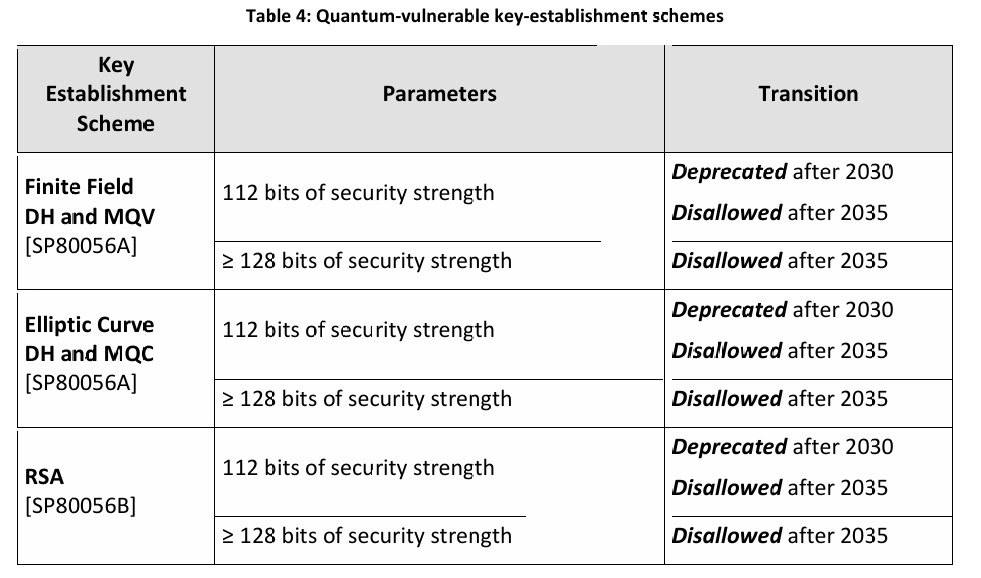
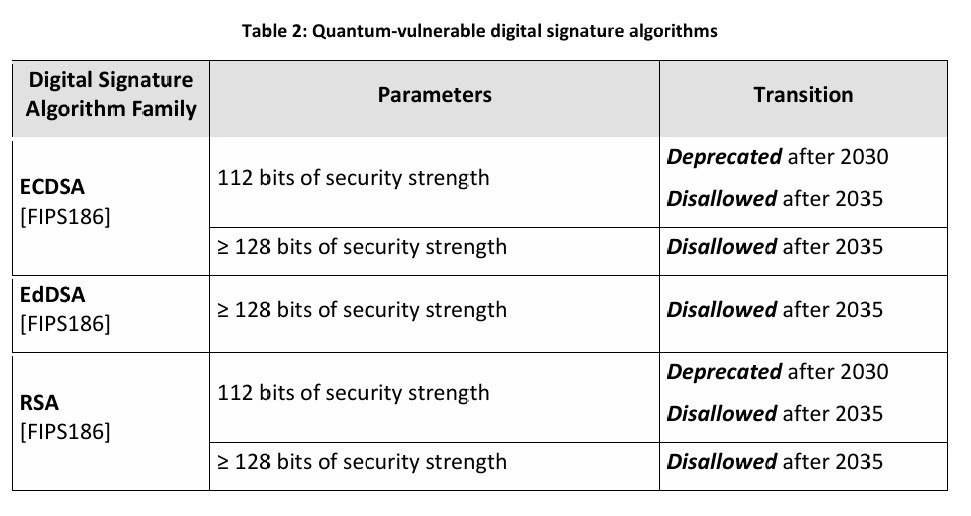
  • Post-quantum cryptography: This term, often shortened as PQC, refers to new encryption methods that are designed to be safe against quantum attacks. Think of it as inventing a new kind of lock that even those futuristic quantum “lock-picks” can’t crack. There’s been a global effort among mathematicians and cryptographers to develop and test these new locks. For example, one promising approach is based on lattice cryptography – without diving too deep, imagine a grid of points in a huge space; finding a specific point in that grid is hard for both normal and quantum computers. Algorithms like CRYSTALS-Kyber (a mouthful, I know) use lattice problems and have been selected as likely replacements for RSA key exchange. Similarly, new digital signature algorithms (to replace things like the current RSA/ECDSA signatures) have been developed – some based on lattices (e.g., Dilithium algorithm) and even one based on hash functions (hash-based signatures) for extra safety. In the news snippet provided, NIST (a U.S. standards body) just announced the first batch of these standardized PQC algorithms in August 2024. That’s a big deal because it means the community has decided on some trustworthy options to implement. The senior dev in the meme is essentially telling the junior: “We’re not going to be caught off-guard. We have new algorithms ready to swap in. By the time quantum computers are a real threat, everyone will be using these new quantum-safe methods.” So, the internet won’t suddenly break — it’ll evolve, much like how we’ve upgraded protocols and encryption methods in the past (for instance, moving from older, weaker algorithms like SHA-1 to stronger ones like SHA-256, etc., when weaknesses were found).

  • Not all cryptography breaks: It’s worth noting, not every kind of encryption is devastated by quantum computing. Symmetric encryption (like AES, which locks data with a single secret key) and Hash functions (like SHA-256, used in password storage and blockchain) are also affected by quantum algorithms, but not as dramatically. Quantum computers offer a speed-up known as Grover’s algorithm which can cut down the effort needed to brute-force guess a key or find a hash preimage. But Grover’s algorithm only gives a quadratic speedup, not an exponential one. In simple terms, that means if you have a key of size N bits, instead of trying 2^N possibilities, a quantum attack would effectively need √(2^N) = 2^(N/2) tries. So to stay safe, we can just double our key lengths (e.g., going from 128-bit keys to 256-bit keys for AES) and we’re more or less fine. This is a manageable adjustment. The big worry was really about RSA/ECC because Shor’s algorithm is exponential speed-up – there’s no easy “just make the key bigger” fix, since no matter how big you make an RSA key, a sufficiently large quantum computer could crack it in polynomial time. That’s why replacing RSA/ECC entirely is the plan, rather than extending their key sizes. The senior dev likely explained this nuance: “Not everything is lost — your AES-256 encryption is still okay; we might bump it to AES-512 eventually, but that’s minor. It’s the public-key part we’re replacing.” By explaining that, they’re trying to show the junior that it’s a contained, solvable problem, not a total collapse of all security.

  • “Good capacity” caveat: The meme specifically phrases “quantum computers exist with ‘good’ capacity.” The senior dev might clarify that capacity here means enough qubits and low enough error rates to actually run those scary algorithms fully. We’re very far from that capacity. The junior might have thought any quantum computer = break encryption. Not true; only a really powerful one could. It’s like knowing that a bulldozer could tear down your house if it came, but currently you just have a toy RC tractor outside — it’s not capable of such destruction.

Given all this, the senior’s position is that panic isn’t warranted; preparation is. We calmly address the issue by developing new crypto and planning a migration, instead of freaking out. The junior dev, hearing all this, understands logically but still feels uneasy. That’s the comedic heart: the kid knows the adult is making sense, but can’t shake the scary mental image of quantum super-hackers.

To put it in relatable terms: imagine you just learned that in theory, someone might invent a master key that opens any lock in the world. An expert locksmith tells you, “Yes, but such a key would be incredibly hard to make, and locksmiths are already designing new locks that that key won’t work on. We’ll change your locks in time. Don’t worry.” You’d feel better, but you might still glance at your door at night and think, “What if someone, somehow, made that key already?” 😅 That’s basically what’s happening here with encryption. The post_quantum_cryptography is like the new locks, quantum computers are like the hypothetical master key.

Finally, note the meme’s imagery: it’s using a scene from Finding Neverland where an adult is comforting a child. In developer memes, it’s common to use children to represent junior devs or newbies (because they’re still learning, wide-eyed), and adults as senior devs (experienced, knowledgeable). The emotional faces amplify the point: the junior dev (the child actor in the image) looks worried and then starts crying, which mirrors that anxious feeling a new dev might have after hearing something scary about their field. The senior dev (Johnny Depp in the movie) is calm and protective, just like a mentor patiently explaining complex concepts and assuring that it will be okay. The text in the meme is in big bold letters to capture what each is effectively saying or thinking. It’s a humorous but affectionate portrayal of a teaching moment in tech: the expert is effectively saying, “I promise, it’s going to be alright. This is advanced stuff but under control,” and the junior is basically responding, “I hear you… but it still freaks me out!”

By explaining all this, hopefully any junior dev (or anyone new to these quantum and crypto concepts) can see why the meme is funny. It’s showing a real-world communication gap in an exaggerated way. The senior’s line about “no reason to worry” is true in context, but the junior’s fear isn’t completely absurd either — it’s just human nature to be scared when you first encounter the idea that something as foundational as encryption could have an Achilles’ heel. In reality, the best approach (and what many companies and governments are doing) is calmly preparing for a post-quantum world: testing new algorithms, planning gradual upgrades, and keeping an eye on quantum tech progress. So you can imagine our senior dev adding, with a smile, “Hey, by the time this becomes an issue, you’ll probably be a senior developer yourself, helping implement the new crypto. And we’ll likely be laughing at whatever new ‘scary tech’ the next generation is overreacting to!” 😄

Level 3: Don’t Panic (Quantum Edition)

In this meme’s second panel, our seasoned developer (looking every bit the calm mentor, Johnny Depp in a suit) gently tells the worried junior, “There really is no reason to worry about quantum computers breaking everything.” This is the classic senior perspective trying to inject rationality into hype-induced anxiety. Those of us in the Security and Cryptography field chuckle here because we’ve all been on one side or the other of this conversation. It’s a scene straight from the IT office drama: a junior engineer reads an alarming headline or hears a conference talk about “the quantum threat”, and suddenly imagines all of our encrypted data tumbling out in plain text. Meanwhile, the grizzled cryptographer or senior dev, who’s weathered countless tech panics before, has to talk them off the ledge. The Finding Neverland bench consolation scene (the source of these images) is a popular meme template precisely because it captures that dynamic: expert patience meets newbie panic. Here, the expert is essentially saying, “Yes, quantum computers could break RSA in theory, but not today and not all at once – we’ve got this under control.” It’s the tech equivalent of a doctor with a vaccine telling a patient not to fear a disease that hasn’t emerged yet.

The humor (tinged with empathy) comes from the third panel: despite the thorough, measured explanation, the kid clings to the expert and cries, “BUT I’M SCARED…” 😭. This exaggeration resonates with experienced devs because we recognize that feeling. How many times have we tried to reassure someone (or even ourselves) with facts and probabilities, only to find that emotion wins out? In the context of cyber security, fear is a frequent flyer. Security news often tends to be doom-and-gloom – whether it’s the latest critical vulnerability (Heartbleed! Log4Shell!), an exploit going wild, or yes, the impending “quantum apocalypse.” For a junior dev hearing about quantum computers for the first time, it does sound like a sci-fi horror story: “One day soon, some lab will turn on a computer and instantly all passwords, bank accounts, and secret messages in the world will be breakable.” It’s no wonder the poor “child” in the meme looks like he’s facing the boogeyman. Even the phrasing in the first panel – “quantum computers exist with ‘good’ capacity to break cryptography” – is deliberately sensational, as if saying: imagine the monster is real and hungry. Once that mental image is in place, a calm explanation about standardization and timelines can bounce right off a panicked mind. The kid’s tearful “But I’m scared…” is funny to us because it’s true: in tech, logic doesn’t always dispel fear on first pass. We smile because we either remember being that junior, or we’ve had to comfort that junior (or sometimes, a panicky non-technical manager who just skimmed an article on Wired about quantum hacking).

Let’s unpack why the expert’s argument should be convincing (and why it humorously isn’t). The senior dev likely enumerated a bunch of reassuring points (some of which we covered in Level 4):

  • “It’s not happening tomorrow” – Current quantum machines are far too weak; we’re not about to see someone post a git commit -m "All your RSA are belong to us" 😊. In fact, each time a quantum research milestone hits the news (like Google’s “quantum supremacy” experiment in 2019, or a new 100+ qubit chip), cryptographers quickly clarify that these feats are not about breaking encryption. They’re usually very specific demonstrations (e.g., “we made a quantum computer do a very esoteric math problem faster than a classical supercomputer”). Not factoring 2048-bit numbers in seconds! Yet headlines and social media often gloss over that nuance. A senior dev has the context: they remember the hype cycles. They might tell the junior: “I’ve seen FUD (Fear, Uncertainty, Doubt) come and go. Remember when everyone freaked out that AI would guess all our passwords? Or that time when some predicted classical computers would hit a wall and we’d have a ‘millennium bug’ style crypto collapse? Didn’t happen that way.” The phrase “Don’t Panic” (a la Hitchhiker’s Guide) is basically the senior’s motto.

  • “We have solutions ready (or nearly ready)” – The mention of new post_quantum_cryptography standards by NIST is a real-world anchor to this meme. In August 2024, NIST announced the first set of algorithms that will replace RSA/ECC in the coming years. The expert in the meme might literally be citing this: “See, even the government standards folks are on top of this. We’ve got quantum_readiness plans. By the time a malicious actor has a quantum computer that can run Shor’s algorithm on meaningful keys, all the major internet protocols – your TLS, VPNs, secure email, blockchain, etc. – will have been upgraded to use quantum-resistant algorithms. We’re already testing those in labs and some early adopters are implementing hybrid cryptography (both classical and PQC) just to be safe.” In other words, the adult is saying the world isn’t standing still, and that proactive defense is well underway. Seasoned devs find this part relatable because it’s a common pattern: When newbies worry about a known upcoming issue, often there’s a task force of grey-beards who started solving it ages ago. (It’s reminiscent of Y2K: lots of folks panicked in 1999, but professionals had started remediation in the early ’90s which is why planes didn’t fall out of the sky at midnight.)

  • “Focus on real risks” – Here’s something the senior is probably thinking (even if not saying aloud): “Kid, there are more immediate fires to worry about.” 🔥 In the security world, it’s darkly funny how people can obsess over exotic threats while neglecting basic hygiene. The senior might recall that their team hasn’t even enabled 2FA everywhere, or that there’s an ancient Apache server with known vulnerabilities unpatched – issues that attackers are exploiting today, not hypothetically in 15 years. Yet the junior is losing sleep over theoretical quantum hackers from the future. It’s a bit like someone refusing to cross the street for fear of a meteor strike, while casually juggling lit fireworks. Any experienced engineer has seen this mismatch of priorities. The meme exaggerates it: the kid is so scared of the quantum boogeyman that no amount of comforting can soothe him. The seasoned folks reading this meme knowingly roll their eyes (in a fond way): “Yep, been there – trying to convince someone to chill out about while they ignore the very real bug under their nose.” The line “There’s no reason to worry” from the expert is practically a mantra in IT when dealing with hype. But we also know that oftentimes saying “don’t panic” has the opposite effect on a panicked person (ever tried telling a panicked user “don’t worry, it’s just a false alarm” only to have them freak out more?). The meme nails that irony.

  • Emotional resonance and the mentorship role – Beyond the tech specifics, this meme gets a chuckle because of the gentle absurdity of the scene. Here’s this wise, suited adult, likely representing a cryptography PhD or principal engineer, using big words like “capacity,” “cryptography,” “quantum computers” to reassure, and the junior dev is literally depicted as a child who responds with a raw, childlike admission of fear. It’s an exaggeration, but it rings true in tone. Senior developers often do play the part of mentor/therapist, especially in areas like security which can sound scary. The bench-hug image from Finding Neverland underscores the almost parental vibe: the adult literally embracing the crying kid. In real life, you don’t typically hug your colleagues on a bench 🙃, but metaphorically, seniors do try to create a safe space for juniors to express concerns. The meme’s punchline “BUT I’M SCARED…” in giant letters is hilarious because it so bluntly states what people usually try to mask. Juniors might sit in a meeting nodding as the senior says “There’s no immediate danger,” but inside they’re still thinking “Holy crap, this sounds terrifying.” The meme just says it out loud, on a park bench for dramatic effect.

Even the choice of the Finding Neverland template is a wink to meme-aware developers. That movie scene is about using imagination and being comforted – which parallels nicely here. The dev community has repurposed it for all sorts of “experienced person comforts newbie” jokes. By using it for a crypto_anxiety_meme, the creator signals: this is a familiar situation, let’s laugh at ourselves. The natural green park setting and the earnest expressions make the final hysterical crying text all the more over-the-top. It’s basically a meme-ified version of: “I hear you... but I’m still freaking out!”

In summary, the senior perspective sees the quantum threat rationally: a serious but slow-burning issue that we’re handling with science, standards, and lots of testing. There’s a clear plan (migrate to PQC over the next decade or so) and no immediate catastrophe scheduled for tomorrow morning. But the meme humorously acknowledges a truth every tech veteran knows: calm facts don’t always quell scary imaginaries. Humans are emotional creatures, and fear of the unknown – especially something as cloak-and-dagger as “quantum codebreakers” – can linger. Those final tears on the bench encapsulate the shared laugh: yes, we know everything’s probably fine, and yet some tiny part of us might still whisper "but... what if?". The community laughs together at that dissonance. In the end, the post’s message (highlighting NIST’s new standards) and the meme combine to say: “We’ve got new locks for the future, but it’s okay if you’re still a bit spooked – that’s normal.” Just as the adult holds the child, the experienced dev in all of us wants to pat our inner junior on the back and say it’ll be alright, even as we double-check our encryption libraries… you know, just in case. 😉

Level 4: The Qubit Menace

At the cutting edge of Quantum Computing, there’s a theoretical showdown brewing between quantum algorithms and classical cryptography. The meme’s setup — “Imagine quantum computers exist with ‘good’ capacity to break cryptography” — alludes to the feared scenario where a sufficiently advanced quantum machine runs Shor’s algorithm at scale. Shor’s algorithm, discovered by Peter Shor in 1994, is a quantum method that can factor large integers exponentially faster than any known classical algorithm. Since the security of RSA (and other public-key systems like ECC, which underpins things like TLS handshakes) relies on the fact that factoring huge numbers or solving discrete log problems is practically impossible for classical computers, Shor’s breakthrough was a bombshell. In theory, a powerful enough quantum computer could find the prime factors of a 2048-bit RSA key in mere hours or minutes, a task that would take even a massive classical supercomputer longer than the age of the universe. This is the “quantum nightmare” the junior dev in the meme has heard about – the idea that Encryption as we know it (from your HTTPS connections to your VPN and Bitcoin keys) could suddenly become toast once someone builds a big quantum machine. 🧨🔑

However, here’s the reality check the senior dev is trying to convey: building a Shor’s-algorithm-level machine is extraordinarily difficult. Quantum computers aren’t like supercharged classical CPUs; they’re almost alien technology. They use quantum bits (qubits) which can exist in superposition (a blend of 0 and 1 at the same time) and become entangled (linked in spooky ways Einstein dubbed “spooky action at a distance”). These properties let quantum machines explore many possibilities in parallel, enabling algorithms like Shor’s to effectively find patterns (like the periodicity in a modular arithmetic function) that reveal factors. But this parallel magic comes at a cost: qubits are incredibly fragile. Tiny vibrations or temperature fluctuations can collapse their state (a problem called decoherence). To factor a 2048-bit number, estimates suggest we’d need on the order of thousands of high-quality logical qubits operating in concert – and due to error-correction overhead, that might mean millions of physical qubits. Today’s quantum prototypes (as of 2024) boast maybe 50-100 noisy qubits (IBM recently demonstrated a 127-qubit device), and those can barely maintain coherence for fractions of a second. Running Shor’s algorithm on a number like RSA-2048 would require a quantum computer many orders of magnitude more powerful than anything currently existing. It’s as if we have the blueprint for a teleportation machine (Shor’s algorithm), but we’re stuck building a bicycle (today’s quantum processors). 🚲✨ The laws of physics haven’t said “no” – but engineering and scaling such a device is an epic moonshot, requiring breakthroughs in qubit error correction, stability, and architecture.

Crucially, the Cryptography world has not been idly twiddling its thumbs in fear of this quantum menace; it’s been proactively preparing defenses – this is known as post-quantum cryptography (PQC). Post-quantum algorithms are new encryption and signature schemes designed so that even a quantum computer (as far as we know) can’t easily crack them. They rely on math problems outside the reach of known quantum algorithms – for example, the hardness of finding short vectors in lattices, solving certain multivariate polynomial equations, or decoding random linear codes. Unlike RSA’s factoring problem or ECC’s discrete log, these problems don’t have a Shor’s-style solution on a quantum machine. Over the past few years, there has been a global project (led by organizations like NIST) to standardize these next-gen algorithms. In fact, NIST just finalized its first set of post-quantum standards (including lattice-based encryption like CRYSTALS-Kyber and signatures like Dilithium and a stateless hash-based scheme) in 2024. This means the industry now has vetted replacements for RSA and ECC ready to deploy in the coming years. In essence, the experts are saying: “Yes, one day quantum computers will be big enough to threaten current cryptography, but by the time that happens, we’ll have long switched to new quantum-resistant keys and protocols.” It’s a race, but a slow and methodical one – and so far, the cryptographers are confidently ahead.

So, from a pure technical perspective, there truly is “no reason to worry about quantum computers breaking everything” overnight. The fundamental math and physics are understood: Shor’s algorithm is real but demands unreal hardware; Grover’s algorithm (another quantum algorithm) can speed up brute-force searches, but it only quadratically weakens symmetric crypto (meaning we can double key sizes like moving AES-128 to AES-256 to counter it). All of the critical algorithms we use today have quantum-proof replacements on the horizon. The adult in the meme is basically channeling this rational stance: we know what the threat is, we know its limits, and we know how to neutralize it before it materializes. The humor is that despite this solid scientific reassurance, the child (junior dev) is still wide-eyed with existential dread. And that, as we’ll see, is a very human reaction in tech – where knowing the theory doesn’t always erase the fear of the unknown.

Description

A three-panel meme using scenes from the movie 'Finding Neverland' to express anxiety about quantum computing. In the first panel, a man (Johnny Depp) tells a young boy, "LET US IMAGINE THAT TODAY QUANTUM COMPUTERS EXIST WITH 'GOOD' CAPACITY TO BREAK CRYPTOGRAPHY." In the second panel, the man's face is shown in a concerned close-up, with the text, "THERE REALLY IS NO REASON TO WORRY ABOUT QUANTUM COMPUTERS BREAKING EVERYTHING." The final panel shows the man comforting the crying boy on a park bench, admitting, "BUT I'M SCARED...". This meme humorously captures the cognitive dissonance felt by many in the tech industry. While rationally acknowledging the development and rollout of Post-Quantum Cryptography (PQC) standards, like those recently announced by NIST, the existential threat that quantum computers pose to current encryption standards (RSA, ECC) is a source of deep-seated anxiety. The meme personifies the internal struggle between the calm, professional understanding of the problem and the overwhelming fear of a potential 'crypto-apocalypse' and the monumental migration effort required to prevent it

Comments

22
Anonymous ★ Top Pick We're all calm about the quantum threat until we remember the multi-year global effort it took just to get people to stop using TLS 1.0. Now, do that for every cryptographic primitive on the planet
  1. Anonymous ★ Top Pick

    We're all calm about the quantum threat until we remember the multi-year global effort it took just to get people to stop using TLS 1.0. Now, do that for every cryptographic primitive on the planet

  2. Anonymous

    Shor’s algorithm cracking RSA is theoretical; convincing the CFO we need new HSMs because ML-KEM keys don’t fit in the 2009 firmware - that’s the quantum threat keeping me up tonight

  3. Anonymous

    The real quantum entanglement is between our current PKI infrastructure and the sunk cost fallacy - we know migration to post-quantum algorithms will be painful, but we're superpositioned between 'it's too early' and 'it's too late' until the first RSA-2048 key collapses

  4. Anonymous

    The real quantum superposition is security engineers simultaneously believing 'quantum computers are decades away' and 'we need to migrate all our cryptographic infrastructure yesterday' - because nothing says 'I understand threat modeling' quite like losing sleep over Shor's algorithm while your production systems still accept MD5 certificates

  5. Anonymous

    Shor ruining RSA isn’t the scary part; it’s rotating every mTLS cert across 300 services while the HSM vendor calls PQC “Q4 roadmap.”

  6. Anonymous

    Quantum breaking RSA doesn’t scare me; turning on Kyber in TLS and watching MTU‑fragmented handshakes bounce off our 2013 load balancer does

  7. Anonymous

    Quantum threats to PKI: the one migration where 'zero-downtime' means accepting your certs are already superpositioned

  8. @Sp1cyP3pp3r 1y

    but can quantum computers run minecraft?

    1. @pulsar_sp 1y

      you should've said," but can they run at least anything except 7*3 == 21 at the moment?..")

      1. dev_meme 1y

        Yes, even publicly anounced one can do more than that for quite some time already

      2. dev_meme 1y

        I mean, 15 was in the begging of the century and 21 was in 2012?

        1. @pulsar_sp 1y

          yeah, my bad. what were the last numbers exactly?

      3. dev_meme 1y

        Probablt the best example would be IBM’s Eagle machine learning (but at least it was fair demonstration of tech)

    2. @SamsonovAnton 1y

      They certainly ⟨can|cannot⟩!

  9. dev_meme 1y

    ML-KEM (Kyber) - https://nvlpubs.nist.gov/nistpubs/fips/nist.fips.203.pdf ML-DSA (Dilithium) - https://nvlpubs.nist.gov/nistpubs/fips/nist.fips.204.pdf SLH-DSA (SPHINCS+) - https://nvlpubs.nist.gov/nistpubs/fips/nist.fips.205.pdf At the very end of each document there is short appendix section that outlines the changes from the "ipd" draft versions published last summer.

  10. @NickNirus 1y

    implement them now please

  11. @CcxCZ 1y

    Just use hybrid, like tinyssh/OpenSSH does.

  12. @anatoli26 1y

    At this moment probably for the general public post-quantum is not needed, but stuff like blockchains and some things that could still require privacy or provable authenticity even decades after, may really need post-quantum algos today

    1. @L2CacheGay 1y

      the point of post quantum is less about the threat of quantum computing directly and more about finding problems that are resistant to an easy solution to the discrete log problem being found

  13. @dsmagikswsa 1y

    Any TLDR? How post quantum encryption actually work?

  14. @SoutHora 1y

    Me, who came here to ask what's the name of the movie. So what's it?

    1. @Algoinde 1y

      Finding Neverland

Use J and K for navigation