Skip to content
DevMeme
5470 of 7435
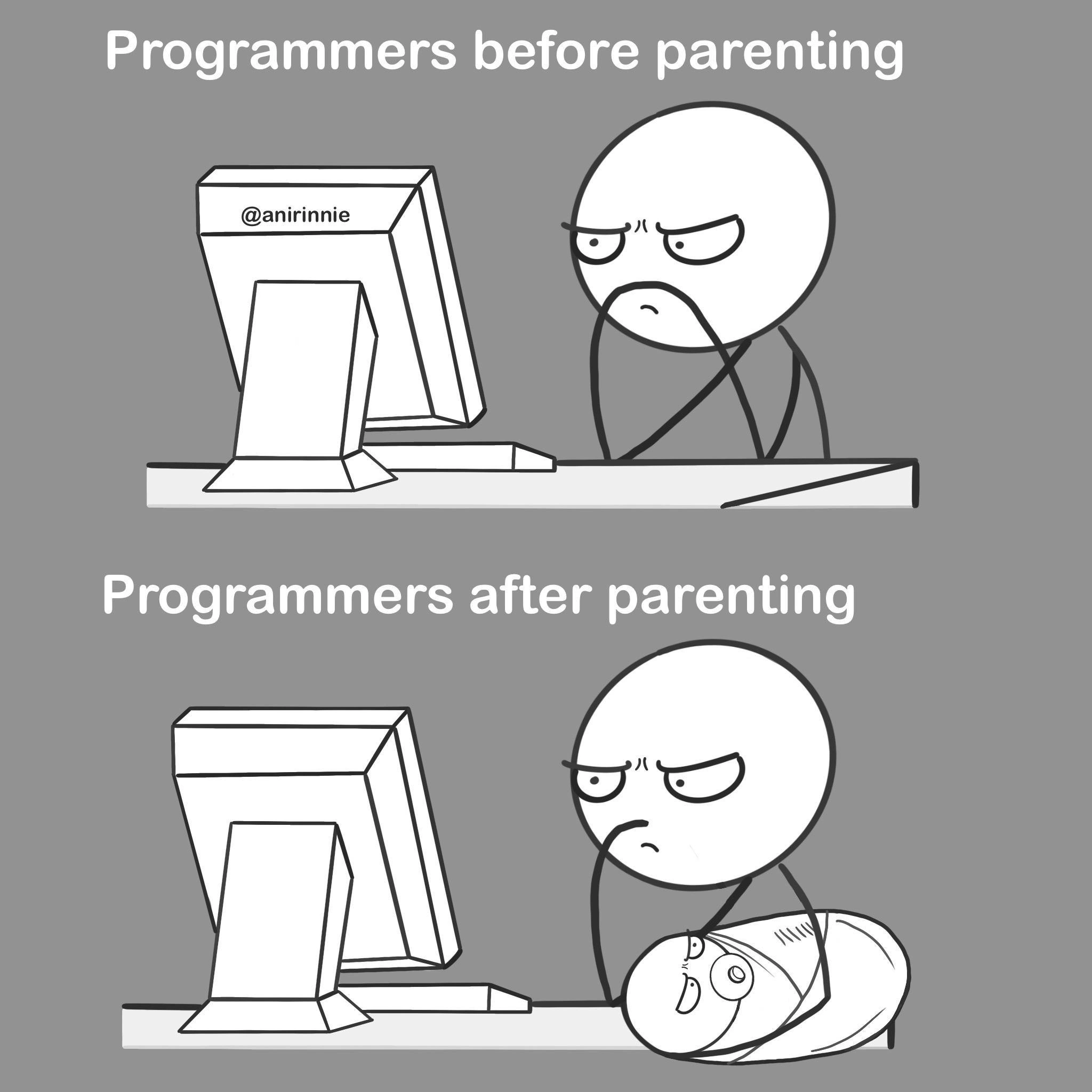
Programmer's Unwavering Focus, Now with a Junior Debugger
MentalHealth Post #5995, on May 12, 2024 in TG

Programmer's Unwavering Focus, Now with a Junior Debugger

Why is this MentalHealth meme funny?

Level 1: Juggling Act

Imagine you’re trying to do something important, like your homework, but you also have to hold your baby sister at the same time. You really want to focus on solving a tricky math problem, and you even have that super serious “I’m concentrating” look on your face. But in one arm, you’re gently rocking your baby sister to keep her from crying. It’s a bit like trying to juggle two things at once: your schoolwork and the baby. This meme is funny because the cartoon shows a person doing exactly that – working on a computer with total focus while cradling a baby. Normally, you’d think holding a baby would require all your attention (babies can be wiggly and loud!), so seeing someone act like nothing has changed is silly. It’s a playful way to show how life changes when you have a child. The person hasn’t lost their determination to work, but now they have to be a parent at the same time. We laugh because we know both jobs are hard by themselves, and doing them together is both impressive and a little ridiculous. In other words, the picture makes us smile and appreciate how moms and dads often have to multitask, turning even a normal work day into a bit of a balancing act with a baby in tow.

Level 2: One-Handed Debugging

Imagine the meme as a before-and-after snapshot of a developer’s life. In the “before parenting” panel, the programmer sits at their desk, both hands free on the keyboard, completely absorbed in coding. In the “after parenting” panel, the same programmer is still at the desk with that trademark coder concentration, but now there’s a baby in their arms. They’re literally typing with one hand while holding a newborn with the other! This visual gag highlights how life changes for a developer once they have a little one to care for.

Let’s break down the text: “focused coding sessions” refers to those times when a programmer can fully concentrate on writing code or building a feature without any interruptions. Many coders cherish these sessions when they can get “in the zone” or achieve a state of flow. On the other hand, “baby-holding debugging marathons” is a playful phrase blending software work with parenting duty. Debugging is the process of finding and fixing errors (bugs) in your code. A debugging marathon means a very long debugging session – the kind that can last hours because the bug is tricky or you keep getting sidetracked. Now add a baby into the mix: the developer might have to pause the debugging every few minutes to bounce a fussy infant or fetch a pacifier. It turns what could have been a one-hour bug fix into a drawn-out marathon, because you’re alternating between code and cradle. Essentially, the meme shows multitasking at an extreme: the developer is trying to squash software bugs while also tending to a squirming little “feature” in their arms.

For someone new to the tech world, it’s important to know that programming often requires intense focus. When you’re deep in a complex problem or debugging a stubborn issue, even a small interruption (like a phone notification or a knock on your door) can break your concentration. You then have to spend time remembering what you were doing before you can continue – that’s time lost due to what we call context switching. Context switching is just a fancy term for changing your focus from one task to another. In the “after parenting” scenario, the context is constantly flipping between “coding mode” and “parent mode.” It’s like trying to read a really interesting story, but every few minutes someone asks you a question – you can do it, but it’s much harder to keep track of what’s happening in the story. Similarly, the programmer in the meme can still code, but they have to restart their train of thought every time the baby needs attention. One-handed coding in the picture is not just a funny stunt; it symbolizes that only part of the developer’s attention (and literally one hand) can be given to the computer, because the other hand (and a big part of their mind) is busy making sure the baby is safe and happy.

This meme also touches on the idea of work–life balance in a very literal way. Work-life balance means managing your job duties and your personal life so that neither completely overwhelms the other. Here, work and life aren’t just balanced, they’re practically merged – the programmer is doing their job and taking care of their child at the same time. It’s a relatable situation for many people who work from home or anyone trying to juggle responsibilities. It highlights a real challenge: how can you keep being productive at work when family needs (like a baby who doesn’t care about your Zoom meeting) pop up at any moment? There’s a nod to health and well-being in this joke too. New parents in any job often face sleep deprivation, which means not getting enough sleep (since babies wake up throughout the night). Now, imagine trying to solve a tough coding problem after you’ve been up three times the night before — your brain would feel pretty foggy! If you try to push through that day after day without rest, you could start feeling burned out. Burnout is what we call it when someone becomes extremely tired, frustrated, or ineffective because of long-term stress and overwork. It’s a big concern in the tech industry, and part of the reason people in tech talk about taking care of your mental health. Seasoned developers will often share work-life balance tips (for example, “take regular breaks,” “don’t deploy code at 4 AM,” or “let someone else hold the baby sometimes!”) to help newcomers avoid these pitfalls. No piece of code is worth grinding yourself to exhaustion.

In summary, the meme is funny because it’s true to life: it shows a dedicated programmer trying to do two big jobs at once. The “before” picture could be any coder laser-focused on a project, and the “after” picture is that same determined soul, but now with a baby hanging on them – literally a parent programmer’s reality. Even if you’re not a parent, you can chuckle at the exaggeration of someone debugging code with a baby in one arm. And if you are a parent (or have ever tried babysitting while doing homework), you’ll recognize the almost-superhero effort it takes to concentrate on anything with a little human in your care. The meme gives a lighthearted nod to all those coding moms and dads doing baby_on_lap_coding and making it work. It reminds us that behind many software projects, there’s also a mom or dad expertly juggling bugs and babies as part of their daily routine.

Level 3: Interrupt-Driven Development

This meme humorously splits a developer’s life into two phases: before parenting and after parenting. In the top panel, a programmer is scowling in deep concentration at a CRT monitor (cheekily labeled @anirinnie – likely the artist’s signature) with full focus on code. In the bottom panel, that same determined programmer is still glued to the screen, but now they’re cradling a swaddled baby in one arm while typing with the other. The punchline? The expression on their face hasn’t changed one bit – the coder’s intensity remains, despite literally carrying extra weight (a baby!) on the job.

For veteran developers, this scenario hits close to home and evokes an immediate knowing chuckle. It’s highlighting the shift from the myth of endless, focused coding sessions to the reality of interrupt-driven development once you have kids. In operating system terms, parenting turns your life into a high-priority interrupt system. Think about a CPU handling a critical hardware interrupt: the processor halts its current task, deals with the urgent event, then resumes where it left off. Similarly, a programmer-parent might be in the middle of debugging a hairy race condition or crafting a complex algorithm when – WAAH! – a baby’s cry instantly preempts their “process.” The code is put on hold for an impromptu production issue in the form of a diaper change or a pacifier rescue. Only after that urgent “interrupt service routine” (soothing the baby) can they context-switch back to the code. It’s a real-life example of preemptive multitasking, except the scheduler is a newborn with zero chill about your sprint deadlines.

This comic resonates with those in the tech community because it’s a truth often glossed over by idealistic developer productivity charts and sprint plans. Before parenting, many in tech enjoy what’s called deep work – long, uninterrupted stretches of coding where you can hold a whole system in your head. You might have pulled caffeine-fueled all-nighters, fully immersing in code with a single-minded focus. But after a baby arrives, uninterrupted time becomes the scarcest resource. The meme’s second panel visualizes the extreme multitasking many programmer_parenting veterans end up mastering: writing while loops with one hand while literally rocking a cradle with the other. It’s a comical and admirable adaptation. The developer’s fierce concentration suggests that despite exhaustion and sleep deprivation, they’re determined to solve that bug. (Perhaps it’s not the first time they’ve debugged something at 3 AM, but now the 3 AM alarms come from a baby monitor instead of a pager!)

From an engineering management perspective, the meme underscores why metrics like sprint velocity or lines-of-code counts should be taken with empathy and context. A senior engineer who used to crush 10-hour coding marathons might see their output zigzag after becoming a parent – not because they’ve lost skill, but because they’re effectively running a background process (raising a tiny human) that has unpredictable I/O demands and frequent interrupts. The humor here also gently pokes at workplace culture: tech companies love to tout work-life balance tips, but graphs and velocity charts rarely account for a colicky baby or a daycare pickup in the middle of the day. This stick-figure dev’s unwavering glare hints at the internal dialogue of so many parent-developers: “Focus! You got this. Solve the null pointer before the baby wakes up again!” It’s funny because it’s true – coding often becomes a race between commits and cradle calls.

Historically, as the tech industry matures, more developers are experiencing this exact juggling act. The early days of startup culture glorified burning the midnight oil (pulling late-night coding sprints fueled by energy drinks and pizza). Many of those early-career devs are now senior engineers with families, and their perspective has shifted. Discussions about mental health in tech increasingly acknowledge that coders aren’t code-producing robots – they’re humans with lives, caretaking duties, and the occasional sleep-deprived haze. Ignoring those personal factors can lead to DeveloperBurnout, which is why more folks in tech talk openly about well-being and balance today. This meme captures that evolution perfectly: the “always-on, 10x developer” stereotype meets the reality of a baby that doesn’t care about GitHub commit streaks. The result is a piece of developer humor that doubles as candid commentary on work–life balance. It validates that you’re not alone if your day’s stand-up report includes both a completed code review and an epic baby spit-up incident. Seasoned devs will nod in recognition: surviving production outages at 3 AM was one thing, but nothing refactors your priorities (and your schedule) like welcoming a tiny new “junior developer” at home — one who demands a deploy (diaper change) every few hours.

In short, the meme uses a simple visual metaphor to acknowledge a complex truth: once you become a parent, coding is no longer a solo quest. It’s more like a co-op campaign where you and your baby share one keyboard – sometimes literally. The determination on the character’s face says it all: despite the chaos, they’re still a programmer at heart, clinging to that problem-solving mindset. That mix of unwavering focus and total exhaustion is peak developer lifestyle comedy. It highlights the resilience required to balance feature flags with feeding schedules, and reminds everyone in the community that behind many great commits is a story of work-life juggling that would put a circus act to shame.

Description

Two-panel comic strip in black and white on a grey background. The top panel is labeled "Programmers before parenting" and shows a stick figure with a serious, focused expression staring intently at a computer screen, chin resting on a propped-up hand. A watermark "@anirinnie" is visible on the monitor. The bottom panel, labeled "Programmers after parenting," depicts the exact same scene, but with the addition of a small baby lying on the programmer's arm, which is resting on the desk. The programmer's intense focus on the screen remains unchanged despite the new, adorable distraction. This meme humorously captures the reality of being a working parent in the tech industry. It highlights the challenge of maintaining "flow state" or deep concentration, which is crucial for complex problem-solving in software development, while simultaneously caring for a child. For experienced developers, it's a relatable take on the work-life integration struggle, where personal responsibilities physically intrude upon the mental space required for coding. The joke is that the intense focus is immutable, even when context-switching is forced upon them

Comments

10
Anonymous ★ Top Pick My commit messages went from "Refactor authentication service" to "Fix bug while baby naps" and now my main branch is just a series of "hotfix-while-feeding"
  1. Anonymous ★ Top Pick

    My commit messages went from "Refactor authentication service" to "Fix bug while baby naps" and now my main branch is just a series of "hotfix-while-feeding"

  2. Anonymous

    Before kids I obsessed over Kubernetes pod scheduling; after kids I am the scheduler - pre-empted every 20 minutes by a non-maskable interrupt that also expects a lullaby SLA

  3. Anonymous

    The real reason senior engineers push for better async/await patterns isn't performance optimization - it's because they need code that can gracefully handle interrupts every 3 minutes when their toddler discovers a new way to bypass child locks on the home office door

  4. Anonymous

    The real joke here is that experienced developers know the truth: having a kid doesn't change your workflow - it just adds another dependency that requires constant runtime monitoring, has unpredictable memory leaks, and forces you to master true asynchronous processing. The grumpy expression remains because you're still debugging production issues at 3 AM, except now you're also handling a different kind of critical alert that can't be silenced with a simple log filter

  5. Anonymous

    Parenting turns programming into hard real-time: same keyboard, new high-priority interrupts - sleep() is eventual consistency and GC now means diapers

  6. Anonymous

    Pre-parenting: single-threaded bliss. Post: preempted by a zero-latency, non-yieldable interrupt handler

  7. Anonymous

    Parenting upgraded my workflow from batch jobs to an interrupt‑driven system where the Infant Service Routine preempts every thread until the milk buffer refills

  8. @CcxCZ 2y

    Fairly sure non-parent made that. :-D

  9. @your_1st_father 2y

    Looks like their child is also thinking some programming problem

    1. @Agent1378 2y

      He/she should

Use J and K for navigation