Skip to content
DevMeme
5826 of 7435
PinePhone's Ingenious Workaround for Contactless Payments
Hardware Post #6383, on Nov 12, 2024 in TG

PinePhone's Ingenious Workaround for Contactless Payments

Why is this Hardware meme funny?

Level 1: Rubber Band to the Rescue

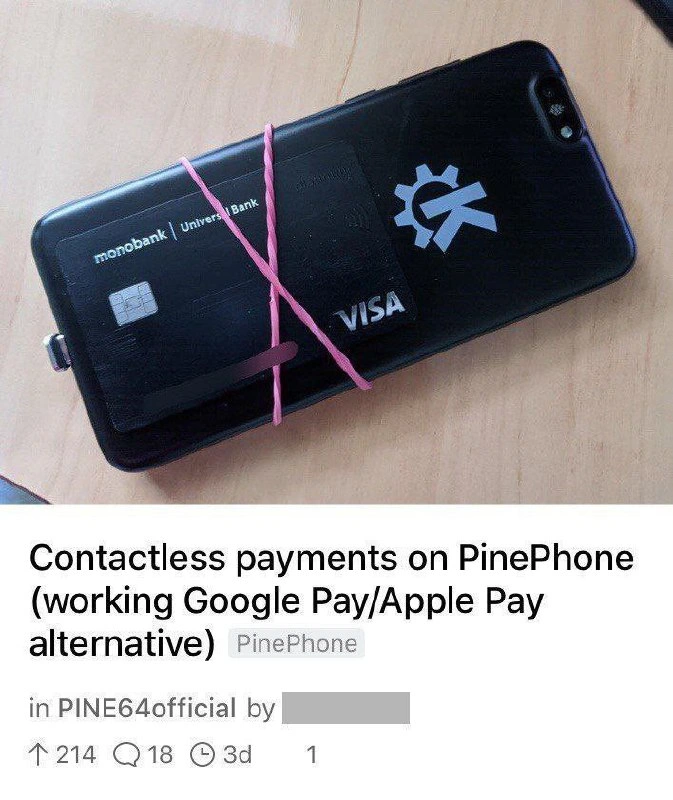
Imagine you have a toy phone that can’t do a fancy trick your real phone can do, like paying for candy at a store by tapping it. What this person did is kind of like magic with everyday things: since their special phone couldn’t do the pay-by-phone trick, they just took their credit card (the same card you’d normally tap) and tied it to the back of the phone with a rubber band. It’s like if your toy car didn’t have a horn, so you taped a little bell to it – now when you move the car, the bell rings! In this case, when they want to buy something, they just hold the phone (with the card piggybacking on it) near the store’s scanner. The store’s machine reads the real card and ta-da, payment done! It’s funny because instead of using a complicated app or technology, they solved the problem in a super simple, almost silly way. It shows how clever and resourceful people can be: when the phone itself couldn’t do the job, a rubber band and a bit of creativity saved the day. The phone and the card are literally working together – the phone carries the card, and the card does the paying. It might look a little goofy, but hey, it works and it makes people smile!

Level 2: DIY Mobile Wallet

Let’s break down what’s happening in this meme in simpler terms. We have a PinePhone, which is a special kind of smartphone created by Pine64 that runs Linux-based operating systems (instead of Android or iOS). Think of PinePhone as a tinkerers’ phone – it gives you a lot of freedom to modify and control things (it’s open source), but it doesn’t come with many of the usual apps or features that an Android or iPhone might have. One thing most modern phones have is the ability to do contactless payments – that’s when you can pay in a store by just tapping your phone on the card reader, using services like Google Pay or Apple Pay. Those services let you store your credit card information in your phone securely, and the phone uses its NFC (Near Field Communication) antenna to talk to the payment terminal, just like a contactless credit card would.

Now, the PinePhone doesn’t have Google Pay or Apple Pay (those are proprietary services and need Google’s or Apple’s systems). It may not even have the needed NFC hardware or the software support for it. So, a PinePhone user who wanted that tap-to-pay convenience had to get creative. In the photo, they literally took a physical VISA credit card (you can see the monobank | Universal Bank branding on it) and used a pink rubber band to strap it onto the back of the phone. The rubber band is wrapped in a diagonal cross shape (an “X”) to hold the card firmly. This way, whenever they need to pay for something, they can just grab their phone (which now has the card attached) and tap the card on the reader. In effect, the phone + card combo works as a DIY mobile wallet.

This is a classic workaround – a solution you come up with when the “proper” way isn’t available. It’s also a bit of a joke among tech folks: instead of figuring out how to make the PinePhone act like it has Google Pay (which could be very hard or impossible given the limitations), they did the simplest thing – just attach the actual credit card to the phone. It’s a hardware humor moment because it’s using a physical object to solve a tech problem. People in the PinePhone community found it funny and clever; it’s an example of a rubber band hack (using something as basic as a rubber band to fix or add functionality). The post calls it a “working Google Pay/Apple Pay alternative” – and indeed it is working, but not at all in the high-tech way one would expect! For a newcomer or junior dev, the takeaway is: the PinePhone user needed contactless payment ability, so they literally made their own physical mobile payment solution. No special app or coding, just a phone, a card, and one pink rubber band. It’s simple, it’s effective, and it’s pretty funny when you think about how high-tech the problem is versus how low-tech the solution turned out to be.

Level 3: Rubber Band Integration

To a seasoned developer, this meme nails the absurd practicality of a hardware hack solving a software limitation. The PinePhone is beloved by Linux enthusiasts for its open-source ethos, but that freedom comes with trade-offs – notably the lack of mainstream mobile-payment apps. No Google Pay, no Apple Pay, and likely no certified NFC payment module. So what’s the working Google Pay/Apple Pay alternative? Here, it’s literally strapping on the one thing that does have universal payment support: a contactless Visa card. The humor hits home because it’s a classic workaround taken to an extreme, yet it makes a kind of sense. Developers joke about “gluing on a solution,” and this is that in the most literal fashion. Why fight with proprietary APIs or MobileDev headaches if you can solve the problem outside the system entirely? It’s a bit of DeveloperHumor that underscores how we often jury-rig fixes when official support isn’t available. The photo in the meme shows a PinePhone with a pink rubber band in an X formation, firmly holding a monobank VISA card on the phone’s back – a visual punchline that the “contactless payments on PinePhone” are achieved by merging phone and card into one gadget. It’s reminiscent of a DIY solution MacGyver would devise – low-tech, but effective. Seasoned engineers recognize the subtext: integrating financial tech on an open platform is hard (banks demand tamper-proof hardware, certified OS environments, proprietary code – none of which the PinePhone has). The community’s response? Bodge it together with what you’ve got. It’s also a gentle poke at how closed the mobile payment ecosystem is. Want to be an alternative Google Pay on a Linux phone? Good luck – unless you do something crazy like this. The meme gained traction in the Pine64 community because it combines HardwareHacks with everyday convenience: this user found a cheeky way to carry their contactless_payments capability. They’ve basically made the phone itself into a wallet – or perhaps a phone-case-meets-money-clip. The inclusion of the PinePhone’s gear-shaped open-source sticker in the image drives it home: this is the hacker’s way, the open source hardware community’s spirit of improvisation. When the elegant solution isn’t available, the rubber_band_hack is the next best thing. It’s funny and relatable to any engineer who’s ever hacked together a quick fix with tape, zip-ties, or in this case, a rubber band – we’ve all been there, turning a clunky solution into a viable one because hey, it works!.

Level 4: Hardware Card Emulation

At the FinTech deep-dive, this meme embodies a bit of tongue-in-cheek engineering: a literal form of NFC integration by physically attaching a credit card to a phone. In typical mobile payments, a phone’s internal secure element or Host Card Emulation (HCE) allows it to mimic a contactless card. Systems like Apple Pay and Google Pay rely on cryptographic protocols (EMV standards) and tokenization: the phone’s NFC chip beams encrypted payment tokens, derived from your card details, to the store’s reader. But the PinePhone – a privacy-focused, open source phone – doesn’t come with those proprietary payment frameworks (and in some cases, not even an NFC radio). Instead of injecting complex code or grappling with closed APIs, this hacker went full stack hardware. By rubber-banding a real Visa card onto the PinePhone, they created a makeshift physical mobile wallet. It’s like implementing SecureElement.executePayment() in hardware rather than software: the actual Visa card’s chip (an embedded microcontroller following the EMV spec) handles the cryptography, and the card’s NFC antenna speaks directly to the terminal. This NFC workaround leverages fundamental physics – the card draws power and communicates via the point-of-sale’s electromagnetic field – achieving contactless payments on a device with no native support. In a way, it’s HardwareHumor meets ingenious engineering: a Rubber-Band HCE that humorously sidesteps the need for writing a single line of payment integration code, while still adhering to banking’s strict security protocols (courtesy of the card’s built-in crypto). The absurdity is delightful: rather than emulate a card in software, why not just strap the real secure element on there? After all, you can’t get more secure or more compatible than an actual bank-issued chip doing exactly what it was designed for – only now it’s along for the ride on the back of a Linux-powered phone.

Description

The image displays a screenshot of a Reddit post about the PinePhone. The main photo shows a black smartphone, identifiable by the Pine64 gear logo, lying on a wooden surface. A physical black VISA credit card from 'monobank / Universal Bank' is strapped to the back of the phone with two crisscrossing pink rubber bands. Below the photo is the Reddit post title: 'Contactless payments on PinePhone (working Google Pay/Apple Pay alternative)'. The humor is deeply sarcastic, presenting an absurdly low-tech, physical workaround as a sophisticated technological solution. PinePhones are Linux-based, open-source smartphones that typically lack the proprietary hardware and software support for established NFC payment systems like Google Pay or Apple Pay. The joke is that by physically attaching the card to the phone, one can tap the entire bundle on a reader, thus achieving a 'contactless payment' with the phone, which is a clever jab at the practical limitations that often accompany open-source hardware enthusiasm
Comments

15
Anonymous ★ Top Pick That's not a workaround, it's a hardware abstraction layer. The rubber bands are the API
  1. Anonymous ★ Top Pick

    That's not a workaround, it's a hardware abstraction layer. The rubber bands are the API

  2. Anonymous

    We couldn’t stomach the Google Pay SDK bloat, so we just bind-mounted a Visa to /dev/antenna with a rubber band - zero dependencies, 100 % FOSS, and the PCI auditor rage-quit

  3. Anonymous

    When your Linux phone's NFC driver is still in development but your coffee shop only takes contactless payments - sometimes the most elegant solution is two rubber bands and accepting that 'it works on my machine' has evolved into 'it works ON my machine.'

  4. Anonymous

    When your open-source mobile platform doesn't support proprietary payment APIs, you pivot to a more 'direct integration' approach. This is what we call 'hardware-accelerated payments' - zero latency, no SDK dependencies, and 100% backwards compatible with every POS terminal. The rubber band provides elastic scalability, and the implementation is so lightweight it literally adds zero bytes to your binary. Sure, Apple Pay uses Secure Element and tokenization, but this solution offers something they can't: the ability to remove your payment method and use it at an ATM. Sometimes the best API is no API at all

  5. Anonymous

    Contactless on PinePhone via RBAC - Rubber Band Assisted Contactless; zero drivers, vendor-neutral, and PCI loves that the OS never touches the card

  6. Anonymous

    Wallet parity on PinePhone achieved by relocating the EMV token to the chassis - zero SDKs, no vendor lock‑in, and the only incident runbook is “replace rubber band.”

  7. Anonymous

    HCE too locked-down? PinePhone devs deploy PCE: Physical Card Emulation via rubber bands

  8. @Deymos_s 1y

    PinePhone is cool thing.

  9. @Turok1234 1y

    Monobank mentioned 🦅🦅🦅🦅🦅🦅🦅🦅🦅🦅 WTF is a bank branch 🦅🦅🦅🦅🦅🦅🦅🦅🦅🦅

  10. 扇子 1y

    i would imagine a privacy-conscious pinephone user would only use cash

  11. @vladyslav_google 1y

    MONOBANK MENTIONED📢📢📢🦅🦅🦅🇺🇦🇺🇦🇺🇦

  12. @ephemeralin 1y

    Not funny ahaha 😅

  13. @slyveek 1y

    MONOBANK MENTIONED 🗣️🗣️🗣️🗣️🗣️🔥🔥🔥🔥🤑🤑🤑💲💲💲💵💰💰💰💰🏛️🏛️🏛️

  14. @the_doom_guy 1y

    THE BEST BANK MENTIONED 🇺🇦🇺🇦🇺🇦🇺🇦🇺🇦🇺🇦🇺🇦🇺🇦🇺🇦🇺🇦🇺🇦🇺🇦🇺🇦

  15. @lilfluffyears 1y

    I just put it in my case

Use J and K for navigation