
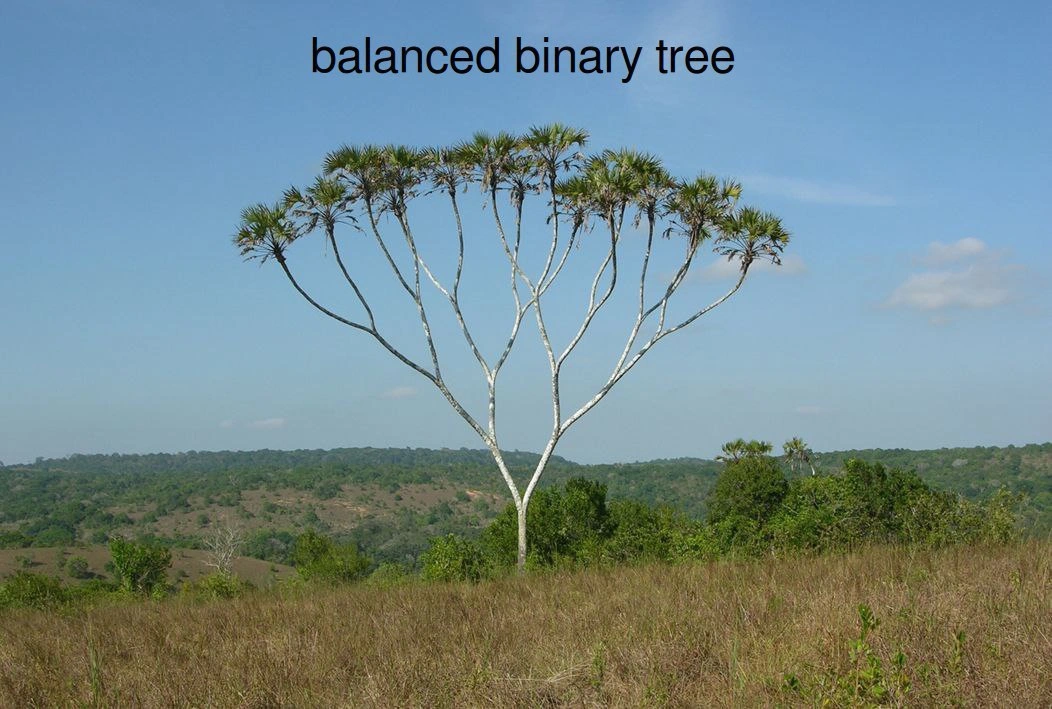
A Wild Balanced Binary Tree Appears
Description
A photograph of a real tree in a natural, open landscape, with a clear blue sky above and rolling green hills in the background. The tree itself is remarkable because its trunk and branches have grown in a way that perfectly mimics the structure of a balanced binary tree, a fundamental concept in computer science. The trunk splits into two main branches, which then fork repeatedly, maintaining a symmetrical and balanced structure all the way to the leafy crowns. Superimposed over the top of the image in a simple black font are the words 'balanced binary tree'. The humor is derived from the direct and literal visualization of an abstract data structure found in nature, a visual pun that resonates with anyone who has studied algorithms and data structures


Comments
7Comment deleted
I bet the lookup time on that thing is O(log n), but the write time is seasonal
Mother Nature mastered AVL rotations millennia ago - yet our Black-Friday insert path still degrades to O(n)
After 20 years of optimizing tree rotations and rebalancing algorithms, you realize nature's been running the same code in O(seasons) time complexity with zero memory leaks and self-healing properties - though their garbage collection only runs once a year in autumn
Finally found O(log n) search time in nature - though I suspect the rebalancing operations during storms might violate our SLA. Still waiting for the pull request to add red-black coloring to the leaves for better worst-case guarantees
If only our service topology rebalanced this gracefully - one more urgent leaf and our BST turns into a linked list with O(n) pager alerts, while nature quietly ships left‑right rotations in v1
An actual balanced binary tree - meanwhile our BST with monotonic IDs and TODO: rotations quietly degrades into a 300k‑node linked list
Unlike production BSTs after user data, this tree stays balanced without AVL rotations