Skip to content
DevMeme
6043 of 7435
Refusing to pay for an AI code editor subscription
IDEs Editors Post #6616, on Apr 2, 2025 in TG

Refusing to pay for an AI code editor subscription

Why is this IDEs Editors meme funny?

Level 1: Friends to the Rescue at Night

Imagine that late one night, something important broke at a big computer company – like their website or game stopped working for everyone. Most people are sleeping, but a special group of friends gets a call for help. Even though it’s 3 AM and very late, these friends all rush to their computers to fix the problem. It’s really hard work, kind of like firefighters putting out a fire, but instead they’re fixing computers and software. They work together in the middle of the night while everyone else is asleep. Finally, they manage to solve the problem and everything is working again. They’re super tired but also happy and proud that they saved the day (or really, the night!). So, what do they do? They take a selfie together, smiling. They joke that they’re just “hanging out with my friends” as if it was no big deal. It’s funny because usually people take group selfies when they’re having fun at a party or relaxing, but these friends took one after an all-night emergency! The picture shows how close and brave they are: they stuck together, helped each other, and fixed a big mess. In the end, they feel like heroes who can laugh about it, saying, “Yep, just chilling with my buddies,” even though they actually just battled a big problem while we were all sleeping. It’s a simple reminder that teamwork can make even a scary, late-night problem feel better – and even a little bit funny – once it’s over.

Level 2: Pager Storm Survivors

In this meme, we see a group of engineers who just went through a late-night tech emergency together. They are Site Reliability Engineers (SREs) – specialists in keeping websites and services running smoothly. When you see “SRE squad selfie right after the 3 AM pager storm quieted,” it means these folks were on on-call duty (being available at odd hours for emergencies) and had a really rough night. A “pager storm” refers to a flood of alerts or pages from their monitoring system (like PagerDuty, a popular alert service). Imagine your phone blowing up with dozens of urgent messages all at once – that’s a pager storm. It usually happens when a critical part of a system fails and triggers many error alarms across different services. These SREs all got notified around the same time (probably via loud phone alerts that no one wants to hear at 3:00 AM) and jumped online to tackle a major production incident. “Production” is the live environment where real users are affected, so any problem there is high priority. ProductionIncidents are often jokingly called “fires”, and fixing them under pressure is known as ProductionFirefighting. These people literally had to become “firefighters” for the company’s software, just in the middle of the night.

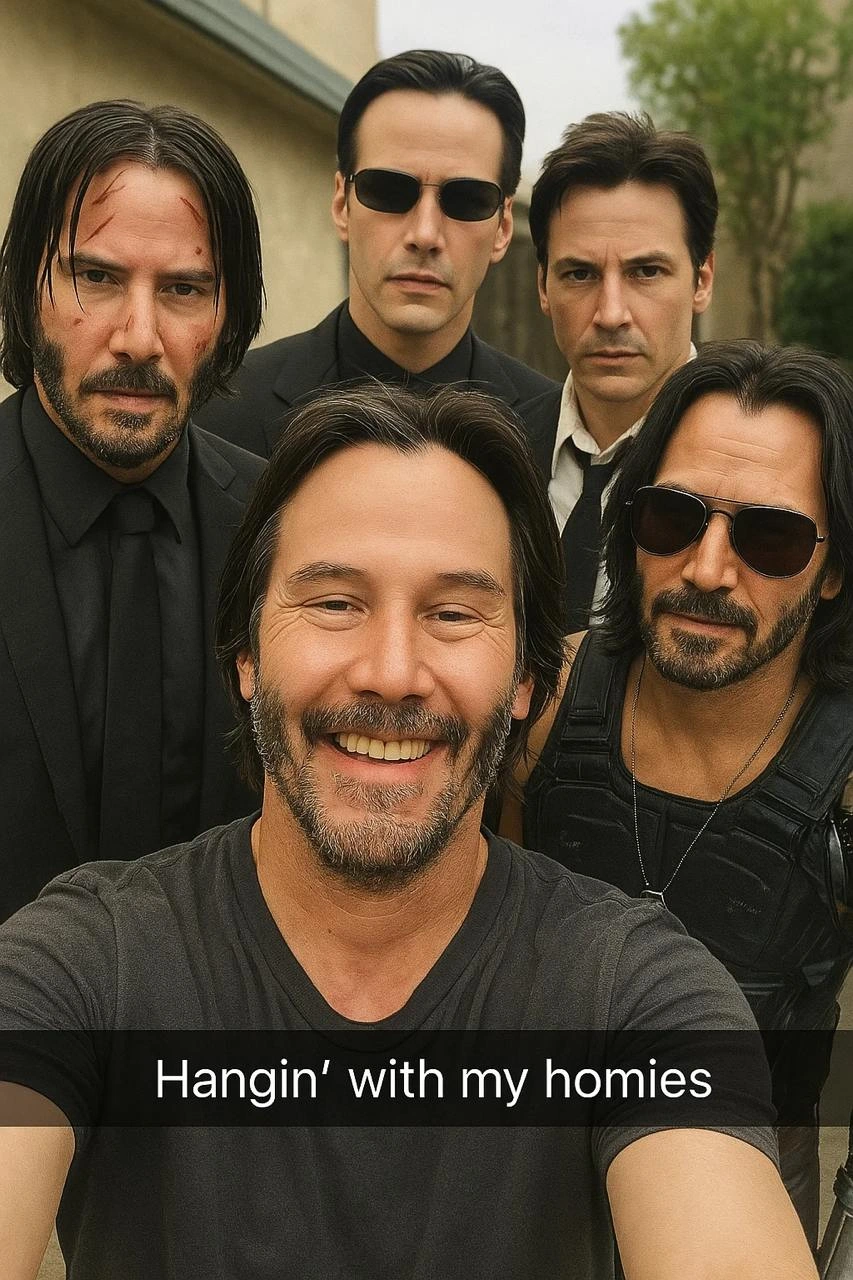
Now, look at their outfits and pose. They’re all dressed in black – some in formal black suits with ties, one in tactical-looking all-black gear, and the one in front in a charcoal grey T-shirt. This all-black ensemble isn’t a typical office dress code; it’s more like a tongue-in-cheek reference to being a special ops team. In the chaos of a 3 AM emergency, they probably threw on whatever clothes were handy (nobody’s planning a fashion statement when the pager goes off – you might end up in pajamas or, in this exaggerated case, a suit or tactical vest!). The result is they coincidentally look like a coordinated unit of secret agents or a SWAT team. This visual gag emphasizes how an on-call SRE team feels: like an elite squad rushing in to save the day. One guy even has tactical gear, giving off “action hero” vibes. It’s common in DevOps humor to compare on-call teams to emergency responders. They might joke about being “IT commandos” or “server warriors.” Here they actually look the part, which makes the meme extra funny.

Across the bottom of the image, there’s a black banner with the text “Hangin’ with my homies,” styled like a Snapchat caption. This is deliberately ironic. “Hangin’ with my homies” is a very casual, chill phrase – something you’d post when you’re relaxing or having fun with friends (“homies” means close friends or buddies). The humor is that these engineers did spend the night together, but not by choice and definitely not relaxing. They were intensely fixing a broken system. By captioning it like it’s just a friendly hangout, they’re poking fun at their own situation. It’s a way to lighten the mood. After fighting through an incident, the team feels a strong camaraderie – almost like soldiers after a mission or athletes after a big game – so calling each other “homies” fits that bond. The Snapchat-style caption format is commonly used in memes for comedic contrast: you take a serious or wild situation and label it as something mundane. In this case, a high-stress outage becomes “just chillin’ with friends, nothing to see here.” OnCallHumor often uses this kind of understatement to cope with how crazy on-call life can be.

The fact they took a group selfie right after resolving the issue shows their sense of teamwork and relief. In tech, when a major outage is resolved late at night, the team often has a moment of celebration or at least a big sigh of relief together. They might share a screenshot of the green dashboards, do a virtual high-five on Slack, or as a joke, snap a photo like this. It’s a way to say “we survived the night!” and document the crazy experience. The faces are blurred for privacy, but you can imagine they look tired and maybe a bit triumphant. Everyone’s close together in the frame, which visually says, we’re in this together. This has blameless_postmortem_vibes – in SRE culture, blameless postmortems are meetings after an incident where the team discusses what went wrong objectively, without blaming individuals. The idea is to learn and improve rather than punish. The meme’s vibe is similar: no one is being blamed in the picture; instead, they’re all smiling (or at least smirking) as a unified team. It conveys that the problem is solved and we’re all friends at the end of it.

Let’s talk about the line in the post text: “MFs when they don't want to pay for cursor.” In a very informal way (yes, “MFs” is a crude abbreviation for “****”), the poster is joking about why this nightmarish situation might have happened. It suggests that some folks (maybe upper management or the company, in a teasing sense) didn’t want to spend money on “Cursor” – perhaps a tool or service that could have prevented the issue. We’re not sure what Cursor refers to exactly (it could be a product or service), but the implication is clear: by being cheap or skimping on resources, they ended up with a disaster that the SRE team had to fix manually. This is a common gripe in DevOps/SRE circles: if you don’t invest in reliable infrastructure, monitoring, or support, you get more outages and sleepless nights. For example, not paying for a database backup service might lead to a 3 AM recovery slog when things crash. So the meme is also a little jab at such penny-pinching decisions. It’s saying, “This is what happens when you try to save money – the on-call team turns into an emergency response squad.” It’s DevOpsHumor with a bit of truth behind it.

In summary, the meme uses a dramatic team selfie to highlight what being on-call can feel like. Tags like OnCallDuty, ProductionIncidents, and LateNightDebuggingSessions all point to the same experience: being woken up to fix critical problems and bonding with your team through that process. The SREHumor shines through the exaggerated visuals (black suits as battle gear) and the funny caption. To a newcomer, it shows that SREs often deal with sudden emergencies, but they handle it together, and afterwards they often joke about it to cope. This “pagerduty_squad_selfie” is basically an inside joke: only those who’ve been paged at ungodly hours truly know the mix of pain and camaraderie behind those smiles. Even if you’re a junior dev who hasn’t been on-call yet, you can appreciate that these guys and gals are the ones who keep the site running while everyone else sleeps – and they’ve earned the right to crack a grin and call each other “homies” when the storm passes.

Level 3: War Room Warriors

This image perfectly captures the post-incident glow of an SRE on-call team at oh-dark-thirty. It’s 3 AM, production was on fire (again), and these folks just lived through a pager storm that could wake the dead. Now the alerts have finally stopped screaming, the dashboards are green again (mostly), and here they are commemorating the battle’s end with a group selfie. The sarcasm is palpable: “Hangin’ with my homies” splashed across the bottom like a casual night out, even though you can practically smell the adrenaline and spilled coffee. OnCallDuty veterans know this scene all too well – the mixture of exhaustion, relief, and that twisted pride of “we fixed it… at least until the next deploy.”

Check out their impromptu all-black dress code: three in black suits and ties, one decked in tactical gear, and the front guy just in a charcoal T-shirt. It’s like a DevOps version of a special ops unit – LateNightDebuggingSessions meet John Wick. They probably threw on whatever was within arm’s reach when the PagerDuty app started lighting up their phones. One might’ve been at a formal event when pager hell broke loose (hence the suit and tie), another literally keeps a tactical vest of dongles and cables for datacenter trips, and the tech lead front-and-center rolled out of bed in his go-to “[root@prod]# kill -9” T-shirt. By sheer chance (or twisted sense of humor), they all ended up looking like a coordinated strike team. This ProductionFirefighting squad dresses for the occasion – maybe in mourning black for our dearly departed uptime. It’s a funeral for the bug that woke them up.

The humor here is how DevOps teams adopt gallows humor to cope. An SRE “pagerduty_squad_selfie” after an incident is a badge of honor. These war-room warriors have each other’s backs. At 2:47 AM someone yelled “all hands on deck!” in Slack, and by 3:05 AM they’re basically the Avengers of ProductionIncidents, each team member hopping on the call: one debugging the database, another rolling back that cursed deployment, a third frantically tweaking Terraform scripts in infra-as-code purgatory. It’s chaotic, LateNightDebuggingSessions pumping on caffeine and muscle memory. When the monitors finally stop blaring error sirens, there’s this surreal quiet… that’s when someone cracks a joke or posts a meme in the incident channel to break the tension. Here, they went a step further – snapping a selfie like “Yup, still alive, still standing.” It’s camaraderie forged in crisis. You can imagine the conversation right after this photo: “Good job, everyone. Same time next week?” (Cue groans.)

And that Snapchat-style caption – “Hangin’ with my homies” – oh, that’s peak OnCallHumor. It’s the kind of absurd understatement only the sleep-deprived ops folks can pull off. In reality, they just spent 2+ hours in system-save mode, heart rates through the roof, maybe cursing at JSON configs or mysterious Kubernetes evictions. But they frame it as a casual hangout with friends. There’s an unspoken rule in SRE culture: blameless_postmortem_vibes only. No matter whose code actually caused the 2 AM meltdown, by 3 AM they’re all homies in the trenches, united against the cruel whims of distributed systems. Blurred faces or not, you can sense those thousand-yard stares and half-smirks that say “that was rough, but we made it... and we’ll laugh about it later.” It’s a blameless group pic – blame the system, not each other (until the post-mortem, where we politely dissect which microservice went rogue).

The post_message joke, “MFs when they don't want to pay for cursor,” adds a spicy layer of cynicism. Read between the lines: this catastrophe might have been preventable if someone approved the budget for a proper tool or service (incident_response_group_photo subtweeting the penny-pinching bosses). Maybe “Cursor” is code for some pricey SaaS that would have caught the issue early or automated the fix. But nah, why pay for reliability when you’ve got a sleepy SRE squad to do black-ops troubleshooting for free at 3 AM, right? :smirk: This is classic in our field – companies skimp on infrastructure or monitoring, and the DevOps_SRE team ends up doing heroics. Sure, you saved a few bucks on that support contract or failover cluster, and in exchange you got five ProductionFirefighting John Wicks patching things manually in the dead of night. The meme is calling that out with a wink: “This is what you get when you go cheap on reliability – an after-hours SWAT team of engineers saving your bacon.”

For those of us who’ve been on-call, this picture is both hilarious and a little traumatic. It satirizes the OnCallHumor culture: we cope with brutal nights by joking that it’s just a bunch of pals chillin’. The reality is an adrenaline-fueled debugging marathon where you earn your stripes. Each person in that selfie has the unmistakable “I need sleep” face mixed with “we did it!” pride. It’s a DevOpsHumor masterpiece because it takes a very real scenario – teammates bonding under extreme stress – and presents it in the tongue-in-cheek format of a casual selfie. It’s equal parts catharsis and flex. After all, not everyone can say their idea of “hanging with the homies” involves SSHing into servers and fighting off a production apocalypse before dawn. SREHumor at its finest.

// TODO: Invest in redundancy so we don't get paged at 3 AM next time

Description

A selfie of a smiling Keanu Reeves with the caption "Hangin' with my homies". Behind him stand several of his serious-looking action movie characters, including John Wick (with facial cuts), Neo from The Matrix (in sunglasses), and another character in a suit. The overall image is a composite. The original post caption, "MFs when they don't want to pay for cursor", provides the technical context. The meme humorously depicts a developer's internal "squad" of free tools and workarounds they assemble when they are too cheap to pay for a premium AI-powered tool like Cursor. The tough-looking characters represent the developer's stubborn reliance on their own, often more difficult, methods

Comments

19
Anonymous ★ Top Pick My toolkit is just a bunch of shell scripts in a trench coat pretending to be a real IDE. They don't have AI, but they have a very particular set of skills... skills they have acquired over a very long career of me googling Stack Overflow
  1. Anonymous ★ Top Pick

    My toolkit is just a bunch of shell scripts in a trench coat pretending to be a real IDE. They don't have AI, but they have a very particular set of skills... skills they have acquired over a very long career of me googling Stack Overflow

  2. Anonymous

    We hit five nines last night - five engineers awake 99% of the time

  3. Anonymous

    When you finally achieve horizontal scaling but it's just you copy-pasting yourself across multiple availability zones because the bus factor is 1 and you're too burned out to document the tribal knowledge before your PTO

  4. Anonymous

    When you have dev, staging, QA, pre-prod, and prod all running different versions of your code, and they're all technically 'you' but with slightly different configurations and increasingly concerning behavioral differences. The one in sunglasses is definitely production - looks cool but you can't see what it's actually doing, and it's probably about to dodge some bullets (or cause an outage)

  5. Anonymous

    When the SLO breach summons both suits and plate carriers, you know “hangin’ with my homies” is just the incident commander’s euphemism for a bridge call you’ll still be writing the postmortem for at 3am

  6. Anonymous

    The High Table of PR reviewers: suited up, silent, and ready to nuke your sloppy commits

  7. Anonymous

    SEV-1 squad selfie: the SRE shows up in production armor, the PMs wear funeral black for the SLA, and I’m spamming ‘kubectl rollout undo’ while PagerDuty drops the bass

  8. @loginstart 1y

    do people actually use cursor

    1. @just_zhenya 1y

      yep, how do I click things without it?

      1. @ismailgaleev 1y

        Use cli only

        1. @hy60koshk 1y

          It's a valid control method, yes. But it doesn't *click*

      2. @sylfn 1y

        Enter/Space key

        1. @ZgGPuo8dZef58K6hxxGVj3Z2 1y

          Fr

        2. @ZgGPuo8dZef58K6hxxGVj3Z2 1y

          If app dev wasn't a script kiddie

        3. @ZgGPuo8dZef58K6hxxGVj3Z2 1y

          Btw what behavior do you like more? What should happen when you hold space? Press/spam the button or hold the button down just like with mouse and be able to cancel with esc?

          1. @sylfn 1y

            idk i used neither and they both will be counterintuitive in some way

    2. dev_meme 9mo

      Not anymore

  9. @patsany_horosh_mne_v_dm_pisat 1y

    Nice fellas you got here

  10. @hy60koshk 1y

    Random clicking fact: not knowing what ctrl and shift do in Cossacks (the strategy game) is kinda vital for future relationships

Use J and K for navigation