Ignoring 800 Compiler Warnings Like a True Anarchist
Why is this Compilers meme funny?
Level 1: Ignoring All the Alarms
Imagine you’re playing a video game and your screen starts flashing red with tons of warning signs – maybe your character is low on health, the game is beeping, and a big alert says “Danger! Danger!” Now, instead of finding a health pack or taking cover, you just shrug and charge ahead saying, “Eh, who needs a plan?” That’s essentially what’s happening in this meme, but with writing code. The programmer’s tool is desperately saying “Uh oh, I see 800 things that might be problems!” (picture 800 little alarm bells ringing), and the programmer just laughs it off like it’s nothing. It’s funny in the way it’s funny when a cartoon character ignores all the “Do Not Enter” signs and drives right off a cliff – you kind of shake your head and chuckle at how ridiculous it is. The phrase “Do I really look like a guy with a plan?” is the coder joking that they have absolutely no plan to deal with all those warnings. They’re just gonna keep going. We laugh because it’s a silly, reckless attitude – like someone ignoring a fire alarm and saying “Fire? What fire?” Usually, if you see warnings or danger signs, you’d stop and fix the problem. But in this joke, the person doesn’t, and that carefree craziness is what makes it humorous. It’s basically showing the goofy confidence of saying “It’ll be fine!” even when every indicator is saying it might not be fine at all.
Level 2: Warning Fatigue
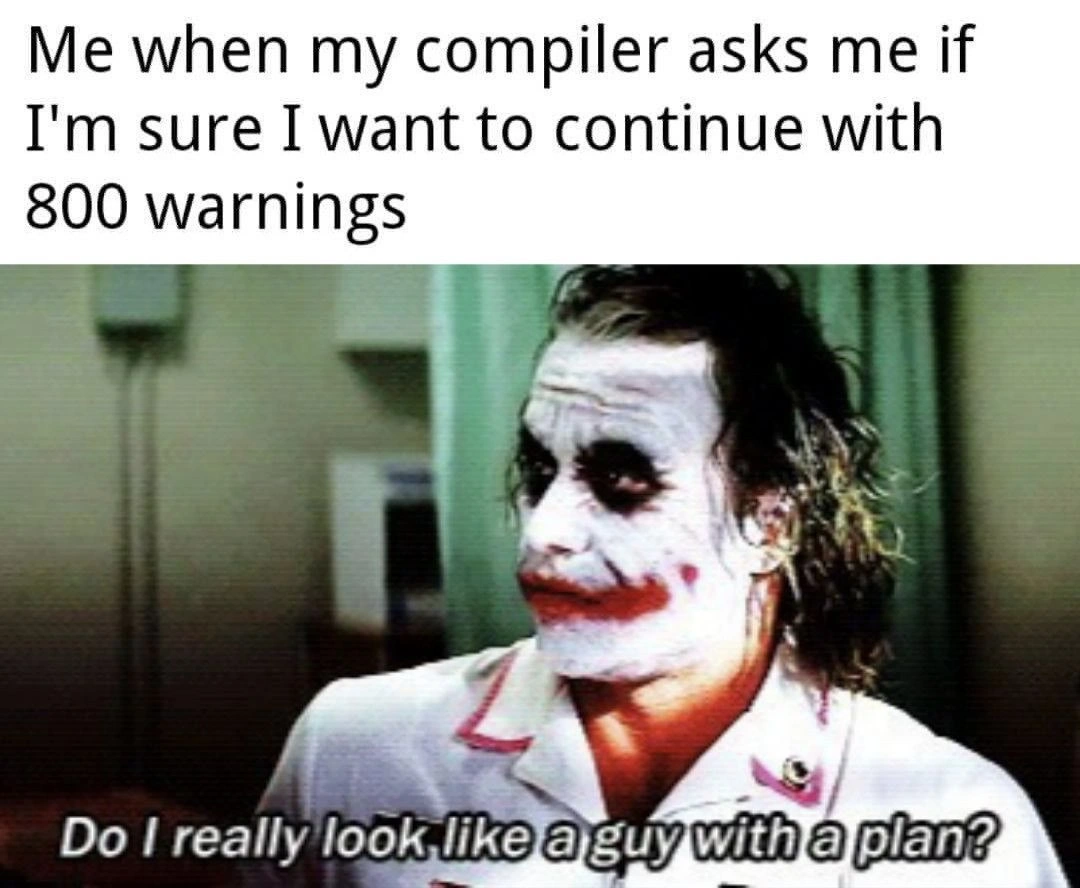
So what’s going on here? This meme shows a programmer and a compiler (the program that turns code into an application) at odds over a huge number of warnings. Compiler warnings are messages you get when your code compiles successfully, but the compiler is concerned about something in your code. They’re like the compiler saying, “Hmm, this might be a problem later, just so you know.” They don’t stop the build (unlike compiler errors, which must be fixed for the code to compile at all), but they’re important signals for code quality. In the top panel of the image, the text says: “Me when my compiler asks me if I’m sure I want to continue with 800 warnings.” That basically sets the stage: the developer just finished compiling code and got 800 warning messages. That number is eight hundred – an insanely high count! It’s as if the compiler is astonished and asking, “Are you sure everything’s okay? There are 800 issues here!” Some development environments or build tools might actually prompt you or at least highlight the fact that you have an unusually large number of warnings. Even if not, any sane person would pause at seeing that. But the joke is that “me” (the developer) isn’t fazed at all.
Now, the bottom panel is an image of the Joker from Batman, specifically Heath Ledger’s Joker dressed as a nurse in The Dark Knight. He’s just blown up a hospital and he turns around with this smug look, saying, “Do I really look like a guy with a plan?” That line in the movie is famous — the Joker prides himself on not having a plan, on being unpredictable and chaotic. The meme puts that quote as the developer’s reply to the compiler. In other words, when faced with 800 warnings and the implicit question “You’re not actually going to ignore all these… right?”, the developer basically responds: “Plan? What plan? I’m just gonna go ahead anyway.” It’s a bit like a student turning in an assignment full of teacher’s red ink corrections and saying, “Eh, do I look like someone who planned to revise this?” It’s intentionally ridiculous, and that’s why it’s funny.
Let’s break down some terms and why this scenario is a big red flag (pun intended). CodeQuality refers to how well-written and maintainable the code is. Tons of warnings generally mean lower code quality, because the code has many questionable bits that the compiler felt worth mentioning. It’s like a report card for the code – and 800 warnings is a report card covered in red notes. TechnicalDebt is another term featured in the tags. This is a metaphor: when you write quick-and-dirty code or ignore problems (like warnings), you’re basically taking on “debt”. It’s a debt because eventually, those shortcuts and issues will need fixing, and the longer you wait, the “interest” (the effort and risk to fix them) increases. In our case, every warning ignored is a little IOU saying “fix this later.” 800 ignored warnings? That’s a gigantic stack of IOUs in the code, i.e., technical debt galore.
CodeSmells is a fun term that means something in your code “smells” off – it’s not necessarily a bug, but it’s a sign of bad design or a likely problem. Compiler warnings often point out code smells. For example, a warning might say “hey, you created a variable but never used it” – that’s a smell, because why is it there if it’s not used? Did the developer forget something? Another warning might be “this function is deprecated” – meaning, you’re using an old way to do something that’s not recommended anymore (and maybe in a future update it’ll be removed). These are things that won’t crash your code immediately but hint at trouble or poor practices – exactly what BadPractices are. And ignoring warnings is widely considered a bad practice in itself, because you’re basically choosing to ignore potential problems.
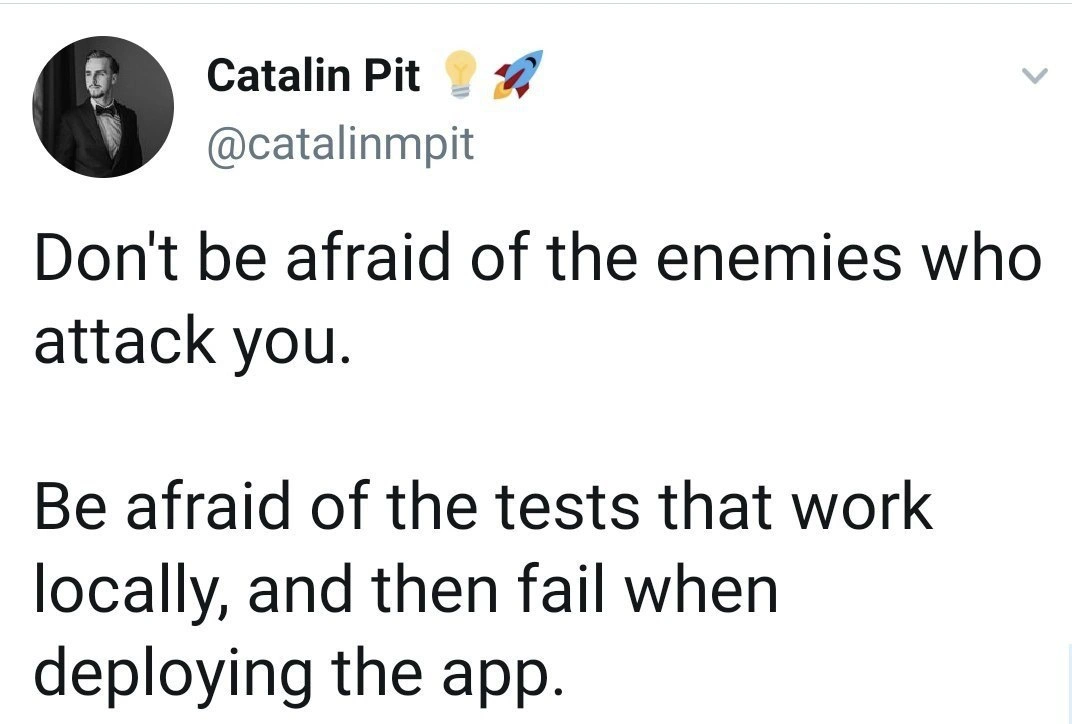
Now, why would a person ignore compiler_warnings, especially so many? One reason is what we call warning_fatigue. If you see a warning once, you’ll likely fix it. If you see 800 every time you compile, you just start tuning them out. It’s like hearing the same alarm beep over and over – eventually, you no longer react to it. In big projects, sometimes there are just too many to deal with quickly, so people develop a habit of ignoring them (“We’ll get to those later…”). It’s also possible that some warnings are false alarms or not immediately important, and over time the developers got used to them. This isn’t good, but it happens. Imagine joining a team and on day one you compile the code and hundreds of messages scroll by. You ask your mentor, “Uh, what about all these warnings?” and they shrug: “Oh yeah, we know. Don’t worry about those.” You’d be bewildered, right? But that’s warning fatigue and complacency in action.
The phrase “who actually has a real plan?” from the title, and the Joker’s “Do I really look like a guy with a plan?” both drive home the same point: there is no plan to fix or address these warnings. It’s a tongue-in-cheek admission of negligence. The developer isn’t even pretending that they’ll go back later and clean things up — they’re openly saying they have zero intention of dealing with it. This attitude is funny to see in a meme because it’s a hyperbole of what not to do. No professional would outright say “I don’t plan anything, I just wing it,” but the truth is, sometimes we behave that way subconsciously by procrastinating on maintenance. The meme just makes that implicit attitude explicit and absurd by borrowing the Joker’s over-the-top persona.
For someone newer to coding, let’s also clarify what 800 warnings really means during a build_process. When you write code in languages like C, C++, or Java, you run a compiler to build your program. The compiler will stop you cold if there are errors (like syntax mistakes, or calling a function that doesn’t exist – those must be fixed). But if there are warnings, the compiler will list them out as messages, but still produce the final program. So you might see something like:
Compiling MyProgram.java...
MyProgram.java:10: warning: [deprecation] useNewMethod() in SomeLibrary has been deprecated
oldLibrary.useNewMethod();
^
MyProgram.java:50: warning: [unused] private variable 'plan' is never used
private String plan = "winging it";
^
... (and so on, imagine hundreds more) ...
Build succeeded with 800 warnings.
A result like “Build succeeded with 800 warnings” is both a relief (it succeeded!) and a scare (800 warnings?!). The developer in the meme chooses to only celebrate the first part – it succeeded – and totally ignore the second part. In reality, seeing even double-digit warnings should make you pause and consider cleaning up the code. But in the wild, people often just move on, run the program, and pray nothing breaks. Especially under time pressure, it’s easy to justify: “Well, it’s compiling and running. I’ll deal with those warnings later.” The problem is “later” can keep getting pushed off, sometimes indefinitely.
This meme also subtly references dark_knight_nurse_meme, which is a known format on the internet. The image of the Joker in a nurse outfit with that subtitle has been used in various jokes to indicate someone being crazily reckless or chaotic. Here it’s applied to a programmer ignoring warnings. If you recognize the scene, it adds an extra layer of humor because you remember how the Joker literally just caused massive destruction. Comparing that to a programmer’s behavior is an exaggerated analogy – implying that ignoring all these warnings is inviting disaster, just like the Joker invites disaster wherever he goes.
In simpler terms: the developer is basically saying “I don’t care what could go wrong, I have no strategy to prevent problems, I’m just going ahead.” And compilers, being logical machines, will do exactly what they’re told – they’ll produce the program and run it, even if they warned you 800 times that something might be off. The meme is funny because it’s an obvious bad idea presented in a jokey way. It’s like watching someone knowingly do something risky and laughing at how blatant they are about it. Developers find it humorous because it’s a tiny bit true of how projects sometimes go, even though we’d never put it that way officially. It’s poking fun at ourselves for those times when we skip best practices due to laziness or pressure.
For a junior developer or someone learning: take this meme as a light-hearted warning in itself. Ignore warnings at your own peril. It might be amusing in a meme, but in real coding life, having at least a rough plan to address issues (even gradually) is wise. The Joker may get away with chaos in a movie, but in code, chaos usually comes back to bite you. So next time you see even 8 warnings, let alone 800, remember this meme… and maybe choose a different path than our Joker-minded friend 😅.
Level 3: It Compiles, Ship It
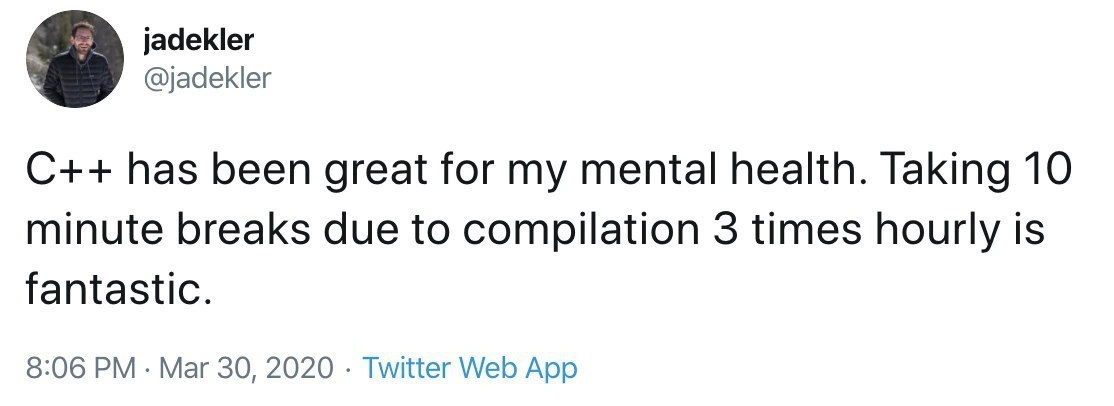
For seasoned developers, this meme hits that nerve between laughter and dread. We’ve all either seen or written code that compiles with a wall of warnings and thought, “ehh, it runs, ship it!” The top text sets up the scenario: “Me when my compiler asks me if I’m sure I want to continue with 800 warnings.” Even if a compiler doesn’t literally ask “Are you sure?” (most just print warnings without pausing), the exaggeration is clear — 800 warnings is an absurd amount. It’s the compiler’s polite way of screaming, “This code is a hot mess!” And yet, the developer (in the meme, us) just steamrolls ahead. The punchline comes from the bottom panel: the Joker in a nurse outfit (from The Dark Knight, 2008) turning to say, “Do I really look like a guy with a plan?” He’s grinning like a maniac, basically the embodiment of chaos. The combination is golden: a developer gleefully disregarding code health warnings, channeling the Joker’s I-don’t-give-a-damn attitude. It’s developer humor that’s both funny and a little horrifying because it rings so true.
Let’s unpack why this scenario is so relatable. In theory, every developer knows that compiler warnings are there for a reason — they indicate possible bugs, code smells, or at least sloppy code that might bite you later. Best practices and any decent code quality guide will say you should keep warnings to a minimum (ideally zero). Many of us have sat through brown-bag lunches or code quality sessions preaching “stop ignoring warnings” because each warning is a potential time-bomb in your code. CodeQuality 101: a clean compile is a happy compile. We know this.
But then reality hits: deadlines, legacy codebases, and sometimes pure laziness or exhaustion. In real projects (especially older ones), it’s disturbingly common to see dozens or hundreds of warnings scroll by during the build process. You might hear a fellow senior dev sigh, “Yeah, we inherited this system with 500+ warnings… fixing them isn’t priority right now.” Over time, people just get used to that noise. It becomes the norm. This is exactly how technical debt accumulates in a codebase — not through one big decision, but through a thousand small “meh, ship it anyway” moments. Each ignored warning is a tiny piece of debt. Add up 800 of them, and you’ve basically mortgaged the code’s future stability. The joke in the meme is that the developer isn’t even pretending to have a plan to pay down that debt. They’re self-aware in their recklessness: “No plan? No problem!”.
There’s a shared war-story feeling here. Many experienced devs have that memory of the one warning they ignored that later caused a production outage or a nasty bug. For example, ignoring a compiler warning about an unchecked error code, only to have the program crash in the field because that error actually occurred. Oops. This is why we chuckle nervously at the meme — it’s funny until you remember you’ve been the clown before 😅. The DeveloperHumor often comes from pain, and this is a prime example of laughing at our own bad habits.
The Joker quote “Do I really look like a guy with a plan?” is iconic for portraying someone who embraces not having a plan. In the film, the Joker prides himself on turning the well-laid plans of others into chaos. In the coding context, the developer is almost proud (or at least unapologetic) about not addressing those warnings. It’s a wink to fellow devs: “Yes, I see the disaster waiting to happen, but I’m going to act cool and carry on.” It satirizes that cavalier attitude some developers (or their managers) have — just get the build out, deal with consequences later. That phrase “It compiles, ship it” perfectly captures this mindset. Who has time to sift through hundreds of warnings when the sprint is ending and the feature needs to be delivered by EOD Friday? Just hit deploy and pray. The meme basically dresses that devil-may-care developer in Joker’s clothes for comedic effect.
From an organizational perspective, getting to a state of 800 warnings usually means these issues have been accumulating over months or years. It often happens in legacy projects or large codebases where multiple teams contribute. No single developer “owns” all the warnings, so they fall through the cracks. It could also be a sign that quality standards aren’t enforced — maybe there’s no continuous integration rule to fail a build on warnings, no code review comments about them, and no time allocated to refactoring. In some teams, management might even explicitly say “Don’t waste time on those minor issues, we have features to build,” effectively ignoring red flags for the sake of speed. This creates a culture where developers just reflexively ignore warning output. The first time a new developer compiles the project and sees pages of orange text, they’ll likely freak out: “Did I do something wrong?!” And a jaded teammate will respond, “Nah, that always happens. Just ignore it.” Boom — culture of ignoring warnings established. The meme speaks to this absurd normalization of bad practice. We laugh because it’s true and absurd at the same time — like a hospital where alarms are always blaring and everyone just goes about their business (again, that nurse imagery… not a coincidence!).
Another layer of humor: the number 800 is over-the-top. It’s a bit of hyperbole that makes the meme funnier. Most sane projects won’t even compile if you truly had hundreds of severe issues; likely many of those warnings are trivial or repetitive. But we have indeed seen projects with hundreds, sometimes thousands of warnings – especially when porting code to a new compiler that’s stricter, or when building with all warnings enabled for the first time in ages. There’s a brief temptation to just turn off warnings entirely so you don’t have to see them (some compilers let you disable specific warnings, and IDEs have a “squelch” setting). And honestly, some devs do that – they’d rather hide the problem than fix it. That’s like taking the batteries out of a smoke detector because it won’t stop beeping. Funny enough, we’re basically looking at a meme of a guy sitting in a smoke-filled room saying “Plan? What plan?” while the smoke detector (compiler) is shrieking.
TechnicalDebt and CodeSmells are two terms tightly woven into this scenario. Those warnings are code smells – indicators of deeper issues (maybe sloppy casting, unused variables hinting at unfinished logic, deprecated functions that haven’t been updated, etc.). Each one is telling a story about a potential weakness or at least untidiness in the code. If nobody tackles them, they remain in the system, making future work harder. If you ever do try to fix things, it’s a daunting task — where do you even start with 800 items? It’s like trying to tidy a hoarder’s house: overwhelming. That’s why having a real plan matters. The meme humorously admits there is none. And in fairness, sometimes that’s reality: no plan, just keep coding and hope the pile of junk doesn’t collapse today. Senior devs chuckle at this because they’ve lived it, often against their better judgment. We joke about it as a coping mechanism: “Haha, yeah we totally do that… we’ll fix it someday, right?” Wink.
One more thing: The use of the Joker in the meme isn’t just random; it’s specifically the scene where he’s dressed as a nurse and blows up a hospital. Why that scene? Because in the movie, that moment is the Joker reveling in destruction of something that others thought was secure. Translating that to software, pushing code with 800 warnings is like walking away from an about-to-explode codebase in a carefree manner. The developer is basically saying, “I know this might blow up (maybe not now, but eventually), and I couldn’t care less. In fact, I find it amusing.” It’s dark humor — we’re personifying the neglectful programmer as a comic book villain who knows he’s doing something insane. The absurdity makes it funny, and the grain of truth makes it hit home.
In summary, for the experienced crowd, this meme is a perfect storm of software bad practices portrayed with an unforgettable pop culture reference. It lampoons the all-too-common habit of ignore_warnings during the build process. We laugh, we tag our colleagues saying “hey remember that project? 😅”, and deep down, we all vow (again) to someday reduce our own warning counts… maybe when we have a spare moment, if ever. After all, as any battle-worn dev will tell you with a smirk, “It compiled, didn’t it? Ship it!” – famous last words.
Level 4: Compile-Time Chaos Theory
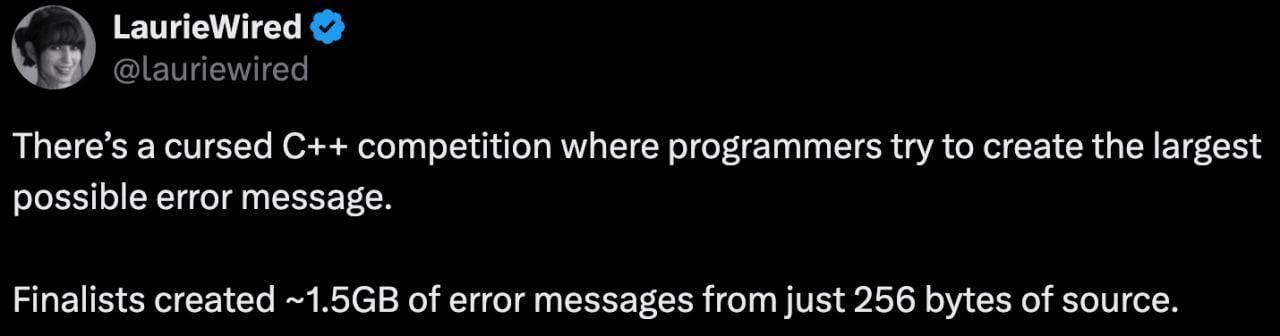
At the bleeding edge of compiler design and static analysis, ignoring 800 warnings is like embracing chaos in a realm built on logic. In compiled languages, a compiler warning is a semi-formal signal from the compiler — essentially the tool’s polite way of saying “this looks fishy, but I’ll let it slide.” Each warning represents the compiler’s best effort at analyzing your code for potential code quality issues without halting the build. Why not just stop for every issue? Because proving a program is completely error-free crosses into the territory of formal verification, bumping up against theoretical limits like the Halting Problem. In theory, detecting every possible bug or misstep in code is undecidable – compilers can’t guarantee catching all issues without potentially infinite analysis. So instead, they implement heuristics and checks that produce warnings for suspicious patterns (like using an uninitialized variable, unreachable code, type mismatches, etc.) where something could be wrong even if the program still compiles.
Now, when a developer breezes past 800 warnings, they are essentially thumbing their nose at those hundreds of heuristic red flags. This is warning fatigue taken to an extreme. It’s reminiscent of alarm fatigue in other fields (like nurses tuning out constantly beeping monitors — fitting given the Joker’s nurse costume in the meme). When you have so many alarms going off, the signal-to-noise ratio plummets. Amid 800 messages, the truly critical warning (the one that foreshadows a catastrophic undefined behavior or security hole) is a needle in a haystack. The developer has become desensitized, treating the compiler’s output like background noise. At a certain point, the warnings might as well be 404 ignored.
From a software engineering standpoint, this is where technical debt grows into a monster. Each ignored warning is like taking out a small loan against the code’s future stability. A few here or there might be harmless, but hundreds accumulated? That’s compounding interest on instability. The concept of technical debt interest becomes painfully real: eventually, those warnings will demand payback, often at the worst time. There’s a famous adage in production engineering: “Hope is not a strategy.” Plowing ahead despite copious warnings is basically relying on hope – hoping that none of those 800 flagged issues actually matter. It’s akin to a chaotic experiment in software entropy. According to Lehman’s laws of software evolution, complexity (and disorder) in a system increases over time unless you invest energy to reduce it. All those warnings are entropy made visible, a sign the code’s code quality is decaying. If you never allocate time to clean up (reduce entropy), the system slides further into chaos – fitting, because our meme’s anti-hero thrives on chaos.
We can even draw parallels to Chaos Theory here (half-jokingly): tiny uncertainties or “smaller” warnings can unpredictably cascade into major bugs – the butterfly effect in code. One ignored null check warning in module A might contribute to a major null-pointer crash when combined with an edge case in module B. With 800 such flapping butterflies in the codebase, who knows which one triggers the hurricane in production? And if that happens, you can bet the lack of a plan will truly show. Seasoned engineers have seen this play out: an ominous compiler_warnings list precedes a 3 AM incident post-deployment. As they say in ops, those warnings are often “the logs of tomorrow’s outage.”
It’s telling that some organizations adopt ultra-strict policies like treating warnings as errors (-Werror flag in GCC, for instance) to keep the build clean. That’s the opposite philosophy of our Joker-minded developer: it’s saying no warning is acceptable because each could hide a real problem. But flipping that switch on a project drowning in warnings is non-trivial; it’s comparable to turning a cruise ship on a dime. You’d first need a heroic effort to fix or suppress existing warnings (often by actually addressing the underlying code smells or explicitly marking them with pragmas/annotations to ignore). And unfortunately, many teams lack the time, will, or management support to do that heavy refactoring – so the warnings remain and multiply. This status quo can even alter team psychology: newcomers see hundreds of warnings and conclude “oh, we just ignore those here.” The bad practice perpetuates itself.
There’s also an interesting language-design angle here. Modern languages like Rust or Go have taken a firm stance on many issues that would merely be warnings in C/C++ – by outright forbidding them or making them compile errors. For example, Rust will not compile code with unused variables or unchecked Results unless you explicitly acknowledge them (you must consciously let _ = result or use a placeholder _ for an unused variable). The idea is to force the developer to handle potential issues upfront, essentially designing away the “I’ll ignore it” path. Older languages or large legacy codebases don’t have this luxury; they rely on the honor system (developers paying attention to warnings) or external linting tools. If the culture is lax, you end up with a warning tsunami.
Finally, consider the meme’s cinematic reference: the bottom panel quotes the Joker – “Do I really look like a guy with a plan?” In the world of Gotham, that line is chilling because the Joker embraces chaos for its own sake. In the world of compilers and code, a developer proudly marching past 800 warnings is doing much the same: embracing chaos in a context that usually demands precision and caution. It’s a darkly funny inversion – compilers are all about strict rules and formal structure, and here comes a developer basically saying “Rules? Plans? I don’t bother with those.” The compiler (like an automated voice saying “Warning, warning, are you sure?”) is essentially Alfred pleading to Batman’s Joker, and the developer-Joker just smirks. It’s humor with a grim underlying truth: in engineering, ignoring reality’s warnings can lead to real explosions. The only difference is instead of a hospital blowing up (as in the movie scene), it might be a production server or a critical application crashing at the worst time. And if you ask this dev what the mitigation plan is, well… do they really look like a guy with a plan?
Description
This is a two-panel meme featuring the Joker. The top panel contains black text on a white background that reads, 'Me when my compiler asks me if I'm sure I want to continue with 800 warnings'. The bottom panel is a still image of Heath Ledger as the Joker in a nurse's uniform from the movie 'The Dark Knight'. He has a chaotic and disheveled appearance with smeared clown makeup. The subtitled dialogue from the movie is visible at the bottom: 'Do I really look like a guy with a plan?'. The meme humorously captures a developer's decision to ignore a vast number of compiler warnings. While the code might compile, warnings indicate potential issues, bugs, or use of deprecated features. An experienced developer knows that 800 warnings signify significant technical debt or poor code quality. The joke lies in equating this reckless coding practice with the Joker's persona of chaos and unpredictability, suggesting the developer is embracing the potential for future disaster just to make the code run

Comments
7Comment deleted
Ignoring 800 warnings is just a way of telling the compiler, 'I too like to live dangerously.' It's not a bug, it's an undocumented feature discovery program
Nothing screams “enterprise-grade” like a CI pipeline that insists on five-nines uptime while the Makefile quietly passes `-Wno-everything` so 800 warnings don’t block the deploy
Those 800 warnings are just the compiler's way of documenting that it tried to save us before we ship this to production and blame it for the inevitable null pointer exception in the one place we actually suppressed the warning
When your codebase has accumulated 800 warnings over the years and the new junior asks if we should fix them before the release: 'Some men just want to watch the build log burn.' The real chaos isn't the warnings themselves - it's the archaeological expedition required to understand which ones actually matter versus which are just legacy noise from that time someone decided to use deprecated APIs because 'they still work.' At this point, fixing them would require touching code that hasn't been modified since the Obama administration, and we all know the first rule of legacy systems: if it compiles with warnings, it's production-ready
In our monorepo, 800 warnings is just the noise floor - if a build is clean, you probably targeted the wrong project
800 warnings? That’s our roadmap - turn off -Werror, ship it, and let PagerDuty document the architecture
800 warnings? In a battle-hardened codebase, that's just the compiler whispering 'sweet dreams' before prod deploy