Skip to content
DevMeme
5905 of 7435
When the legendary pirate finally takes the “learn to code” advice
Learning Post #6465, on Dec 19, 2024 in TG

When the legendary pirate finally takes the “learn to code” advice

Why is this Learning meme funny?

Level 1: Pirate’s New Job

Imagine a famous pirate who spends all his time sailing the seas suddenly starts working in an office on a computer. It's a funny picture, right? Pirates are known for adventures, treasure hunts, and breaking the rules. Coding, on the other hand, is like solving puzzles and following rules to make a computer do things. So seeing Captain Jack Sparrow swap his pirate ship for a desk and a keyboard is really silly. It’s like telling a wild race car driver to become a quiet librarian overnight. We laugh because it’s so unexpected: a swashbuckling pirate turning into an everyday guy who types on a computer. The idea is that learning to code somehow completely changes him, and that huge, over-the-top change is what makes it goofy and fun.

Level 2: From Pirate to Programmer

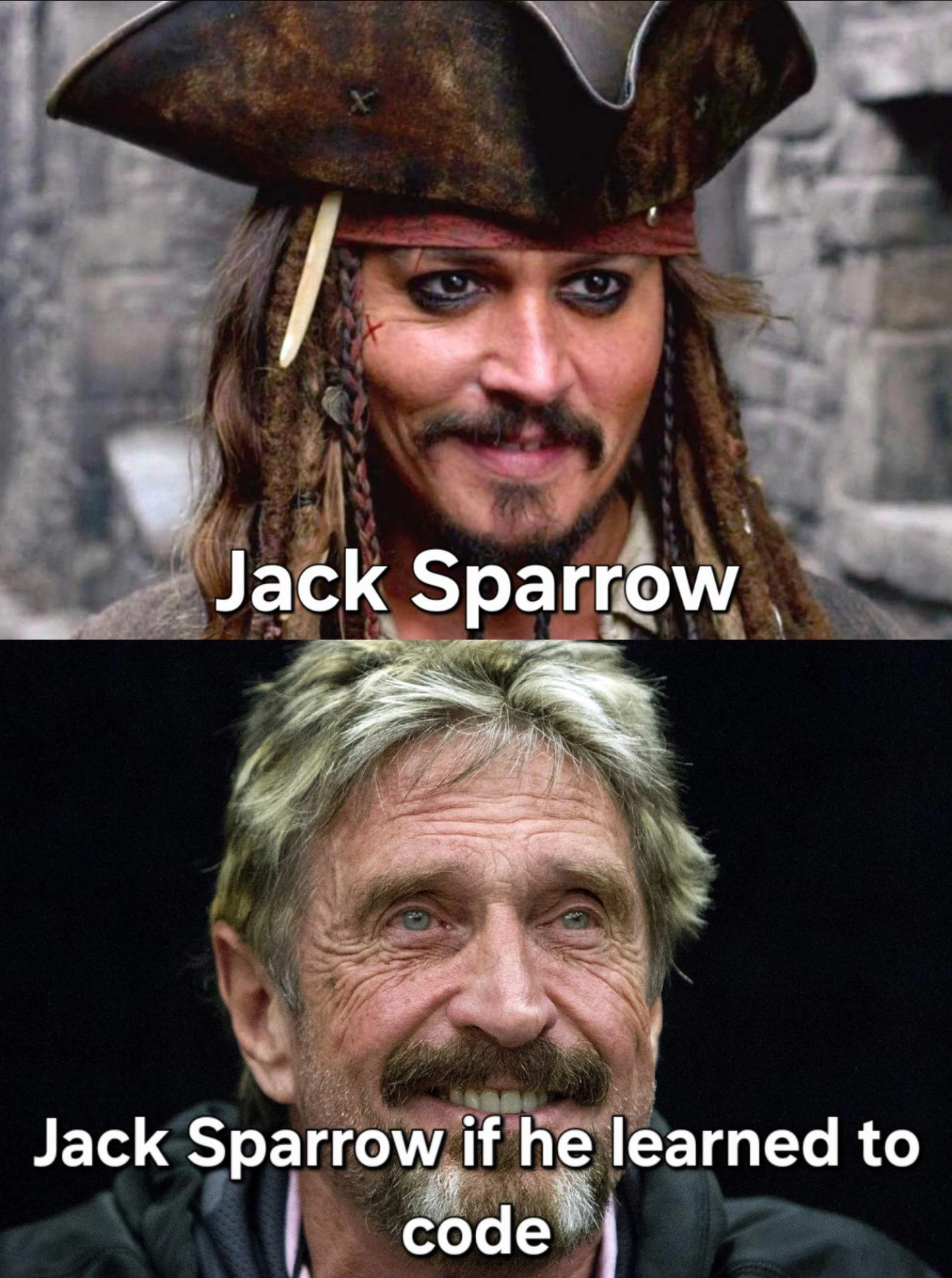
At its core, this meme shows a fun transformation: Jack Sparrow the pirate becoming Jack Sparrow the programmer. The top image is Jack Sparrow as we know him from Pirates of the Caribbean – wearing his weather-beaten tricorn hat, with braided hair and beads, looking mischievous. The caption simply labels him by name. The bottom image claims to be “Jack Sparrow if he learned to code,” showing a middle-aged man in a hoodie with a thoughtful (and slightly cheeky) smile. The joke here is visual and straightforward: it imagines that if this wild pirate took the advice to learn to code, he’d end up looking like a typical software developer at a tech conference. The pirate’s iconic look (the hat, the dreadlocked hair, the eyeliner, maybe a bottle of rum in hand) has been traded for the stereotypical coder look – casual dark hoodie, possibly an ID lanyard or conference badge, and the kind of grin you see on a veteran tech guru. It's a big change in style, which makes the comparison funny and easy to get. Essentially, the meme is asking: What would a legendary pirate be like as a computer programmer? And it answers with a picture: he’d turn into a more ordinary-looking guy in modern clothes, but still with a hint of that roguish smile. Seeing this side-by-side is comical because it’s such an unlikely makeover.

The phrase “learn to code” is key to understanding the meme. In the tech world, “learn to code” means learning how to write computer programs – basically telling a computer what to do using languages like Python or Java. Over the last decade, people in many dev communities have encouraged others to pick up programming as a valuable skill. You might have heard stories of a musician or a taxi driver who learned coding and then got a job at a software company. There’s even a whole movement behind this idea, with coding bootcamps (intensive courses) designed to help folks switch careers. So telling someone to “learn to code” has become a common piece of advice, almost a cliché, whenever someone is looking for a new career or a better-paying job. In fact, online groups (like Reddit’s programming forums or Q&A sites such as Stack Overflow – which is a huge site where developers help each other solve coding problems) are full of success stories from people who made a big career change by learning to program. It’s generally meant in a positive way: the idea that anyone, from any background, can become a developer if they put in the effort to learn. This meme takes that idea and plays with it in a silly way by applying it to a fictional pirate captain. Of course, Jack Sparrow isn’t real, and pirates aren’t exactly enrolling in coding classes. But the exaggeration is the point – it’s career change humor. It humorously suggests that even someone as far from a desk job as a swashbuckling buccaneer might reinvent himself through coding. It’s poking a bit of fun at how people sometimes talk about coding as the magic solution for everyone.

Another thing to notice is how the meme uses a famous character in a classic internet format. Jack Sparrow is a super recognizable character, so this is clearly a jack sparrow parody. By placing him in a tech context, the meme becomes a pop culture crossover — it mixes the world of pirates with the world of programmers. This kind of remix is common in meme culture: taking a well-known image or person from movies and combining it with a completely different theme (like coding) to create a joke. The meme uses the well-known Impact font captions: bold white text with a black outline, placed at the bottom of each image. That style immediately tells you it’s meant to be humorous and not a serious scene from a movie. The text itself sets up the comparison in a simple, almost deadpan way: the first image is labeled “Jack Sparrow,” the second “Jack Sparrow if he learned to code.” It’s structured like a before-and-after gag. This format is popular because it delivers the joke visually – you see the dramatic change and get the punchline instantly. In developer circles, people enjoy this kind of reference because it’s relatable humor. Many developers have seen friends or colleagues undergo real-life transformations when they switch into tech (for example, a former artist friend now lives in hoodies and talks about JavaScript all day – a much smaller scale version of pirate-to-coder!). Even if you’re new to programming, it’s funny on a basic level: a quirky pirate magically turning into a modern-day tech guy. In short, the meme uses familiar imagery and straightforward captions to make a joke that both techies and casual internet users can chuckle at. It’s a lighthearted nod to the whole learning to code craze, wrapped in a playful movie reference.

Level 3: Refactoring Pirate Code

This meme deftly combines pop culture reference and developer humor to amuse seasoned devs. It features a pirate vs programmer juxtaposition: the infamous Pirates of the Caribbean swashbuckler Jack Sparrow set against a modern coder version of him, riffing on the perennial tech mantra “learn to code.” For those steeped in dev life, the humor hits on multiple levels. First, there’s the contrast in personas: a rum-loving pirate captain versus a hoodie-clad programmer. The top panel shows Jack in full pirate glory, while the bottom panel imagines “Jack Sparrow if he learned to code,” implying our legendary buccaneer traded the high seas for high-tech. The Impact font captions (big bold white text with a black outline) are a hallmark of meme culture, immediately signaling that this is a tongue-in-cheek comparison. An experienced developer will chuckle because they recognize this “learn to code” meme setup: take an extreme figure and humorously imagine them in a coding career.

Behind the laugh is a knowing nod to DevCommunities and their enthusiasm for career changers entering tech. In recent years, “everyone should learn to code” became a widespread — almost mythical — piece of advice. It’s championed on programming forums, Twitter threads, and at meetups as a golden ticket to a better job. Seasoned engineers have watched this trend explode: coding bootcamps promising to turn anyone (perhaps even a mischievous pirate) into a software developer, and countless posts celebrating someone’s successful pivot from an unrelated job. There’s a bit of affectionate sarcasm here. Veteran devs know that transitioning from a life of piracy to the structured logic of programming isn’t as simple as a catchphrase. The meme exaggerates the idea for effect. It’s basically saying, “Sure, even Captain Jack could become a programmer if he just learned to code!” — a playful poke at how over-hyped that advice has become in some circles.

Interestingly, the “after” photo (Jack as a coder) even resembles a real-world tech personality who had a similarly rogue reputation. The face is blurred, but many in the know see a nod to an infamous antivirus software founder known for living on the edge. This adds an extra wink for the initiated: even after “civilizing” into a coder, Jack might still be a pirate at heart. It underscores how learning to code isn’t a magic spell that completely changes who you are. One can imagine our pirate captain carrying some of that wild spirit into tech. He might trade his mystical compass (which once guided him to hidden treasure) for a Stack Overflow search bar to guide him to answers, and bury his loot as commits in a GitHub repository. The tech industry actually has a history of romanticizing pirates: Steve Jobs once quipped, “It’s better to be a pirate than join the Navy,” to inspire out-of-the-box thinking in his team. This meme flips that idea around for laughs: here the pirate does join the tech “Navy” (the corporate world of programmers), and we get to see how oddly he fits in!

From an experienced developer perspective, there’s a sweet irony in this scenario. In Jack’s pirate lore, there’s even a famous joke about their own Code (the pirate rulebook) being pretty lax. One character slyly remarks:

“The Code is more what you’d call guidelines than actual rules.”

Programmers grin at that notion, because in real software projects, coding standards and “best practices” often feel the same way – more like guidelines than ironclad laws, especially when deadlines loom or quick-and-dirty fixes are needed. In practice, building software can be as untamed and adventurous as pirate life. A legacy codebase full of odd hacks is like a mysterious shipwreck filled with booby traps to navigate, and a sudden production outage can turn a calm afternoon into a stormy fight for survival. In other words, Jack Sparrow’s cunning, chaotic problem-solving style might actually shine during a 3 AM debugging session! This is a subtle reason the meme resonates: savvy devs know that creating software isn’t always a neat, orderly voyage. Sometimes it’s more “Why is all the RAM gone?” than “Why is the rum gone?” — meaning the chaos of bugs and broken code can rival any storm at sea.

The meme’s format itself is an inside joke to longtime internet users. The two-panel, captioned image is a classic Impact font meme setup that immediately telegraphs a comedic comparison. It’s reminiscent of the "How it started vs. How it’s going" structure, showing a before-and-after with a twist. Here, the first panel establishes the well-known pirate image, and the second delivers the punchline by showing a radically different outcome after a single change (“learning to code”). For experienced viewers, the choice of attire in the bottom image is spot-on: Jack’s traded his tattered pirate gear for the unofficial uniform of techies — a simple dark hoodie. This detail gets knowing smirks because the hoodie in tech culture has become a symbol of programmers and hackers (thanks to real-life trends in Silicon Valley and countless hacker movie tropes). By putting Jack in a hoodie, the meme efficiently says “he's a developer now” without needing extra words. It’s a perfect pop culture crossover: anyone familiar with Jack Sparrow instantly recognizes him, and anyone in tech recognizes the hoodie-and-conference look. The mashup is absurd and delightful.

Ultimately, the meme tickles developers because it highlights the almost magical light in which coding is sometimes portrayed. There’s an underlying truth wrapped in humor: people often speak of coding as if it can transform anyone into a model modern worker. By applying that idea to a notorious pirate, the meme winks at us: imagine thinking even Jack Sparrow would become a straight-laced guy just by picking up Python! It’s poking fun at our own industry’s tendency to hype up programming as a life-changing cure-all. Seasoned devs appreciate this kind of relatable humor. Many of us have been on either side of that advice — giving it sincerely to others, or rolling our eyes when hearing it for the hundredth time. This meme lets us laugh at the absurdity of the “learn to code” craze, while also joyfully acknowledging the idea that our ranks of coders truly are a motley crew from all walks of life. After all, if even a swashbuckling pirate can join the stand-up meeting, who are we to say no?

Description

Two-panel vertical meme. Top panel: the fictional pirate character Jack Sparrow wearing a weather-beaten tricorn hat, braided dreadlocks, and beads; bold white Impact-style text at the bottom reads “Jack Sparrow.” Bottom panel: a middle-aged blond man in a dark hoodie (face blurred) sits pensively, evoking a tech conference photo; bold white Impact text along the bottom (partially wrapping around his shoulders) reads “Jack Sparrow if he learned to code.” The joke riffs on pop-culture familiarity with Pirates of the Caribbean and the perennial industry mantra that everyone should “learn to code,” implying even swashbucklers eventually pivot to software engineering. For seasoned devs, it pokes fun at career-switch hype and the notion that coding magically civilizes even the most chaotic ‘pirates.’


Comments

13
Anonymous ★ Top Pick Senior-dev translation: he renamed the Black Pearl to ‘black-pearl-backend’ and now plunders prod with a force-push to main - because dead code tells no tales
  1. Anonymous ★ Top Pick

    Senior-dev translation: he renamed the Black Pearl to ‘black-pearl-backend’ and now plunders prod with a force-push to main - because dead code tells no tales

  2. Anonymous

    The real curse of the Black Pearl was discovering it was written in Perl with no documentation and the original developer left for a startup promising 'unlimited rum'

  3. Anonymous

    This meme perfectly captures the industry's unspoken truth: you either die a script kiddie with dreams of changing the world, or you live long enough to see yourself become the architect of your own cryptocurrency scam while running from international authorities. McAfee went from writing antivirus software to becoming the virus himself - a cautionary tale about what happens when you spend too much time in the terminal and not enough time touching grass. The real tragedy? His code probably still has better documentation than most enterprise systems

  4. Anonymous

    From chasing cursed treasure to debugging microservices across the seven seas of distributed systems

  5. Anonymous

    When Jack Sparrow learned to code, he rebranded to Stack Overflow - still a pirate, just raiding decade‑old accepted answers while the cache hides the mutiny until the next deploy

  6. Anonymous

    Jack learned to code, wrote navigateToRum() without a base case, and - without -foptimize-sibling-calls - promptly discovered the real treasure: a stack overflow

  7. @Lexi_Stechenko 1y

    можно бригаду? кто на нижнем фото?

  8. @hur7m3 1y

    Captain Jack Sparrow*

  9. D Y 1y

    https://en.m.wikipedia.org/wiki/John_McAfee#:~:text=On%205%20October%202020%2C%20McAfee,to%20file%20income%20tax%20returns

  10. @azizhakberdiev 1y

    Jagus Barrow~

  11. Deleted Account 1y

    jack sparrow does respect women

  12. @Essonaby 1y

    ThePrimeagen if he wouldn’t use vim for week?

    1. @sysoevyarik 1y

      *когда уже 10 минут не говорил, что работал в нетфликсе

Use J and K for navigation