Skip to content
DevMeme
5627 of 7435
A "Terrible" DevOps Merger Proposal
DevOps SRE Post #6174, on Aug 21, 2024 in TG

A "Terrible" DevOps Merger Proposal

Why is this DevOps SRE meme funny?

Level 1: A Bad Combo

Imagine you have two really useful things: a fork and a spoon. They’re great separately – you use a fork to stab food and a spoon to scoop soup. Now pretend a big company says, “Hey, let’s combine the fork and spoon into one mega-tool!” You might end up with a wonky utensil sometimes called a spork. 😅 A spork tries to be a fork and a spoon at the same time. It kind of works, but it’s never as good as a fork or a spoon by themselves for certain tasks. And if someone jokingly called the new utensil “Forkpoon,” that name sounds pretty silly, right? It even has “poon” in it which might make kids giggle.

In the meme, something similar is happening with names. Two big computer tools – one that builds things (Terraform) and one that sets things up (Ansible) – are imagined to merge into one tool. If you squeeze their names together, you get “Terrible.” Now, terrible is an English word that means “really bad.” So it’s as if combining these two tools would create one giant bad tool. The person is making a joke: should we call it Terrible?

It’s funny for a couple of reasons. First, the name is a perfect accident – Terraform + Ansible just happen to form the word “Terrible,” which is goofy. Second, it hints that this combination might actually be a bad idea – like mixing foods that don’t go well together (imagine a pizza milkshake, eww!). Just like you’d say a pizza milkshake sounds terrible, tech folks are saying, “Hey, merging these two tools would be terrible (and look, the name literally spells it out!).”

So basically, the meme is a playful pun. It takes two good separate things and jokes that if you force them together, you get something bad – and even its name calls it bad. Even if you’re not into tech, you can relate: it’s like combining your two favorite toys into one weird toy that doesn’t really work – and then that new toy is literally named “Awful.” You’d laugh and think, “Yeah, that checks out – it really would be awful!” The humor is all about the silly name and the idea that sometimes, two doesn’t make one better.

Level 2: Tool Mashup Mayhem

Let’s break this down in simpler terms. The tweet in the image is joking about two popular DevOps toolsTerraform and Ansible – and imagines what would happen if IBM combined them into one. The punchline is that the merged name would be “Terrible.” This is funny to developers because it’s a pun (a play on words) that also hints the idea might actually be bad.

What are Terraform and Ansible? They’re both tools used in Infrastructure as Code (IaC) and automation, but for slightly different things:

  • Terraform is a tool for provisioning infrastructure. That means you use Terraform to create and manage cloud resources like virtual machines, networks, and databases by writing configuration files. Think of writing a blueprint for a house (Terraform config files), and then Terraform builds the house (your cloud servers) exactly as described. It’s made by a company called HashiCorp, and it’s widely used to set up things in AWS, Azure, Google Cloud, etc. You write your intentions in Terraform’s config language (HCL), run terraform apply, and Terraform will talk to the cloud APIs and set up everything. It also keeps track of what it built (state) so it knows how to update or destroy resources later.
  • Ansible is a tool for configuring and automating tasks on servers. It’s like a remote-control tool for IT operations. With Ansible, you write playbooks (in YAML, a human-readable data format) that list steps to perform on target machines – for example, “install Nginx, copy these config files, then restart the service.” When you run ansible-playbook, it connects (usually over SSH) to your servers and runs those steps. Ansible is agentless (you don’t need to install a special agent on target machines), and each run doesn’t keep long-term state – it just executes the tasks and ends. It’s great for setting up software, deploying applications, or generally configuring systems that are already up and running. Notably, Ansible came from an open-source project (originally created by Michael DeHaan) and was later acquired by Red Hat, which is now part of IBM. So IBM actually owns Ansible through Red Hat.

In real DevOps workflows, you often use both in sequence: for example, use Terraform to create a bunch of fresh servers on a cloud platform, then use Ansible to log into those servers and install all the necessary software. They complement each other but are separate tools with different commands and formats. Terraform deals with infrastructure, Ansible deals with software setup on that infrastructure.

Now, the joke asks: What if IBM decided to merge Terraform and Ansible into one super-tool? If you literally combine their names, Terraform + Ansible, you can squish it into the word “Terrible.” That kind of merged word is called a portmanteau – when parts of two words are glued together to form a new word (like “brunch” = breakfast + lunch, or “DevOps” = Development + Operations!). In this case, the portmanteau happens to be an actual English word terrible, which means “really bad.” So it works as a joke on two levels:

  1. It’s a goofy mashup name (ha, Terraform + Ansible = Terrible, what a coincidence!).
  2. It implies that merging these tools would be a terrible idea.

Why might it be terrible (the bad kind, not the joke kind)? In the tech industry, when big companies like IBM acquire or merge technologies, the results can be mixed. Sometimes you get a seamless integration, but other times you end up with a bloated product that’s complicated and hard to use. Developers often groan when they hear about “tool consolidation” because it can mean the company will force two different systems to work together in a clunky way. Each tool (Terraform, Ansible) is already complex on its own; a combined tool might double the complexity.

Also, there’s naming chaos to consider. Big enterprises love to rename things they acquire. If IBM combined these, they might give it some long enterprise name, but from an engineer’s perspective, calling it “Terrible” is a perfect tongue-in-cheek nickname. It’s a cheeky way to say “please don’t do this, it would not end well.” The tweet’s author, Jeff Geerling (@geerlingguy), is a respected figure in the DevOps community (he’s very well-known for his work with Ansible, even wrote books about it). So him making this joke is endearing to other DevOps folks: it’s like an Ansible expert winking at the crowd, saying “Merging my favorite tool with another? Yikes, no thanks!” in a humorous way.

In summary, at this level: Terraform and Ansible are important automation tools in DevOps. The meme imagines IBM combining them, which the community jokes would be both literally and figuratively “Terrible.” It’s a play on the combined name sounding like a negative word, poking fun at how corporate mergers of tools can become messy. DevOps engineers find it funny because they’ve lived through wacky naming schemes and overstuffed “all-in-one” tools before – this tweet just encapsulates that experience in one clever pun.

Level 3: Naming Things Is Hard

This meme hits on a DevOps inside joke about tool consolidation and naming. The tweet suggests that if IBM ever mushed together two huge Infrastructure-as-Code tools – Terraform (for provisioning) and Ansible (for configuration) – the result could only be dubbed “Terrible.” It's a classic portmanteau: Terra‑form + Ansi-ble = Terri-ble. And yeah, it's implying exactly that: such a mashup would be a terrible idea, both in name and in practice.

Why would merging Terraform and Ansible be so Terrible? Let's unpack the technical culture clash here:

  • Different Purposes: Terraform is all about provisioning infrastructure. You declare what cloud resources you want (servers, networks, databases), and Terraform's engine figures out the dependency graph and creates or updates those resources to match. Ansible, on the other hand, is about configuring and orchestrating – installing software, setting up configs, running ad-hoc tasks on existing servers.
  • Different Paradigms: Terraform uses a declarative approach with a desired end state defined in its own configuration language (HCL – HashiCorp Configuration Language). It keeps a state file to know what’s been created. Ansible uses a more procedural approach with playbooks written in YAML that list tasks to execute in order on hosts (though each task is meant to be idempotent, meaning if you run it twice, it won’t change anything the second time if the system is already in the desired state). Merging these would be like merging a blueprint with a step-by-step recipe – possible, but you'd get a very confusing document.
  • Workflow: Terraform has a two-step plan/apply workflow – you terraform plan to see what changes it would make, then terraform apply to actually enact them. Ansible is more direct: you run an ansible-playbook and it goes and does the tasks on the servers right away. If you smashed them together, do you plan or do you run? Both? A Terrible two-phase play? It’d befuddle even seasoned SREs.
  • Syntax and Ecosystem: Imagine combining Terraform’s HCL syntax with Ansible’s YAML and Jinja2 templating. How would a combined config even look? Would we embed YAML blocks inside HCL or vice versa? That sounds nightmarish – a Frankenstein language that’s half JSON-ish config, half playbook... The meme has senior DevOps engineers chuckling darkly because we can totally picture some big enterprise trying this and creating an unmaintainable monster.

Now, the tweet specifically names IBM, which adds another layer of humor for those in the know. IBM is infamous for its big acquisitions and attempts at “enterprise synergy.” They bought Red Hat (which stewards Ansible) in 2019, so Ansible is under the Big Blue umbrella now. IBM also heavily uses Terraform (for example, IBM Cloud Schematics is basically Terraform under the hood). So an IBM executive might indeed dream, “Hey, let’s integrate these into one uber-tool!” – Cue the collective groan of engineers everywhere. We’ve seen this play out in industry: a corporation bolts together two tools with good intentions of a unified experience, but ends up with a bloated, overly complex product. Corporate tool consolidation often promises the best of both worlds and delivers the worst of each.

The name chaos is the cherry on top. In tech, naming things is notoriously hard (there’s that old joke: “There are only two hard things in Computer Science: cache invalidation and naming things.”). Here the combined name accidentally spells a real English word, and an unpleasant one at that. It’s like fate warning us in advance. The pun is so perfect because Terrible literally means awful. It’s a self-own on the idea. This joke resonates with DevOps folks because it captures a shared skepticism: when a big vendor like IBM tries to “innovate” by fusing tools, we fear it’ll be… well, terrible. The tweet’s hyperbolic question format (“would that be Terrible?”) is just wry humor – we all know the answer is “Yes, obviously!” without it being said.

To give you an idea of how mismatched Terraform and Ansible are, consider a quick comparison of their usage. Here’s a tiny taste of each tool’s style side by side:

# Terraform (HCL) snippet: Provision a cloud server
resource "aws_instance" "web" {
  ami           = "ami-0abcdef1234567890"  # Amazon Machine Image for the server
  instance_type = "t2.micro"              # Small instance type
  tags = {
    Name = "WebServer"
  }
}
# Ansible (YAML) snippet: Configure a server (playbook tasks)
- name: Set up web server
  hosts: webservers
  become: yes  # run as sudo/root
  tasks:
    - name: Install Apache
      apt:
        name: apache2
        state: latest
    - name: Start Apache service
      service:
        name: apache2
        state: started
        enabled: true

Terraform’s snippet defines infrastructure (an AWS EC2 instance) in a declarative way. Ansible’s snippet defines automation tasks (installing and starting Apache on a server) in a procedural list. They solve different problems in the DevOps world. Sure, they complement each other in workflows (provision with Terraform, then configure with Ansible), but merging them into a single tool would introduce all sorts of complexity. The meme cynically implies that an IBM-driven merger might force us to use one convoluted Terrible tool instead of two specialized ones.

And let’s be honest, if IBM did roll out something like this, they probably wouldn’t call it “Terrible” (IBM’s marketing department would invent a grandiose name like IBM Cloud Unified Infrastructure Automation Suite™ or some acronym nobody can remember). But the dev community’s snarky suspicion is that whatever the name, the result would live up to being terrible in practice, especially for the poor engineers on call at 3 AM trying to debug it. So the humor blends wordplay with a weary industry truth: not every “integration” is a good idea, and sometimes two great tastes don’t taste great together – they just make a Terrible pun.

Description

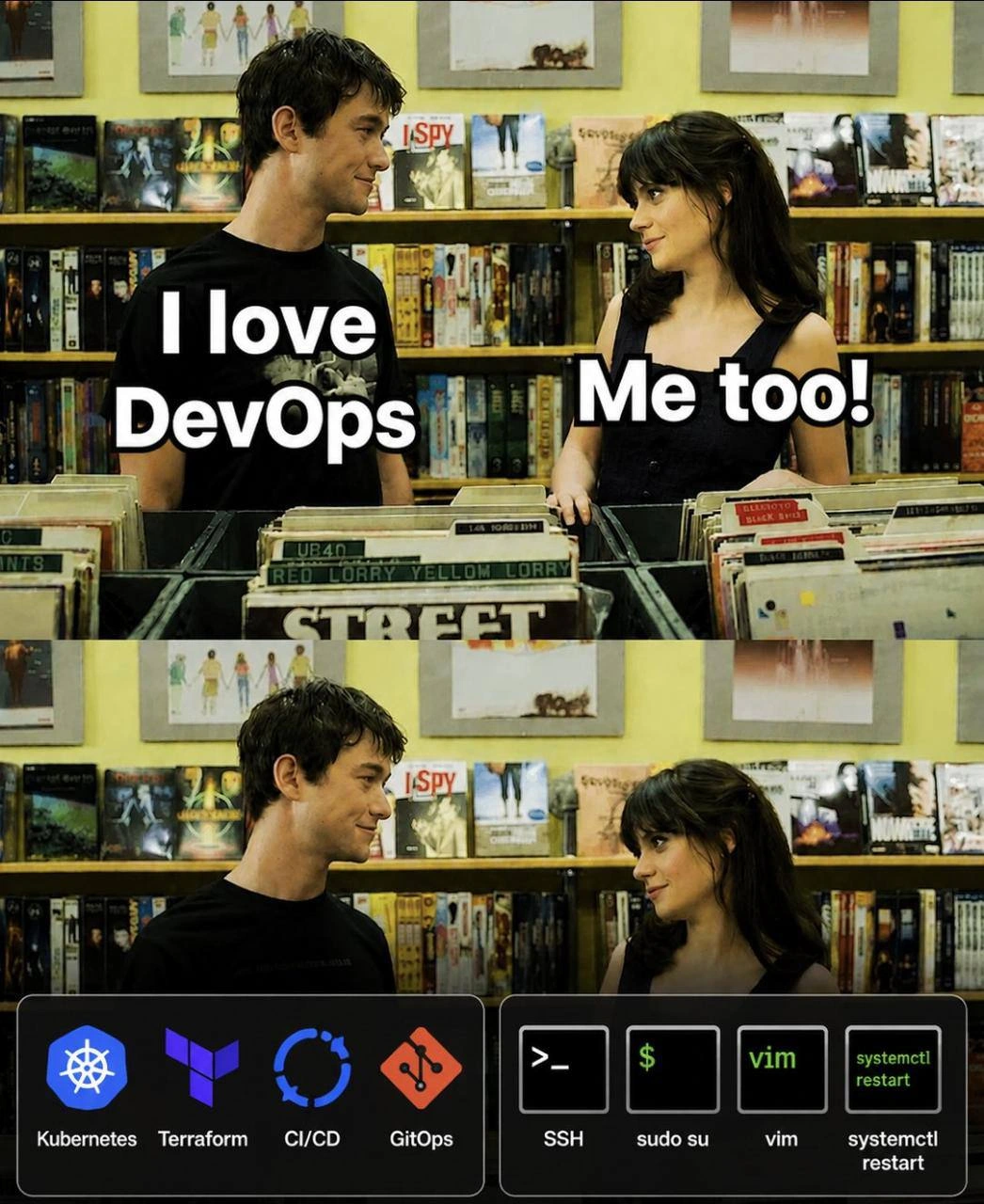
A screenshot of a tweet by Jeff Geerling (handle @geerlingguy), a well-known figure in the DevOps community. The tweet, posted on April 25, 2024, has a black background with white text. The profile picture shows Jeff Geerling, and a "Follow" button is visible in the top right. The tweet text reads: "If IBM decides to merge Terraform and Ansible, would that be Terrible?". The joke is a pun combining the names of two popular DevOps tools: Terraform (for infrastructure as code) and Ansible (for configuration management). Ansible is owned by Red Hat, which is a subsidiary of IBM. The humor lies in the portmanteau "Terrible" (Terraform + Ansible), suggesting that a merger of these distinct tools by a large corporation like IBM would result in a monstrously complex and unusable product. This resonates with senior engineers who have experienced the challenges of tool integration and the friction often introduced by large corporate acquisitions in the tech space
Comments

17
Anonymous ★ Top Pick The proposed tool 'Terrible' would finally unify infrastructure and configuration management into a single YAML file that's simultaneously declarative, imperative, and idempotent, but only runs on an OS/2-themed Kubernetes distribution sold by the kilobyte
  1. Anonymous ★ Top Pick

    The proposed tool 'Terrible' would finally unify infrastructure and configuration management into a single YAML file that's simultaneously declarative, imperative, and idempotent, but only runs on an OS/2-themed Kubernetes distribution sold by the kilobyte

  2. Anonymous

    Can’t wait for IBM’s “TerriBle”: run `terrible plan-playbook apply`, watch your HCL transpile to YAML, the state persist in DB2, and discover the only idempotent thing left is your disappointment

  3. Anonymous

    The real terror isn't the portmanteau - it's imagining the YAML-HCL hybrid syntax that would emerge, complete with IBM's mandatory 47-page enterprise license agreement and a new certification track that somehow requires both RHCE and HashiCorp badges just to write a hello-world deployment

  4. Anonymous

    The real horror isn't the name 'Terrible' - it's imagining the Terraform state file trying to reconcile with Ansible's YAML playbooks while IBM's enterprise licensing team watches. At least the migration path would be straightforward: just run `terraform destroy` on your career plans and `ansible-playbook find-new-job.yml`

  5. Anonymous

    IBM merging Terraform and Ansible: a tool where 'plan' opens a ServiceNow ticket, 'apply' waits for CAB, and state lives in DB2 - idempotent by virtue of permanent change freeze

  6. Anonymous

    Terraform's declarative state meets Ansible's imperative whims - the merger where idempotency goes terribly rogue

  7. Anonymous

    Terrible: when terraform plan emits an Ansible play that immediately mutates your tfstate - declarative and imperative unified in one irreproducible pipeline

  8. @Diotost 1y

    Why not Ansiform?

    1. @mihanizzm 1y

      Cause that's not funny

    2. @OdinochkaAO 1y

      AnsiFormGrantEtt 😂

  9. @SamsonovAnton 1y

    Anform Terrible

    1. @paul_thunder 1y

      Ansaform Terrible

      1. @AmindaEU 1y

        Ansa being Finnish for a trap might give you bonus points as well

        1. @paul_thunder 1y

          Trust me, that wasn't intentional, but if I could - I'd definitely did that intentionally 😄

  10. @nb30ac 1y

    It will be just IBMform

  11. @UncleDaddyRam 1y

    Transible will be more in line with current trends

    1. @leandrofriedrich 1y

      omagad homosex program how could they (this is a very obvious joke, do not take this seriously)

Use J and K for navigation