Corporate Swag: The Ultimate Burnout Cure
Why is this CorporateCulture meme funny?
Level 1: Sticker on a Broken Toy
Imagine you have a favorite toy car, and one day its wheel falls off. You’re upset because now the car is broken and won’t roll. Instead of fixing the wheel properly, your parent just slaps a fun sticker on the side of the car and says, “There, all better!” Does that solve the problem? Of course not – the car still has a missing wheel, even though it now has a nice sticker. You might giggle because it’s silly: the big problem (the broken wheel) is still there, and the sticker was just for show.
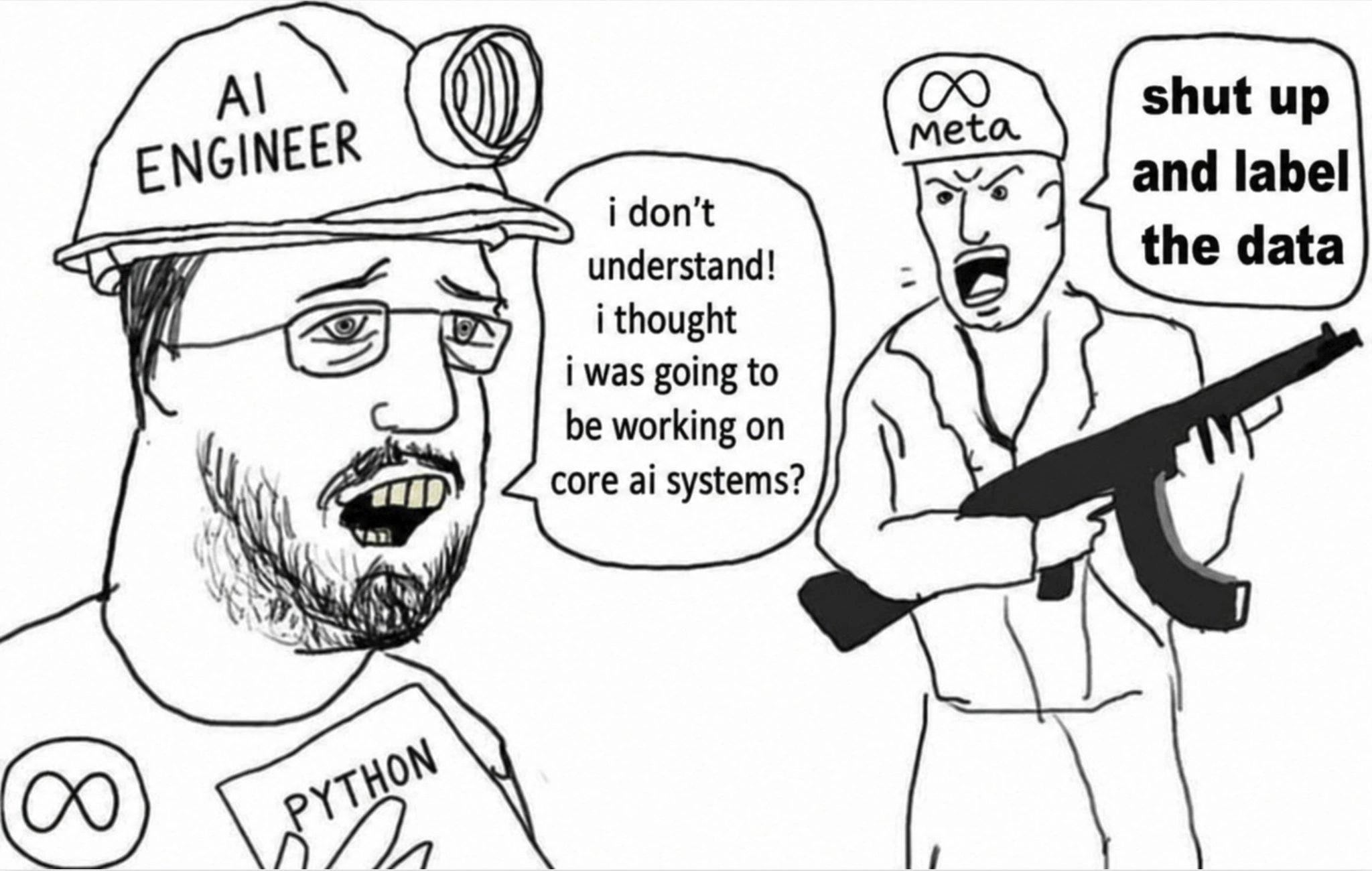
This meme is funny for the same kind of reason. The programmer’s life is the broken toy – it’s “falling apart” because of working too much and not getting paid enough (that’s a really big problem, like a missing wheel). The company’s HR is like the parent who puts a sticker on it – they give the programmer a free T-shirt and coffee mug with the company’s logo on it. That’s like saying “Here’s a little gift, hope that makes you feel better!” Everyone can see that a shirt and mug won’t actually fix anything (just like the sticker didn’t fix the toy). We laugh because the solution is so obviously not enough for the problem. It’s a simple, relatable idea: when someone tries to fix a huge leak with a tiny piece of tape (or a big problem with a small gift), it’s ridiculous – and that’s why it’s funny.
Level 2: Crunch Time Band-Aid
Let’s break down the meme in plain terms. We have a two-panel image. In the first panel, a man (from the Flex Tape commercials) represents “HR” (the Human Resources department). There’s a large tank of water with a big crack, and water is spraying out — that leak is labeled “Programmers life falling apart due to endless working hours and low wages.” This is describing a programmer who is struggling: working extremely long hours (so no personal time to rest – poor work-life balance) and being paid a low salary for all that effort. In short, the developer is headed for burnout (burnout means feeling completely exhausted, stressed, and no longer able to cope due to work). The programmer’s life is depicted as “falling apart” because constantly working overtime and being underpaid is unsustainable – it drains your energy, harms your MentalHealth, and can make your personal life very difficult. The cracked tank is a perfect visual for something breaking under pressure.
Now, what does HR do in the meme? In the second panel, the HR person uses a giant piece of Flex Tape to cover the crack and stop the leak. That tape is labeled “T-Shirt and coffee mug with office’s logo.” This represents the kind of company swag (free merchandise with the company logo) often given to employees: common examples are branded T-shirts, coffee mugs, water bottles, mousepads, etc. The idea is that HR is trying to fix the developer’s serious problems (overwork and low pay) by giving them a T-shirt and mug. It’s a satirical image saying, “Look, HR thinks handing out some free swag will fix everything!” This comes across as ridiculous – clearly, a T-shirt and mug won’t actually increase someone’s salary or reduce their working hours.
To a junior developer or someone new to office life, here’s the context: Companies sometimes respond to employee dissatisfaction or low morale with small perks and gifts. Have you ever heard of a pizza party being thrown after a tough week, or everyone getting company-branded hoodies at the end of a project? Those are examples of token appreciation. They can feel nice in the moment (who doesn’t like free pizza or a cool T-shirt?), but they don’t address the core issues causing the stress. In tech and gaming industries especially, there’s a notorious practice called “crunch time”: that’s when teams are pushed to work overtime (nights, weekends) as a deadline approaches. People get very tired; some start to burn out. Instead of fixing the schedule or hiring more help, management might say “We’ll reward the team with goodies!”
The Flex Tape meme format itself comes from a famous infomercial where the spokesman (Phil Swift) loudly demonstrates the tape’s miraculous ability by slapping it on a leaking tank to seal it instantly. It became an Internet meme used to joke about any quick fix solution that’s applied in a flashy, confident way to a very serious problem. In our meme, HR is Phil Swift and the “miracle solution” is company swag. The humor comes from the obvious mismatch: the audience knows that a simple piece of tape isn’t a proper fix for a huge crack, just like a mug and shirt aren’t a real fix for overwork and underpay. It highlights a gap in CorporateCulture – sometimes companies try to solve DeveloperPainPoints (like being overworked) with superficial rewards rather than meaningful changes.
In summary, the meme is saying: programmers are suffering from long hours and low wages (a very big, real problem), and the company’s HR swoops in with some free branded merchandise (a tiny, not-really-helpful “fix”). It’s a joke about how companies can be out of touch with what developers actually need. Anyone who’s experienced a hollow perk in place of real support will understand the punchline: a T-shirt isn’t going to fix burnout.
Level 3: Covering Cracks with Swag
This meme delivers a darkly humorous jab at corporate culture. In the classic Flex Tape meme format, we see an enthusiastic figure (labeled HR) slapping a piece of super-strong tape over a gushing leak. Here, the "leak" is captioned “Programmers life falling apart due to endless working hours and low wages.” In other words, the developer’s entire well-being is cracking under CrunchTime pressures, brutal hours, and low compensation. And what’s HR’s brilliant fix? A strip of tape labeled “T-Shirt and coffee mug with office’s logo.” It’s a satirical analogy: the company tries to patch serious DeveloperBurnout with token gifts. The humor bites because it’s painfully relatable in tech circles – a prime example of CorporateCulture trying to paper over systemic problems with swag.
Seasoned developers recognize this scenario as a workplace anti-pattern. Instead of addressing the root causes – say, unrealistic Deadlines leading to 70-hour weeks or chronic underpayment (classic developer_exploitation) – management reaches for a quick morale boost. It’s essentially a band-aid solution: “We know your life-work balance is shot and you’re mentally exhausted… so how about a free T-shirt and coffee mug?” 🙄 Because nothing says “we value you” like a polyester shirt and a $5 mug with a logo, right? The meme exaggerates this disconnect by visualizing HR literally slapping company swag on a crisis, as if WorkLifeBalanceTips were as simple as sipping coffee from a branded mug. Experienced engineers have sat through this song and dance: after a death-march project or endless on-call rotations, you get a goofy trinket or a pizza party instead of actual relief. The DeveloperHumor here comes from that shared cynicism – we laugh so we don’t cry about how common this is.
From a veteran coder’s perspective, this “swag fix” is analogous to a quick hack in code. Imagine a critical software bug flooding the system with errors – but rather than refactoring or thoroughly debugging, you just patch it with one if statement or silence the alarm. Sure, it stops the alert for now, but the underlying issue is still festering. In the meme, the developer’s life is the system on the brink, and HR’s swag is the flimsy patch. In technical terms, this is treating the symptom instead of the cause. It’s technical debt in HR form: the real problem (overwork and underpay) remains unresolved under that shiny sticker of “appreciation.” We senior devs have a term for this kind of management move – it’s not a solution, it’s a workaround. A very, very cheap workaround. To illustrate, here’s a tongue-in-cheek pseudocode of HR’s approach:
# HR's burnout quick-fix algorithm (satire)
if developer.burnout_level > CRITICAL_THRESHOLD:
give(developer, CompanySwag(items=["T-Shirt", "Coffee Mug"]))
print("All problems solved! 🎉") # Sarcasm: nothing is actually solved
Notice the if condition triggers swag distribution when burnout gets critical, as if swag is a valid remedy for exhaustion. The comment hints that this is sarcasm – obviously, a coffee mug isn’t a real solution for burnout any more than Flex Tape truly fixes a massive tank crack. The code analogy underscores the absurdity: it’s like telling a crashing program “don’t crash” and thinking the job is done. In real life, when programmers are teetering on collapse from CrunchTime and stress, HR might deploy what we jokingly call “swag ops” – a quick influx of branded goodies – hoping to boost morale. But senior engineers know this is just masking the symptoms. The problem (be it a leaking water tank or a burnt-out developer) will keep leaking through the cracks, no matter how hard you press that company-logo tape.
The satire cuts deep because it highlights a well-known DeveloperPainPoint: many companies prefer cheap, visible gestures over meaningful change. It’s easier (and cost-effective) for a company to print some motivational t-shirts than to, say, hire extra developers to reduce workload or offer competitive salaries. The water keeps spraying out from new leaks (think of declining mental health, reduced productivity, high turnover) while HR proudly points to the one spot they slapped a patch on. The mismatch between the severity of the problem and the triviality of the solution is the crux of the joke. Every experienced developer who’s sat in a “thanks for grinding nonstop” meeting and walked out with company swag will be nodding (or smirking) at this meme. It’s career humor with a razor’s edge: funny because it’s true, and a little depressing for the same reason.
Description
A two-panel meme using the 'Flex Tape' format featuring Phil Swift. In the top panel, a large glass tank is shown with a significant leak, representing a major problem. Text over the gushing water reads, 'Programmers life falling apart due to endless working hours and low wages.' Standing nearby with a cheerful expression is Phil Swift, labeled 'HR'. The bottom panel shows the famously inadequate solution: a hand slapping a piece of Flex Tape over the massive hole. The tape is labeled, 'T-Shirt and coffee mug with office's logo.' The meme satirizes the corporate culture practice of addressing deep-seated employee issues like burnout and low compensation with superficial, low-cost perks. It highlights the disconnect between the magnitude of the problem and the triviality of the solution offered, a sentiment widely shared among developers who have been offered company swag instead of meaningful improvements to their work conditions
Comments
9Comment deleted
HR's solution to burnout is company swag, which is like trying to patch a memory leak by changing your IDE's theme
HR’s “burnout mitigation plan”: issue a new hoodie, close the Sev-1 morale ticket, and declare the culture refactor complete - corporate Flex Tape for the monolith we’ve been promising to decompose since 2014
The best part is when they announce the swag at the all-hands meeting right after explaining why the company can't afford market-rate salaries but just secured another $50M in Series B funding for 'aggressive growth initiatives.'
HR's approach to developer retention follows the same architectural pattern as most legacy systems: apply increasingly elaborate patches to fundamental design flaws rather than refactoring the compensation model. It's like trying to fix a memory leak with print statements - technically you're doing *something*, but the root cause remains unaddressed while the system continues degrading
HR’s retention strategy is T‑Shirt‑Driven Development: cover the morale leak from endless hours and low pay with swag, flip the SLO dashboard to green, and wait for the TTL to expire when the engineers evict themselves
HR's swag rollout: containerized perks hotfixing retention leaks - still 503ing talent at scale
Swag-driven retention is like slapping Flex Tape on your SLOs - you might hide the attrition leak for a sprint, but comp bands and staffing levels are still flooding prod
Remind them who they belong to Comment deleted
That's not always management fault. Sometimes programmers so on project thath they commit on features they can't lift. Sometimes we should say NO to the management and to ourselves. Comment deleted