Skip to content
DevMeme
4210 of 7435
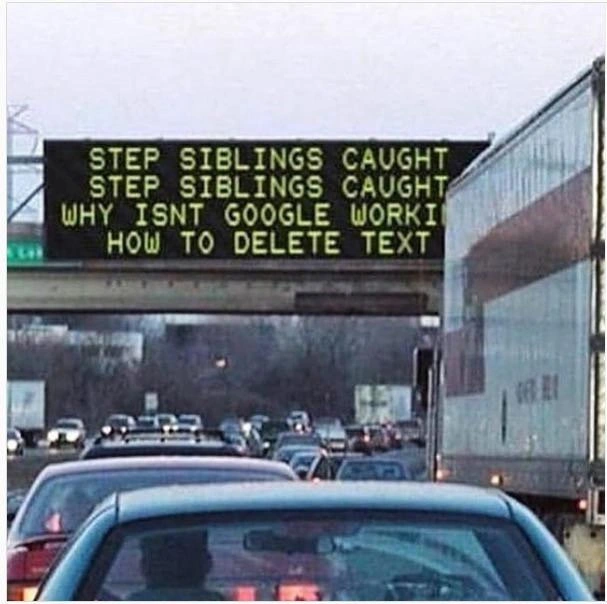
When the production road-sign accidentally dumps your Google queries to live traffic
OnCall ProductionIssues Post #4599, on Jun 28, 2022 in TG

When the production road-sign accidentally dumps your Google queries to live traffic

Why is this OnCall ProductionIssues meme funny?

Level 1: When Oops Goes Public

Imagine you’re trying to look up something private on your computer or phone, but by accident you end up showing it on a giant billboard for everyone around to see. 😳 For example, let’s say you’re in school and you mean to quietly ask Google a weird or silly question. But instead, you accidentally broadcast that question over the school’s loudspeaker or put it up on the big projector screen in assembly. Suddenly the whole school hears or sees your personal, panicked question! You’d feel totally embarrassed, right? You’d be scrambling to fix it or take it back, but it’s already out there. That’s basically what happened here with the highway sign. The person who controls the road sign accidentally put what they were trying to search for on Google onto the huge electronic sign that all the drivers on the highway could read. It was a big “oops” moment. People driving by probably laughed or went “What the heck is that?” because it was obviously not meant for them. It’s funny to everyone else because it’s such a silly, obvious mistake. But you can imagine the poor operator was freaking out, turning red, thinking “Oh no oh no – how do I erase this?!” It’s a lot like blurting out something in public that you only meant to say in private. Everyone makes mistakes, but this one was just very public, which makes it equal parts embarrassing and entertaining to witness.

Level 2: No Undo Button

Production is what we call the real live system that actual users (or in this case, the public) see. Here, “production” is the big electronic highway sign over the road. Normally, that sign displays useful info like traffic conditions or safety warnings. But in this case, it showed something completely unintended: the private search queries of the person operating it. In other words, we got a search_history_leak on a giant public screen.

How could that happen? Most likely, the operator (the person in charge of updating the sign) typed into the wrong box or program on their computer. Instead of typing their query into Google or a help menu, they accidentally typed it into the interface that controls the sign’s message. There was no safety filter or preview step to catch the mistake. The system just took whatever was entered and immediately pushed it out to the sign. Without a safe staging or preview mode (a way to test changes privately before the public sees them), their input went straight to the highway sign in real time. As soon as they hit “Enter,” the sign updated with those words for all drivers to see – a classic “oops_production_change” moment. And there was no quick fix or rollback either (meaning no easy way to undo or revert to the previous message) once they realized what had happened.

If we read the sign’s messages one by one, we can piece together the story of the operator’s panic. First, we see STEP SIBLINGS CAUGHT (and it appears twice). That looks like part of whatever they were initially trying to search for. We don’t know why they were searching that phrase – it’s a bit random and possibly personal – but it definitely wasn’t meant to be a highway alert. Drivers seeing that probably went “Huh? That’s not about traffic…”. Next comes WHY ISNT GOOGLE WORKI. This was probably the start of them typing “WHY ISN’T GOOGLE WORKING?” – perhaps because at that crucial moment, the Google search page wasn’t loading or the internet was acting up. The text got cut off (likely when they pressed Enter too soon), so all drivers saw was half a sentence. You can imagine the operator’s frustration: the one time they desperately need Google, it’s unresponsive. Talk about DebuggingFrustration! Finally, we see HOW TO DELETE TEXT. By now the operator has realized the horrible mistake (their queries are on the sign) and is trying to find a solution. Ironically, they attempted to search for “how to delete text” – and that, too, ended up being sent to the sign! So every driver essentially read the thought process of someone frantically trying to undo a mistake. It’s as if their computer said, “Sorry, I’ll have to display your every cry for help to the world.” Not exactly the help they were looking for.

In a well-designed system, there would be safeguards to prevent this kind of fiasco. For example, the sign’s control software could have an edit-preview mode where you compose the message and double-check it before a second confirmation actually displays it. There might also be user permissions or at least a big pop-up that says, “Are you sure you want to put this message live?” Unfortunately, it seems those checks were absent or turned off here. The interface might have been confusing (perhaps a text input box that wasn’t clearly labeled), or the operator was in a hurry and skipped steps. Either way, a simple mistake was able to go straight through to the live sign with no barriers.

Once the wrong text was up there, how do you fix it? Ideally, you’d have a one-click undo or a quick way to revert to the last correct message. In software deployment this is called a rollback – going back to a previous safe state if something goes wrong. On a highway sign, a “rollback” would mean quickly restoring the previous proper message or at least clearing the sign to blank. Here, the fact that the operator was reduced to frantically querying “how to delete text” tells us there was no obvious rollback feature. They genuinely didn’t know how (or didn’t have permission) to quickly remove the text. So the embarrassing messages probably stayed up longer than anyone would like, until someone figured out the manual steps to clear or override them.

For those of us in tech, this incident is both funny and cringe-inducing. It’s funny because it’s such a human mistake – we can all easily imagine clicking the wrong window or sending a message to the wrong chat. It’s cringe-y because it happened on a public platform, and we know how serious a ProductionIssue can be. There’s an old joke acronym PEBKAC, which stands for “Problem Exists Between Keyboard And Chair.” That’s a tongue-in-cheek way tech folks say the error was caused by the user, not the computer. This situation is a textbook PEBKAC case: the computer did exactly what it was told (display these words), but the human told it the wrong thing.

If you’re a junior developer or just starting out, the big lesson here is about context and caution. Always double-check that you’re in the right place before doing something that affects real users. It’s like making sure you’re sending a private message versus posting in a public channel – or saving your work to a test server, not the live server. In operations (“ops”), there’s a common piece of advice: always know which system you’re on before you hit enter. This highway sign mistake is a dramatic example of what can happen if you don’t. One distracted moment can turn into a very public mess.

After an incident like this, the team responsible would definitely do a follow-up analysis (a postmortem in engineering terms). A postmortem is basically a report or meeting to discuss what went wrong and how to prevent it in the future. They’d ask: How did our process allow a Google query to go live? What safeguards failed or were missing? Then they’d take actions: maybe update the software to include a preview mode or add an “Are you sure?” prompt, or train the staff better so they’re more careful with the sign interface. The goal is to make sure this kind of public oops never happens again. It’s embarrassing for the organization, but if they learn from it, at least something good comes out of the ordeal. And for everyone else who saw the photo or reads about it, it’s a funny story with a little cautionary tale wrapped inside: even the tools meant to inform us (like road signs) are run by humans, and humans are not error-proof.


Level 3: Signs of a Meltdown

Picture this: rush-hour traffic is crawling, drivers are glancing up at an overhead LED sign expecting a construction warning or accident update. Instead, the sign is spewing an IT operator’s frantic Google searches in real time. As an on-call engineer who’s seen a fair share of ProductionIssues, I have to wince-smile. This isn’t an alien hack or a hardware glitch; it’s a grade-A HumanError broadcast in 10-foot letters. In other words, a mortifying public_display_bug where the “bug” isn’t in the code at all – it’s the person at the keyboard.

One moment of interface confusion turned that highway message board into a live feed of the operator’s panic. The text STEP SIBLINGS CAUGHT repeats twice – maybe they hit Enter too early or thought it didn’t go through the first time. Then WHY ISNT GOOGLE WORKI pops up, abruptly cut off, implying even Google (or the network) gave out at the worst possible moment. Finally, the coup de grâce: HOW TO DELETE TEXT appears, the desperate last-ditch query. We are literally seeing an operator_panic play out line by line: initial mistake, critical tool failing, frantic attempt to undo. It reads like an incident timeline in real-time, except the whole world can watch. You can practically hear the facepalms from the IT team. (For the motorists below, imagine the confusion: “Uh, what did I just read? Is Google broken? And who’s caught doing what with step siblings?!”)

For seasoned devs, this scenario is equal parts hilarious and horrifying. It’s like accidentally committing your embarrassing debug logs to main, or running DROP TABLE users; on the production database because you had the wrong terminal open. We all dread that "Oh no... that was prod" moment. Here it happened in the most public way imaginable. The humor comes from the absurd transparency: the road sign is effectively displaying the step-by-step postmortem of its own failure as the failure is happening. If they write an incident report later, those exact phrases will be bullet points:

  1. Mistaken input sent to production (“STEP SIBLINGS CAUGHT”).
  2. Critical tool not available (“WHY ISNT GOOGLE WORKING”).
  3. No rollback or delete mechanism (“HOW TO DELETE TEXT”).

It’s the nightmare of shipping un-reviewed strings straight to production — a ProductionIncident born from a simple slip, now immortalized in a viral photo. Painful for the team, comedy gold for everyone else.

So how did it get this bad? Lack of safety nets. Ideally, a digital_road_sign system would have safeguards: a preview mode, a second pair of eyes, at least a big “Are you sure?” confirmation before anything goes live. Maybe even locked-down preset messages instead of free-form text, to prevent exactly this. But in operations, speed often wins over caution. When there’s a sudden traffic hazard, operators need to update signs fast – no time for multi-step reviews. That convenience becomes a liability if someone mistakes the sign’s input field for a Google search box. It’s a classic trade-off: agility vs. safety. Ninety-nine times out of a hundred, it’s fine... then you get the one time an exhausted operator tries to Google on the wrong screen. Cue chaos. And with no straightforward rollback mechanism (no instant “undo” button for a highway sign), every keystroke was essentially permanent until they could figure out a fix. The system offered no_rollback and no mercy in that moment.

This incident will no doubt be prime incident_postmortem_material. The root cause? 100% PEBKACProblem Exists Between Keyboard And Chair – amplified by poor UX design. In plain terms, the technology did exactly what it was told, but the human told it the wrong thing. It’s the kind of bug you can’t entirely blame on software, yet the software could have been friendlier to clumsy humans. A battle-scarred engineer might shake their head and say, “There but for the grace of sanity go all of us.” We’ve all relied on Google and quick hacks in a pinch; and we’ve all gotten bit by context switches and fat-finger mistakes. There’s no unit test for “admin panicked and typed in the wrong window.” The lesson learned (aside from double-checking which screen is active) is that even mundane systems need sensible safeguards. At least this fiasco, while embarrassing, wasn’t dangerous — no lives lost, just an operator’s pride. And for the rest of us, it’s a free cautionary tale: if you think your last deploy was bad, hey, at least you didn’t live-stream your search history to an entire highway of commuters.


Description

A photo of rush-hour traffic shows cars queued beneath an overhead LED highway information sign. Instead of the usual lane-closure notice, the amber block lettering reveals what looks like a panicked search history: “STEP SIBLINGS CAUGHT”, “STEP SIBLINGS CAUGHT”, “WHY ISNT GOOGLE WORKI”, and “HOW TO DELETE TEXT”. The repetition and truncated word suggest an operator has live-edited the board, hit enter too early, and is now frantically searching for an undo. For developers, it’s the nightmare of shipping un-reviewed strings straight to production - an incident born of human error, insufficient safeguards, and nonexistent rollback mechanisms
Comments

6
Anonymous ★ Top Pick Pro tip: don’t wire the highway sign to the same Kafka topic as the ops console - observability shouldn’t include the on-call’s browser history
  1. Anonymous ★ Top Pick

    Pro tip: don’t wire the highway sign to the same Kafka topic as the ops console - observability shouldn’t include the on-call’s browser history

  2. Anonymous

    When you accidentally deploy to prod instead of staging and your Elasticsearch cluster starts serving raw query logs to the public API

  3. Anonymous

    This is what happens when you test in production without a rollback strategy - except your 'production environment' is a highway sign visible to thousands of commuters, your authentication was probably 'admin/admin', and your only debugging tool (Google) just went down. The attacker's thought process is perfectly captured in real-time: exploit found → inappropriate content deployed → realization of mistake → attempt to Google 'how to fix' → Google fails → existential panic about how to undo. It's the infrastructure security equivalent of a git push --force to main, except there's no force-push --force-with-lease to save you, and your entire incident response is now immortalized in traffic camera footage and social media. At least they didn't try 'sudo delete text'

  4. Anonymous

    Prank deployed to immutable highway DMS, no airgapped revert, and the controller's firewall blocks Stack Overflow - SRE hell on I-95

  5. Anonymous

    Single-tenant CMS, multi-tenant blast radius - never put draft and broadcast on the same Kafka topic, unless your incident comms plan includes six lanes of throughput

  6. Anonymous

    Someone wired the highway sign to the “user_searches” Kafka topic instead of “traffic_alerts” - event-driven is great until your consumer lag is measured in miles of privacy incident

Use J and K for navigation