
CS Fundamentals Post #4974 · source on Telegram
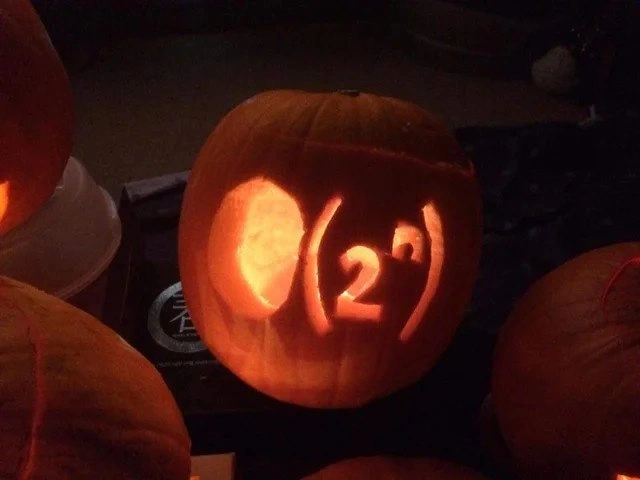
Carve out exponential fears with this O(2^n) complexity Halloween jack-o-lantern
Description
The photo shows a dimly lit room with a glowing pumpkin that has been carved into a jack-o-lantern. Instead of a traditional face, the carving displays the Big-O notation "O(2^n)": a capital letter O, an opening parenthesis, the number 2, a caret indicating exponentiation, the letter n raised slightly, and a closing parenthesis. The interior candle light makes the mathematical symbol shine brightly against the dark orange rind, while other uncarved pumpkins sit nearby in the shadows. For software engineers, the joke is that exponential-time algorithms are the scariest monsters of all - perfect for a Halloween decoration that playfully warns about performance nightmares in algorithm design and complexity analysis

More like this
More like this in CS Fundamentals →


Use J and K for navigation
Comments
6Comment deleted
The real Halloween horror: discovering O(2^n) buried in the hot path five minutes before the midnight deploy
Finally, a pumpkin that accurately represents the time complexity of our Halloween deployment pipeline after someone decided to recursively validate every config file against every other config file
When your Halloween decorations accurately reflect the runtime of your recursive solution without memoization - at least the pumpkin will decompose faster than O(2^n) will finish executing on production data
This O(2^n) is the only jack‑o’-lantern that makes an architect reach for memoization, pruning, and the incident runbook simultaneously
O(2²): Because in prod, n=2 forever - scaling would just melt the candle
Carved O(2^n) into the jack‑o’-lantern - because the only thing scarier than Halloween is a “temporary brute force” hiding in the hot path that autoscaling can’t outrun