Skip to content
DevMeme
6292 of 7435
The Classic Go Language vs. Go Game Misunderstanding
Languages Post #6897, on Jun 18, 2025 in TG

The Classic Go Language vs. Go Game Misunderstanding

Why is this Languages meme funny?

Level 1: Same Sound, Different Stuff

Imagine two friends both say, “I love football!” and they get super excited because they think they agree. But one friend is thinking of soccer ⚽ (what many countries call football), and the other friend is thinking of American football 🏈 with the helmets and touchdowns. Uh-oh! They both used the word “football,” but each meant a completely different game. They only realize it when one starts talking about kicking a round ball and the other mentions throwing an oval ball. Suddenly, it’s a funny mix-up. That’s exactly what’s happening in this meme. Two people thought they loved the same thing called “Go,” but one meant a computer language and the other meant a board game. It’s funny and a little awkward – kind of like two people using the same word but speaking about two separate things without knowing it. When they figure it out, you can imagine them laughing and saying, “Oh! I didn’t mean that Go!” It’s a silly reminder that just because you hear the same word, it doesn’t always mean the same thing to everyone.

Level 2: One Word, Two Meanings

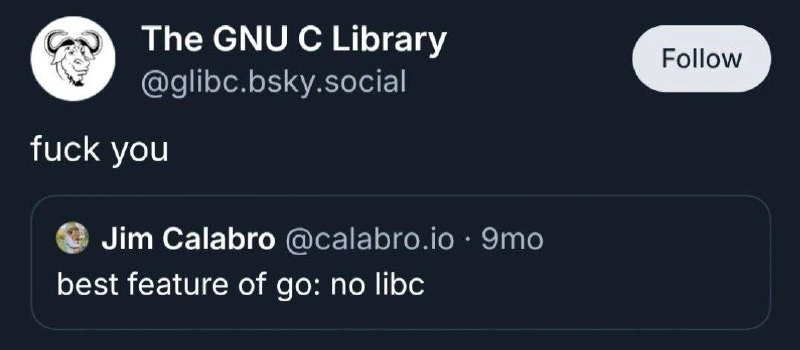
The meme might seem simple, but there’s a lot to unpack for a newer developer. In the first panel, two people are excited because they think they share the same hobby. They both say “I love Go.” However, “Go” has two different meanings here, and each person has a different one in mind. The second panel makes this clear by showing exactly what each person was referring to. Over the man, we see a snippet of Go source code, and over the woman, we see a Go board game with black and white pieces. So effectively, the man was talking about the Go programming language (often nicknamed Golang in developer communities), and the woman was talking about Go, the strategy board game. It’s a classic case of miscommunication: the same word referring to two separate things. Let’s break down those two to understand why this mix-up is both funny and relatable:

  • Go (the programming language): This is a popular programming language created by Google engineers around 2009. It’s known for being simple, efficient, and great at handling multiple things at once (thanks to built-in support for concurrency with goroutines). One hallmark of Go is how it handles errors. Instead of throwing exceptions like Java or Python, Go functions usually return an error value along with their result. That means Go programmers write a lot of code to check errors. In fact, the snippet shown in the meme – if err != nil { return err } – is something you’ll find repeatedly in Go projects. It literally means: “if there was an error (err is not nil), then stop and return that error back to the caller.” It’s an idiomatic way in Go to propagate errors up the call stack. To any Go developer, seeing if err != nil { return err } is as familiar (and maybe as unexciting) as seeing “Hello, World!”; it immediately signals “hey, we’re talking about Go the language.” It’s kind of an in-joke among Go programmers that error handling involves writing this check over and over – so much that everyone recognizes it instantly.

  • Go (the board game): Go is also the name of a very famous board game. It originated in China over 2,500 years ago, which blows my mind – people were playing Go long before computers, or even paper as we know it, existed! The game is played on a 19x19 grid board (sometimes smaller for beginners) with black and white stones. Each player takes turns placing a stone of their color with the goal of surrounding territory on the board. The rules are actually quite simple, but the game itself becomes incredibly rich and complex – so much so that it has captivated people for centuries, and more recently it became a huge milestone for artificial intelligence (Google’s AlphaGo program famously beat a world champion in 2016, which was a big deal in AI). In casual conversation, fans of the game will just call it “Go.” If someone says “let’s play Go” and you see a wooden board with a grid and bowls of stones, you know they mean the game. It has nothing to do with programming; it’s more about strategy and patience.

Now, knowing these two definitions, you can see what happened. In the first panel, neither person clarified which “Go” they meant – each assumed the other meant the same thing they did. This is a communication mistake that is easy to make. The guy (likely a software developer) meant “Go” as in the programming language he codes in and loves for its clean syntax and powerful standard library. The girl (maybe also a developer, or just someone who enjoys strategy games) meant “Go” as in the board game she possibly plays at a cafe or online. When they each said “I love Go,” each thought, “Great, this person loves my interest!”

The humor and relatability come from that second panel reveal: we, the audience, finally see the evidence of what each one was actually thinking. The error_handling_snippet on his side and the Go board on her side make it crystal clear that a mix-up happened. Seasoned devs find it extra funny because the error snippet is so stereotypically Go (the language) that it’s almost a trope. And having a big Go board in the other person’s thought bubble (in place of her caption) similarly screams board game Go. It’s an expectation_mismatch illustrated visually.

For a junior developer or someone new to these references, the key takeaway is: the word "Go" can refer to two very different things. In tech circles, if someone mentions they love Go, you might need a moment to figure out if they’re talking about coding or about laying down stones on a wooden board. The meme is playing on that double meaning. It’s like a nerdy “Who’s on first?” situation where both people think they’re agreeing, but actually each one is talking about something else entirely. This often happens when we drop context in communication. In developer communities (DevCommunities), we use a lot of jargon and assume others know what we mean. But sometimes, as here, a term can belong to two different jargons! Without additional clues, confusion happens.

The record store setting of the meme (with vinyl records and DVDs in the background) is a popular image template used to show two people bonding over something. In the original scene (from the movie 500 Days of Summer), it was music bringing them together. Here, that format is repurposed for a tech joke: the initial bond (“hey, we share a passion!”) and then the sudden comedic realization (“oh… not exactly that same passion”). It’s relatable humor for developers because many of us have had moments of miscommunication just like this – maybe not about “Go” specifically, but about other terms where our mind jumps to a tech meaning and someone else meant something completely different (or vice versa). It reminds new developers that clear communication is important, and that our technical words can sometimes mean something totally different outside our software bubble. Always good to clarify!

Level 3: Naming Things is Hard

At first glance, this meme is a perfect storm of naming collision humor that only developers could concoct. Two people proudly declare, “I love Go,” and for a blissful moment they think they’re on the same page. But as the second panel reveals, their context was completely different – a classic ambiguous_term_collision. The guy is talking about the Go programming language, while the girl meant the ancient board game Go. This twist hits home for seasoned engineers because it satirizes the perennial communication bugs that arise when we drop domain context. In coding terms, they experienced a human-scale namespace collision – the same identifier ("Go") mapped to two incompatible referents. It’s like a function name overloading gone wrong in real life: without explicit type information (or at least a clarifying word or two), the “compiler” of conversation inferred the wrong meaning.

Notice the visual clues in panel 2 that tip off each person’s intended meaning. Over the guy, there’s a beige code snippet:

if err != nil {
    return err
}

Any Go developer’s eyes light up at this because it’s the quintessential Go idiom for error handling. In Go (the language), functions often return an error, and the very first thing you do after a call is check if err != nil { return err }. This little four-line ritual is so idiomatic that seeing it is like a secret handshake among Go programmers. It screams “this is Go code!” as loudly as curly braces scream C-like language or System.out.println screams Java. The snippet is practically boilerplate in every Go project – an instantly recognizable bit of source that seasoned Go devs have written ten thousand times (usually while wishing for generics or a try-catch, at least before Go 1.20’s errors.Join). By using that specific if err != nil { return err } snippet, the meme telegraphs his side of the story: he’s a gopher (Go programmer) through and through. Seeing it, experienced devs can’t help but smirk – yep, that’s Go alright, with its explicit error returns and no exceptions. It’s a tiny in-joke about Go’s design philosophy: simple, explicit error handling that some love for its clarity and others playfully gripe about due to its verbosity.

Meanwhile, over the woman in panel 2 is an image of a 19×19 Go board (called a goban), covered in black and white stones. Any board game enthusiast or AI researcher would recognize this as Go, the strategy game. It’s a classic arrangement of stones mid-game, possibly an endgame scenario judging by the dense clusters. To a programmer’s eye, those black and white pieces might look like binary bits or pixels, but to a Go player each stone is a move in an ongoing intellectual duel. The board’s sizable grid and the clusters of stones telegraph that this isn’t chess or checkers – it’s that other game: the one known for its elegant rules and mind-boggling complexity (infamously, more possible Go positions than atoms in the universe). In other words, her “Go” is the 3,000-year-old board game beloved in East Asia and by strategy geeks worldwide.

Now here’s why this mix-up tickles developers: we deal with naming confusion all the time, albeit usually in code. Think of variables or functions named poorly – one module calls something ProcessData meaning one thing, another module has a ProcessData doing something else, and boom, confusion ensues. Or two microservices talk about an “invoice” object but each defines it differently – cue hours of debugging. In this meme’s scenario, the word “Go” is like a single identifier with two definitions in different libraries (one in the “programming languages” library, one in the “games” library) accidentally imported into the same conversation without qualification. The result? A context bug: both devs think they’ve found a mutual passion, only to discover a type mismatch. It’s a relatable humor point for developers because we’ve all been bitten by something like this. Maybe not literally confusing a board game with a programming language, but certainly misinterpreting a term a teammate used because we assumed a different context.

There’s also a community inside-joke here. The Go language was created at Google in 2009 and quickly grew a passionate developer community – they often call themselves gophers (after Go’s cute gopher mascot). Meanwhile, the game of Go has an avid community of its own, with players who might spend years studying strategies for surrounding territory and achieving “atari” and “ko” (no, not KO like in boxing – ko, a special Go rule!). The meme humorously portrays two individuals who likely belong to these very different DevCommunities but momentarily mistake each other for a kindred spirit. It’s as if a Kubernetes expert accidentally wandered into a board game meetup: “You love Go? I love Go!” — a heartwarming moment of geeky connection — record scratch — “...oh wait, we’re not talking about the same thing.” The abrupt realization in panel 2 is where every engineer chuckles, because who hasn’t seen a conversation go off the rails due to an expectation_mismatch? In real life tech chatter, this could happen with words like “Java” (coffee vs. Java the language), “Python” (snake vs. language), or even non-language terms like “Spring” (a season… or the Java framework). We usually resolve it with a laugh and a clarifying sentence, much like these two devs will have to do after the meme ends.

On a deeper level, this highlights how crucial context is in communication. In programming, we solve ambiguities by namespacing, adding prefixes, or choosing unique identifiers – imagine if the language Go had been named something distinct like “GopherLang”, this mix-up might never happen (in fact, many people do say Golang for clarity on search engines). Similarly, in human conversation, adding a bit of extra info (“I love Go, the programming language” or “Go, as in the board game”) would act like a namespace qualifier and prevent the bug. But of course, in casual chat we often omit that for efficiency – and usually the surrounding context disambiguates it. Here context failed: maybe they met in a generic setting (like that record store, not at GopherCon or a board game club), so each assumed their own context as default. That false assumption is developer life 101: whether it’s assuming a time format, a character encoding, or which “Go” someone means, you learn quickly that clear communication saves a lot of headache. The meme playfully reminds us that even two engineers can bond over Go and still experience a communication segfault when their personal namespaces collide.

In summary, the humor operates on multiple levels for a tech audience. There’s the surface pun of one word meaning two things – a classic joke format – elevated by the specificity of these two things being beloved in different nerd spheres. There’s the recognition factor of that Go code snippet, instantly generating a knowing grin from anyone who’s handled errors in Go (oh, the countless return err lines we’ve written…). And there’s the meta-joke that in an industry obsessed with precise languages (programming languages, APIs, protocols), we still fall prey to plain old human miscommunication. It’s a gentle poke at our tendency to assume the context we live in is universal. Seasoned devs will nod knowingly because they’ve learned (sometimes the hard way) that one person’s obvious “Go” is another person’s something-else entirely. As the saying goes in software engineering: there are only two hard things – cache invalidation and naming things. This meme is basically that aphorism come to life. The name “Go” turned out to be harder than the creators probably expected, yielding a comedic collision of domains. And the result? A punchline that practically writes itself – we can almost hear both devs thinking, in unison, “Oops, error not nil; better handle that and clarify!”.

Description

A two-panel meme based on a scene from the movie '500 Days of Summer' with Joseph Gordon-Levitt and Zooey Deschanel in a record store. In the top panel, the man says, 'I love Go,' and the woman replies, 'Me too,' implying they share a common interest. The bottom panel reveals their different interpretations. An overlay by the man shows a snippet of Go (Golang) code: 'if err != nil { return err }', which is the standard, verbose error handling pattern in the language. An overlay by the woman shows a Go board with a game in progress, referring to the ancient strategy board game. The humor arises from the ambiguity of the word 'Go,' contrasting a niche programming language topic with a well-known board game. For developers, the meme is relatable due to the ubiquity of this specific error-handling code, which is a frequent topic of discussion and debate in the Go community
Comments

17
Anonymous ★ Top Pick Go's error handling is so explicit, you have to check for an error to see if you have an error. It's the only language where your code's main narrative is a series of existential checks before anything interesting happens
  1. Anonymous ★ Top Pick

    Go's error handling is so explicit, you have to check for an error to see if you have an error. It's the only language where your code's main narrative is a series of existential checks before anything interesting happens

  2. Anonymous

    Classic rubber-duck moment: you finally find someone who ‘gets Go’, and it still returns a type error at runtime - human runtime

  3. Anonymous

    After 15 years of architecting distributed systems, you realize the real romance killer isn't 'if err != nil' - it's explaining to the board why your microservices need 47 different error handling strategies while the monolith team ships features with a single try-catch

  4. Anonymous

    This perfectly captures the Go community's eternal struggle: explaining to non-programmers that you're passionate about a language where 'if err != nil' appears in literally every function, not an ancient board game that takes years to master. Though honestly, debugging a production panic at 3 AM versus playing a 6-hour Go match against a dan-ranked player? Both require similar levels of strategic thinking and acceptance of inevitable suffering. At least the board game doesn't have breaking changes in minor version updates

  5. Anonymous

    Whichever Go you meant: avoid cycles with the board’s ko rule and the language’s comma‑ok - both reward the senior move of an early return

  6. Anonymous

    She propagates groups, he propagates errors - concurrency's power couple

  7. Anonymous

    Different Go, same game theory: she manages liberties, he manages early returns - miss one 'if err != nil' and your production cluster gets captured

  8. @SamsonovAnton 1y

    🧑: I love Brainfuck. 👩‍🦰: I love to fuck brains, too.

  9. @anonusernametg 1y

    Ohh so that board game is called Go I never really bothered to look it up lol

    1. Deleted Account 1y

      I know a dangerous game, The c++, can u play it?😁 That's very diffacut to play, im sure

      1. @anonusernametg 1y

        Been there, done that. NOT recommended

        1. Deleted Account 1y

          Im currently in java game

          1. @anonusernametg 1y

            You like to live dangerously and hard lol

            1. Deleted Account 1y

              because I'm on the knife's edge

    2. @patsany_horosh_mne_v_dm_pisat 1y

      I never look something up, I just ask

  10. @MrZarei 1y

    nil

    1. @itsTyrion 1y

      ?

Use J and K for navigation