A Programmer's First Paycheck: An Unexpected Origin Story
Why is this Career HR meme funny?
Level 1: Lemonade Stand Lessons
Imagine a kid who decides he wants to make money by running a little lemonade stand. He buys lemons, sugar, and cups and sets up a table outside, excited to earn his first dollar selling tasty lemonade. But sadly, no one comes to buy any. By the end of the day, he's made zero money from lemonade. Feeling frustrated, he does something drastic: he sells his lemonade stand itself (and the pitcher and cups) to another kid just to get some quick cash. Now he finally has a bit of money — but there's a catch: he no longer has the stuff needed to sell lemonade anymore!
This scenario is both funny and a little sad. It's funny because it's not what you expect: the kid "succeeded" in making money, but only by giving up the very thing he needed to reach his goal. It’s like trying to win a race by selling your running shoes. Sure, you got some money, but now you can't keep running the race you wanted to win. Everyone can understand that feeling of wanting something to work out and then, when it doesn’t, taking a shortcut that kind of defeats the original purpose.
In the programmer’s case, the meme is doing the same thing. The "lemonade stand" is his laptop and the "lemonade" is his coding work. He wanted to earn money by coding (selling lemonade), but since that didn't happen yet, he jokingly says he earned money by selling his laptop (selling the stand). It makes us laugh because we know he had to abandon the very plan he was proud of. Even someone with no tech knowledge can giggle at the silliness of having to sell your important tool just to claim you made some money doing what you love. The joke makes us smile and also root for him a little — hopefully he'll buy a new laptop and get back to coding, so next time his money really does come from programming!
Level 2: Selling the Tools
This meme is essentially a screenshot of a tweet that delivers a joke about being a new programmer and struggling to make money. Let's break down what's happening:
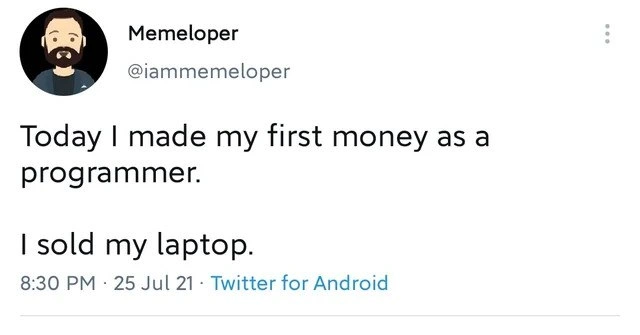
The Tweet Format: The image shows a typical Twitter post. In the top left, there's a small avatar (profile picture) and the name "Memeloper" with the handle @iammemeloper. This tells us who posted it. Below that, we see the tweet text itself in clear black font on a white background. At the bottom of the screenshot, there's the timestamp "8:30 PM · 25 Jul 21" and the note "Twitter for Android." These details show when it was posted and from what device (in this case, via the Twitter app on an Android phone). This style — screenshotting a funny tweet — is common for sharing jokes in forums and group chats, because it captures the original post exactly as it appeared on Twitter.
The Joke Text: The tweet says, "Today I made my first money as a programmer." This sounds like the person is announcing a proud achievement – usually, that would mean they got paid for a coding job or a freelance project. But the next line reveals the twist: "I sold my laptop." This means that the only money they managed to get wasn't from coding at all, but from selling their laptop, which is the main tool they use for programming. The humor comes from this unexpected contrast. It’s like saying, "I finally succeeded in making money as a coder... by giving up the very thing I need to code!"
Why It's Funny: For many people starting out in software development (often called junior developers or just juniors), earning that first dollar from programming can take longer than hoped. You might spend months learning to code, buying a decent laptop, maybe doing some projects, and still have no income yet from programming itself. This tweet makes fun of that situation in a light-hearted, self-critical way. The author is poking fun at themselves: instead of making money by writing software, they only made money by selling their computer out of desperation. It’s a form of self-deprecating humor common among developers, meaning they joke about their own shortcomings or tough situations. The idea is obviously absurd — normally, selling your computer is the last thing you'd want to do if you aim to be a programmer, since without it you can't easily practice or work. That absurdity is exactly why it's funny. The person basically admits, "I haven't earned anything by coding yet, so the only profit I got was by literally selling my coding machine." It's a joke that carries a hint of frustration that many beginners feel, turned into something to laugh about.
Key Terms and Real-World Meaning: A programmer is someone who writes code to create computer programs or apps. Usually, programmers get paid for using their coding skills to solve problems or build products. Income (or "money as a programmer") means getting paid for that work – like receiving a salary or freelance payment for programming. A laptop is a portable personal computer; it's often the primary tool a developer uses to write and test code. When the tweet says "I sold my laptop," it means the person gave up their computer in exchange for cash. Essentially, they turned their physical asset (the computer) into money. So instead of earning money by doing programming work, they got money by selling the hardware they would normally use to do that work. It’s an ironic situation: without a laptop, continuing as a programmer becomes pretty much impossible, so it's a short-term gain with a long-term loss. People laugh because it’s clearly a joke — nobody actually aims to advance their programming career by getting rid of their computer! The tweet is exaggerating to make a point about how hard it can be to make that first buck in coding.
Relatable Early-Career Struggles: This joke falls under developer humor, especially career humor. It resonates with a lot of folks in tech because it's common to have a period where you're learning and maybe even spending money (on courses, books, a good laptop) without yet having a job or paying project. Many of us remember what it felt like to desperately want that first paycheck from coding. If you've ever felt discouraged that your programming skills weren't making money right away, this meme hits home in a funny way. It's saying "Yup, I'm so far from making money coding that I had to get money by other means (selling my stuff!)." In developer communities, people share jokes like this to feel a sense of we're in the same boat. It’s comforting and humorous for a beginner to know others have felt the struggle too. Even more experienced programmers chuckle at it, because they remember being in that situation or mentoring newbies through it. The Juniors category tag on this meme is there because it directly speaks to the experience of being new in the field. And the reason it's tagged as Career_Humor is that it's joking about the career aspect (making a living) of being a programmer, not about a specific coding language or error.
The "Twitter for Android" Clue: A small but funny detail in the screenshot is the line that says "Twitter for Android." That indicates the tweet was posted using the Twitter app on an Android phone. Why mention this? In context of the joke, it subtly reinforces the story: if the person sold their laptop, they might only have their phone left to use the internet. So the fact that we see the post came from an Android device adds a wink to the scenario — they're announcing their first programming money from their phone because the laptop is gone! It isn't the main joke, but it's one of those little details that make the scenario feel complete (and a bit extra funny for those who notice it).
In plain terms, this meme is a humorous take on the tough reality some beginners face. The tweet’s author jokingly claims their first success in making money as a coder, but the "success" came from doing something completely against the goal of being a coder (selling the computer they code on). It’s funny because it flips our expectation and highlights the ironic truth that starting a new career can be financially challenging. The meme uses very simple language and a familiar social media format, so you don't need any special technical knowledge to get the joke — just an understanding that a programmer needs a computer, and selling it for cash is a sign they weren't getting cash from programming. It's a quick, relatable laugh for anyone who's ever felt broke while chasing a dream.
Level 3: Hello World, Goodbye Laptop
The meme in question is a screenshot of a tweet from Memeloper (a playful blend of "meme" and "developer") that starkly states:
Today I made my first money as a programmer.
I sold my laptop.
At first glance, an experienced developer will recognize this as a classic comedic bait-and-switch. The first sentence reads like a proud milestone: finally earning income from coding! But the second sentence delivers an ironic twist: the first money didn't come from writing code at all – it came from selling the very laptop needed to code. This one-two punchline follows a well-known humor pattern in dev circles: set up an expectation, then subvert it. On Twitter, programmers often use a line break or two-part tweet exactly like this to maximize comedic timing. The initial line makes us think "Congrats, you got paid for your programming skills," and then the punchline "I sold my laptop" flips that feeling into dark humor. It's simultaneously funny and a little painful, especially for those of us who remember the hustle of early career days.
Beyond the immediate laugh, there's a deeper paradox here that senior engineers and industry veterans will nod at. To earn money as a programmer, you generally need a computer—your primary tool of the trade. Yet this tweet jokes that the only way this dev could make any money was by giving up that tool. It's a tongue-in-cheek take on the Catch-22 of starting a programming career: you invest in a good machine expecting it to pay off through coding work, but until you land a paying gig, that machine is just an expensive paperweight. Many of us have sunk costs into hardware, courses, and countless hours of learning before seeing our first paycheck. Here, those sunk costs are "recovered" in the most ironic way possible. In business terms, the author is liquidating his only tech asset (the laptop) to finally see some cash flow. The humor cuts deep because it hints that his hardware literally had more immediate cash value than his code at this point. The laptop is essentially worth more sold for cash than kept for developing apps that aren't earning money yet!
For seasoned developers, this scenario evokes a mix of empathy and "I've been there" laughter. We might recall times we half-joked about having to sell our gear to pay rent during tough periods. The tweet dramatizes a feeling common in the programmer community: early on, your coding output might not be lucrative, so in jest you consider monetizing whatever you can – even if it's your development setup. It's a form of developer self-deprecation that resonates widely. After all, the tech industry promises high salaries, but getting that first break can be notoriously hard. Until that happens, it can feel like all your fancy equipment and knowledge are sitting idle. This tweet compresses that frustration into a single absurd scenario: making your first “programmer money” not from a killer app or freelance project, but from pawning your development laptop. By selling the tool of your trade, you're essentially throwing up your hands and saying, "Well, coding didn't pay me, but at least this machine will!"
We can even illustrate the joke in pseudo-code form, as if it were an algorithm for a cash-strapped coder:
# If coding isn't bringing in any income, sell the hardware:
if programming_income == 0:
money = sell(laptop) # fallback: monetize the laptop
This tongue-in-cheek code snippet captures the same punchline: when coding gigs yield $0, the backup plan is to turn your hardware into cash. Of course, it's not a serious or sustainable strategy – it's a humorous logical extreme. The real-life consequence of selling your laptop is that you can't code anymore (at least until you buy another device). That impossibility is exactly what gives the meme its edge: it highlights a desperate move that undercuts the very goal it came from.
Another layer of appreciation comes from noticing the small text in the screenshot: "8:30 PM · 25 Jul 21 · Twitter for Android". For eagle-eyed readers, the "Twitter for Android" tag is an extra wink. It indicates the tweet was posted from an Android phone, presumably via the Twitter app. Why is that amusing? Because if he sold his laptop, his smartphone might be the only device left to tweet from! It's a subtle detail that reinforces the joke's narrative – we're left chuckling at the image of a programmer announcing his big "earnings" on his phone because the poor guy no longer has a computer. These little touches are the kind of insider observations that veteran devs love to notice when sharing a knowing laugh over a meme.
Overall, the humor works on multiple levels: the structural comedy of the setup-and-punchline format, the painfully relatable commentary on early-career financial struggle, and the ironic technical detail that he's literally tweeting from a phone after hawking his laptop. In online dev communities, this tweet struck a chord because it perfectly encapsulates a shared experience with a dash of absurdity. It’s a reminder that starting out in tech can be tough – sometimes you sink money into learning and equipment and still end up literally selling the tools before you ever get paid for using them. Experienced devs laugh at this meme not out of schadenfreude, but because we remember that feeling and know that (luckily) it's usually temporary.
Description
The image is a clean screenshot of a tweet from a user named 'Memeloper' (@iammemeloper), who has a cartoon avatar of a man with a beard. The tweet, set in black text on a white background, consists of a two-sentence joke with a classic setup and punchline. The first line reads: 'Today I made my first money as a programmer.' The second line delivers the twist: 'I sold my laptop.' The timestamp indicates it was posted at '8:30 PM · 25 Jul 21 · Twitter for Android.' This piece of dark humor resonates deeply within the developer community, especially with juniors, freelancers, and those who have experienced the financial grind of starting a career in tech. It humorously subverts the success story expectation, pointing instead to the struggle and frustration of trying to monetize programming skills, leading to the ultimate act of 'giving up' by selling the very tool of the trade
Comments
9Comment deleted
My first paycheck as a programmer also came from selling my laptop. Turns out my M1 Max was worth more than the entire project's budget for the 'simple' CRUD app
The most literal serverless migration ever: decommission the last on-prem box - your laptop - and book the eBay proceeds as ARR
The real irony is that selling a developer laptop probably nets more immediate cash than most junior dev salaries after accounting for bootcamp debt, AWS bills from abandoned side projects, and the subscription services we forgot to cancel after the free trial
The classic programmer's paradox: you need a laptop to make money coding, but you need money to keep the laptop. It's like trying to bootstrap a startup with zero capital, except the MVP is literally your development environment. At least he didn't say he made his first money by accepting a job offer and immediately selling the company-issued MacBook Pro on eBay before his start date
Ultimate serverless refactor: decommission the monolith for immediate ROI
Peak FinOps: achieve positive unit economics by selling the only worker node - aka the developer’s laptop - instant scale‑to‑zero
First profitable commit: decommissioned the entire engineering cluster by selling our only compute node - my laptop
Lol Comment deleted
AHAHAHAHAHH Comment deleted