Skip to content
DevMeme
423 of 7435
Adding 'Critical' Features to a Legacy System
TechDebt Post #490, on Jul 25, 2019 in TG

Adding 'Critical' Features to a Legacy System

Why is this TechDebt meme funny?

Level 1: Pouring Gasoline on a Fire

Imagine you have a small campfire that’s already burning a bit out of control. Now suppose someone comes along with a big can of gasoline and pours it straight onto the flames because they want the fire to burn bigger and brighter right now. What do you think will happen? Woosh!🔥 The fire erupts into a massive blaze that nobody can manage. It’s obviously the opposite of what you should do if a fire is getting too big – you’re supposed to put water on a fire, not fuel! This meme is joking about the same kind of silly mistake, but in a software project. The “campfire” is like a software that’s already having problems, and the person dumping gasoline represents a client demanding a bunch of new features all at once. The joke is that, just like gasoline makes a fire much worse, adding a ton of extra work to an already shaky project just makes everything collapse or go up in flames. It’s funny in a “I can’t believe they did that” way, because anyone can see that making a problem bigger is not how you solve it – yet it still happens more often than you’d think, and that’s the punchline.

Level 2: Fuel to the Fire

Let’s break this situation down in simpler terms. The meme uses a fire as a metaphor for a software project that’s already in trouble, and gasoline as a metaphor for the new demands being piled on. Here’s what’s basically happening:

  • Technical debt: This is a metaphor in software for the consequences of taking shortcuts or skipping best practices over time. Imagine a codebase that’s been around for years and has lots of messy code, quick hacks, and things that really should have been fixed or cleaned up but never were. That accumulated mess is called technical debt. It’s like the software has a bunch of unpaid bills in terms of maintenance. In the meme, those unpaid bills have caught up – the code is a “fire” burning out of control because of all that neglected cleanup.
  • Feature requests: These are things the client or stakeholders ask the developers to add to the software – new features, changes, or improvements. For example, a client might say “Can you add a new report here, and also integrate with Tool X, and by the way, we need a mobile version…” Each of those is a feature request. They’re normally a healthy part of software development – that’s how products evolve.
  • “Critical” features: When something is labeled critical, it means it’s supposed to be extremely important and urgent. In real projects, truly critical requests should be rare (for example, fixing a security hole would be critical). The joke in the meme is that the client has 32 different feature requests and is calling all of them “critical.” If you label everything critical, the word loses its meaning. It suggests the client thinks everything they want is top priority. This is a nightmare for developers because they’re being told nothing can wait. It’s like if your teacher gave you 32 assignments and said each one is the most important and all are due immediately. You know that’s not going to end well.
  • Feature creep: This term (also known as scope creep) refers to the tendency for a project to keep getting new features added on beyond what was originally planned, often without adjusting timelines or resources. If you’ve ever worked on a school project that started simple but then people kept suggesting “Just one more thing!”, you’ve experienced feature creep. It “creeps” in gradually until the project becomes much larger and more complicated than intended. Here, 32 new requests coming all at once (especially on an old, fragile system) is like feature creep on steroids. It overloads the project.
  • Stakeholders/Clients: These are the people who have a stake in the software and are requesting these features. They could be paying clients, managers, or product owners – basically anyone who is not coding, but has authority or needs. In the meme, they’re the ones labeled “Clients” pouring the gas. They want a lot of new things, and they want them fast. Their expectations might be unrealistic, especially if they don’t understand the state of the code.
  • Legacy code: This term isn’t explicitly on the meme, but “software with years of technical debt” implies the software is old and inherited. Legacy code is an older codebase that might not follow modern practices, possibly written by people who have left, and often lacking proper documentation or tests. Developers often find legacy systems tricky to modify because you’re not sure what will break. In our scenario, the legacy code is the dry brush that’s making the fire burn so hot.

Now, put it all together: we have a long-standing software project full of unresolved problems (that’s the technical debt). Think of it like a rickety old house: it still stands, but it’s one spark away from catching fire because of all the dry wood and clutter. Along come the clients (or bosses), who either don’t realize or don’t care how unstable things are. They dump 32 new feature requests on the team and call each one urgent. This is like piling fuel onto a fire. Instead of stabilizing or fixing the existing issues first, they’re demanding rapid additions on top of a shaky foundation. The fire (problems) was already growing, and these features are the gasoline making it roar.

For a junior developer or someone new to the industry, this situation is a classic lesson in project management gone wrong. Proper project management would involve balancing new features with maintenance. For instance, if a codebase has a lot of issues, a good manager might say, “Let’s pause and refactor (clean up) some of this code before we add more features.” Or at least, they’d prioritize which features are truly critical and which can wait. But here, the stakeholder pressure is to do everything right now. It’s an overload situation.

Think about your own experience if you’ve worked on any group coding project or even a big homework assignment. Imagine your program is barely working (maybe lots of bugs), and instead of fixing those bugs, your team suddenly decides to add a bunch of new functionalities the night before the deadline. You kind of know adding all that is risky, but you feel pushed to do it. What usually happens? The next morning, nothing works properly because all those last-minute changes broke the fragile parts that were working. That’s basically what this meme is describing, but on a bigger, more chronic scale. The developers are frustrated because they know each new quick fix is making the code harder to deal with, but they’re being told by the clients, “No time to tidy up – just add this, and this, and this…” It’s a recipe for coding frustration.

In the meme’s exaggerated scenario, calling all 32 features “critical” is itself a joke about stakeholder expectations. In reality, not everything can be highest priority; you have to choose what truly matters. But some clients or bosses will insist that everything is mission-critical. This puts the development team in an impossible spot: they can’t do 32 things at once without cutting corners. And cutting corners (like copying sloppy code, not testing properly, skipping design) leads to more technical debt, which makes the codebase even shakier. It’s a vicious cycle. The term “fuel to the fire” is exactly how it feels – every new demand just makes the existing problems bigger.

From the developers’ viewpoint, this is a well-known pain. It’s why you’ll hear many devs groan about feature creep or too much technical debt. They know that if you continuously pile on new stuff without fixing the core, eventually the software “burns out” – maybe it crashes, maybe it becomes so complex that even small changes take ages or cause bugs. The meme is a humorous warning: if you treat a struggling project by simply heaping more work on it, you’ll turn a small fire into a giant blaze.

In summary, this meme is illustrating a common scenario where clients’ expectations (lots of new features immediately) clash with reality of the code (which desperately needs improvements, not more pressure). It falls into the category of TechDebt nightmares and bad ProjectManagement. A junior developer looking at this should learn that it’s important to manage technical debt and set proper priorities. If you don’t, you end up with the software equivalent of an uncontrolled fire. And no one wants their project to turn into a fire-fighting exercise. The humor might make you smile, but it carries a real lesson: don’t pour gasoline on a coding fire – in other words, don’t keep pushing new features into a system that’s already unstable without addressing the root problems first.

Level 3: Feature Creep Inferno

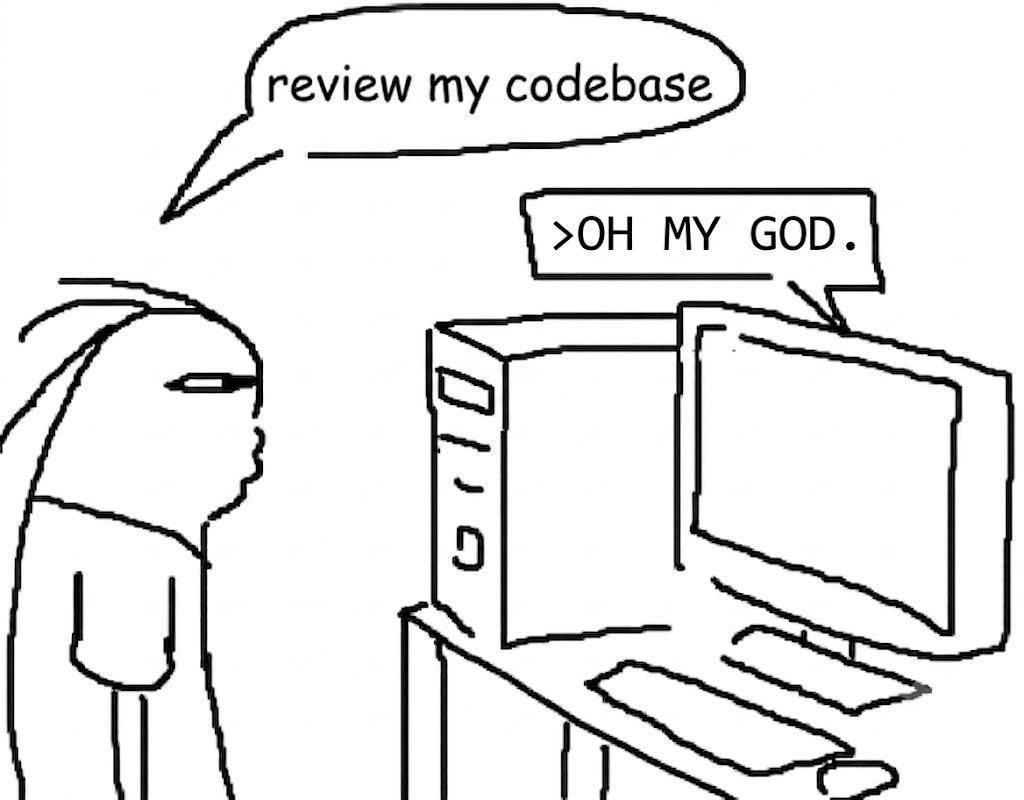
In this meme, we witness a software project treated like a literal dumpster fire – except instead of extinguishing the flames of accumulated technical debt, the stakeholders are dumping more fuel on it. The image shows a person labeled “CLIENTS” pouring gasoline (tagged as 32 “critical” feature requests) onto a blaze captioned “software with years of technical debt.” It’s an absurd yet eerily familiar scene to any senior developer: a legacy codebase (smoldering with unresolved issues) being doused with a deluge of new demands. In other words, it’s the classic gasoline_on_fire_analogy for what happens when stakeholder expectations completely ignore the reality of a burning, unstable system.

What makes this darkly funny is how true-to-life it is. We’ve all seen projects where every new ask from a client is labeled “critical” — to the point that the word loses all meaning. When everything is top priority, effectively nothing is; the development team is just thrashing around, firefighting. Here they gave a comically specific number: 32 urgent requests. That number is exaggerated, but it captures the feeling of being bombarded by dozens of “must-have” features simultaneously. Each feature by itself might be feasible, but cramming them all into a system already teetering under years of neglect is begging for disaster. The meme highlights the phenomenon of feature creep (also known as scope creep), where continuous additions to the scope – especially under pressure – turn a controlled project into an inferno of complexity. It’s humor born from pain: every experienced dev knows this spiral all too well, which is why the meme elicits a pained chuckle.

Now, technical debt itself is depicted as the roaring fire here, and that’s apt. Years of quick-and-dirty code fixes, skipped refactors, and clunky old modules create a volatile tinderbox in the codebase. Just like financial debt, tech debt accrues “interest” – but that interest is paid in slower development, frequent bugs, and hair-on-fire emergencies. An architecture full of hacks might work okay under normal conditions, but it’s fragile. Add one too many changes and things can suddenly blow up. Senior devs know that feeling when a tiny “harmless” change triggers a major outage because the underlying code was a house of cards. This meme visualizes that risk perfectly. Instead of paying off some of that debt (by refactoring or improving the code) or at least not pushing the system so hard, the client in the meme is aggressively feeding the flames. It’s like they’re saying, “Our software is barely holding together? Great, let’s double the workload on it with new features!” It’s the kind of logic that keeps on-call engineers up at 3 AM. 🔥

There’s an undercurrent of shared trauma here that every developer who’s dealt with stakeholder pressure will recognize. In meetings, clients or upper management often insist, “We need this new functionality now; it’s critical for the business!” Meanwhile the dev team is frantically waving red flags, saying, “The system can’t handle this without serious cleanup.” But too often, management sees addressing technical debt as a “nice-to-have” or something to postpone, because new features excite customers and executives. So the dev team gets overruled and told to “just make it work” by any means necessary. That’s when you end up layering hack upon hack – temporarily appeasing the client, but adding more fuel to the fire in the long run. They always promise to clean it up next sprint (but of course “later” never comes). Every quick fix is like throwing another log on the blaze. For the developers, this is a classic pain point: you deliver the shiny new features to cheers from stakeholders, while quietly thinking “we’re gonna pay for this later.” And pay you do – when something inevitably breaks spectacularly.

For example, we can practically script the conversation leading up to a scenario like this:

Client: “We need all these new features implemented immediately. It’s critical for our users!”
Developer (under their breath): Our codebase is already a bonfire, but sure… let’s pour on a few more gallons and see what happens.

The code itself starts to reflect this chaos. Instead of elegant design, you get giant switch statements or if/else ladders full of one-off patches for each “critical” request. It’s not pretty. For instance, the code begins to look like:

// Pseudo-code illustrating accumulated quick fixes
switch(featureId) {
    case 1:  applyQuickFix1(); break;
    case 2:  applyQuickFix2(); break;
    // ... imagine cases 3 through 31 similarly piled on ...
    case 32: applyQuickFix32(); break;
    default: printf("🔥 Too many features! System on fire! 🔥");
}

Each case above represents a hurriedly added feature workaround. This kind of code is a nightmare to maintain – and practically a fire hazard for the software. A structure like that screams, “We just kept shoving in new stuff without rethinking the design.” It’s a direct result of feature requests being jammed into the system without pause.

I’ve personally witnessed a real-life version of this. We had a large web application already creaking under the weight of tech debt – performance issues, mysterious bugs, you name it. Rather than give us time to fix the foundation, the client dumped a list of new features a mile long, each deemed vital for an upcoming sales demo. We protested that the app needed maintenance, but the answer was “there’s no time, just add the features – we’ll handle any problems later.” Well, launch day came and guess what? The system crashed and burned in spectacular fashion. 🚒🔥 Logs were scrolling with errors, users couldn’t log in, data got corrupted – basically a five-alarm emergency. We spent the next week in full-on firefighting mode, trying to patch things up. It was the exact scenario this meme illustrates: the client poured critical feature requests onto a software already smoldering, and the result was an out-of-control blaze. The humor here is that the meme isn’t really exaggerating much at all. It’s funny to us in a gallows-humor way because it’s so accurate. We laugh, but it’s the kind of laugh you release while cringing, because you’ve lived that nightmare or know someone who has.

Why does this keep happening, even though by now phrases like “technical debt” are well known in the industry? Often it comes down to misaligned incentives and classic ProjectManagement failures. Clients and product owners focus on short-term gains: new features, flashy updates, anything that can be shown to stakeholders or customers to indicate progress. New features are visible and can be marketed; refactoring code isn’t. So, from the business side, the roaring fire in the codebase remains invisible until it’s too late. Stakeholder expectations are that more features = more value, and that adding features faster will satisfy users or beat competitors. They might think they’re putting out fires (“Users are complaining we lack Feature X, so adding it will solve our problems”) when in reality they’re igniting the codebase further. There’s also a tendency in some organizations to label practically everything as “HIGH PRIORITY” or “CRITICAL,” because every department or client rep believes their request is the one that matters. This leads to absurd backlogs like 32 top-priority items simultaneously, and no sane way to actually prioritize or execute them properly.

From an engineering perspective, it’s obvious that this is unsustainable. But the people calling the shots often aren’t down in the code to feel the heat directly. There’s a disconnect: the client sees new features as putting water on a business fire (appeasing customers, closing a sale, etc.), whereas the developers see those features as gasoline on the technical fire. When management ignores the developer pain points and the warnings about tech debt, the result is exactly as the meme depicts – a dramatic flare-up. The meme resonates because it’s basically taking a common cautionary tale in software development and translating it into a single, striking image. It says, “This is what it feels like when your client expectations for constant new features meet a codebase full of old problems.” Seasoned devs nod their heads (perhaps while sighing or face-palming) because they’ve been caught in that exact bind: keep the client happy today at the cost of setting tomorrow’s project on fire.

Ultimately, the meme is a tongue-in-cheek critique of bad project management and poor prioritization. It’s pointing out the irony that sometimes the very people who want the product to succeed (clients, stakeholders) end up sabotaging it by pushing too hard on a weak foundation. The phrase “fighting fire with fire” usually means using a similar force to combat a problem – but here it’s more like fighting fire with gasoline, which everyone knows is a terrible idea. The “advancednormie” watermark hints that this is a bit of insider humor for those in the know. If you’ve spent enough time in the industry, you don’t know whether to laugh or cry at this scenario. The meme gets a laugh because it’s painfully real: we’ve all seen the codebase bonfire, and we’ve all known a “client with a gas can” who just can’t resist tossing in one more “urgent” request. It’s a clever (and cathartic) way to say, “Please, for the love of code, stop worsening an already bad situation!”

Description

A meme depicting a person at night pouring gasoline from a red canister onto a large, raging bonfire. The image is labeled with white text to create a metaphor for software development. The person wearing a green jacket is labeled 'CLIENTS'. The red gasoline can they are holding is labeled '32 "CRITICAL" FEATURE REQUESTS'. The bonfire itself is labeled 'SOFTWARE WITH YEARS OF TECHNICAL DEBT'. The image humorously and accurately portrays a common frustration in the software industry where clients or stakeholders, unaware of the fragile state of a legacy system, demand numerous new features. These requests, like gasoline on a fire, only exacerbate the existing problems of technical debt, making the system more unstable and likely to fail spectacularly. The watermark 'advancednormie.com' is visible in the bottom right corner
Comments

7
Anonymous ★ Top Pick The client thinks they're requesting features, but what they're really doing is performance testing the disaster recovery plan
  1. Anonymous ★ Top Pick

    The client thinks they're requesting features, but what they're really doing is performance testing the disaster recovery plan

  2. Anonymous

    Adding 32 “critical” features to a 15-year-old monolith is the only bonfire where the smoke alarms are PagerDuty and the fire brigade is the Jira backlog

  3. Anonymous

    Nothing says "we value stability" quite like deploying 32 new features on top of a codebase where the original developers left comments like "// TODO: fix this before it becomes a problem (2015)"

  4. Anonymous

    Ah yes, the classic product strategy: when your codebase is already a dumpster fire held together with duct tape and prayer, the obvious solution is to pour 32 'critical' feature requests on it - because nothing says 'sustainable engineering' like treating your technical debt like a bonfire at a startup retreat. At this point, the only thing more on fire than the code is the Slack channel where the architects are quietly updating their LinkedIn profiles

  5. Anonymous

    If everything is P0, you’ve built a priority inversion engine - watch the debt-soaked monolith hit thermal runaway, no autoscaling required

  6. Anonymous

    In a legacy monolith, 32 “critical” features are just accelerants with polite Jira titles

  7. Anonymous

    Clients: 'Just add these 32 features - it's critical!' Architects: watching the Big Ball of Mud ignite into a full monolith meltdown

Use J and K for navigation