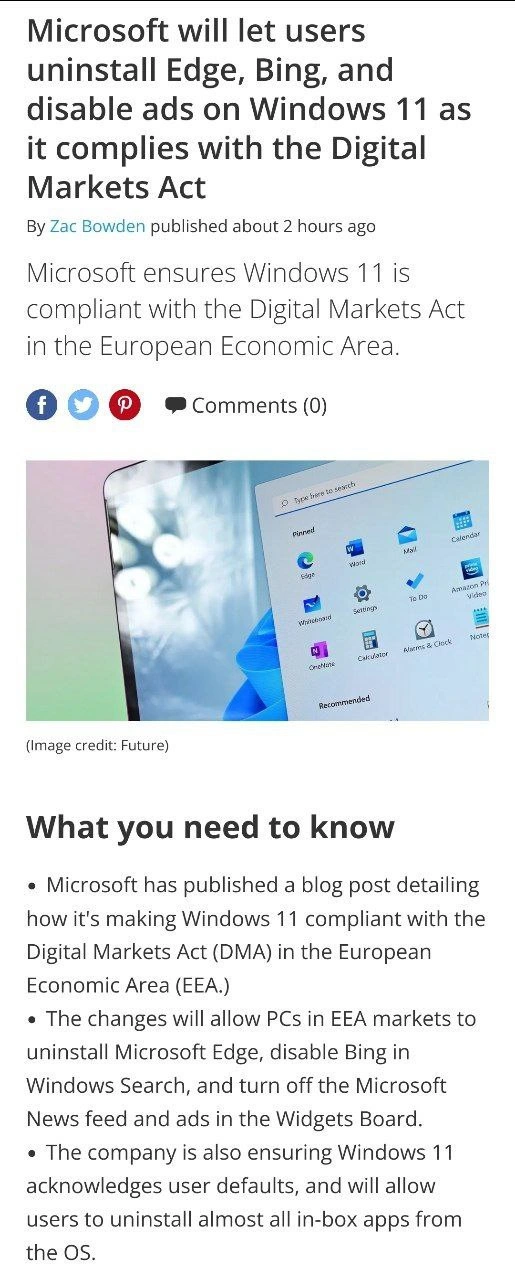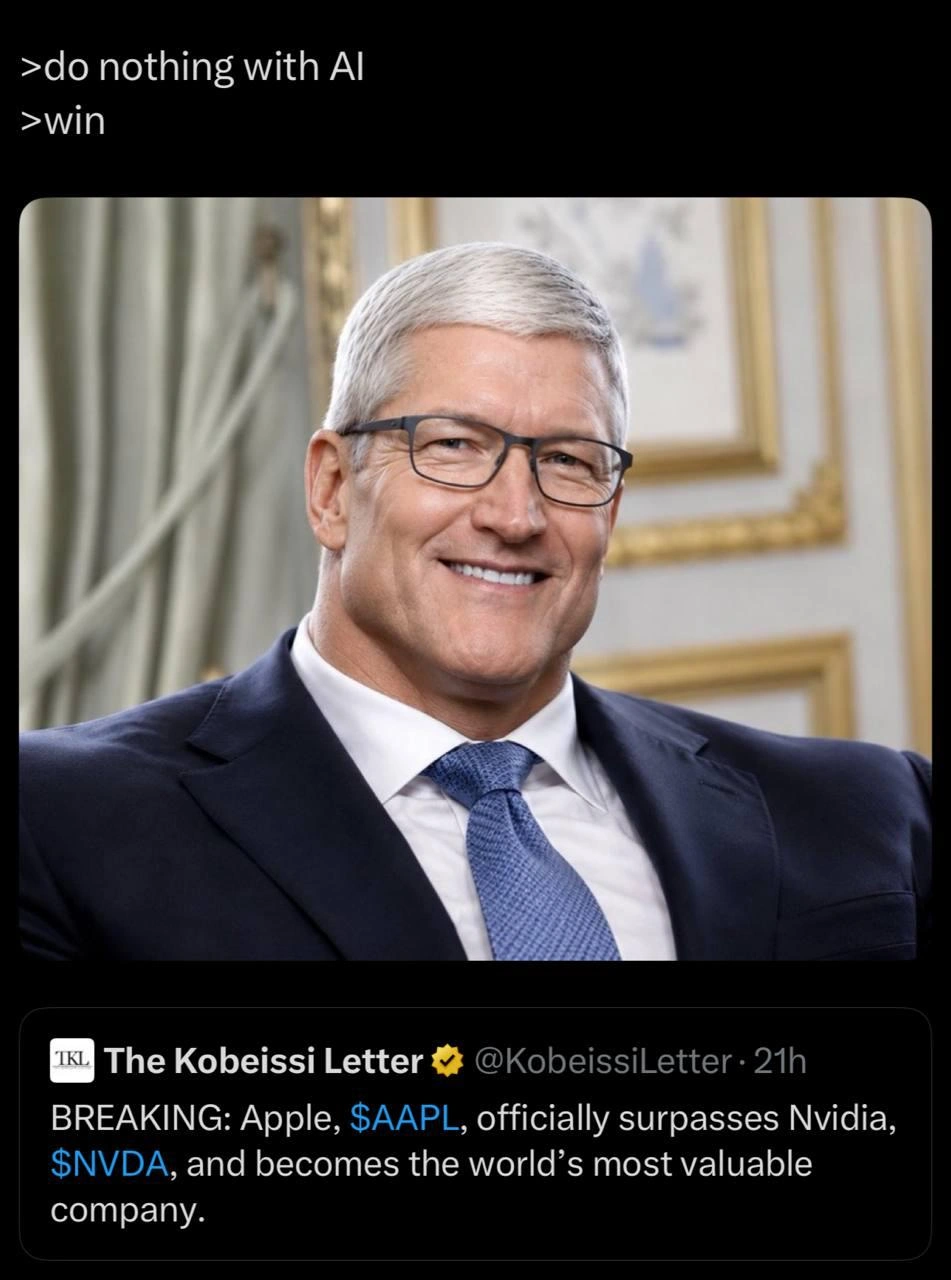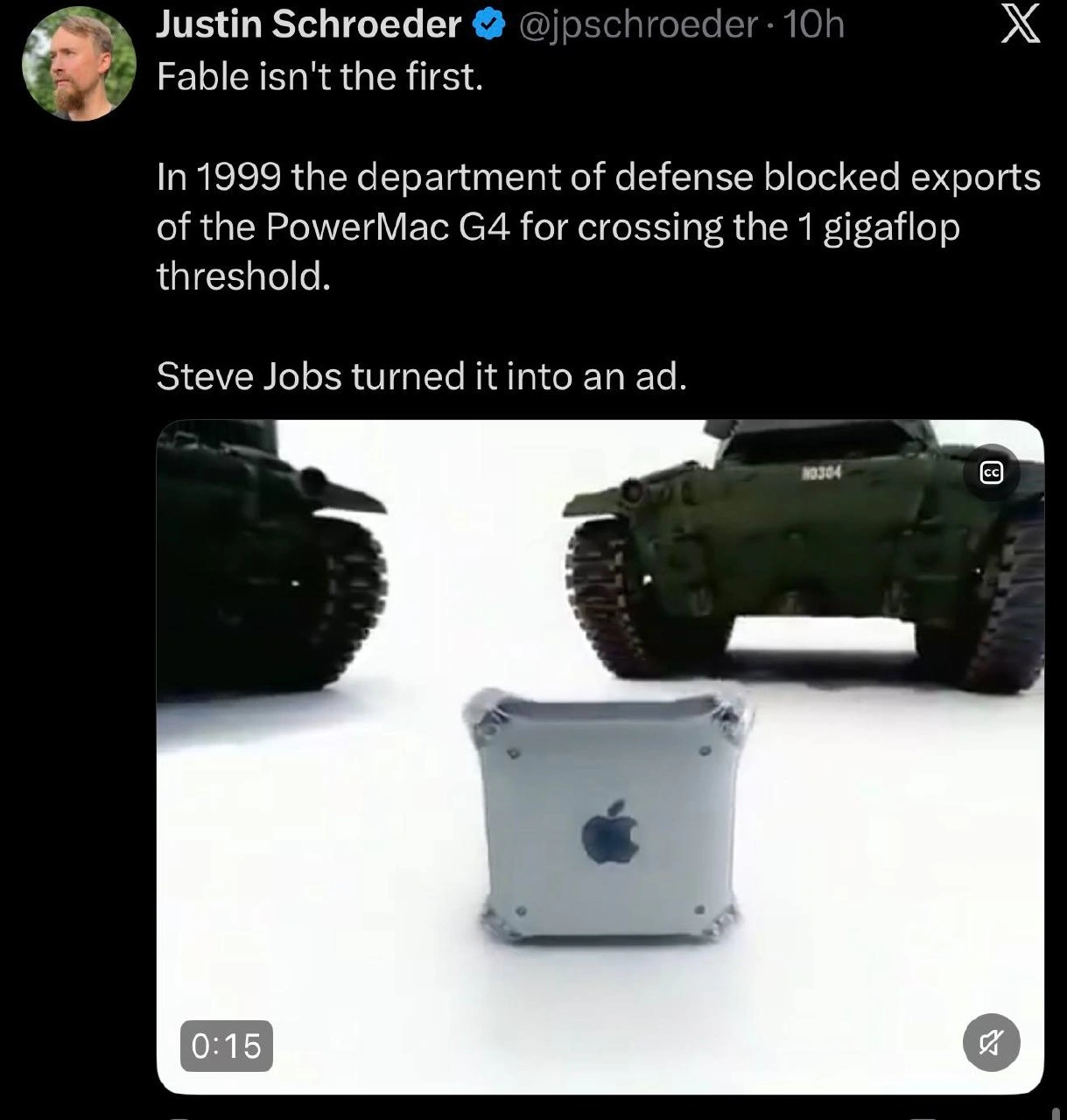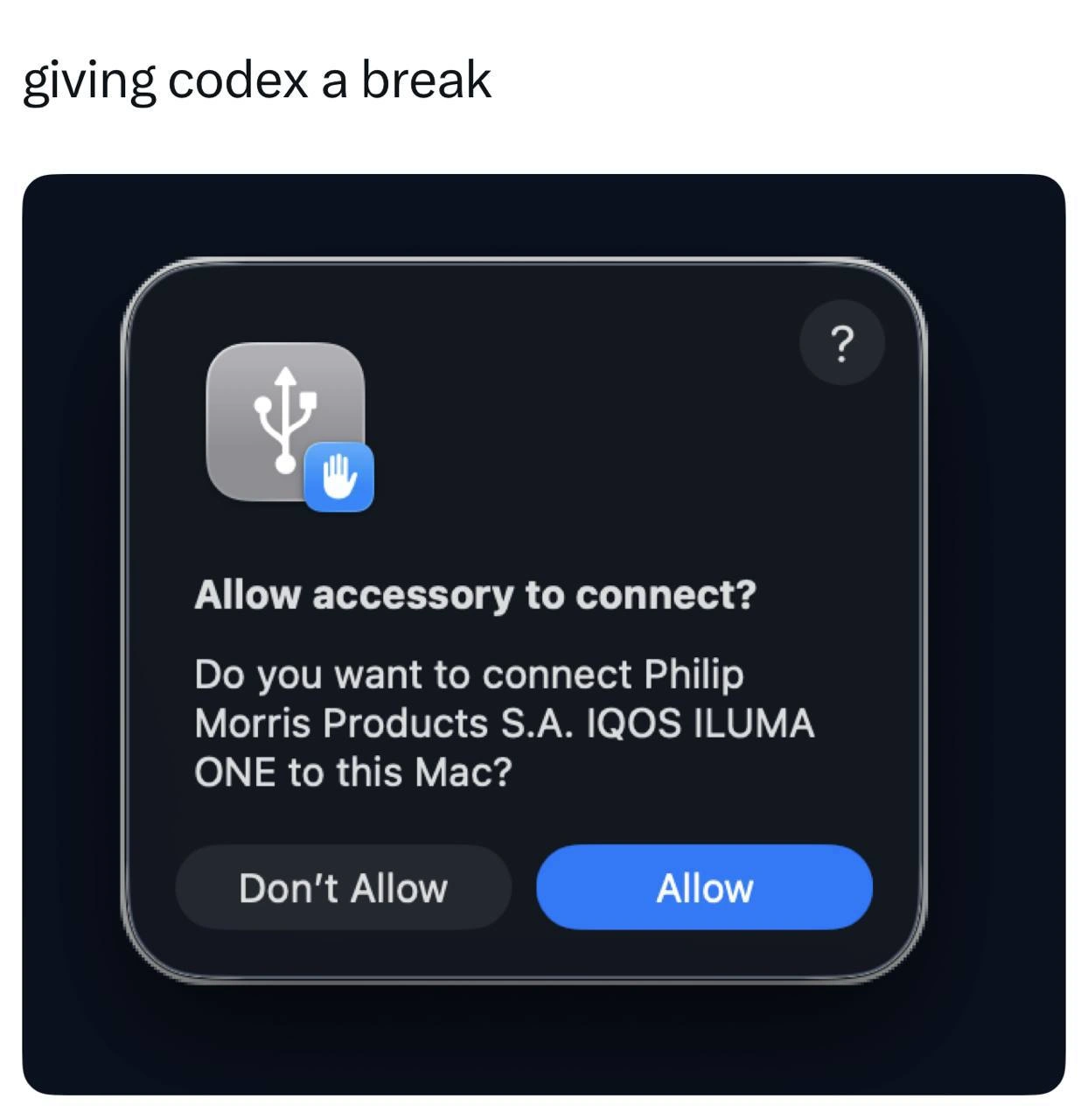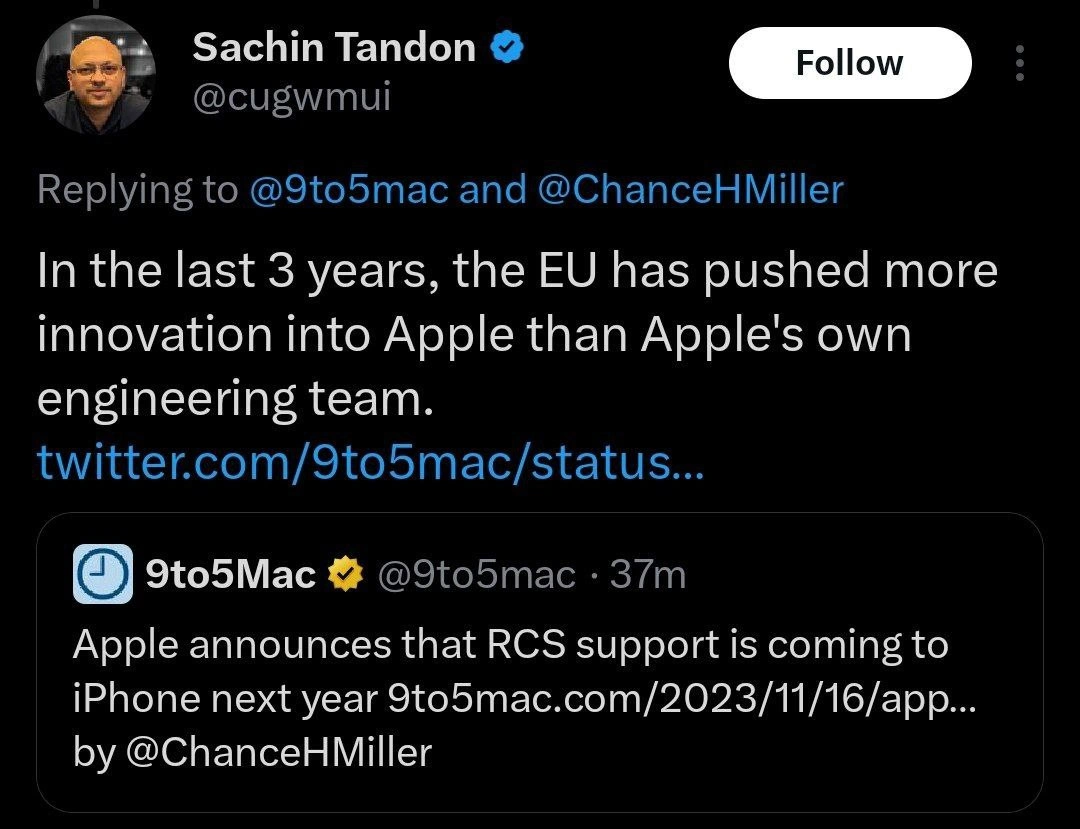
EU Credited as Apple's New Head of Innovation
Why is this Apple meme funny?
Level 1: Play Nice, Apple
Imagine a school playground where one kid (let’s call him Apple) has a super cool toy that only he and his close friends can play with. This toy is like a special messaging game – if you’re in Apple’s club, you get to play a really fun version of it with secret chat signals and shiny stickers. But if you’re not in the club (say you’re an Android kid), Apple either won’t let you play or makes you play a boring old version of the game. Now, the other kids aren’t happy because they can’t join the fun properly. Along comes the teacher – in this story, that’s the EU – and the teacher says, “Hey, Apple, you have to share and let everyone play by the same rules.” The teacher is basically forcing Apple to be fair and use a common set of rules for the messaging game so no one feels left out. Apple doesn’t really want to share his special toy, but he also doesn’t want to get in trouble with the teacher. So he agrees to the new rules, and suddenly all the kids can play together more easily. The funny part is, we usually think of Apple as the kid who invents new games and cool toys on his own. In this case, the teacher had to step in and tell Apple to change the game so everybody could enjoy it. It’s a bit like saying Apple had to be reminded to “play nice with others.” Everyone finds it a little amusing because you’d expect a big kid like Apple to know better, but sometimes even the biggest kids have to follow the playground rules.
Level 2: Breaking the Blue Bubble
For newer developers or those unfamiliar with the Apple vs EU saga, let’s break down the buzzwords. Apple’s “walled garden” is a term describing how Apple’s ecosystem is tightly controlled and self-contained. If you have an iPhone, Apple wants you to use Apple’s own chargers, Apple’s own apps, and Apple’s own services (like iMessage for texting). It’s like a garden with high walls – everything inside is curated by Apple, and it’s not easy for outside things to get in. This strategy ensures quality control and seamless integration, but it also locks users in and keeps competitors out. The EU (European Union), on the other hand, has been enacting rules to knock down some of those walls in the name of fairness and consumer convenience. Over the past few years, EU regulators introduced laws like the Digital Markets Act (DMA) aimed at big tech companies deemed “gatekeepers.” Being a gatekeeper means your platform is so large and essential that smaller competitors can’t thrive if you block them out. The DMA says gatekeepers (like Apple for apps and messaging) must open up certain services to competitors and follow new interoperability requirements.
One concrete outcome is about phone chargers. The EU noticed electronic waste and consumer pain from every phone brand using different chargers. Their solution? A regulation that all new smartphones (including iPhones) sold in the EU must use a common charging standard – specifically USB-C. Apple had its own Lightning port on iPhones for a decade, and despite USB-C being faster and universal (used by most Android phones and laptops), Apple stuck with Lightning for control and accessory licensing profits. When the EU law passed, Apple had to comply or stop selling iPhones in Europe. So in 2023, Apple finally switched the iPhone 15 to a USB-C port. That wasn’t Apple’s internal innovation timeline; it was basically forced by law. Consumers got what they’d been asking for (one charger to rule them all) because regulators stepped in.
Now, the meme specifically jokes about RCS support coming to iPhone. RCS (Rich Communication Services) is essentially the next generation of SMS text messaging. Think of RCS as texting upgraded for the smartphone era: it supports read receipts (“Your message was seen at 5:45 PM”), typing indicators (“Bob is typing…”), high-resolution photos and videos, better group chats, and potentially end-to-end encryption. On Android phones, Google and carriers have been pushing RCS so that the default Messages app can do more than old SMS. But Apple’s iMessage already had those modern features – the catch is, iMessage’s goodies only work between Apple devices. If an iPhone user texts an Android user, the conversation falls back to old SMS (the messages turn green in the iPhone chat bubble). Those green bubbles are infamous: they indicate a basic SMS with none of the fancy features, often leading to broken group chats and blurry videos. Apple didn’t adopt RCS for years, leaving Android users as second-class texting citizens when communicating with iPhones. Why would Apple do that? Because AppleEcosystem lock-in was a huge motivator: teens would tell friends “ugh, you’re a green bubble” – a subtle peer pressure to get everyone on iPhone for a better chat experience. It’s a clever (if a bit ruthless) business move by Apple to keep their messages exclusive.
The IndustryIrony that this meme highlights is that the EU might be the one to change this status quo. Under new interoperability rules (hello, DMA!), a company like Apple might be required to make their messaging service work with others. Rather than opening up iMessage fully (which Apple is loath to do), Apple decided to implement RCS on iPhone for texts with Android users. This way, at least the baseline texting experience improves – the green bubble chats will get features like higher quality media and maybe encryption – without Apple having to give Android users the actual iMessage app. It’s a half-step that likely satisfies the EU’s demands for a more open messaging_standards approach. So, when the tweet says the EU “pushed more innovation into Apple than Apple’s own engineering team,” it’s referencing things like USB-C and RCS which Apple only agreed to under regulatory pressure. It feels like the EU is acting as a catalyst for changes that Apple had the technical capability to do ages ago but refused for strategic reasons.
From a junior dev perspective, it’s a peek into how CorporateCulture and legal requirements can influence technology. We usually think new features come from bright ideas or competition – like Apple adding a cool new camera because Samsung did, or supporting a new framework because devs want it. But here, new features (USB-C charging, cross-platform texting enhancements) came from compliance mandates. Apple’s engineering might have developed prototypes or considered these features long ago, but corporate decisions shelved them until the law said “you must.” It’s a bit like your boss prioritizing a project only after the client threatens to leave. The meme exaggerates to humorous effect: it credits a government body with “innovation” inside Apple. In reality, Apple’s engineers are world-class – they can implement RCS or any standard; they just weren’t allowed to until now. Seeing the EU effectively strong-arm a tech giant into doing something beneficial and then calling that innovation is the joke. It resonates because it’s both true in effect and absurd in notion.
Level 3: Innovation by Regulation
Veteran developers see the irony dripping here: regulators acting as Apple’s product managers. In the last few years, the European Union (EU) has effectively dictated parts of Apple’s roadmap, forcing features that Apple’s own engineering team long resisted. The meme’s punchline – “the EU pushed more innovation into Apple than Apple’s engineers” – satirically jabs at Apple’s walled garden strategy. Apple is famous for a tightly controlled ecosystem (hardware, ports, messaging, app stores) where they call all the shots. But now external laws are prying open that garden gate. A prime example is Apple’s sudden embrace of RCS support for the iPhone’s Messages app. For context, Rich Communication Services (RCS) is a modern messaging protocol (essentially messaging_standards beyond old SMS) championed by carriers and Google. Apple had steadfastly ignored RCS for years, content to let iPhone texts to Android users stay as clunky SMS with “green bubbles”. Why? Because iMessage’s blue bubbles (Apple’s proprietary messaging) lock users into the Apple ecosystem – a classic network effect moat. If everyone in your family or friend circle uses iPhones, group chats hum along with read receipts, high-quality media, and encryption. But if an Android user joins, the experience degrades to basic SMS/MMS. That inconvenience actually pressures some users to stick with iPhones. Apple’s closed approach here isn’t a technical necessity; it’s a business strategy to maintain a walled_garden_break proof fence around its user base.
Now enter the EU regulators with their rulebook. Over the past 3 years, the EU has rolled out laws like the Digital Markets Act (DMA) targeting Big Tech gatekeepers. Under the DMA, dominant platforms must ensure interoperability – meaning services like messaging should work across company lines. To the EU, Apple’s iMessage dominance (especially in regions like the US) looks like a gatekeeper locking out competitors. So the EU effectively told Apple: “Play nice and open up, or face penalties.” The result? Apple announces RCS compatibility in iOS – something unthinkable a couple of years back. It’s the EU doing what consumer pressure and rival competition couldn’t: compelling Apple to adapt. The humor here is that a bureaucratic mandate achieved a user-friendly innovation that Apple’s famed AppleEcosystem ethos wouldn’t prioritize. It’s as if the EU has become an unofficial product team for Apple, spec’ing out features via legislation instead of Jira tickets. IndustryIrony at its finest – a regulatory body known for red tape ends up accelerating tech upgrades on a cutting-edge smartphone.
Seasoned devs also recall this isn’t the first EU-forced “innovation”. Remember Apple’s proprietary Lightning charger? For years, Apple clung to their Lightning port on iPhones while the rest of the industry moved to USB-C. That Lightning connector was a mini CorporateCulture symbol: sleek, Apple-only, and lucrative (via MFi licensing fees). But the EU got tired of drawers full of incompatible chargers and passed a law requiring a common charging standard (USB-C) on all phones. Lo and behold, the iPhone 15 debuted with a USB-C port – not because Apple suddenly loved it, but because compliance-driven innovation left them no choice. This meme alludes to exactly that pattern: the EU’s legal nudges (USB-C mandate, DMA’s messaging interoperability, etc.) are forcing Apple to do things that benefit consumers more broadly, albeit at the expense of Apple’s tightly knit control. Senior architects chuckle because they’ve seen how companies sometimes only change under external pressure. It’s a shared industry experience: iphone_compliance features often get implemented not when engineering deems them cool, but when law or competition makes them unavoidable.
Another layer of humor is the role reversal in who is driving “innovation.” Apple markets itself as an innovator, a company that Think Different and surprises users with revolutionary features. Yet here we have a scenario where the “innovation” (be it RCS messaging or universal ports) wasn’t a visionary Apple exec’s idea – it was effectively imposed by regulators. It’s like imagining a sprint review where the EU Commission is asking Apple engineering, “So, did you implement cross-platform messaging this iteration?” – a thought that would amuse any dev dealing with regulatory stories in the backlog. The meme resonates with developers who know that sometimes the biggest leaps (or headaches) come from outside constraints. They see the slow dismantling of Apple’s walled-garden messaging stack not as a smooth Cupertino masterplan, but as a clumsy unplanned refactor forced by EU’s legal requirements. It’s confirmation that even tech giants must bend to rules, and in doing so, their products might actually improve (much to Apple’s chagrin and users’ delight). For those in the industry, there’s a cathartic “I can’t believe the EU did it” feeling – something like a long-running bug finally getting fixed only after a major client escalation. The whole situation is both absurd and satisfying, making this meme hilariously on-point for anyone following Apple and EU’s ongoing tug-of-war.
Description
A screenshot of a Twitter exchange discussing Apple's product strategy. The main tweet, a reply from user Sachin Tandon, sarcastically states, 'In the last 3 years, the EU has pushed more innovation into Apple than Apple's own engineering team.' This is in response to a quoted tweet from the tech news outlet 9to5Mac, which announces, 'Apple announces that RCS support is coming to iPhone next year'. The humor is a pointed commentary on the perception that Apple's recent adoption of open standards, like the Rich Communication Services (RCS) messaging protocol, is not driven by internal innovation but by regulatory pressure from the European Union's Digital Markets Act (DMA). For senior developers, this resonates deeply as it touches upon the long-standing debate about Apple's 'walled garden' ecosystem, the company's resistance to interoperability with Android, and the power of regulation to force change in big tech

Comments
7Comment deleted
Apple's most influential product manager is now the European Commission. Their user stories are legally binding and the acceptance criteria are non-negotiable
When your roadmap says 'courage' but the EU force-pushes the RCS branch to main
Apple's product roadmap meetings must be fascinating: "What groundbreaking innovation should we ship next?" "Whatever the EU threatens to regulate in six months."
When your compliance team ships more user-facing features than your product team, you know the backlog prioritization meetings have been... interesting. Turns out the most effective product manager for Apple's messaging strategy was the EU Parliament all along - no sprint planning required, just legislative mandates with actual teeth
RDD: Regulatory‑Driven Development - acceptance criteria is “avoid nine‑figure fines”; deliverable is iMessage finally speaking RCS
EU regulators just merged the biggest PR into iOS that Apple's engineers never scoped
Apple’s new sprint methodology: DMA‑driven development - wait for Brussels to write the acceptance criteria, then call it innovation