Skip to content
DevMeme
4497 of 7435
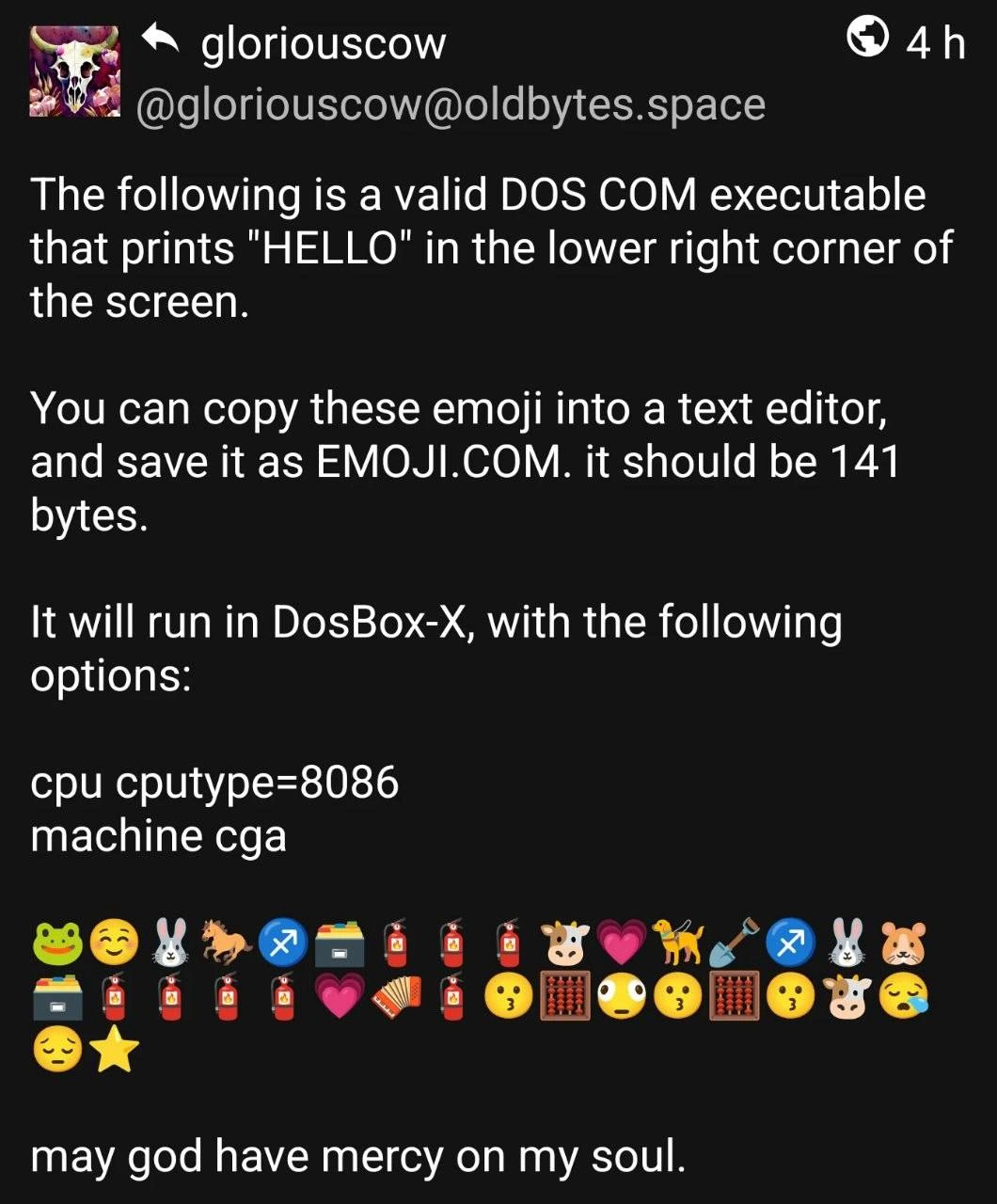
Early-2000s desktop rig meme invites devs to rate the beige battlestation
TechHistory Post #4937, on Oct 14, 2022 in TG

Early-2000s desktop rig meme invites devs to rate the beige battlestation

Why is this TechHistory meme funny?

Level 1: Back in My Day

Imagine your grandpa pulls out a big, chunky old cellphone from 20 years ago and proudly says, “Look at my awesome phone!” Meanwhile, you’re holding your sleek modern smartphone that can play videos and games. You’d probably giggle because it’s cute that he’s so proud of something so out-of-date. That’s what’s happening in this meme: people used to be excited and proud of computers that were big and slow by today’s standards. It’s funny because it shows how much technology has improved — what was amazing back then looks silly now, and we can laugh at how things change.

Level 2: Retro Rig Rundown

For newer developers (or those who’ve never used this old gear), here’s a rundown of each part of the setup and what it does:

  • CRT Monitor: A Cathode Ray Tube monitor – an old-style, bulky computer screen. It’s deep and heavy because it houses a big glass tube and electron guns to create the image. Before flat LCD screens, these CRTs were standard; they often had a slight curve to the glass and could flicker if the refresh rate was low. If you’re used to slim modern displays, a CRT looks like a giant box attached to the back of a screen!
  • Beige PC Tower: The main computer case (the “tower”) that holds all the important parts like the processor (CPU), memory, and hard drive. Back in the day, most PC cases were this dull beige or gray color. In the meme, the tower sits in the desk’s lower compartment. This big box is what we’d now compare to a modern PC case (today often black or lit up with LEDs) or even to the entire computer inside your laptop. It’s the heart of the setup, just in a much bigger, boxier package than we use now.
  • PS/2 Keyboard: A keyboard that uses a PS/2 plug – a small round connector that was common for keyboards and mice before USB. It works like any keyboard (same QWERTY layout and keys), but you had to plug it in before turning the computer on. (Unlike today’s USB devices, you couldn’t just plug or unplug a PS/2 keyboard while the PC was running.) Early 2000s PCs typically had two PS/2 ports: one for the keyboard (often colored purple) and one for the mouse (green).
  • Ball Mouse: An old type of mouse that uses a physical ball to track your hand movements. Underneath, it has a rubbery ball that rolls as you move the mouse, and internal rollers detect the motion to move the cursor on screen. If the cursor started to stick or jump around, it meant the ball or rollers were dirty. Cleaning a mouse ball (by opening a little cover on the bottom) was a routine chore back then. Modern mice use an optical sensor (a little red or laser light) instead of a ball, which is more precise and never needs cleaning – a huge quality-of-life upgrade for users.
  • Flatbed Scanner: A device that copies physical papers or photos into the computer. You lay a page or picture face-down on the glass bed and a moving light scans it line by line to create a digital image. In the early 2000s, having a scanner was pretty common for a home office – it was how you’d send documents via email or save family photos to the PC. A full-page scan could take a minute or more, and the scanner connected with a cable (often through the printer port or a slow USB 1.1 port). Today, most people either use smartphone cameras or have all-in-one printer/scanner machines, so a dedicated flatbed scanner like this is much less common at home.
  • Wooden Hutch Desk: A large, sturdy wooden desk built to hold all this bulky computer equipment. It has a “hutch” – which means shelves and cabinets on top – for storing things like books, software CDs, and small speakers. There’s a slide-out tray for the keyboard and mouse, and a special cubby for the CRT monitor so it doesn’t dominate the whole tabletop. Below, there’s a space for the tower and often some drawers for supplies. Back then, since the computer was heavy and took up a lot of room, these desks helped organize everything. Now that computers and screens have slimmed down, many people use simpler desks (or adjustable standing desks) without those old-school compartments.
  • “Rate My Setup”: This phrase is something you’d say when posting a picture of your computer or gaming setup online and asking people to rate it (give it a score or opinion). It’s basically showing off your gear and seeing what others think. There are forums and social media groups where folks post their glowing RGB-lit battlestations with multiple monitors, saying “rate my setup.” It’s a fun, braggy sort of trend. The meme jokes that someone in the early 2000s is asking us to rate this very outdated setup. It’s funny because by today’s standards, the setup looks old and modest, but the person back then would have been proud of it and expected others to be impressed too!

Level 3: The Beige Age

In the Beige Age of computing (circa early 2000s), a setup like this was the pride of tech-savvy individuals. This meme doubles as a mini TechHistory time capsule: an imposing oak computer hutch cradling a beige PC and bulky CRT monitor. The caption “EARLY 2000’S MF BE LIKE – RATE MY SETUP” is a tongue-in-cheek nod to how far we’ve come. Senior engineers who lived through this period chuckle because they remember when a rig exactly like this was brag-worthy.

Back then, hardware aesthetics meant blending in rather than standing out. PC cases defaulted to a lifeless beige — in part to mask aging plastic’s discoloration (or perhaps to camouflage machines as mundane office furniture). The CRT (Cathode Ray Tube) monitor with its thick bezel and deep backside weighed as much as a packed suitcase; a 17-inch CRT was a luxury, often running at 1024×768 resolution if you were lucky. That screen likely flickered at 60 Hz, subtly straining your eyes, but nobody knew better yet. Flanking it are two speakers cleverly disguised as books, a quirky attempt at making tech decor-friendly. It’s a far cry from today’s open-case PC towers with RGB fans blazing – here, tech tried to hide in plain sight.

This setup screams RetroComputing vibes: the PS/2 keyboard and ball mouse on that sliding tray are artifacts of a bygone era. The keyboard plugs into a dedicated round PS/2 port (purple for keyboard, green for mouse) – a standard before USB took over. The mouse uses a physical rolling ball to track movement, which HardwareHumor enthusiasts know meant periodic cleaning sessions to scrape gunk off the internal rollers so your cursor wouldn’t jitter. It’s LegacyHardware you can almost feel: that mouse ball had some heft, and every so often it needed to be taken out and cleaned (and inevitably got dropped under the desk at least once).

Also perched on this wooden altar is a flatbed scanner – another period piece. In the early 2000s, if you wanted to email a document or digitize a photo, you scanned it. This meant waiting as a bright light bar sloooowly crawled across the page with a mechanical whirr, capturing your document line by line. Scanners connected via clunky parallel ports or early USB 1.1, and using them required patience (and desk space!). Today, a multi-function printer or even a smartphone camera has made the standalone scanner virtually extinct for casual use, highlighting the Legacy vs Modern shift in everyday tech tasks.

The oak hutch desk itself is a supporting character here. These desks were engineered to support massive CRTs and tame the tangle of cables and peripherals. Note the specific cubby for the beige tower – it’s a snug compartment to house the computer case (hopefully with a vent hole in the back to prevent it from becoming a toaster oven). Such furniture now feels antiquated; modern setups favor open desks and minimalist stands, because our screens are slim and our PC cases often showcase their LED-lit innards proudly on top rather than hiding below. In the early 2000s, though, computing was often a stationary, family-room affair – you dedicated a piece of furniture as the computer desk, and that wooden fortress was its domain.

From a senior developer’s perspective, this meme nails the TechNostalgia factor. It harkens back to the days of dial-up internet – when that screeching modem handshake was the soundtrack of connecting to the World Wide Web. Many devs cut their teeth with IDEs like Visual Studio 6.0 or Eclipse on machines just like this, where hitting “Build” meant time to grab a coffee while the code compiled. Upgrading from 256 MB to 512 MB of RAM felt like a colossal luxury (and often cost a hefty sum). If you wanted to test your new website or app, you crossed your fingers that the 56k modem wouldn’t drop the connection mid-upload. Yet back then, having a setup with a flatbed scanner, decent bookshelf speakers, and a 17″ monitor honestly felt like living the dream.

Ultimately, the humor here works on multiple levels. It satirizes modern “battlestation culture” by transplanting it into the past. Today, developers and gamers gleefully post slick, neon-lit setup photos on forums, chasing clout for the most aesthetic multi-monitor rig. By contrast, imagining that same bravado in the early 2000s – with a beige, wire-entangled, space-hogging desk – is absurdly charming. It’s a classic bit of TechHumor that resonates because it’s true: a developer around 2002 would absolutely boast “rate my setup” about this battlestation, and fellow techies would genuinely be impressed. The meme winks at those in the know, reminding us with a grin that yes, there was a time when a Pentium 4 sticker and a 56k modem were bragging rights.

Description

Image shows a heavy, oak-finish hutch desk holding a full early-2000s PC setup. Centered is a square CRT monitor with thick bezel, flanked by two book-shaped speakers, a slide-out tray with a grey PS/2 keyboard and ball mouse, and a beige tower nestled in the lower cubby; a flatbed scanner sits to the right. Bold white impact-font captions read "EARLY 2000’S MF BE LIKE" at the top and "RATE MY SETUP" at the bottom. The meme pokes fun at nostalgic hardware - CRT displays, beige mid-towers, and wooden computer furniture - contrasting it with today’s RGB-soaked battlestations that modern developers post for clout. It resonates with senior engineers who remember dial-up tones, IDEs on 17-inch CRTs, and the joy of finally upgrading to 512 MB of RAM

Comments

6
Anonymous ★ Top Pick 10/10 - pure on-prem: oak rack, single-node beige mainframe, and a flatbed ETL pipeline for importing printed UML into Rational Rose
  1. Anonymous ★ Top Pick

    10/10 - pure on-prem: oak rack, single-node beige mainframe, and a flatbed ETL pipeline for importing printed UML into Rational Rose

  2. Anonymous

    Back when your entire CI/CD pipeline was copying files to a shared drive and your deployment strategy was walking a CD-ROM to the server room

  3. Anonymous

    Back when 'cloud storage' meant hoping your CD-RW didn't fail mid-burn, and your desk needed structural engineering approval to support a 21-inch CRT. This setup could survive a nuclear blast but couldn't run Crysis - the eternal trade-off of the early 2000s: built like a tank, performed like a bicycle

  4. Anonymous

    Back when 'horizontal scaling' meant wedging another beige tower under the desk

  5. Anonymous

    Rate my setup: the original on-prem monolith - beige tower entombed in a wooden hot box, PS/2 I/O, CVS on Zip disks, and autoscaling meant opening the cabinet door

  6. Anonymous

    Back when the only container we orchestrated was a 100-pack of CD-Rs; deploys were Nero -> sneaker-net -> IIS, and IE6 set the roadmap

Use J and K for navigation