A glorious time capsule of Java education
Why is this TechHistory meme funny?
Level 1: Ice Cream Means Us
Imagine a local ice cream shop in your town putting up a big poster that shouts, “Our Shop means Ice Cream, Ice Cream means Our Shop!” They’re basically bragging that their shop is the same as ice cream itself – as if no other ice cream exists outside of them. It sounds silly, right? You’d probably giggle because obviously ice cream is so much bigger than one shop. This meme is funny for the same reason. In the poster, a computer school is claiming it’s one and the same with Java, which is a super popular computer language. It’s like they’re saying, “Learning Java = coming to our school.” Of course, people can learn Java in lots of places, not just there, so it’s a goofy, exaggerated claim. The humor is that they’re over-promising and patting themselves on the back really hard. It reminds everyone of a friend who brags too much or an ad on TV that sounds unbelievable. In the end, we laugh because the claim is just way too big to be true – kind of like that ice cream shop acting like they invented ice cream.
Level 2: One-Stop Java Shop
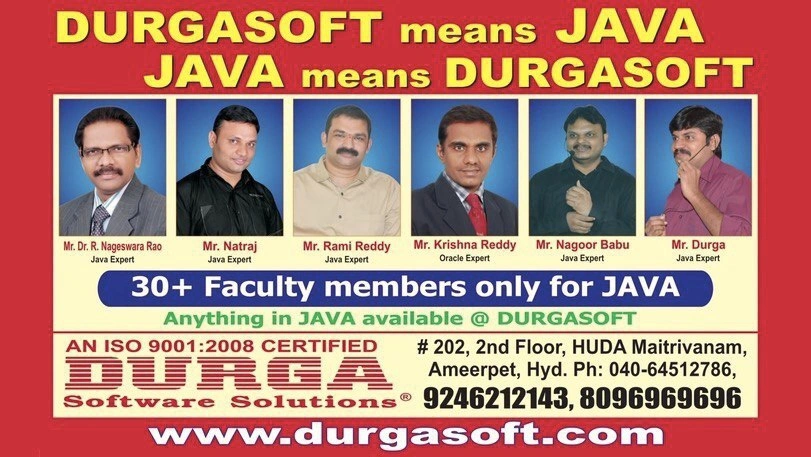
This meme shows an old-school advertisement for a Java training institute called DurgaSoft. The ad basically tries to scream: “We are the ultimate place to learn Java!” In huge letters it says, “DURGASOFT means JAVA, JAVA means DURGASOFT.” This is the institute’s way of claiming that Java (a very popular programming language) and their school are one and the same. Of course, literally that’s not true – Java is a programming language used worldwide, created by Sun Microsystems (and later managed by Oracle Corporation), while DurgaSoft is just one training center in Hyderabad. But as marketing, it’s saying “If you think of Java, you should think of us. We and Java are inseparable.” It’s a bold, catchy slogan to attract students who want to learn Java.
Java is a widely-used programming language known for its “write once, run anywhere” philosophy. It’s been especially common in big companies (banks, IT firms) for building everything from business software to Android apps. Many newcomers find Java’s learning curve steep – there’s a lot of syntax and concepts like object-oriented programming to grasp. That’s why institutes like DurgaSoft exist: to help people learn Java step by step, with the hope of getting a good developer job afterward. In the late 2000s and early 2010s, Java training was a booming business in India. Neighborhoods like Ameerpet in Hyderabad became famous as java_training_institute hubs – basically clusters of coaching centers where thousands of students enrolled in courses for programming, databases, and other IT skills. It was a whole dev community of learners, though a very commercial one. Think of it as an offline, in-person version of today’s coding bootcamps. You’d pay a fee, attend daily classes, get notes, and practice in labs, all to master a technology quickly.
The poster captures that vibe perfectly. It’s brightly colored in red and yellow, a common design strategy to grab attention (like how sale banners or fast-food signs use loud colors). The text is dense and in-your-face, because they’re trying to convey a lot: their expertise, their staff, their credibility. Let’s look at the key parts:
- “30+ Faculty members only for JAVA” – This line proudly states they have over thirty instructors teaching Java alone. That’s a lot of teachers for one subject! The idea is to impress potential students: more faculty means you’ll get a variety of experts and maybe flexible class timings. For a newcomer, it sounds like “Wow, there are dozens of Java gurus here, so I’ll be in good hands.” It also subtly suggests they cover every sub-topic of Java (basic Java, advanced Java, Java frameworks, etc.) because they have so many people.
- Instructor Headshots and Titles: The ad shows six photos of their star instructors. Each one has a caption like “Java Expert” or in one case “Oracle Expert.” This is to build trust – showing real people with specialties. For example, Mr. R. Nageswara Rao – Java Expert or Mr. Durga – Java Expert. Some of these names might be locally famous teachers; often, popular instructors build a reputation for being especially good at explaining tough topics. One instructor is labeled “Oracle Expert” which likely means he teaches the Oracle Database or related technology (Oracle is also the company that now owns Java, so it could imply he handles Java certification topics as well). If you’re a junior dev, seeing “Expert” by each name signals that these teachers really know their stuff. It’s a bit like going to a university site and seeing all professors listed with Ph.D. titles – it’s meant to assure you of quality.
- “Anything in JAVA available @ DURGASOFT” – This sentence claims that anything Java-related is available at the institute. In other words, no matter what you want to learn in the Java universe, they offer it. Be it core Java programming, advanced libraries, enterprise tools, or Java-based frameworks, they have a course or a teacher for it. It’s like saying “you name it, we teach it.” For someone starting out, this sounds convenient: you won’t have to go anywhere else or look for other resources – DurgaSoft has it all, like a one-stop shop for Java knowledge.
- ISO 9001:2008 Certified – On the poster, there’s a badge stating this certification. ISO 9001:2008 is a quality management standard. Essentially, it means the institute has some formal processes to ensure quality in how they operate and teach. While this certification doesn’t directly tell you how well they teach Java, it’s there to give an extra layer of legitimacy, especially to parents or companies who might sponsor training. It’s like saying “We’re officially recognized for running our institute in an organized, quality-focused way.” For a student, it might not mean much for day-to-day learning, but it does sound impressive at first glance. (It’s worth noting ISO 9001:2008 was the version of the standard from the year 2008; there have been updated versions since, but they were still flaunting this one in the ad, likely because that’s when they got certified.)
- Contact Information and Address: The bottom of the poster lists the full address in Hyderabad (HUDAMaitrivanam, Ameerpet) and multiple phone numbers (two mobile numbers and a landline), plus the website durgasoft.com. This was typical for such ads – they want interested students to easily reach out. Ameerpet being mentioned tells locals exactly where to find them (Ameerpet = training hub). The presence of so many phone numbers suggests they encourage people to call to inquire about course timings, fees, new batches starting, etc. Today, a slick ad might just have a web URL or QR code, but back then giving all contact options up front was common. If you were a fresh graduate or an aspiring programmer in Hyderabad, you’d know that heading to Ameerpet and calling these numbers was the way to kickstart your learning.
So overall, this ad is painting DurgaSoft as the ultimate Java learning center. It’s like a very enthusiastic resume for the institute: lots of expert teachers, official certification, any topic you want, we’ve got it. For a junior developer or student, the message is “come learn Java from us and you’ll be in expert hands.”
Now, why is this funny to developers and why did it become a meme? Mostly because of how extreme and earnest the ad is. In hindsight, the claim “Java means DurgaSoft” is an exaggeration that makes techies smirk. No single institute can actually represent a whole programming language – Java is learned and used everywhere, not just at DurgaSoft! It’s a bit like a pizza shop saying “Pizza means OUR shop.” It sounds pompous and oversells the reality. Developers often poke fun at these kinds of grand claims because they’ve seen many technologies and training fads come and go. It’s relatable humor in the tech world: almost everyone has seen an ad, a website, or a salesman that promises unrealistically that their product or service is the absolute best or the only one you’ll ever need. Also, the old-fashioned look of the poster (the design style, the sheer amount of text) is something many of us remember from early in our careers or even from college notice boards. It has a charming, nostalgic feel – learning about programming through these classroom courses, in an age before interactive online platforms and YouTube tutorials took over.
In short, as a junior or someone starting out, you might look at this poster and think, “Wow, they really specialize in Java, they must be great teachers.” And indeed, many people did learn solid basics from places like this. But as you gain experience, you realize the comical side: the marketing is a bit over the top. Java is huge, and no single company can literally be synonymous with it. It’s a piece of developer humor now because we see the overconfidence and we find it endearing and funny. It reminds us of the enthusiasm (and sometimes naiveté) we had when we were just learning to code, believing any institute that promised magic. This meme is basically a nod to that era and an inside joke among devs who’ve been through similar “Bootcamp” or coaching experiences. It’s saying: remember when just seeing “Java” in big letters got us excited (or anxious)? And now we can chuckle at how it was marketed to us.
Level 3: Bijection Boast
DURGASOFT means JAVA, JAVA means DURGASOFT.
This over-the-top slogan sets a one-to-one mapping between a tech institute and an entire programming language. It’s a bold claim – essentially a bijective relationship where the brand and the language are interchangeable in meaning. In mathematics or CS theory, a bijection is a perfect pairing between two sets; here the sets are “all things Java” and “all things DurgaSoft.” The poster implies a two-way mapping claim: if you know DURGASOFT, you know Java, and vice versa. For seasoned developers, this triggers a grinning déjà vu. It’s hyperbolic marketing copy at its finest – an almost cult-like language evangelism vibe that senior engineers recognize from a bygone era of tech hype. The absurdity tickles our geeky side because, logically, saying “X means Y and Y means X” collapses into “X equals Y.” The institute is basically equating itself to the entire Java ecosystem, as if Java were their proprietary domain. It’s a reflexive evangelism loop, an Ouroboros of branding where Java eats its own tail and spells “DurgaSoft.”
This poster is a time capsule from the peak of Java mania, reminiscent of the late 2000s when Java ruled enterprise software and learning Java was a golden ticket into IT. The bright red and yellow palette screams old-school corporate training advertisement – these primary colors grab attention like it’s a clearance sale for coding skills. In places like Ameerpet (a Hyderabad neighborhood famous for dense clusters of software coaching centers), such flyers were once plastered on every corner. This ameerpet_coaching_culture thrived on bold promises and louder banners. The meme’s author jokingly calls it a time machine – indeed, stumbling on this poster in 2019 felt like warping back to 2008 when every other hoarding claimed to be the one-stop Java shop. Seasoned devs who lived through that era find it nostalgic and hilarious: we’ve witnessed decades of language evangelism, from Java to .NET to JavaScript and beyond, and know too well the grandiose claims each wave brings. “Anything in JAVA available @ DURGASOFT” boasts the ad, suggesting a total coverage of the Java universe under one roof. It’s at once impressive and comically exaggerated – like saying they have a JVM vending machine in the lobby or a direct hotline to James Gosling.
Let’s break down the elements that make this so cringey-funny for veteran developers:
- Symmetric Slogan: The tagline “JAVA means DURGASOFT” and vice versa is classic hyperbole. It’s reminiscent of vendor slogans where a company tries to become synonymous with a technology (as if saying “Oracle means database, database means Oracle”). Here it’s scaled up to an entire language: a bit like a DevCommunity in-joke. We all know Java is much bigger than any one institute, which makes this boast amusingly absurd.
- Faculty Overload: “30+ Faculty members only for JAVA” – this line is flexing sheer manpower. For a senior dev, it raises eyebrows: you need 30 Java instructors? Are they teaching every Java framework under the sun? The number is meant to impress (quantity as quality), but it also hints at huge batch sizes or an assembly-line approach to churning out Java developers. It’s a relic of the bootcamp arms race, much like today’s coding bootcamps touting their mentor-to-student ratios. To someone who’s survived messy enterprise projects, the idea that 30 people can teach one language suggests a sprawling syllabus (Core Java, Advanced Java, Struts, Hibernate, Spring, oh my!) – basically the entire legacy enterprise Java stack that was popular back then.
- Instructor Line-up: The poster proudly shows a lineup of instructors with titles like “Java Expert”. For context, in the Ameerpet training scene, star instructors were minor celebrities. Mr. R. Nageswara Rao, Mr. Natraj, Mr. Nagoor Babu… these names (blurred faces and all) imply “We’ve got the gurus.” One guy is labeled “Oracle Expert” – likely covering the Oracle DB or Oracle-specific Java tech (since Oracle Corporation owns Java now, it’s a clever inclusion). A senior engineer chuckles seeing this because we remember that era where being a “Certified Java Guru” was a bigger flex than actual project experience. It also hints at that legacy_enterprise_java_promises vibe: back then, mastering Java and Oracle DB was sold as the key to a stable corporate career.
- ISO 9001:2008 Badge: Ah, the “ISO 9001:2008 CERTIFIED” badge, printed in the corner like a seal of trust. To an experienced eye, this is pure badge flex – it doesn’t say anything about how well they teach Java. ISO 9001 is a quality management certification; having the 2008 version in 2019 is ironically telling – they likely got certified a decade ago and slapped it on every poster since. It’s meant to impress newbies or parents (“Look, we follow international standards!”), but devs know it’s mostly paperwork. Still, seeing that old badge now is endearingly dated, like finding an ancient artifact with an intact royal seal.
- Contact Overload and Address: The poster lists a full street address in Ameerpet, two mobile numbers, a landline, and a website (durgasoft.com). It’s information-dense, typical of local coaching center ads where every pixel is used. A veteran dev who’s been around communities might recall physically visiting such addresses for demo classes. The sheer amount of contact info feels old-fashioned now (today it’d be a simple QR code or a website link), which contributes to the time-travel feel.
All these elements combined create a perfect storm of developer humor for those in the know. It satirizes the grandiosity of tech learning promises. The reason it’s relatable humor is that many of us either started with or encountered this kind of institute. Maybe you or a colleague proudly carried a DurgaSoft Java course certificate to job interviews. Now, years later, you see this poster and realize how overblown it was – and you can’t help but laugh with a mix of fondness and relief. It’s the kind of inside joke that unites the dev community: we’ve all seen learning adverts that promise the moon (or the JVM), and we’ve learned to read between the lines. This particular meme is like a postcard from the past, reminding senior devs how far tech education marketing has come (or not!). In summary, the humor here comes from the stark contrast between the hyperbole of the ad and the reality that Java (or any language) can’t be bottled up by one institute – no matter how many experts or ISO badges they throw at it. It’s a gentle roast of the “Java training institute” phenomenon and a nod to the learning curve we’ve all climbed, often with far less flashy resources.
Description
The image is a brightly colored advertisement for a training center called DURGASOFT, specializing in Java. The design is dated, with a bold red background and yellow text proclaiming 'DURGASOFT means JAVA' and 'JAVA means DURGASOFT'. Below this, there are professional headshots of six male instructors: Mr. Dr. R. Nageswara Rao, Mr. Natraj, Mr. Rami Reddy, Mr. Nagoor Babu, and Mr. Durga, all labeled 'Java Expert', and Mr. Krishna Reddy, labeled 'Oracle Expert'. A central banner announces '30+ Faculty members only for JAVA' and 'Anything in JAVA available @ DURGASOT'. The lower section provides the company's full name, 'DURGA Software Solutions', its ISO 9001:2008 certification, physical address in Ameerpet, Hyderabad, multiple phone numbers, and the website 'www.durgasoft.com'. For senior developers, this ad is a humorous and nostalgic artifact from an era when such intensive, in-person training centers, particularly in India, were the primary pathway into the IT industry. Its aesthetic and singular focus on Java are a stark contrast to the modern landscape of online learning platforms, representing a specific period in tech history

Comments
7Comment deleted
This isn't an ad, it's a time capsule from an era when the path to a senior role was paved with 30+ Java experts in a single building, not a thousand Stack Overflow tabs
If you need 30+ instructors to cover *just* Java, I’m guessing half the syllabus is still EJB 2.0 and the other half is explaining why “Java means Durgasoft” isn’t a circular dependency
This is the institute that trained the architect who insisted we needed AbstractFactoryFactoryBuilderFactory because "that's how enterprise Java works" - and yes, they're still teaching Java 8 as cutting edge
When your entire business model is so tightly coupled to a single technology that your company name literally becomes synonymous with it - that's not just vendor lock-in, that's existential dependency. The circular logic 'DURGASOFT means JAVA, JAVA means DURGASOFT' is the educational equivalent of a recursive function without a base case. One wonders what happened when Kotlin arrived, or if they're still teaching Java 6 with the same 30+ faculty members who've achieved perfect horizontal scalability but questionable version control
Declaring "JAVA == DURGASOFT" violates the equals/hashCode contract - expect collisions in the marketing HashMap; and if “Anything in JAVA” is available, I assume NullPointerException comes bundled
DurgaSoft's 30+ Java faculty: because even Spring can't autowire enough mentors for enterprise-scale NullPointerExceptions
“DURGASOFT means JAVA; JAVA means DURGASOFT” is the kind of equivalence relation I’d reject in code review as a circular dependency politely wrapped in ISO‑9001 paperwork