
The First Rule of Legacy System Maintenance
Description
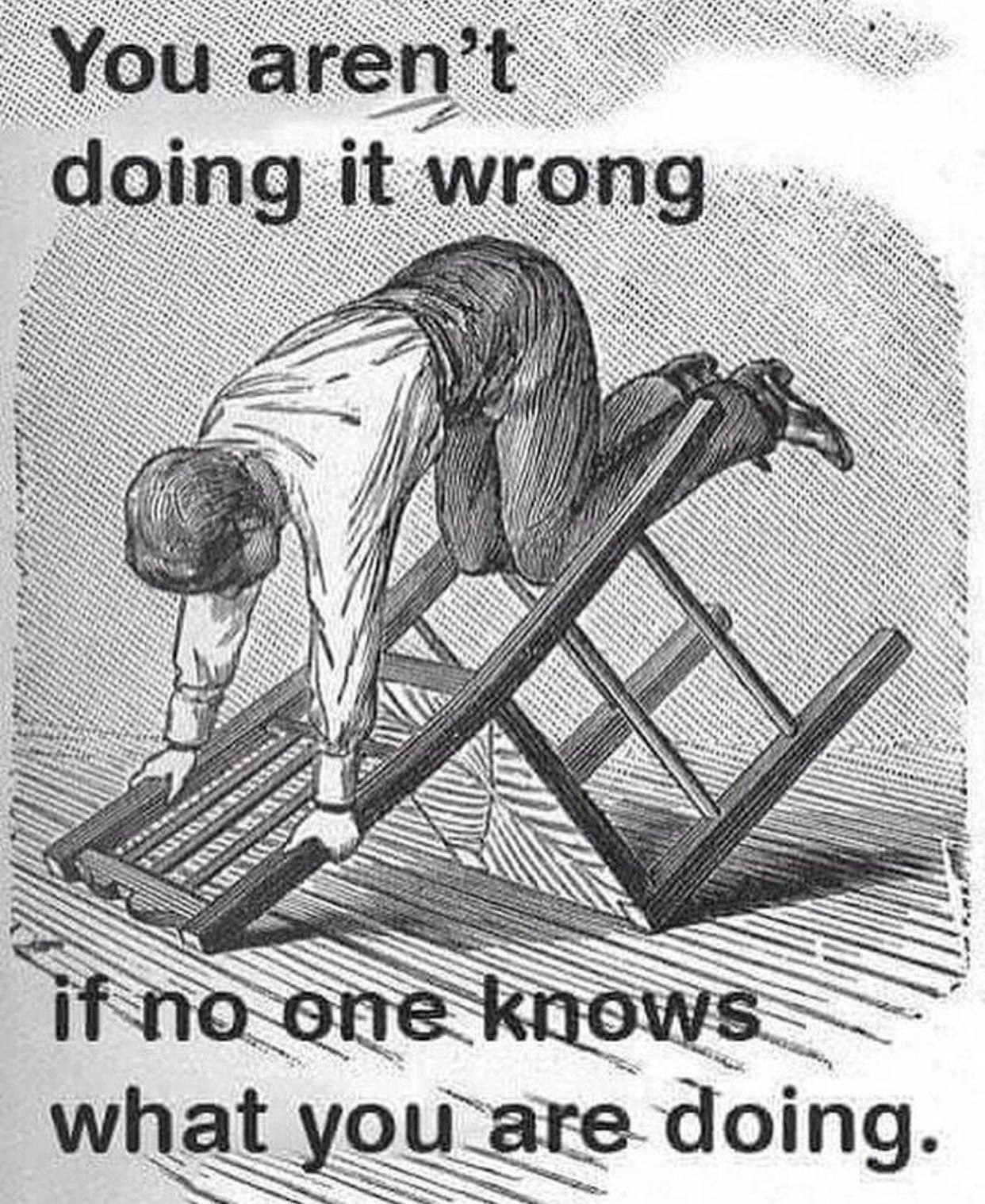
The image features a vintage, black-and-white, stippled illustration of a person kneeling on a folded-up wooden chair in a bizarre, contorted position, hunched over with their hands on the seat. The image has a grainy, photocopied texture. Overlaid in a bold, sans-serif font is the text: 'You aren't doing it wrong if no one knows what you are doing.' The humor resonates deeply with senior software engineers who have worked on complex, poorly documented, or legacy systems. The visual absurdity of the person using the chair 'wrong' mirrors the feeling of implementing a solution in an environment where there are no established best practices or documentation. If the system is a black box to everyone else, any solution that works is, by default, the 'correct' one, as no one possesses the necessary context to critique it. It's a cynical but relatable take on job security through obscurity and the isolation of being the sole expert on a critical piece of infrastructure
Comments
8Comment deleted
This is the guiding principle for the engineer maintaining the ancient Perl script that runs the entire company's payroll. It works, and nobody is brave enough to find out why
Pro tip for job security: architect a microservice that deploys via five nested Helm charts and emits its own runtime DSL - once the call graph looks like that folded chair, every reviewer just types “LGTM?” and moves on
Twenty years in and I've realized the entire industry runs on the collective agreement that nobody will ask follow-up questions during architecture reviews
This is the architectural equivalent of writing a 500-line regex instead of using a parser library - technically it works, nobody else can understand it, and you'll be the only one who can maintain it. Job security through incomprehensibility: the unspoken strategy of every developer who's ever written code so convoluted that the company can't afford to let them leave. It's not technical debt if you're the only creditor who can read the ledger
Enterprise rule: if your service looks like this chair, call it “proprietary,” keep the README empty, and your bus factor becomes the security model
If no one knows what you’re doing, it isn’t a hack - it’s a strategic moat with a bus factor of 1
Enterprise architecture 101: opacity as the ultimate stability metric - no one breaks what they can't comprehend
🔥 Comment deleted